‘Alito’ Invokes the Idea of an Invasion from the US to Save Himself and Revive the PRI
This article by Álvaro Delgado Gómez originally appeared in the August 11, 2026 edition of SinEmbargo.
Mexico City, August 11 (SinEmbargo).— Once again, as he has done on several occasions since Donald Trump took office, the president of the Institutional Revolutionary Party (PRI), Alejandro Moreno Cárdenas, “Alito,” requested the intervention of the United States government in Mexico to impose “economic sanctions” and revoke the visas of the National Electoral Institute (INE) councilors who unanimously ordered him to stop calling Morena a “narco-party” and to remove from his social media the posts in which he uses that label.
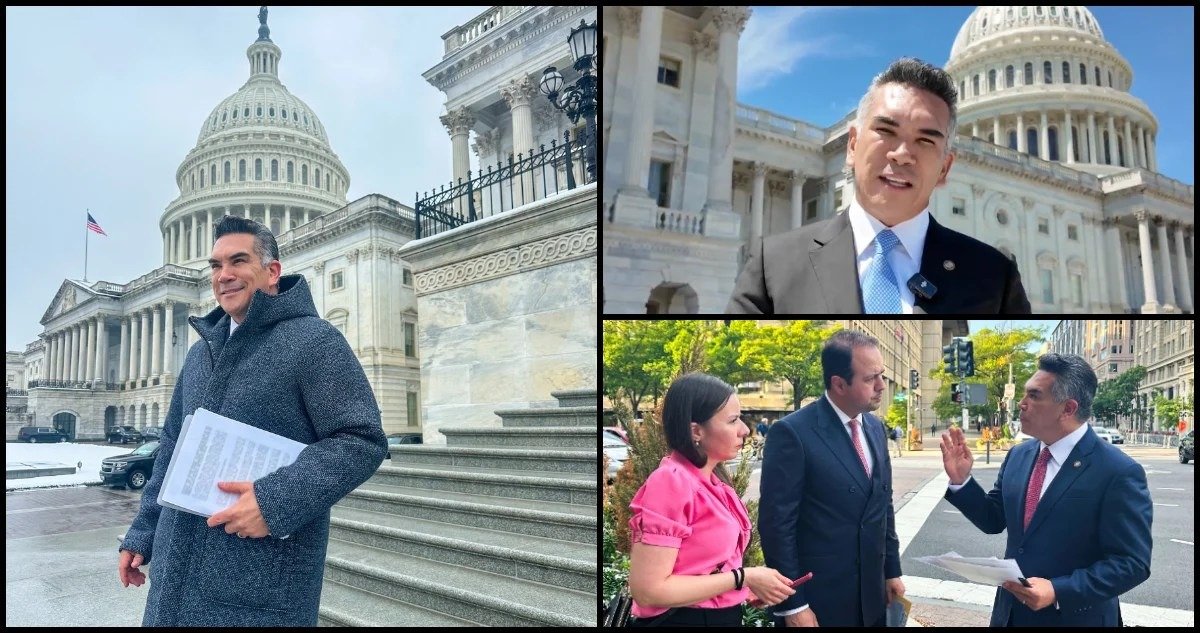
“Alito” Moreno Cárdenas has repeatedly turned to the United States to bring his grievances against the Mexican government. Since February 2025, for example, he has traveled on various occasions to Washington, where he has claimed to hold meetings with US political figures and has denounced an alleged political persecution in Mexico.
“Alito” was in the US capital in August and September of that year—when he met with Republican congresswoman María Elvira Salazar—and again in February and May of 2026, when he reiterated his accusations against Morena. Now he once again turns to the US authorities, this time to request sanctions against INE councilors.
“Alito” Calls for Sanctioning the INE
Moreno Cárdenas announced that this Monday he filed a complaint with the United States Department of State to request that the actions of councilors Rita Bell López Vences, Frida Denisse Gómez Puga, and Arturo Castillo Loza be reviewed and that they be sanctioned under the Global Magnitsky Human Rights Accountability Act.
“This law allows the United States government to impose economic sanctions and restrict entry to its territory when certain grounds of serious human rights violations or corruption are established,” the PRI leader wrote on his social media, adding that, as a Senator, he is convinced that freedom of expression deserves a firm defense.
“In July 2025, the United States sanctioned Brazilian judge Alexandre de Moraes and expressly cited the repression of freedom of expression and the persecution of political opponents as part of the reasons for the measure. His visa was also revoked. That precedent shows that the US authorities have already used their tools to respond to conduct they consider serious infringements of freedom of expression.”
To support his request for the intervention of the United States government in Mexico, the PRI leader claimed that the Mexican government wants to silence his party: “In the PRI we will not allow the cynics and narco-politicians of MORENA to finish building a dictatorship under the protection of organized crime. They will fall, in due time.”
Washington and the Recurring Visits
Less than three months ago, on May 15, Moreno Cárdenas went to Washington and, in front of the Capitol, issued a message denouncing the Mexican government with the same narrative.
“In the PRI we will not allow the cynics and narco-politicians of MORENA to finish building a dictatorship under the protection of organized crime,” he said on that occasion.
Earlier, on February 8, he was also in Washington, where he dined with Christophe Pierre, apostolic nuncio to the United States. “We had a very good talk about the challenges Mexico, the United States, and the world face today,” he wrote at the time.
Last year, after Trump took office as president of the United States, Moreno Cárdenas also traveled to Washington, D.C. On February 12, 2025, he claimed to have held private working meetings with leaders who have influence over that country’s decisions. The PRI leadership did not reveal their names but reported that the meetings addressed topics such as security, migration, the T-MEC, and the bilateral relationship.
In that context, he again complained that in Mexico there were no conditions of “democratic normalcy,” because, he said, “for the Morena government its only reason of State is to consolidate a dictatorship, not peace, not justice, and much less democracy in our country,” and he accused the government of undertaking a political persecution.
“Alito’s” Agenda
Then, on Saturday, August 2, 2025, the national president of the PRI went to Washington again, when that city is normally at a standstill. The PRI leader sent a video message from a cruise ship and did not attach evidence of the “extraordinary day of work” he claimed to have carried out.
In the video posted on his X account, he claimed to have had “very good meetings” and boasted of an “extraordinary day of work,” although he did not publicly identify the people he had met with either. In that message he insisted that the PRI would take its complaints about what was happening in Mexico to the United States and stated that he would continue working and denouncing from that country.
On August 14, 2025, “Alito” returned to Washington, this time to the headquarters of the Organization of American States (OAS), where he met with its secretary general, Albert Ramdin. Accompanied by PRI legislators, he once again denounced a political persecution in Mexico and questioned the judicial and electoral reforms. He also spoke about insecurity, freedom of expression, and the presence of organized crime. The delegation included, among others, senators Manuel Añorve and Pablo Angulo, Deputy Carlos Gutiérrez Mancilla, and the PRI’s secretary of International Affairs, Sofía Carvajal.
On the night of Wednesday, September 3, 2025, he returned to Washington, where he spoke, in a hallway, with Republican María Elvira Salazar.
“We will never allow a terrorist and communist narco-dictatorship to be established in Mexico. Our country must remain a nation of Institutions, with democracy, where human rights, freedoms, and the Constitution are respected,” he shared on his X account.
It was also the occasion on which he shared a photograph of himself ironing a shirt, which gave rise to memes alluding to the Cri-Cri song: “An old rat who was an ironing woman.”
Álvaro Delgado Gómez
Álvaro Delgado Gómez is a journalist, born in Lagos de Moreno, Jalisco, in 1966. He began in 1986 as a reporter and has worked in the newsrooms of El Financiero, El Nacional, and El Universal. In November 1994 he joined the weekly Proceso as a reporter, where he was head of Political Information and specialized in covering political affairs. He has written several books, notably El Yunque, la ultraderecha en el poder (Plaza y Janés); El Ejército de Dios (Plaza y Janés); and El engaño. Prédica y práctica del PAN (Grijalbo). El amasiato. El pacto secreto Peña-Calderón y otras traiciones panistas (Editorial Proceso) is his most recent book.
-
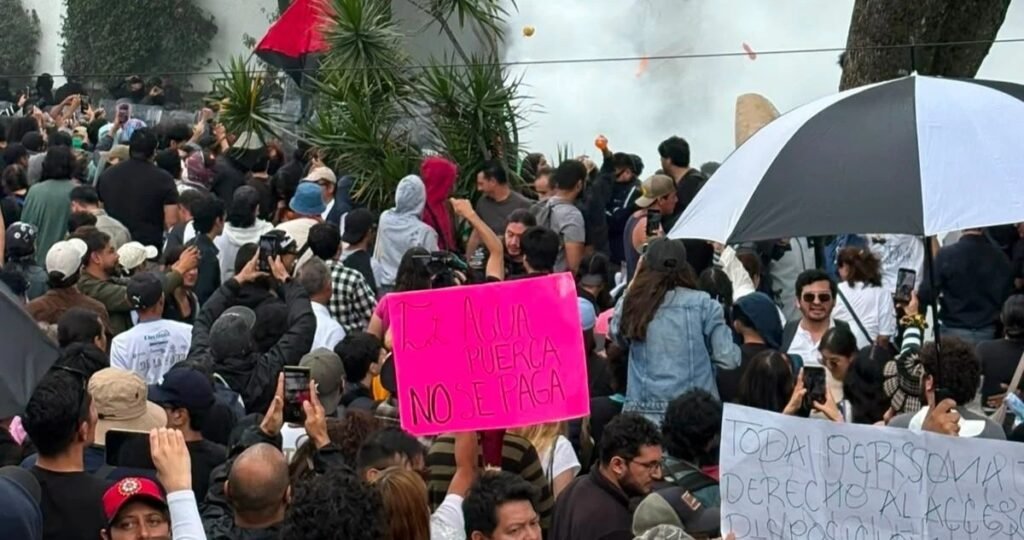
Thousands Demand Clean Water in Jalisco and Lemus Uses It to Repress Them
In Jalisco, governed by the opposition party Movimiento Ciudadano, police met the march with water cannons and tear gas, and protesters reported arrests and two people disappeared.
-
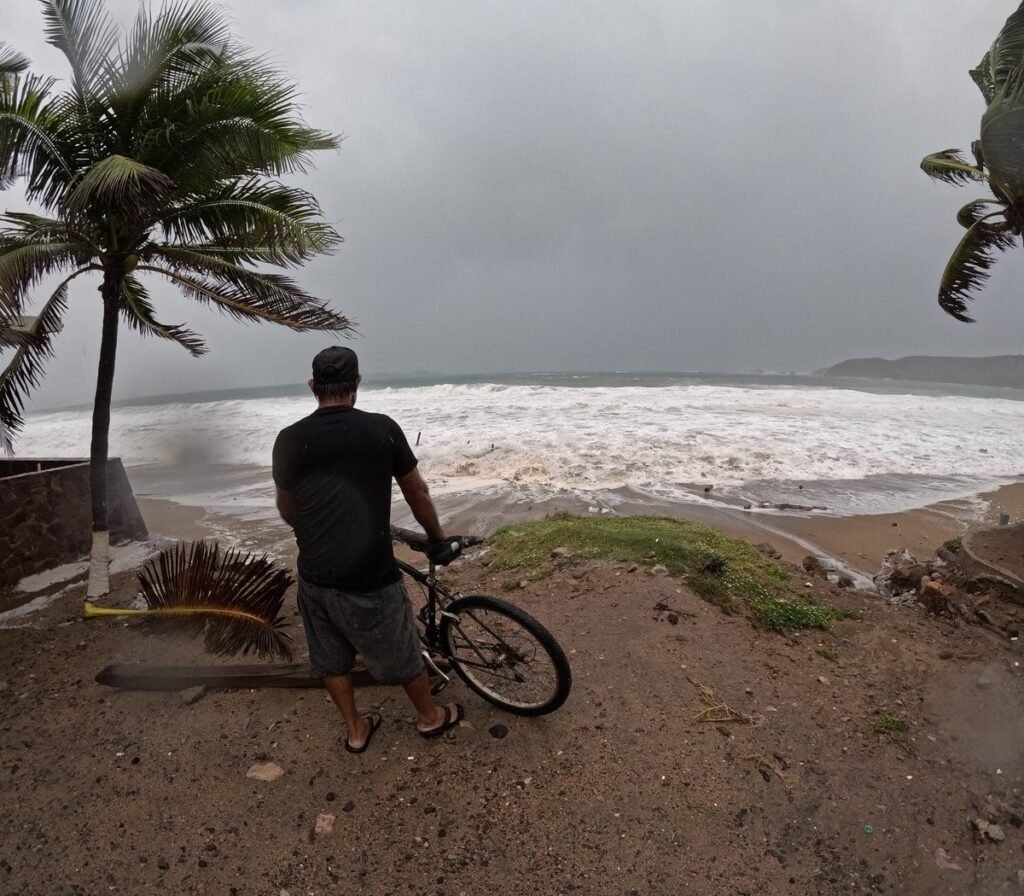
Hurricane Simon Paralyzes Towns and Highways in Jalisco Amid Forecast That It Will Make Landfall
With an erratic path, the Category 4 storm keeps the coast shut in under nonstop rain, though no casualties have been reported so far.
-
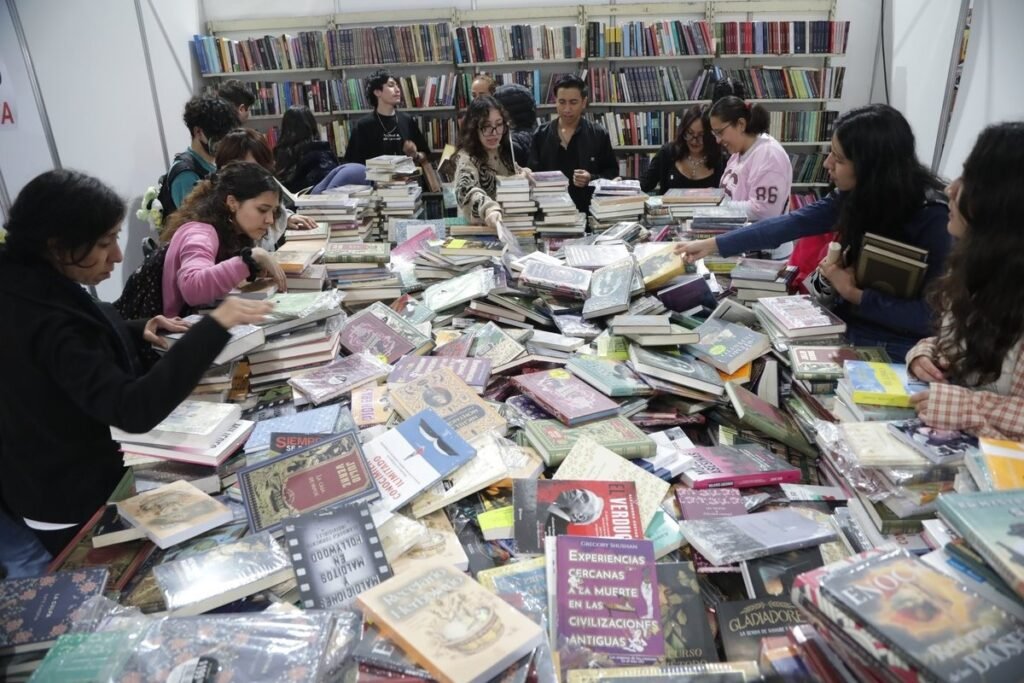
Mexican Book Fairs
“Book fairs in Mexico are among the great gatherings that speak of how a people nourishes itself on books,” observes Poniatowska.