AMLO’s “Grandeza”
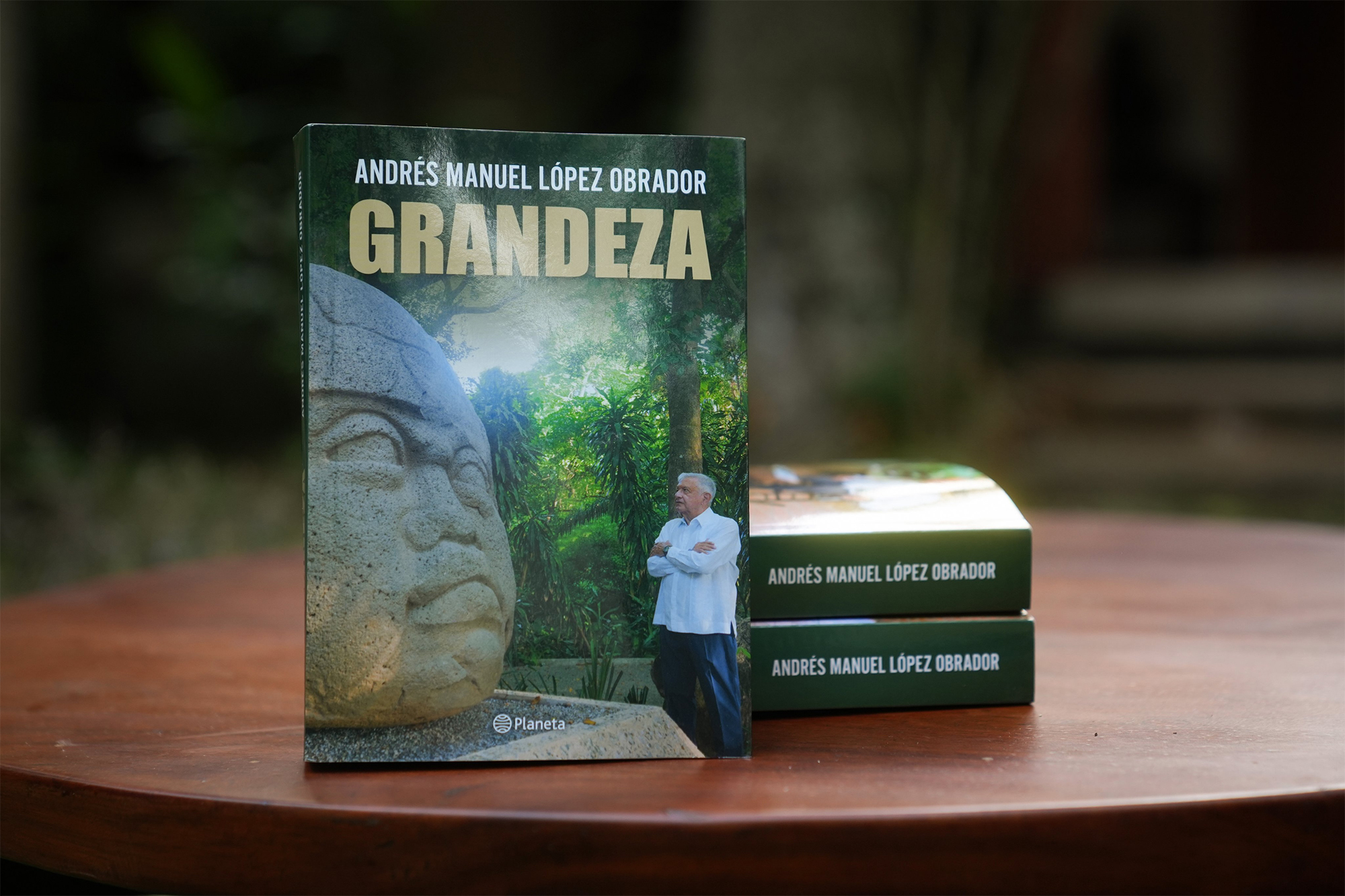
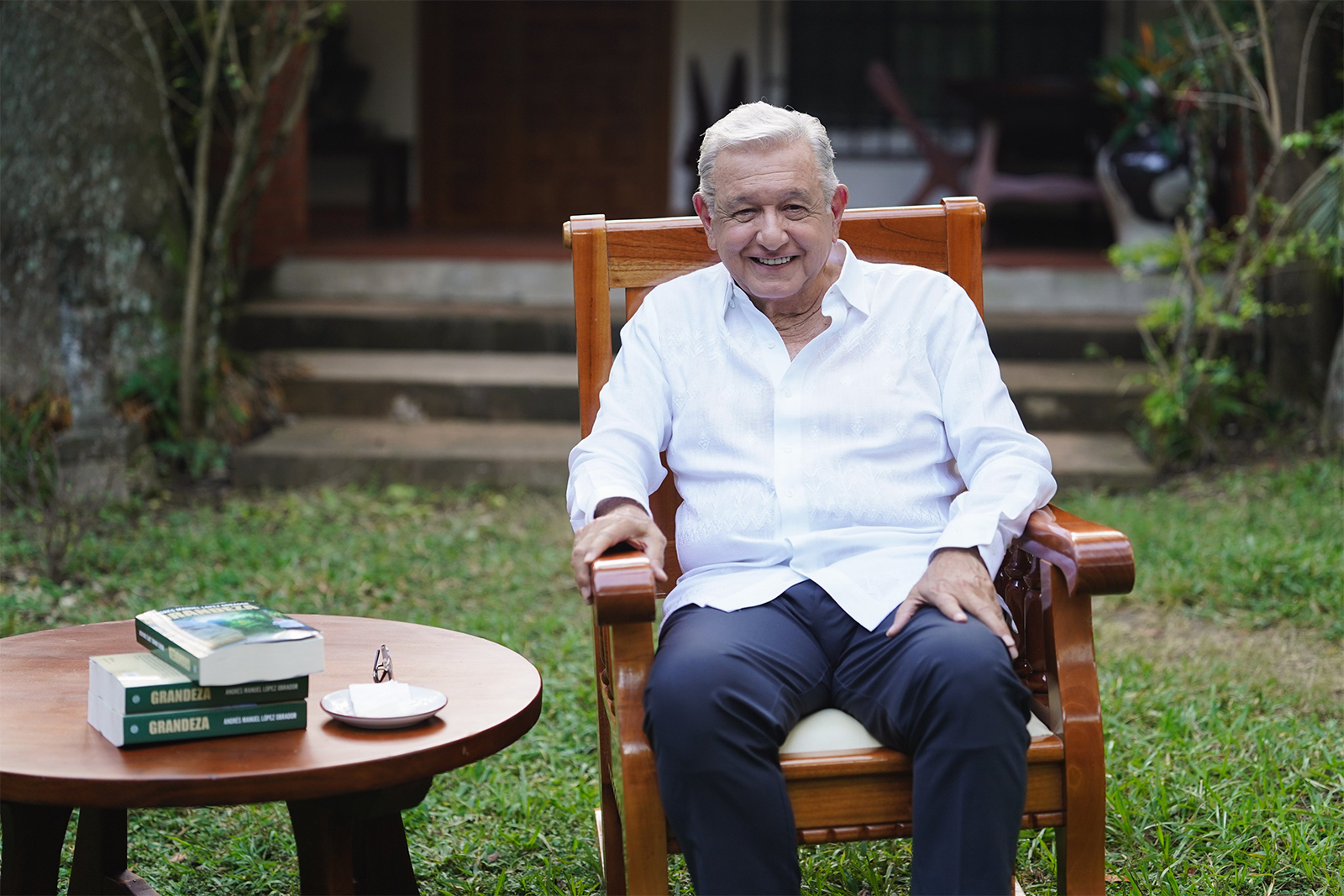
This article originally appeared in the December 1, 2025 edition of La Jornada, Mexico’s premier left wing daily newspaper and contains the introduction to former President of Mexico Andrés Manuel López Obrador’s newest book, Grandeza.
Grandeza, Andrés Manuel López Obrador’s latest book, is a vast effort to give Mesoamerican civilizations their rightful place in a version of world history written from a Eurocentric perspective that remains dominant in contemporary culture. It is also a vindication of the social and ethical legacy of the peoples of the Americas, their centuries-long resistance, and their enduring relevance today.
Based on a vast compendium of references from different eras, López Obrador’s new book also explores the mechanisms that underpin the stability and splendor of cultures, as well as the factors that lead to their decline. The author posits that civilizational continuity resides fundamentally in the people, and that the ruling elites are primarily responsible for periods of instability, war, prostration, and dissolution.
One of the common threads of the two volumes – Gloria will be published next year – is the denunciation of racism and the desires for domination and plunder, attitudes that contaminate a large part of the historiography, sociological literature and even scientific texts of the West.
The ambitious overview begins with the origins of the human species, goes through the formation of the first known sedentary societies, explores the Egyptian, Babylonian, Persian, Indian, Chinese, Jewish, Greek and Roman cultures, and analyzes the rise of Christianity, the values it brought to humanity and its conversion into a state ideology, which produced some of the darkest episodes in history.
The former President carries out a meticulous account of the emergence of American civilizations, from the settlement of America – which was the true discovery and the true conquest of the continent – to the European invasion, and then exposes the historical slander built up over centuries against those civilizations: if the Spanish empire was the victim of a Black Legend concocted by Anglo-Saxon intellectual circles, it engaged in a similar defamation against the peoples it defeated, massacred, and subjugated for a long time.
Introduction
The intention of this analysis is to demonstrate that the best ethical principles and the goodness we possess as a people and a nation stem from what we inherited from the great civilizations of pre-Hispanic Mexico. To prove this hypothesis, I relied on the work of anthropologists, sociologists, historians, archaeologists, and other social scientists, as well as experts in biology, physics, and astronomy. I also consulted specialists in both the interpretation of codices and the translation of hieroglyphs, and in the study of traditions and customs. All of this is complemented by the modest addition of my years of experience working in Indigenous communities and the understanding of popular thought and the most intimate feelings I gathered throughout my travels in communities and cities across the country.
This is the main reason why I am writing this book: to explain how these pernicious and inhuman prejudices were conceived, penetrated, and seek to remain in so many people, and how they have persisted throughout our history.
With this book, I intend to reclaim the enduring relevance of Mexico’s deep-rooted traditions and its original civilizations—subjugated and denied, as described by the scholar Guillermo Bonfil Batalla. I consider it an act of ingratitude not to acknowledge that, thanks to these roots and teachings, Mexicans today are free, fraternal, hardworking, honest, and happy. It is because of these blessed cultures that our country has withstood all kinds of calamities, and its people, though they may falter at times, always rise again and stand tall to continue their journey toward the future.
That is why it is paradoxical and absurd that discriminatory attitudes persist, or to claim that there is a supposed superiority of “races” and social classes, when we should be infinitely grateful and proud to be what we are: custodians of a legacy of prodigious and exemplary moral and spiritual values.
The stigma of masochism and an inferiority complex was imposed by the Spanish invasion, persisted in Independent Mexico, was revived by the Francophilia of the elite in power during the Porfiriato, and is still latent in the essence of conservative thought today: naco, chairo, chinto, indio, pata rajada, indita, inculto, tonto, ignorante, maloliente, raspa, liso, muerto de hambre, pobre diablo, flojo, don nadie and other epithets have as their only explanation how profound the mental colonization and mass manipulation, implanted by the dominant oligarchy in any era, has been.
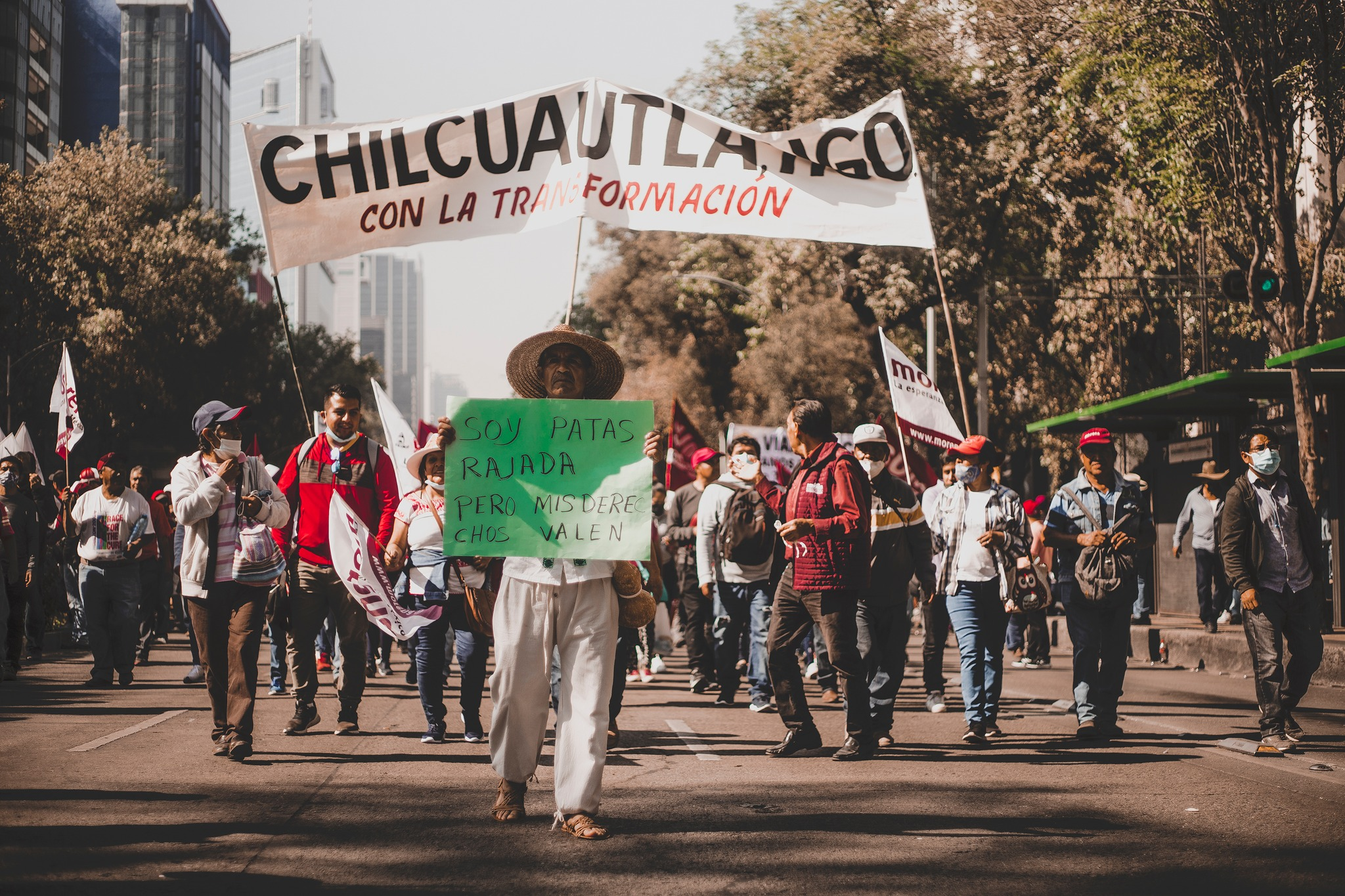
This is the main reason why I am writing this book: to explain how these pernicious and inhuman prejudices were conceived, penetrated, and seek to remain in so many people, and how they have persisted throughout our history despite such profound and radical movements as Independence, the Liberal Reform, and the Mexican Revolution, specifically with the changes registered during the Cárdenas administration and, recently, with the emergence of a collective consciousness never before seen in our country, promoted by the Fourth Transformation of public life in Mexico.
The intention, therefore, is to refute the invented or biased history based, among other aberrations, on attributing to the Indigenous peoples of Antiquity supposed practices of human sacrifice, cannibalism and other such practices and, on the contrary, with evidence and arguments, to make known and exalt the greatness of the splendid Mesoamerican civilizations that have maintained Mexico as a cultural power in the world.
To arrive at the main topic with the necessary background and additional elements, I decided to begin this work with a fascinating and complex analysis of the origins of the world, nature, religions, ancient civilizations, empires, tyrannies, and, of course, humanity, which, regardless of sex, gender, and physical characteristics, has proven to be good and virtuous. According to the most classic definition attributed to Cicero: “Man occupies the center of the universe, stands upright to admire the heavens [and] to know the divine, has the gift of speech unlike animals, and aspires to live in a civilized society, [based] on justice, as the master, in short, of a creation which, in turn, he cares for and respects.”
The second part of the book deals with how the only constructive invasion recorded in America took place: the arrival of Homo sapiens to these lands approximately 20,000 or 40,000 years ago. I will then refer to the emergence of the civilizations of the pre-Hispanic era; subsequently, I will address the topic of the so-called Conquest, as well as that little-known period of almost three centuries known as the Viceroyalty; finally, I will demonstrate that the best of Mexicans today we inherited from our glorious past.
I think you’ll find that last part more appealing. It’s the part I find most captivating, perhaps because it’s the most personal and intimate, or maybe because of Balzac’s assertion that “there’s nothing like […] the peasants, the people of the provinces, to study their affairs thoroughly in every sense.” As always, I’m grateful to Pedro Pablo Martínez, Pedro Miguel, and, of course, Laura, Laurita Nieto, for their support in the analysis, review, correction, and assistance in preparing this work. I hope it contributes to the discussion and that you enjoy it.
-
Camino Rojo: Impunity & Reluctance
What special privilege do mining corporations (both national and foreign) enjoy in Mexico, where they get away with everything, even in these times when the law is supposed to be applied equally without exception?
-
Orla Mining: Investigate & Clarify
If it is confirmed that the Canadian mining company hired criminals to persecute its workers, the sanction cannot be limited to an administrative procedure, as this would allow companies to normalize fines as just another operating cost.
-
People’s Mañanera April 10
President Sheinbaum’s daily press conference, with comments on electoral reform, Barcelona reformist summit, electoral auditing, the economy, World Cup and former Michoacán governor Silvano Aureoles’ arrest warrant.