Because Women’s Bodies Belong to Women
My first time was right after high school. No, not THAT first time! I mean the first time I was groped.
I was in an elevator with an elderly elevator operator who was about half my size. When the doors closed, he grabbed me — as Misogynist-in-Chief Trump would say — “by the pussy.” I was too stunned to stop him. I didn’t report it.
As Fabiola Ramirez tells us, strangers transgressing women’s bodies in public places happens “everything everywhere all at once.” That movie title says it all. A guy behind me on a crowded escalator. Next to me on a bus where riders are packed like sardines. Two of us alone in the office. We women say nothing because it’s useless. Others avert their eyes: “I see nothing going on here!”
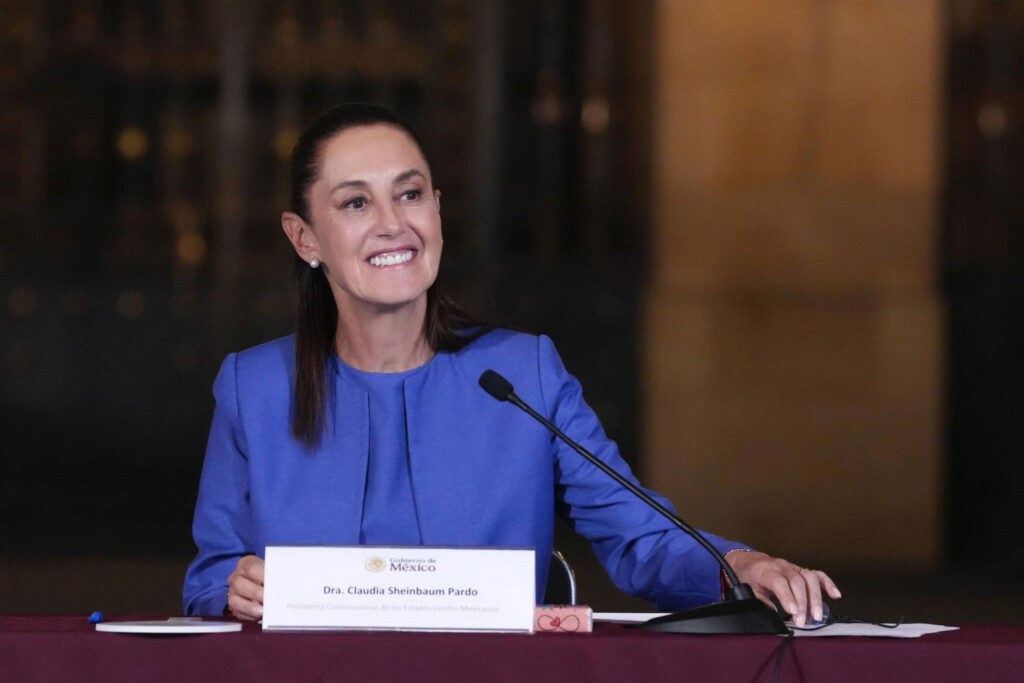
Mexico was shocked/not shocked when their president, Claudia Sheinbaum, was groped in the middle of a street, in the middle of the day, in the middle of a crowd, in the middle of cellphone cameras. No matter our position or social status, to many men, any woman is an object they are free to touch.
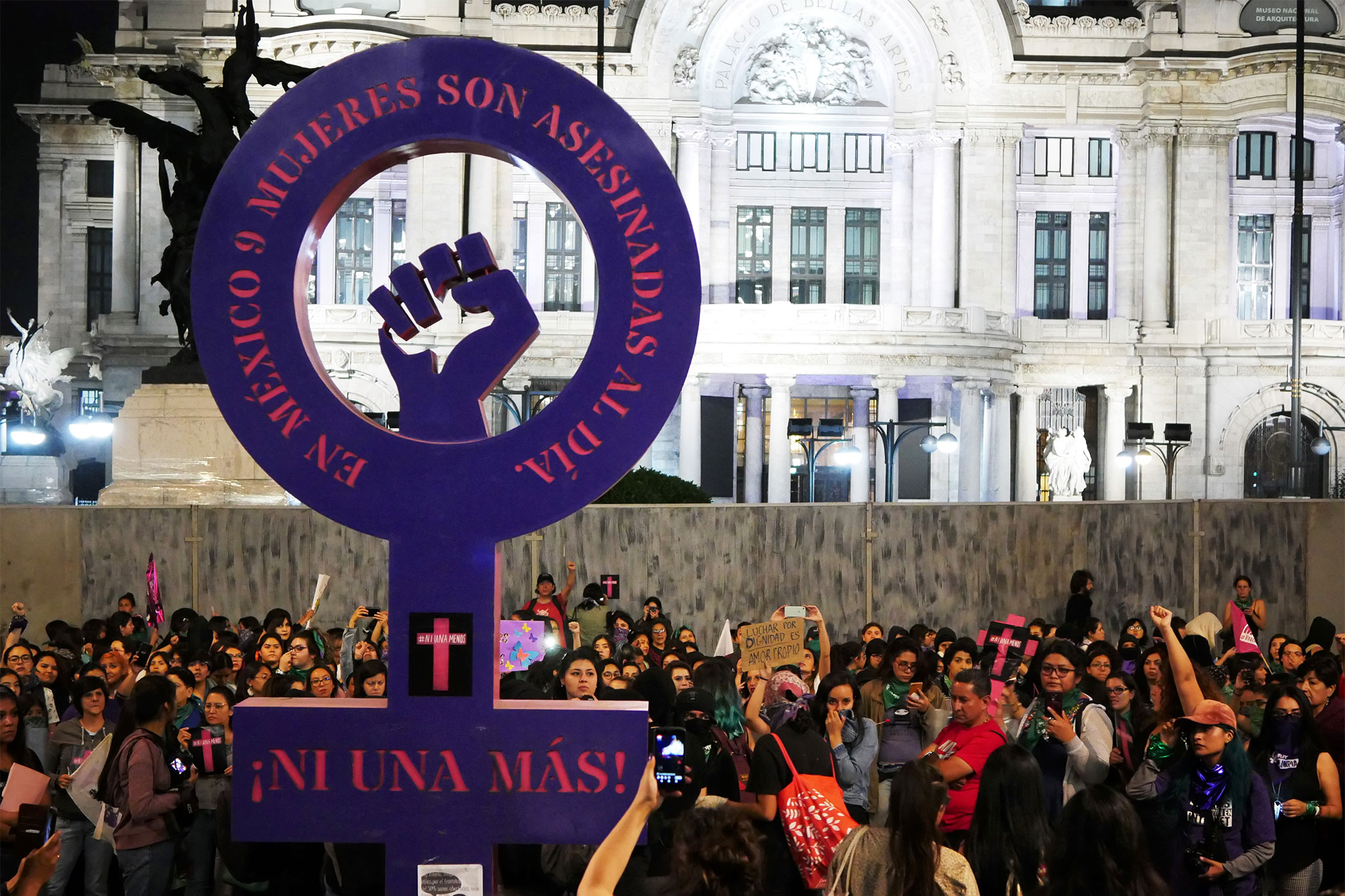
Feminists in Mexico and the US have been demanding for decades that the government take sexual harassment seriously. What will it require for women to simply walk to the store or ride a bus to work without the fear that their bodily autonomy will be breached at any moment? Hmm, what if women began grabbing random men by the balls in public? Would that get attention?
And we haven’t even gotten to domestic violence or femicide.
Women’s equality isn’t something to be kept waiting on the back burner. To achieve Mexico’s 4th transformation, or any social transformation, requires action. No one can be free until women are free.
Fabiola Paulina Ramírez Ortiz brings an intersectional feminist perspective to her work as a human rights defender, union organizer, grassroots educator, policy designer and advocate. She has spearheaded equality and non-discrimination campaigns in community, workplace and government settings. She’s worked with the Mexico City Council to Prevent and Eliminate Discrimination, the National Human Rights Commission, and the National Electoral Institute. She also has provided direct support for victims of violence, and founded Mariposas Mirabal, a space for listening and shared learning for women in precarious employment.

What do you think of Claudia’s reaction after a stranger groped her in public?
Even though Claudia is Mexico’s first woman president, a stranger publicly and inappropriately touched her in the middle of a crowd in broad daylight. I found it outrageous and revictimizing when I heard some people deny what happened — despite videos and numerous witnesses — saying it was just a show, that Claudia planned it. As proof that it was staged, they noted that after it happened, she kept smiling! She took several days to file a complaint, and some said that showed her weakness, that we’re not ready for a female President.
In fact, she had a completely normal reaction to assault. Women often don’t speak up until after they’ve had time to consider the consequences for themselves, the aggressor and their own families.
An assault victim owes no one “ideal” behavior. It’s a fundamental principle to never pressure women who experience violence to file a report. For Claudia, filing an official complaint was necessary and right; as President, she didn’t want to perpetuate the normalizing of these behaviors.
The world expects women leaders to do everything perfectly — but not men. In 1848, when President Santa Anna lost the war against the United States and relinquished half of Mexico’s territory, no one said, “Enough is enough! No more male presidents!”
During the first nine months of 2025, 1,194 reports of sexual harassment were filed in Mexico City, an increase compared to 2024.
Have you ever been groped in public yourself?
Absolutely, I can assure you that we’ve all experienced it. The first time I saw it was while walking home from middle school, and a boy riding a bike touched my friend’s butt. Harassment mostly happened to me on public transportation. One time, I was on my way to high school on a packed bus. I felt something but wasn’t sure if I was being touched. A young woman was watching and called me over as if she knew me and pulled me away from him. So, I learned from a young age both that men feel free to invade our bodies and that women together can protect each other.
It’s important to distinguish between sexual violence occurring in private versus public spaces. In private spaces, the perpetrator is usually someone the victim knows, but in public spaces, he’s generally a stranger. According to a National Security survey, during the first nine months of 2025, 1,194 reports of sexual harassment were filed in Mexico City, an increase compared to the previous year. According to a parliamentary report, of those incidents, 64.8% occurred in public streets or parks and 17.8% on public transportation.
But these are only the official reports!
Most women don’t report incidents, some due to lack of awareness, others out of fear, but always because it’s unlikely any action will betaken. Unfortunately, sexual harassment, including verbal abuse and groping, has become normalized.
Sexual violence against women, including street harassment, isn’t based on sexual desire. It’s based on control — the exercise of power over women and feminized bodies. As is often said, “If there is someone more oppressed than the worker, it’s the worker’s wife.”
What are some demands that feminists have made to the Mexican government for the protection of women?
First and foremost, we demand that the government take attacks against women and girls seriously. Crimes committed against women simply because they are women or non-binary must be investigated diligently, and the perpetrators must be prosecuted. No more impunity.
We demand investigations with a gender perspective by public servants sensitive to the special circumstances women face in gender-based violence. Investigators should be trained to address crimes against women, with the professionalization of workers in this sector.
Current investigative methods re-victimize women because they often start with the premise that “she asked for it,” with questions like “What were you wearing?” Investigators must understand that daring to report abuse is difficult — even after filing a report, the victim may return to an abuser. This does not invalidate the report!

Instead, they must ask: Why did she return? What other options did she have? Was she offered a safe space? Was there economic and psychological violence that prevented the victim from leaving?
Care should be comprehensive with multidisciplinary teams that include mental health professionals, legal counsel and financial support.
For example, women of Andalusia, Spain, passed a law requiring employers to hold women’s jobs while they are in women’s shelters following incidents of abuse. Here in Mexico, a feminist group, Pan y Rosas (Bread and Roses), is demanding that the government implement a similar law nationwide.
I’ve always maintained that human rights are not mere declarations of goodwill — they demand concrete actions, and actions require funding. We demand that the government impose no budget cuts for women’s centers, shelters, or investigations of crimes against women.
Have measures been implemented to improve women’s safety?
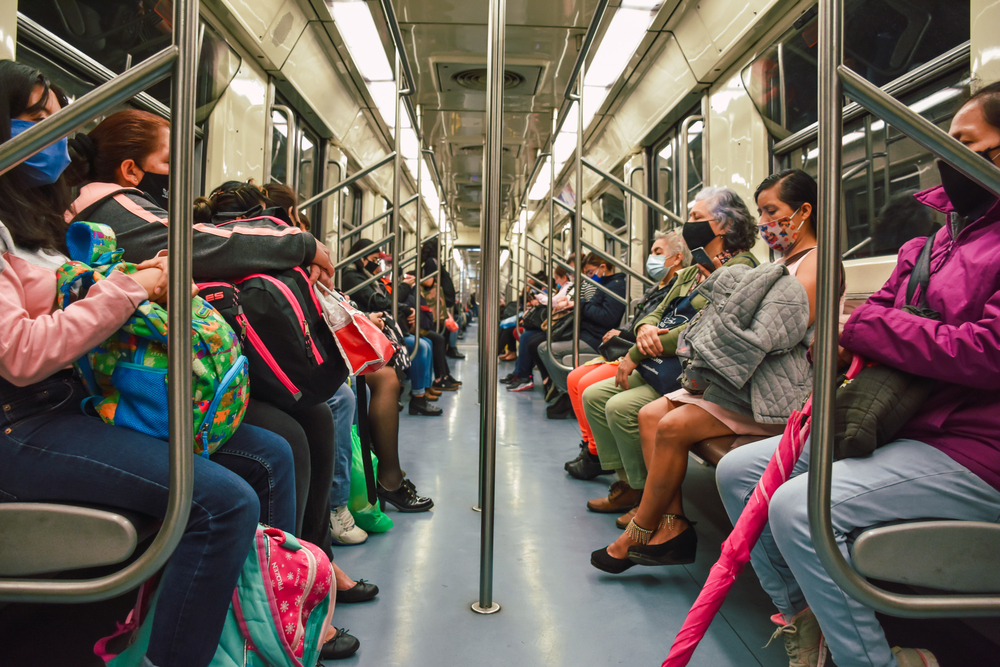
Initiatives to combat violence against women range from very useful to mere charades. For as long as I can remember, Mexico City has had women-only subway cars — and similar “pink seats” on other transit — to reduce sexual harassment on public transportation. And personally, I feel much safer traveling in these spaces.
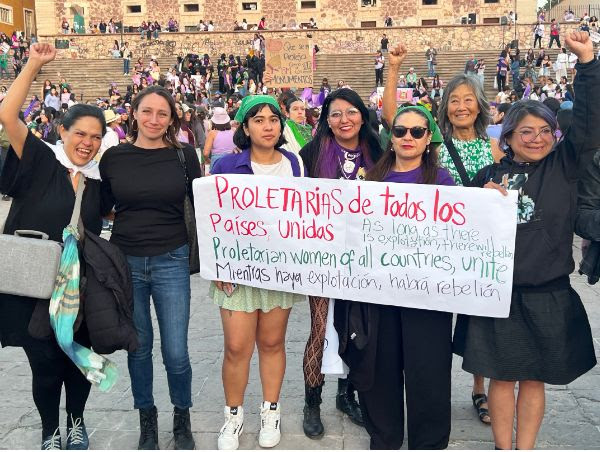
These affirmative measures should be temporary though, and disappear after the inequality has been addressed. But they’ve been in place so many years, it suggests they aren’t seriously reducing sexual harassment on public transportation.
The Alert of Gender Violence Against Women, or AVGMs, are triggered when femicides and disappearances of women exceed “normal” rates and an area is designated as high-risk. Currently, 24 AVGMs are active in 22 of the 32 Mexican states; however, monitoring them is complex, and authorities don’t always report true emergencies. The program only highlights their inaction!
In Iztapalapa, Clara Brugada, as mayor, implemented Walk Safely, a program that included installing streetlights, visible road signs, improvements to parks and creating murals about women’s safety. These definitely improved the neighborhoods’ appearance and increased a sense of security, but these are measures the government should already have been taking simply to improve neighborhoods. These weren’t specifically for the safety of women.
Would men lose if women achieved equality?
The gender binary and sexual violence don’t only repress and oppress women but also LGBTQ+ people and men who don’t conform to masculine stereotypes. If they express tenderness or show tears, heterosexual men are often ridiculed — or worse — usually by other men.
We feminists imagine a world where all people, regardless of gender identity, can live a life more fully than we do currently.
-
Camino Rojo: Impunity & Reluctance
What special privilege do mining corporations (both national and foreign) enjoy in Mexico, where they get away with everything, even in these times when the law is supposed to be applied equally without exception?
-
Orla Mining: Investigate & Clarify
If it is confirmed that the Canadian mining company hired criminals to persecute its workers, the sanction cannot be limited to an administrative procedure, as this would allow companies to normalize fines as just another operating cost.
-
People’s Mañanera April 10
President Sheinbaum’s daily press conference, with comments on electoral reform, Barcelona reformist summit, electoral auditing, the economy, World Cup and former Michoacán governor Silvano Aureoles’ arrest warrant.