Bolivian Attorney General Was Arrested After Investigating Trump-Aligned Operative
This article by José Luis Granados Ceja originally appeared in the October 29, 2026 edition of Drop Site News, an independent, reader-funded news outlet.
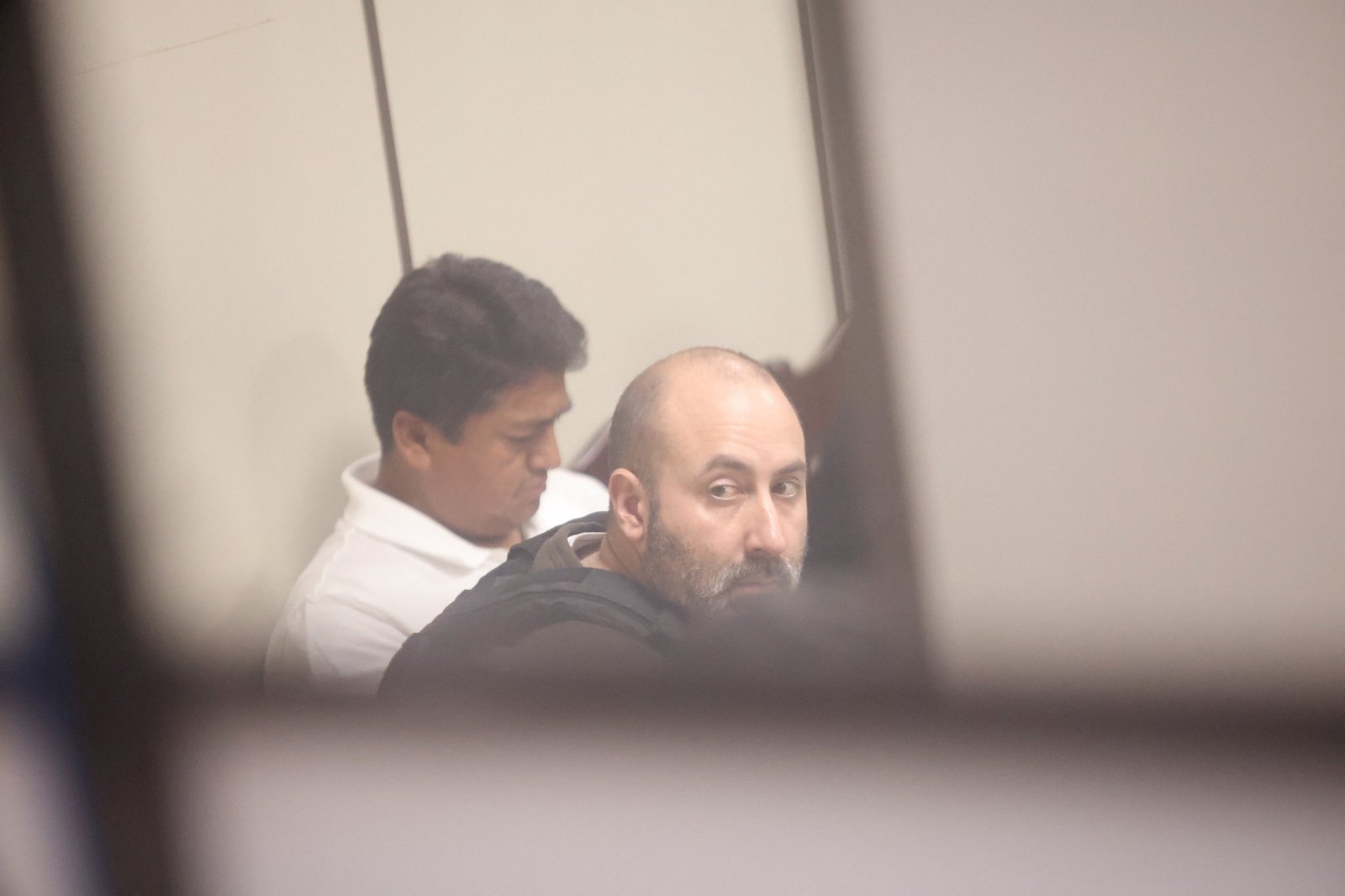
The day after Bolivian Attorney General Roger Mariaca was arrested in late September on drug-trafficking charges, presidential spokesperson José Luis Gálvez called a press conference to thank U.S. Secretary of State Marco Rubio for his support. Then he delivered a warning.
“This has only just begun,” said Gálvez.
Since then Bolivian authorities have moved to silence a leftist news outlet, jailed an opposition lawmaker on terrorism charges, and announced an investigation into former President Evo Morales.
Before his arrest Mariaca had been investigating Fernando Cerimedo, the MAGA-affiliated Argentine political operative after allegedly hiring a hitman to kill his pregnant ex-girlfriend, Nadia Beller. Cerimedo, who was a top aide of President Rodrigo Paz, was also being investigated for drug trafficking.
Beller told Drop Site she expects to be arrested by Bolivian authorities as soon as Friday. She said government sources had warned her that she would be charged with failure to report Cerimedo’s drug trafficking and election interference. She said the Ministry of Government planned to “build a case against me to persecute me and intimidate me, and in this way exonerate [Cerimedo], dismiss all charges against him and absolve him of all responsibility.”
Mariaca’s ouster sidelines a figure who had become a political problem for the Paz government, and serves as an example of how the selective prosecution of individuals accused of links to organized crime works to advance U.S. interests in the region.
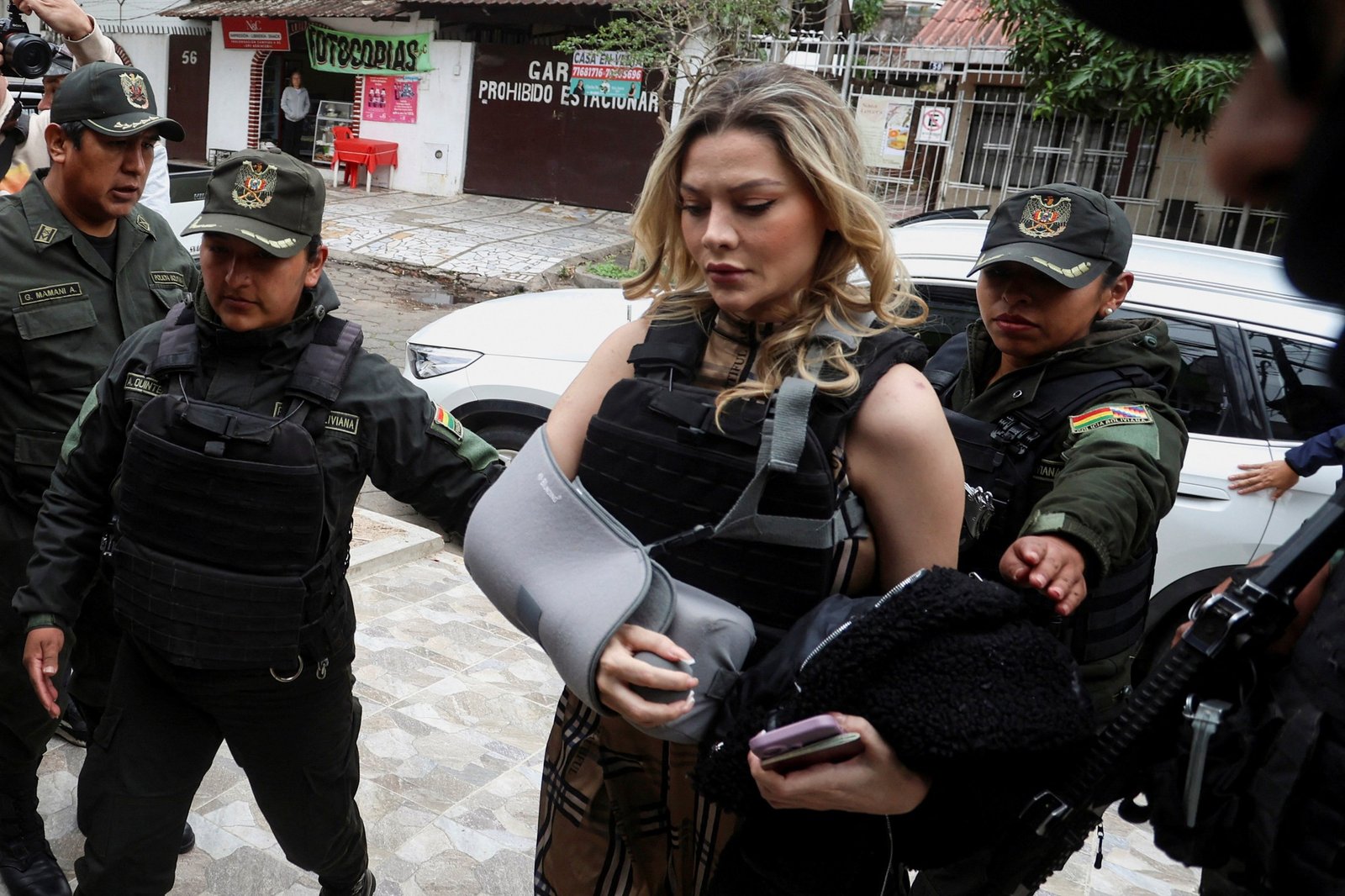
On September 28, two days before Mariaca’s arrest, the United States sanctioned him and revoked his visa for “involvement in significant corruption,” including allegedly “soliciting and accepting bribes to facilitate narcotrafficking,” helping “violent criminals evade justice,” and “undermining” Bolivia’s democratic institutions.
“I think it is important that if crimes have been committed they must be investigated and sanctioned, but his arrest, as it has happened, ignores all legal procedures and guarantees of due process,” Canela Crespo, a Bolivian lawyer and political analyst, told Drop Site.
Gálvez later told CNN in an October 6 interview that the timing of Mariaca’s arrest was merely a “coincidence” and that the investigation had been ongoing since the March arrest of Uruguayan drug trafficker Sebastián Marset.
The charges against Mariaca center on his association with Marset, whom the former attorney general is accused of protecting through high-level bribes and leaked intelligence. On the night of his arrest, an ambulance attempting to leave Mariaca’s residence was stopped with approximately $300,000, in both the local currency and U.S. dollars, and prosecutors claim they have financial intelligence linking him to drug trafficking networks.
Prior to his arrest, Mariaca vehemently denied U.S. allegations regarding ties to drug trafficking and claimed they were driven by political interests linked to his ongoing investigations.
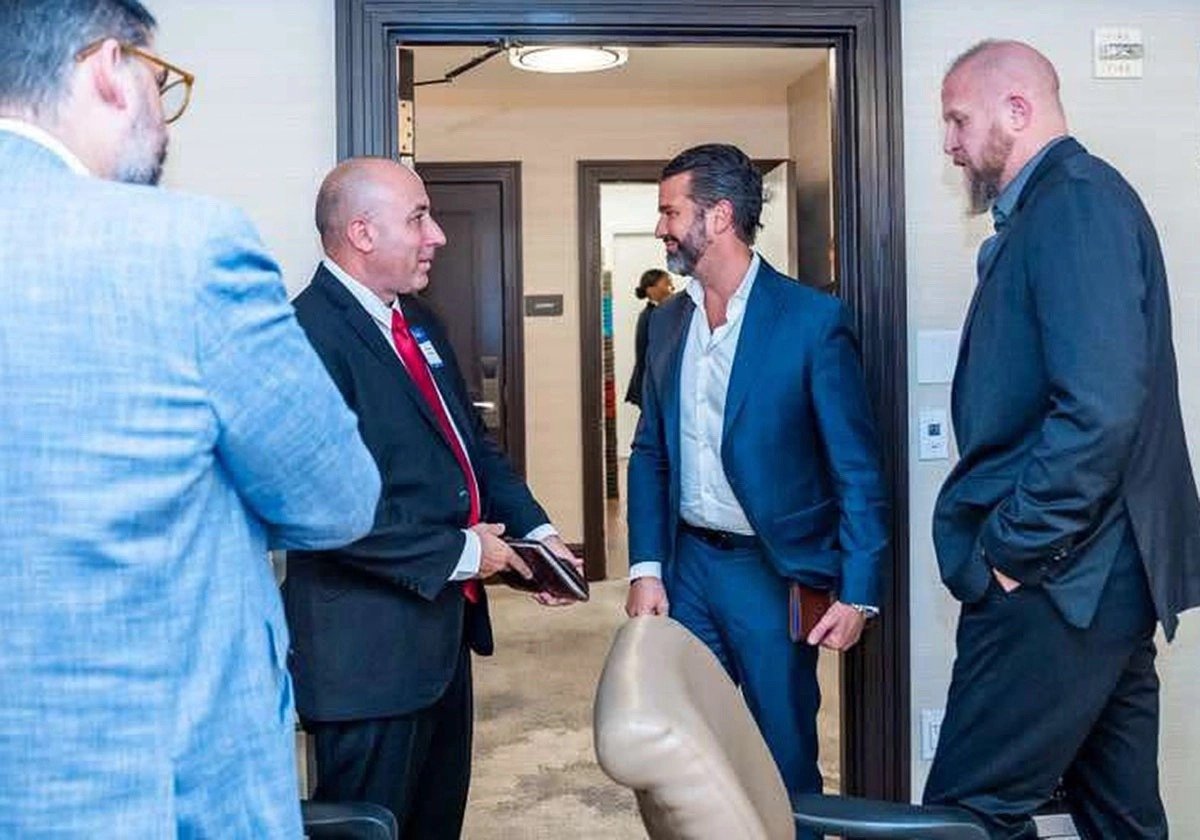
Beller, who has spoken out publicly about her former partner’s political activities throughout the region, told Drop Site that she believed the Trump administration was involved in the decision to arrest Mariaca due to his investigation into Cerimedo, who had ties to U.S. political figures such as Brad Parscale and Donald Trump Jr. In September, shortly before Mariaca’s arrest, she posted a photo of Cerimedo, Trump Jr., and Parscale to her Facebook page.
Bolivian Vice President Edmand Lara Montaño—who has publicly broken with Paz—leaked audio that allegedly captures Cerimedo negotiating payments for aircraft linked to drug trafficking operations.
Beller alleges that the Paz government acted over concerns that Mariaca’s investigation could potentially reach the highest levels, including government ministers and even Paz’s wife, María Elena Urquidi.
Following Cerimedo’s arrest, Lara’s legal team accused Urquidi of involvement in drug trafficking offenses, but prosecutors eventually opted to exclude her from their investigation.
Beller accused Bolivian government authorities of deliberately stalling and derailing the investigation into the assassination plot after her scheduled testimony as a protected witness was abruptly suspended.
“They want to protect their allies, there is no other explanation,” Beller told Drop Site.
Crespo said the arrest of Mariaca is not only linked to an effort to impede investigations into Cerimedo’s alleged criminal activities but to gain control over the country’s prosecutor’s office.
U.S. interference and the actions of the Rodrigo Paz government seek first to deconstruct the judicial system as it is and to put their own pawns. What you have to ask is what power structure is being disassembled, and above all, what power structure intends to be installed in its place.
Canela Crespo, Bolivian lawyer and political analyst
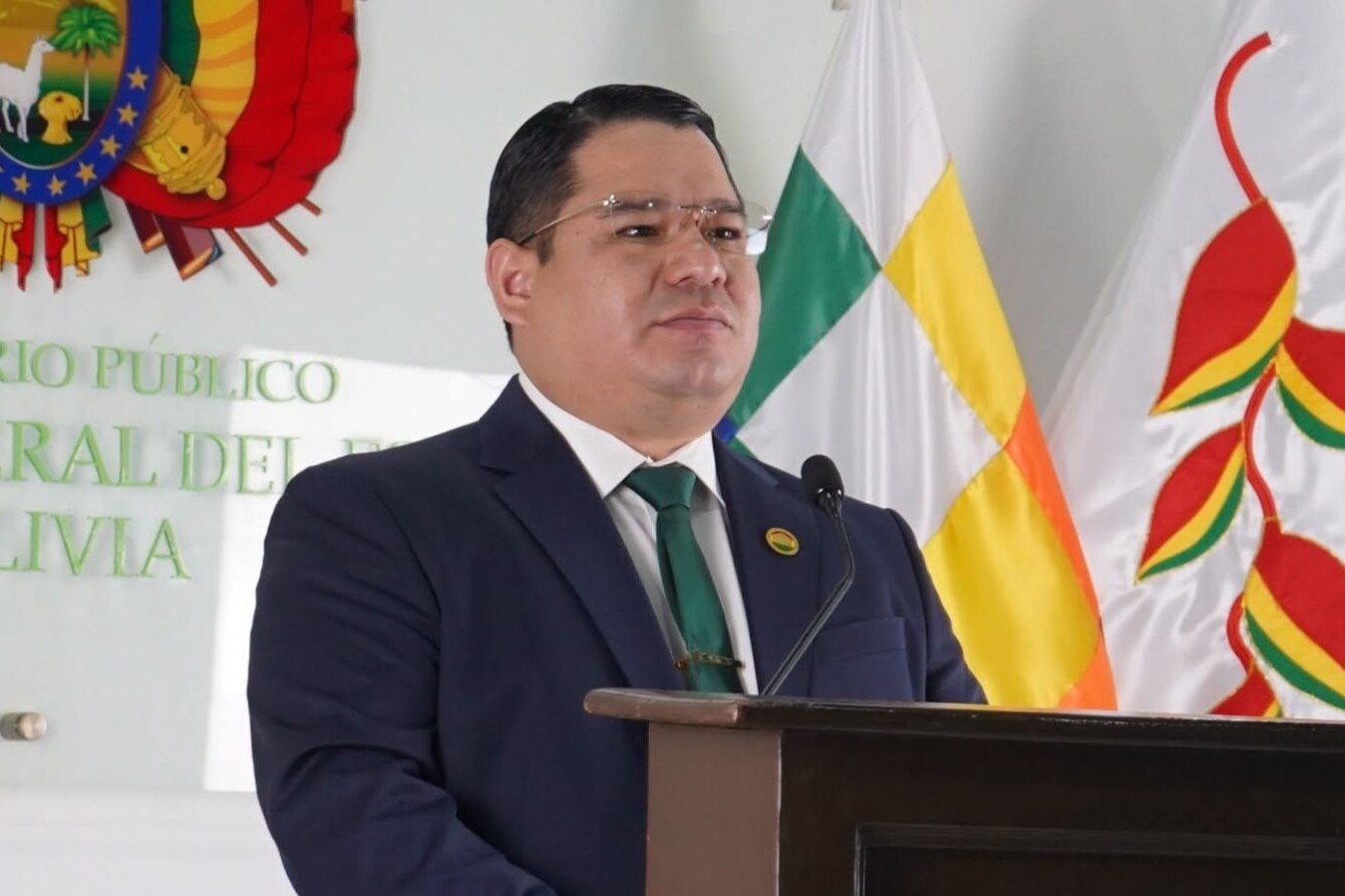
Mariaca, appointed in 2024 during the tenure of former president Luis Arce, had investigated politicians across the political spectrum, including supporters of Evo Morales, Paz’s political rivals.
Kathryn Ledebur, director of the Andean Information Network and an expert on Bolivian politics, told Drop Site that Mariaca had become a “problem” for the Paz government.
“He had been useful for a certain amount of time, but his arrest and prosecution of Fernando Cerimedo was very uncomfortable,” said Ledebur.
Bolivia’s Plurinational Legislative Assembly moved quickly to select Mariaca’s replacement, naming José Armando Urioste as acting attorney general. Urioste is behind the push to prosecute Morales and former Vice President Álvaro García Linera over the deaths of three European citizens at the hands of police in 2009.
Mariaca’s investigation into Cerimedo, who worked closely with the president, threatened to further destabilize an already weakened government that had been rocked by corruption allegations and intense protests in June and July over Paz’s neoliberal economic policies.
Ledebur told Drop Site that in addition to worries about what Mariaca’s investigation could reveal about high-level connections to drug trafficking, the Paz government was also motivated by their desire to secure stability ahead of a politically volatile time in Bolivia.
“They’ve illegally extended a state of emergency that limits freedoms guaranteed by the constitution, and we’re at a point in time where they’d need to push through some major legislation that could significantly affect land tenure rights, indigenous rights, and all sorts of guarantees that were provided in the 2009 constitution,” said Ledebur.
Social unrest in Bolivia tends to pick up in late October, after the planting season, when highly organized indigenous communities can turn their attention to their social demands, Ledebur explained.
The ouster of Mariaca and the derailment of his investigation into sensitive topics gives the Paz government room to operate as it attempts to push through unpopular reforms.
“I think what we’re seeing is they’re cleaning house to have a judiciary that responds to their interests and their needs, and to make sure that when gross human rights violations occur, when these violations of due process and the Constitution continue, that there is nothing in the judicial branch that would impede those actions or slow down this process that they seem to have planned in advance,” Ledebur told Drop Site.
Selective Prosecutions
Following Mariaca’s arrest, U.S. Secretary of State Marco Rubio and Deputy Secretary of State Christopher Landau issued statements of support. A total of 15 countries that form part of President Donald Trump’s Shield of the Americas initiative also issued a joint statement affirming their solidarity with Bolivia following the arrest of Mariaca.
The U.S.-led Shield of the Americas was launched in March, 2026 to coordinate counternarcotics activities in the region and has quickly evolved into a political alliance of countries allied with the U.S. agenda.
Since Trump’s return to office, U.S. policy in the region has been largely dictated by the stated U.S. interest in combating “narco-terrorism.” The kidnapping of Venezuelan President Nicolás Maduro was justified as a “law enforcement operation” in connection to a drug-trafficking indictment.
Yet the Trump administration has also sought closer ties to regional leaders who face credible allegations of ties to drug trafficking. As part of his efforts to help secure a win for the right-wing National Party in Honduras, Trump pardoned former President Juan Orlando Hernández after he was convicted by a New York court of trafficking drugs into the U.S. And Ecuador’s President Daniel Noboa, whose family shipping business has been used by Balkan drug traffickers to transport cocaine, has emerged as one of Washington’s closest allies. Noboa has used the fight against organized crime to justify a state of exception in his country and used this narrative to pursue his political opponents, including former presidential candidate Luisa González, who was recently jailed.
Crespo said the Paz government’s embrace of Washington’s drug trafficking narrative also serves similar ends.
“In the Bolivian case, very clearly, very evidently, it points to the leadership of Evo Morales, but not only his, but also that of social leaders, indigenous peasant leaders, and the political persecution against those of these leaders is based on this narrative of the presence of drug trafficking,” Crespo told Drop Site.
Benjamin Fogel, deputy director of the Alameda Institute, told Drop Site that the U.S. strategy of using the fight against drug trafficking to advance U.S. interests in Latin America has deep historical roots.
“This has been the pattern since [the Nixon administration] in Latin America: selective prosecution, selective use of threats, and selective application of ever-expanding laws to stop the threat of drug trafficking has been a means to manipulate, intimidate, and in effect, intimidate various governments and protect interest of the United States and its allies,” Fogel told Drop Site.
Since his election earlier this year, Colombia’s Abelardo de la Espriella, who once served as lawyer for notorious Colombian paramilitary leaders and drug traffickers, has sought to strengthen his country’s ties to Washington and invited U.S. troops into the country to directly participate in operations, a move that Fogel says would run afoul of the Colombian constitution.
Fogel points out that the U.S. strategy of selective application of counter-narcotics strategy has significant limitations, especially in the case of countries with greater state capacity like Mexico and Brazil.
In the case of Mexico, where President Claudia Sheinbaum has refused to accept U.S. operations, former Chihuahua Attorney General Cesar Jáuregui has been charged with treason for illegally permitting CIA agents to participate in an operation.
Most recently, the U.S. extended a visa to former Brazilian presidential candidate Jair Bolsonaro to allow his entry into the country after he fled Brazil to avoid a money-laundering investigation.
“This is security slop. None of these policies are actually coherent,” said Fogel.
Joseph Bouchard and Camila Lourdes Galarza contributed to this report.
-
Giant Zócalo Catrina Achieves Guinness Record and Pays Tribute to José Guadalupe Posada
Clara Brugada said the 33-meter papier-mâché figure mocks vanity and classism, recalling that in death there are no titles, surnames or fortunes.
-
People’s Mañanera October 30
President Sheinbaum’s daily press conference, with comments on electoral contracts, Day of the Dead, the 1988 fraud, and the CEU.
-
In One Year, Junk Food Was Eradicated From Mexico’s Schools
Education Secretary Mario Delgado says the government has not lost one of the 139 injunctions filed by transnationals, as opposition deputies mocked his TikTok.