
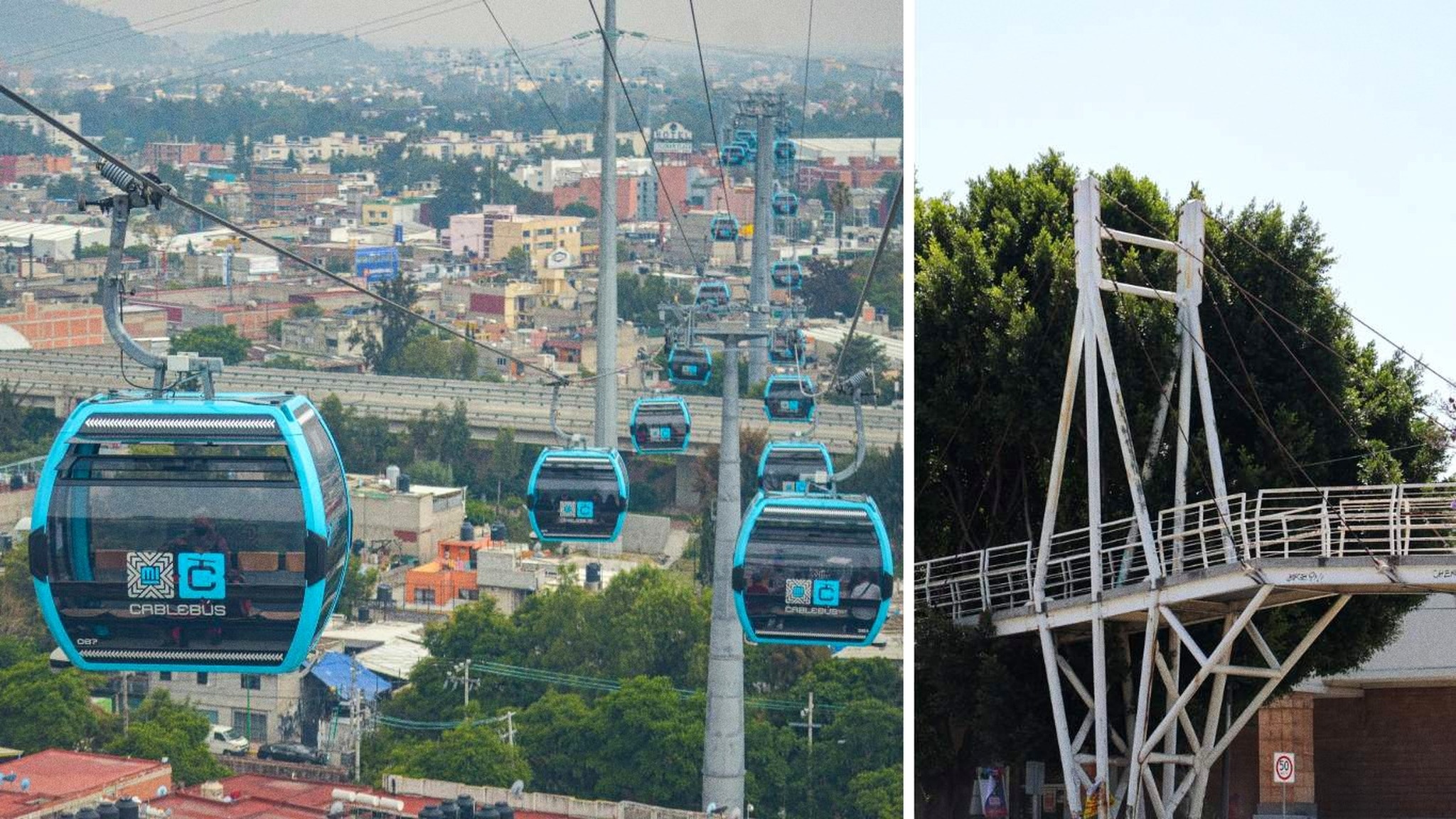
Direct Social Dialogue and Not Dismissing Criticism, Key to the Cablecar in Puebla: Sheinbaum
This article by Yadira Llaven Anzures originally appeared in the July 2, 2026 edition of La Jornada de Oriente, the Puebla-based affiliate of Mexico’s premier left wing daily newspaper.
President Claudia Sheinbaum Pardo affirmed this Thursday that dialogue and social concertation are a fundamental pillar of public administration, in the face of the working groups and the criticism of mobility projects in Puebla, such as the cablebús in Puebla and the new bike lanes.
“In this case it is a project of the Puebla government and they have to be open to dialogue,” she noted, after emphasizing that attending to social demands is a local obligation.
During the morning press conference, the federal leader admitted that the collectives’ grievances must not be dismissed. “What matters is dialogue. They are good projects, but in some cases they often generate legitimate demands from the people, and these must be attended to,” she declared.
When asked how governments should strengthen citizen participation in the face of the opposition that these mega-projects tend to arouse, Sheinbaum Pardo drew on her track record as Head of Government of Mexico City to illustrate the complexity of these processes.
She recalled that, both during her time as Secretary of the Environment, coordinating the Segundo Piso del Periférico in the government of Andrés Manuel López Obrador, and during her period as Head of Government, the socialization of the projects required hundreds of assemblies to mitigate neighborhood rejection.
“We must have personally held around 400 assemblies back then. When, as Head of Government, we carried out the cablebús project here in Mexico City, there were also various problems, and they were being addressed little by little,” she said.
Sheinbaum insisted that “what matters is dialogue,” endorsing that both the cable transport system and the new bike lanes are good projects for the people of Puebla, as long as citizens’ concerns are addressed.
The Tren Maya, a Federal Benchmark for Public Consultation
To elaborate on the consultative approach that, she said, her administration promotes, the head of the federal Executive used the consolidation of the Tren Maya as a recent example that social consensus is possible even in projects of great regional impact.
“The Tren Maya was built and there were a great many assemblies, public consultations, Indigenous consultations, and a lot of investment in the communities,” she highlighted.
Her statement comes amid a scenario of tension in Puebla, where the government led by Alejandro Armenta Mier has projected a reconfiguration of urban mobility through the cablebús in Puebla and new bike lanes.
Cyclist collectives, citizen organizations, and residents of various thoroughfares have expressed their concern and have opened channels of institutional criticism over the environmental impact, the transparency of the bike-lane routes, and the possible heritage damage that the cable transport could generate in residential areas.
Although the local authorities, through the Undersecretariat of Mobility, have established working groups to hear the activists’ proposals, the president made clear that the success and permanence of the state projects will depend on the capacity of Puebla’s officials to resolve the conflicts “little by little” through the democratic path and direct dialogue with the population.
-
Thousands Demand Clean Water in Jalisco and Lemus Uses It to Repress Them
In Jalisco, governed by the opposition party Movimiento Ciudadano, police met the march with water cannons and tear gas, and protesters reported arrests and two people disappeared.
-
Hurricane Simon Paralyzes Towns and Highways in Jalisco Amid Forecast That It Will Make Landfall
With an erratic path, the Category 4 storm keeps the coast shut in under nonstop rain, though no casualties have been reported so far.
-
Mexican Book Fairs
“Book fairs in Mexico are among the great gatherings that speak of how a people nourishes itself on books,” observes Poniatowska.