Mexico’s Electoral Institute Under Lorenzo Córdova Implicated in USAIDgate
This article by Aníbal García Fernández originally appeared in the November 25, 2026 edition of Contralínea, a Mexican investigative journalism magazine.
The portal of the defunct USAID has published nearly 300 documents containing internal files, emails and agency analyses that account for millions in funding for media-related activities. The files include emails with companies such as Meta, Google, YouTube and WhatsApp, and even millions in funding to counter Russia and China. In addition, one of the documents reveals indirect funding to the INE during Lorenzo Córdova’s tenure.
Following the closure of USAID by Donald Trump, many non-governmental organizations, foundations, institutions and media outlets around the world were left without funding. Now, the portal of the defunct USAID has published nearly 300 documents containing internal files, emails and agency analyses that account for millions in funding for media-related activities.
Among the files are emails with transnational corporations such as Meta, Google, YouTube and WhatsApp, and even millions in funding to counter Russia and China. In addition, one of the documents reveals indirect funding to the National Electoral Institute (INE) during Lorenzo Córdova’s tenure.
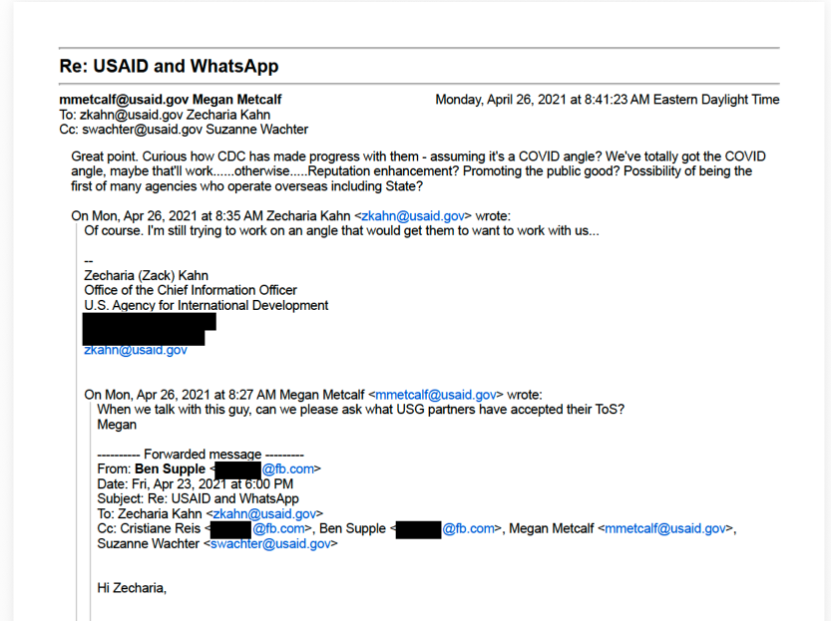
An example of the close collaboration between USAID and the digital corporations are the emails exchanged by Ben Supple—a former Meta executive who, between May 2020 and August 2023, served as global director of partnerships with the public sector and nonprofit organizations for Meta Business Messaging (WhatsApp, Messenger and Instagram)—with Zecharia ‘Zack’ Kahn, former acting director of IT operations at USAID and current chief information officer of the Smithsonian Institution. The latter is an expert in information technology modernization, cybersecurity and digital strategy.
Lorenzo Córdova’s INE, IFES and USAID
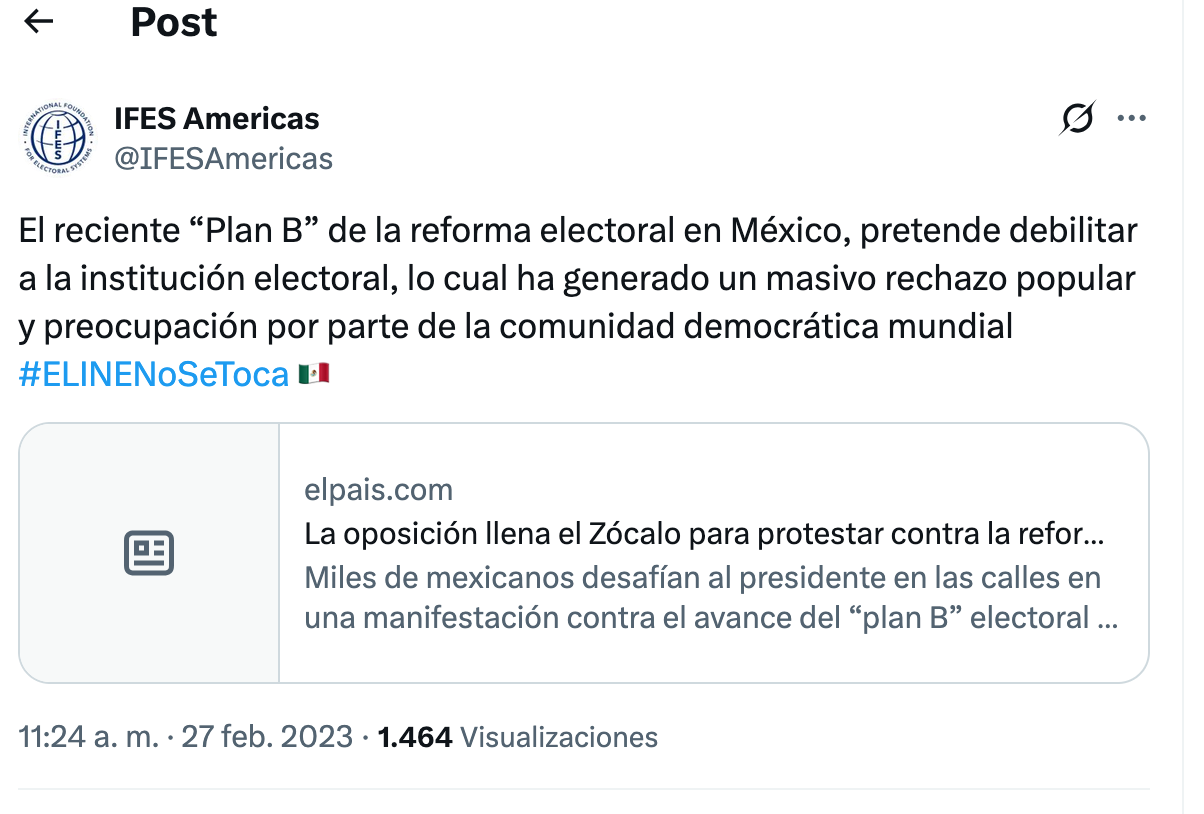
In the declassified files, one of the categories is the fight against what USAID—under the Joe Biden administration—called disinformation. Under that category, a file from the International Foundation for Electoral Systems (IFES) dated August 2019 was revealed, titled “Social Media, Disinformation and Electoral Integrity.”
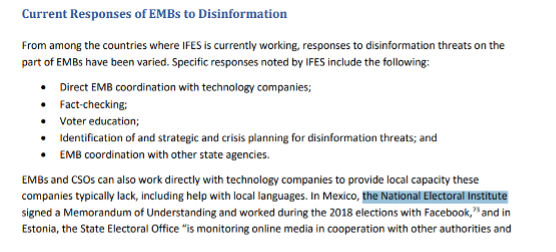
That text contains a section titled: “Current Responses of Government Emergency Bodies to Disinformation,” which details the top-down guidance from IFES to government bodies. Among the things that IFES achieved in the countries where it has a presence, including Mexico, is “direct coordination of government bodies with technology companies; fact-checking; voter education; identification of disinformation threats and strategic and crisis planning to address them; and coordination of government bodies with other state bodies.”
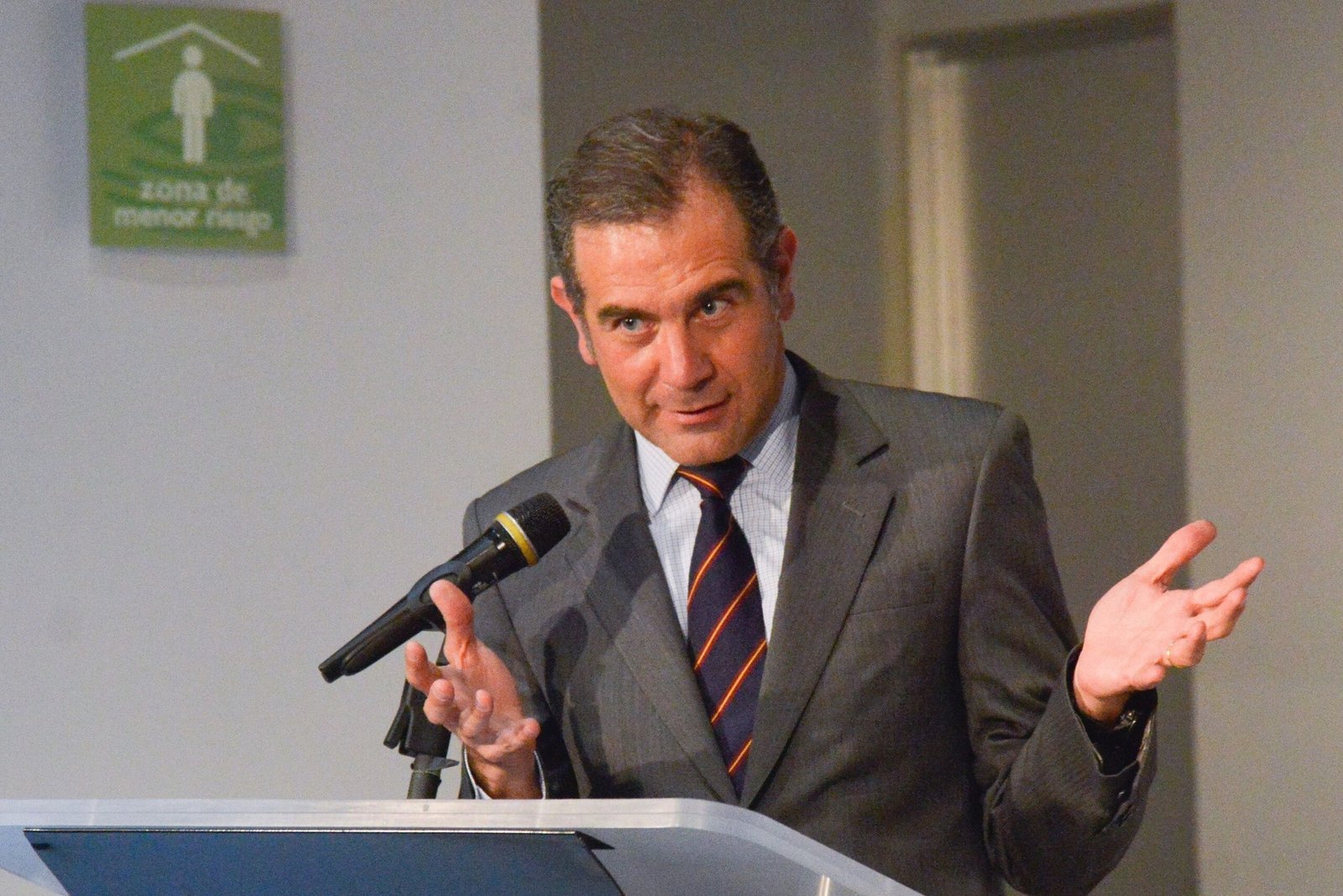
In that regard, the National Electoral Institute—under the administration of Lorenzo Córdova, its former president councilor and today a member of the Somos party—was one of the institutions IFES worked with. On this, the document states: “in Mexico, the National Electoral Institute signed a Memorandum of Understanding and collaborated with Facebook during the 2018 elections, and in Estonia, the State Electoral Office is monitoring online media in cooperation with other authorities and private companies such as Facebook and Google. The actions available to technology companies include flagging or removing false content, rating content according to the findings of fact-checkers, modifying their algorithms to promote truthful information and hide false information, and ad disclosure policies. Facebook, for example, has begun to modify its ad disclosure policies and has experimented with detecting false content. These changes are not implemented globally, but are adapted to the context of each country.”
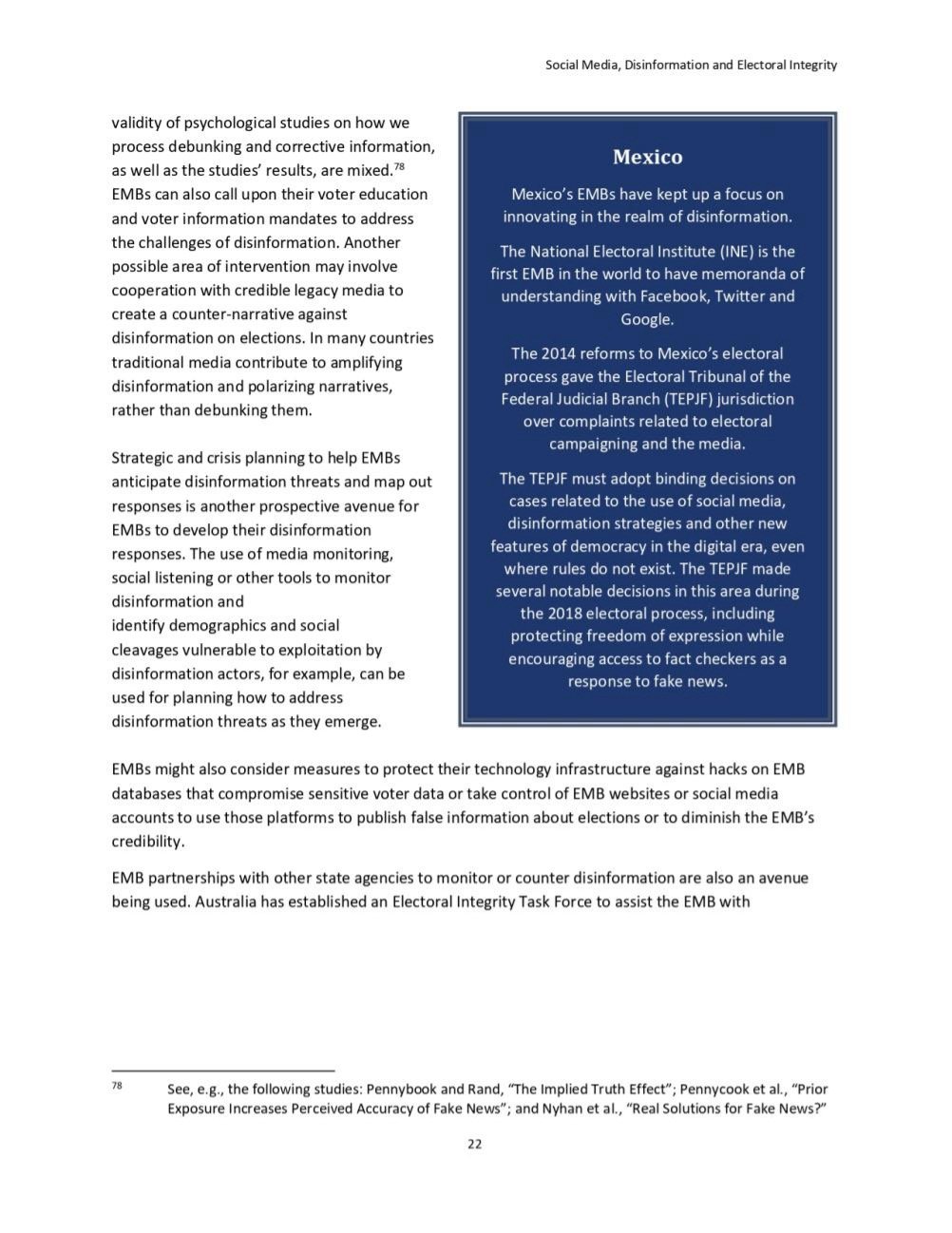
It also mentions that Mexico was a pioneer in this type of program that USAID promoted and funded through foundations such as IFES. The same document states that “Mexico’s electoral bodies have maintained a focus on innovation in the area of disinformation. The National Electoral Institute (INE) is the first electoral body in the world to have memoranda of understanding with Facebook, Twitter and Google. The 2014 reforms to the Mexican electoral process gave the Electoral Tribunal of the Federal Judiciary (TEPJF) jurisdiction over complaints related to electoral campaigns and the media. The TEPJF must adopt binding decisions in cases related to the use of social media, disinformation strategies and other new features of democracy in the digital age, even where no rules exist. The TEPJF made several notable decisions in this area during the 2018 electoral process, including protecting freedom of expression and promoting access to fact-checkers as a response to fake news.”
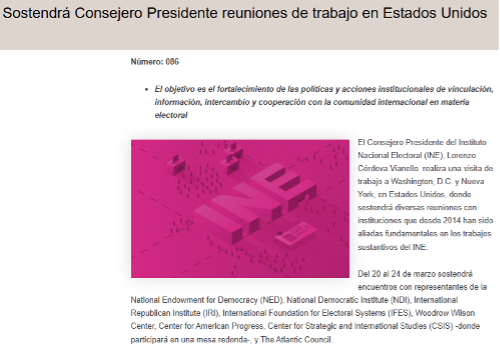
Lorenzo Córdova’s ties to institutions associated with USAID or with the coup-backing National Endowment for Democracy were sealed during the tour he made of the United States in 2023, the year his tenure at the INE ended. Before leaving office, he met with staff from IFES, the NED, the International Republican Institute (IRI) and the National Democratic Institute (NDI), the latter two part of the network that makes up the NED. He also visited conservative think tanks such as the Atlantic Council, NATO’s political arm, and the Wilson Center.
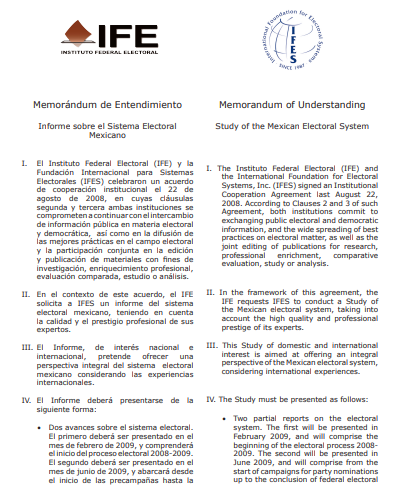
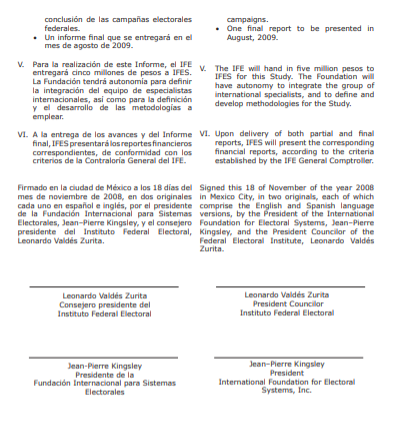
The Mexican electoral institute’s ties to IFES are not new; in fact, since the former Federal Electoral Institute (IFE) there was already a memorandum of understanding between the two institutions, so there is a line of continuity between Córdova’s INE and the IFE of his predecessor and fellow Somos member, Leonardo Valdés Zurita.
Global Funding
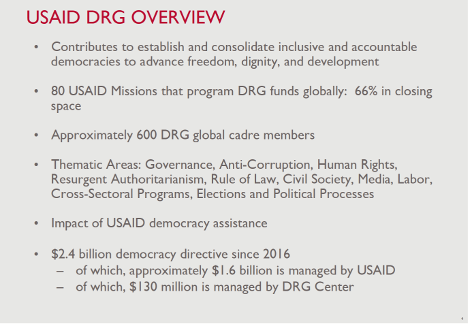
In the USAID files—published by the US State Department—one can see the millions that USAID granted to programs of the Center for Democracy, Human Rights and Governance, such as “Governance, anti-corruption, human rights, resurgent authoritarianism, rule of law, civil society, media, labor, cross-sectoral programs, elections and political processes.”
Notable, for example, are 2.4 billion dollars since 2016 for programs focused on democracy, of which 1.6 billion were administered by USAID and of which 130 million funded the Center for Democracy, Human Rights and Governance.
One of the documents released by the Trump administration itself shows funding by region and program from the State Department’s International Narcotics Control and Law Enforcement. For fiscal year 2020, this institution granted funding for programs such as Human Rights (193 million dollars), Governance (463 million dollars), Civil Society (388 million dollars) and media (158 million dollars).
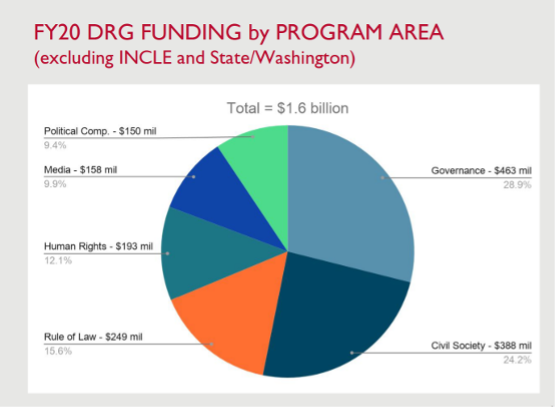
Another of the funded projects was Governance and Anti-Corruption. Under this heading, the supposed focus was “to build more effective, responsive and accountable institutions, improve the capacity to mobilize and use resources to meet public needs, strengthen the ecosystem to fight corruption.”
-
People’s Mañanera November 25
President Sheinbaum’s daily press conference, with comments on violence against women, housing in Guerrero, and the INE.
-
Sheinbaum Backs Chiapas Coffee Growers: “Nestlé Must Pay a Fair Price”
Nestlé cut payments from 60 to 43 pesos per kilo, affecting about 165,000 families. Mexico’s agriculture secretary will support talks.
-
People’s Mañanera November 24
President Sheinbaum’s daily press conference, with comments on China, public healthcare, economic growth, and election contracts.