
Employer Fines For Violating Workweek Limits Between 30,000 to 586,000 Pesos
This article by Nancy Escutia originally appeared in the March 5, 2026 edition of El Economista.
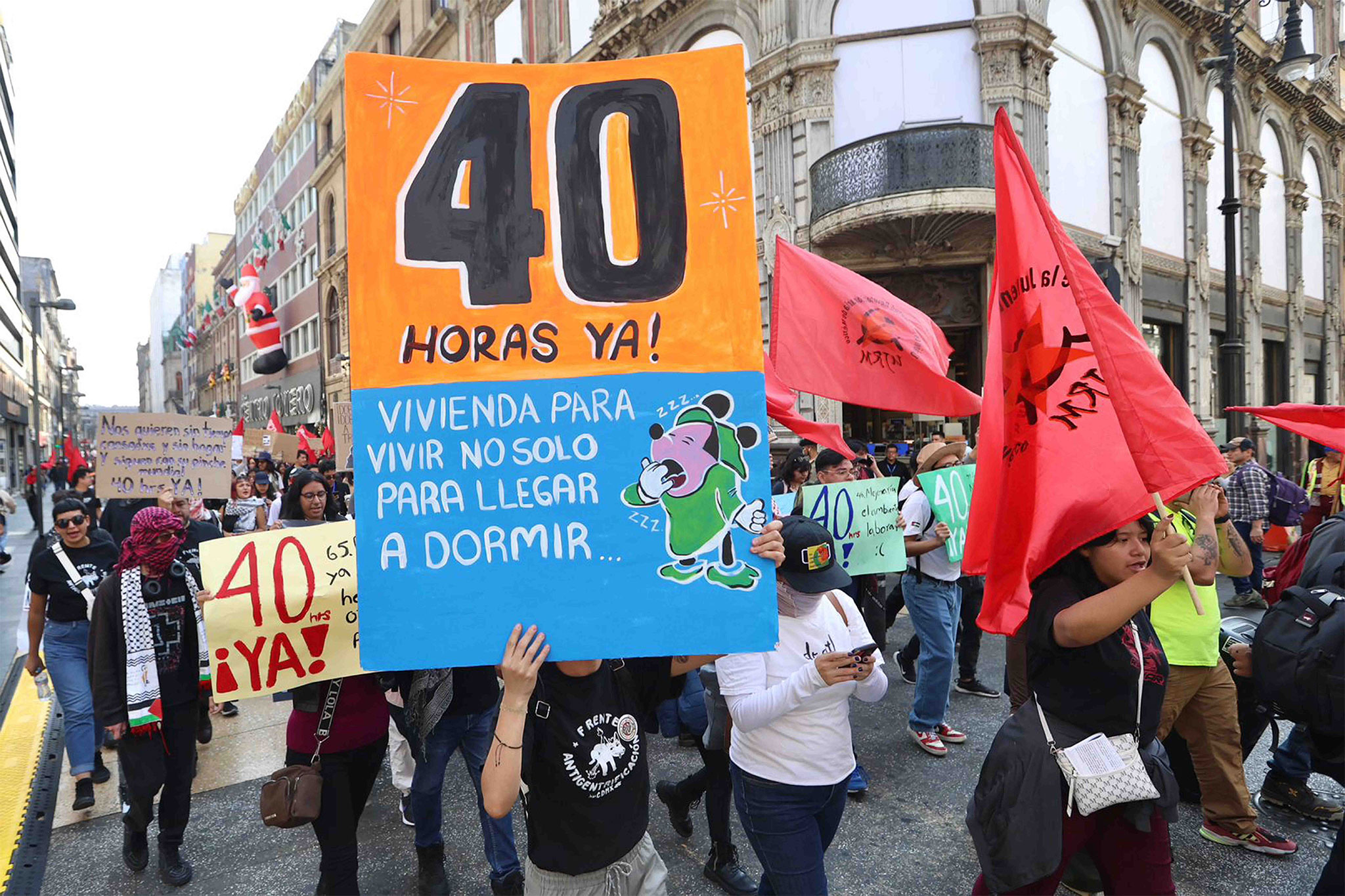
With the publication of the new work schedule in the Official Gazette of the Federation (DOF) , the path toward implementing the 40-hour workweek formally begins. The constitutional reform to Article 123 to reduce working hours continues to generate concerns, especially regarding the consequences of non-compliance.
Although harmonizing the Federal Labor Law (LFT) is the next step, the penalties that employers who violate the law will face can already be anticipated, unless they comply with the changes to secondary legislation. The law already includes fines for employers who violate the permitted work limits.
Compliance with the workday is not only a matter of respecting the principles of decent work established in the Magna Carta, but also a responsibility that, if not fulfilled, can involve fines of several thousand pesos and even penalties punishable by imprisonment.
According to Article 68 of the Federal Labor Law (LFT), employees are not obligated to work longer than the hours established by law. Overtime is the only permitted extension, and it must not exceed 12 hours per week, as established by the labor reform.
Fines for Workweek Non-Compliance
Failure to comply with the duration of the workday currently carries a penalty of 29,327.50 ($1,653USD) to 586,550 pesos ($33,060USD), equivalent to 250 to 5,000 times the UMA (Unit of Average and Update in force as of 2026), according to article 1000 of the Federal Labour Law.
The value of the UMA (Unit of Measurement and Update) is updated annually, so the penalty will be calculated based on the amount in effect at the time the violation occurred. In this regard, it should be noted that the transition will take three years, as the penalty will be reduced by two hours per year starting January 1, 2027, and will conclude in 2030.
This is how the gradual reduction of the working day will be implemented in Mexico:
- 2027 – 46 hours
- 2028 – 44 hours
- 2029 – 42 hours
- 2030 – 40 hours
Who Determines the Fine?
The specific amount of the fine will be determined by the Secretariat of Labour and Social Welfare (STPS), which will consider the seriousness of the infraction, the employer’s intent, the number of workers affected, and the employer’s economic capacity.
In case of recidivism, article 992 of the LFT establishes that the fine will be doubled and if it affects several workers, the sanction will be imposed for each of the affected ones.
The reform to working hours includes a new limit of 12 overtime hours per week, and a cap of 4 triple-shift hours per week. These limits are important because, in addition to fines, exceeding the permitted hours could constitute the crime of labour exploitation, which is punishable by imprisonment.
The Law to prevent human trafficking classifies as labor exploitation when an unjustifiable benefit, economic or otherwise, is obtained directly or indirectly from the activity of another or others through working hours that are above what is stipulated by the Law.
In 2026 and 2027, the maximum permitted overtime will be nine hours, but if the triple-hour cap is not implemented immediately, a workday exceeding 13 additional hours could be considered labor exploitation. In 2028, the permitted overtime (including triple-hours) will be 14 hours, in 2029 it will be 15 hours, and in 2030, with the standard 40-hour workweek, the limit will be 16 hours per week.
In other words, once the 40-hour week comes into effect in 2030, and adding the permitted overtime, the maximum working hours will be 56 hours per week. Exceeding this threshold would constitute the crime of labor exploitation, which carries a penalty of three to ten years in prison and a fine of 5,000 to 50,000 days.
Furthermore, if the affected individuals belong to Indigenous or Afro-Mexican communities, the penalties will increase from four to 12 years in prison.
To ensure compliance, the reform to the Federal Labor Law will include the employer’s obligation to have an electronic record of the workday that includes the start and end times, data that must be provided to the authority when it requires it.
-
El Taller: Central America: Ground Zero for Empire with Hilary Goodfriend
Breaking down Central America’s political trajectory—from US intervention to today’s far-right surge, electoral sabotage, and Mexico’s strategic role.
-
People’s Mañanera March 25
President Sheinbaum’s daily press conference, with comments on Plan B electoral reform, Housing for Wellbeing and housing as a social right, polls, and consular protection for Mexican migrants in the US.
-
Ecocidal Militarism
If citizens in Western democracies were asked whether their militaries should build public infrastructure instead of waging war, they would almost certainly choose the latter. Abby Martin’s newest film “The Greatest Enemy of the Earth,” documents the environmental cost of the American empire.