FIFA’s Cola Cup & Dystopian Horror
This article by Alejandro Calvillo originally appeared in the March 7, 2026 edition of Sin Embargo. The views expressed in this article are the authors’ own and do not necessarily reflect those of Mexico Solidarity Media or the Mexico Solidarity Project.
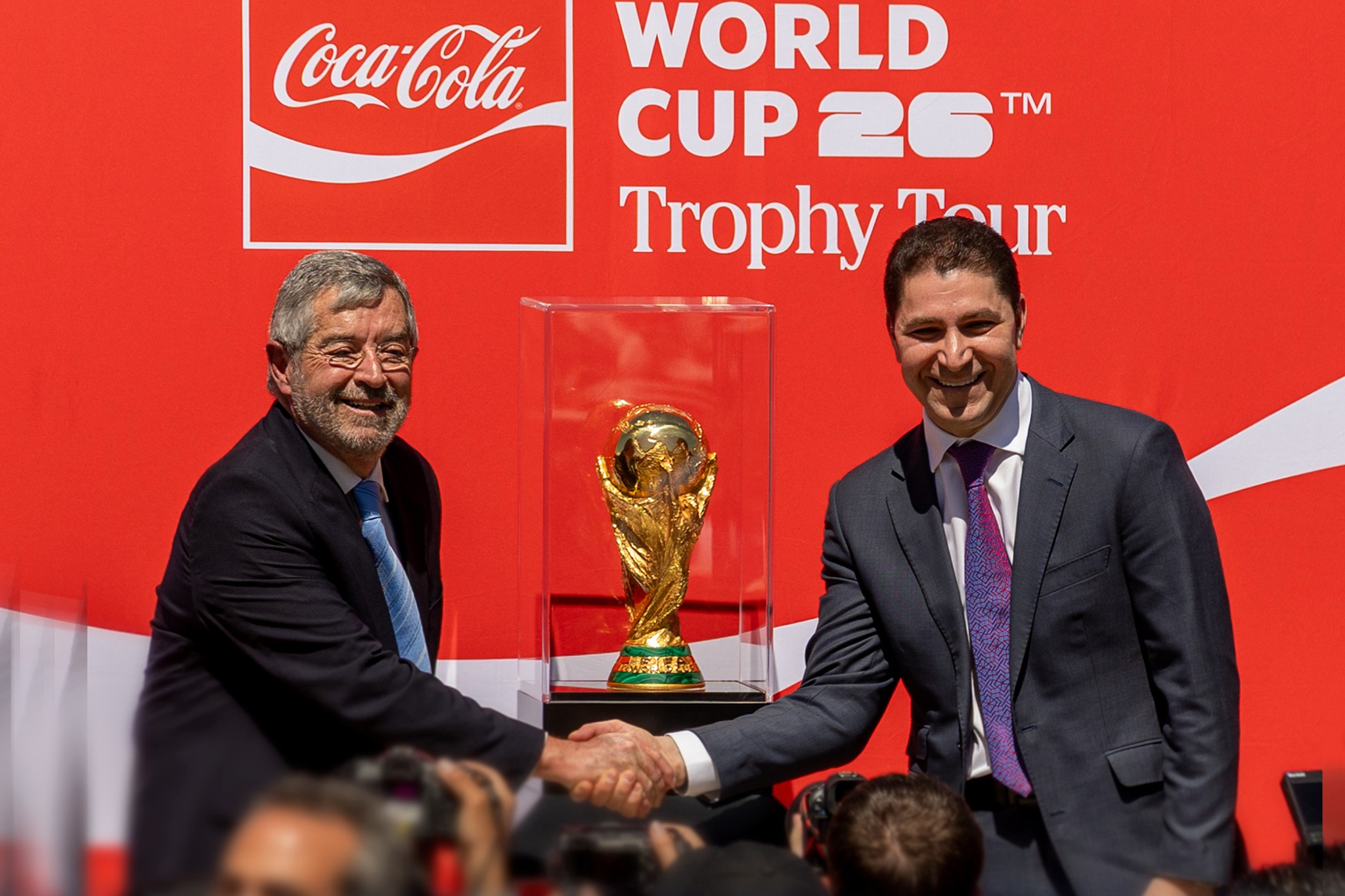
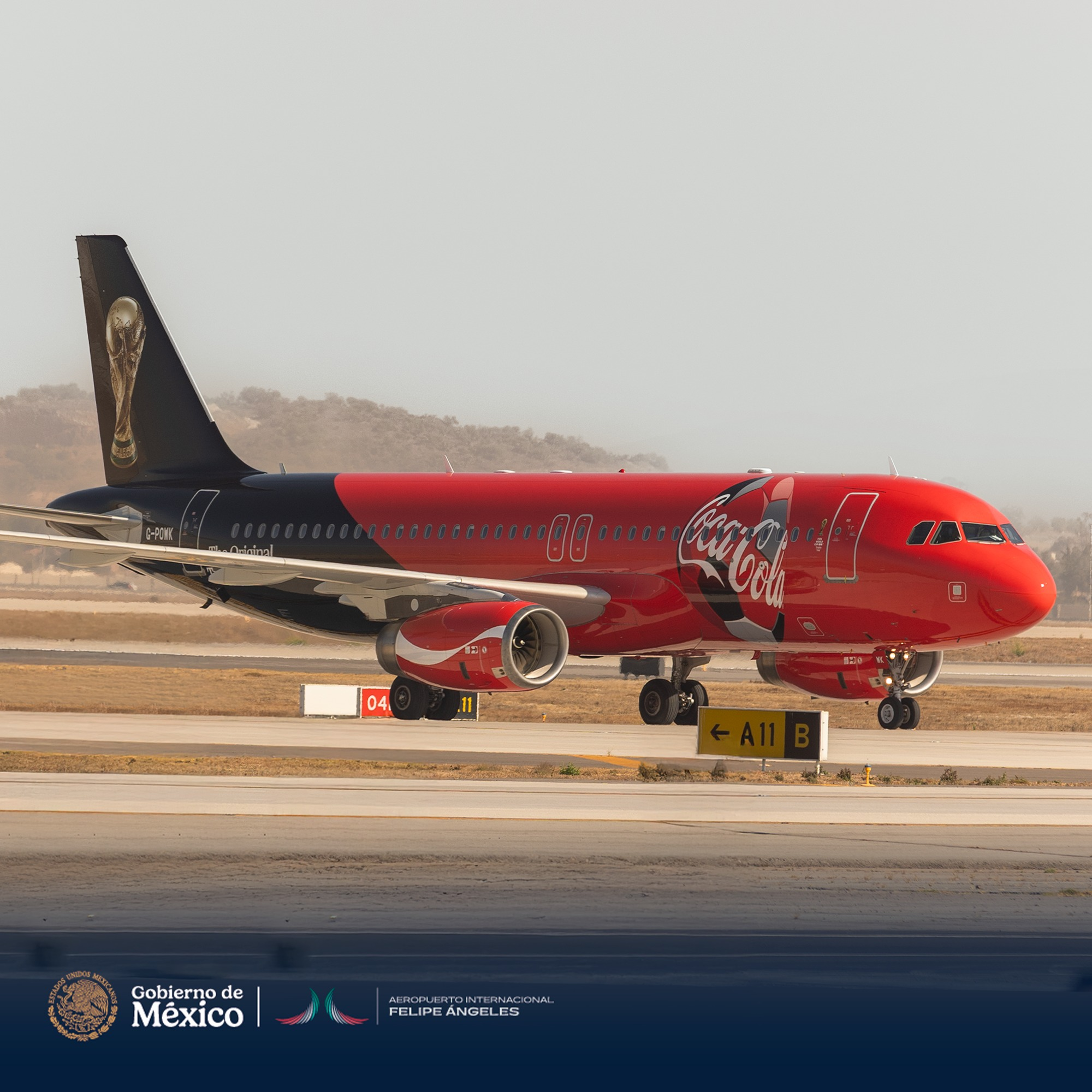
The trophy was received at Felipe Ángeles International Airport by the Secretary of Foreign Affairs, as if it were a cabinet minister. But in reality, the trophy was merely a pretext; what was actually being received was the mother of all advertising campaigns. The trophy, a small object just 35 centimeters tall, arrived in Mexico on a plane painted in Coca-Cola’s signature red, emblazoned with the brand’s logo in enormous letters. Government and company representatives, along with FIFA representatives and a former football player, posed next to the small trophy, with the large red plane bearing the soft drink company’s logo as a backdrop—perfectly positioned for the photo. The same logo was also displayed on the table where the trophy was placed and on the backdrop behind the smiling entourage. If you compare the size of the cup with that of the Coca-Cola advertisement, it is clear that the cup is the pretext for the advertising campaign, the mother of all advertising campaigns, in which the authorities of a Government that calls for a reduction in the consumption of the product that surrounds the Cup and the event are involved.
The association of the product’s brand with the World Cup is so strong that Coca-Cola must be present at every event where the Cup is featured, as was the case with the President’s morning press conference. The World Cup in Mexico is a legacy of an agreement between then-President Peña Nieto and FIFA, an agreement whose full extent regarding tax exemptions remains unclear. It should be noted that health officials from Peña Nieto’s own administration now work for Coca-Cola or represent Mexican football before FIFA and the World Cup.
The dystopia, in its global, planetary dimension, is such that it becomes clear that the most-watched sporting event on the planet is embroiled in the biggest advertising campaign for a product that is one of the main causes of the obesity and diabetes pandemic afflicting humanity. How can a product with such harmful effects sponsor this sporting event, and in this case, the one most followed by the world’s population? Dystopia is defined as an undesirable future society where political and/or technological powers act against humanity.
And this dystopia becomes dystopian horror when it comes to the case of Mexico, where, conservatively and based on a recently published scientific document, we estimate that the consumption of Coca-Cola and its soft drink brands is responsible for at least 115,000 new cases of diabetes and cardiovascular disease each year. This estimate of 115,000 new annual cases of these diseases in Mexico, solely due to the consumption of Coca-Cola and its other soft drink brands, is based on the assumption that half of the sugary drinks consumed in Mexico are from this company. Therefore, they would represent half of the cases of these diseases reported in the scientific article Burdens of type 2 diabetes and cardiovascular diseases attributable to sugar -sweetened beverages in 184 countries , published in the journal Nature Medicine in February 2025. In other words, if we consider the cases of diabetes and cardiovascular diseases accumulated in Mexico over the last four years, between the World Cup in Qatar and the one to be held in our country, we are talking about nearly half a million cases due to the consumption of products from this brand.
Mexico has the highest consumption of Coca-Cola products and one of the highest consumption rates of sugary drinks. It can also be estimated, by subtracting the health impacts of other brands of sugary drinks and homemade beverages, that approximately 20,000 people die each year in Mexico due to the consumption of Coca-Cola products.
The photograph of the World Cup’s arrival in Mexico is a stark illustration of the absurdity of the world we’ve reached thanks to the power of large corporations; of the crisis of our current civilization, of a society trapped in a power economy, a society manipulated by addictions. Associating the consumption of this beverage with sports, with youth, with joy and happiness is the result of multimillion-dollar advertising campaigns, but primarily, it stems from the impact of its sweet taste on the brain and the dopamine rush it generates—that release of the so-called pleasure hormone. This pleasure and addiction is amplified by the combination of the sweet taste with the caffeine also present in the drink.
By taking a closer look at the product’s characteristics, its composition, its impact on health, the addiction it generates, its advertising association with a series of emotions and values, and its capture of this sporting spectacle, we can get an idea of the dimension of what we must now call the Cola Cup.
In June 2023, I recorded the video column The Coca- Cola Addiction: Why We Are Addicted to Coca-Cola. The response to that piece on SinEmbargo clearly demonstrated the extent of addiction to this product in our country, with over 600,000 views and more than 1,600 comments . I invited the audience to comment on this addiction, and many of the testimonies were heartbreaking, describing the situation of friends and family members, and even my own, about the harm suffered from high consumption of this product, and how I couldn’t stop consuming it despite the serious situation I was in. The consumption of this product undoubtedly causes a human tragedy, the full extent of which is still not fully recognized.
Addiction can have two origins: physiological and psychological. The first is related to the activation of the reward mechanism, dopamine, and the second to the association that advertising creates with values, situations, and aspirations when consuming the product. Coca-Cola exhibits both of these aspects of addiction—physiological and psychological—which reinforce each other.
The Coca-Cola Cup, the mother of all advertising campaigns, will destroy efforts aimed at reducing consumption of these products through taxes, labeling , and regulations in schools. These are all very important efforts that must be reinforced and expanded; however, the Coca-Cola Cup will severely damage them due to the invasive advertising we already experience from this company, which will become significantly more intense . It’s important to remember that Coca-Cola’s business model is very different from many others, especially because of the enormous amount of resources it dedicates to advertising, to creating this psychological addiction intimately linked to the physiological one, this association with everything that the product itself is not: with values, with family, with happiness, with environmental care, with respect for communities, women, and so on.
Coca-Cola has found an excellent ally in FIFA, an organization mired in deep corruption that has turned sport into a big business, to the point of transforming the World Cup into a publicity stunt. It’s a marriage between a corporation that preys on health and the environment and a gangster-like “sporting” organization.
The current government has implemented important , albeit hesitant, policies to reduce the consumption of these products, as recommended by international organizations that recognize the damage they cause exceeds the capacity of governments to address it. We, as a society, bear the brunt of the damage while corporations reap the profits. Given the damage that the Cola Cup will leave behind, the government will have to strengthen its policies, stop hesitating, and take decisive action, following the best practices already in place in other countries.
Alejandro Calvillo is Director of El Poder del Consumidor and a sociologist, with degrees in philosophy from University of Barcelona, and in environment and sustainable development from El Colegio de México.
-
Network in Defense of Corn Warns of Risk to Mexico’s Native Seeds
Communities spoke out against seed ownership systems and policies that promote land privatization and commodification, warning that these measures affect autonomy and community organization.
-
People’s Mañanera March 31
President Sheinbaum’s daily press conference, with comments on public health investments, Gulf of Mexico oil spill, energy sovereignty, AIFA airport, forced disappearances, and Sonora River remediation.
-
Tariffs Without Industry: The Trap of Mexican Trade Policy Towards China
Without a policy aimed at increasing the productive investment rate to accompany the country’s reindustrialization process, trade barriers will be inefficient due to the rigidity of the productive structure.