Florida, the Race for the Presidency & Opaque Capital
This article by Alejandro Marcó del Pont originally appeared at El Tábano Economista on December 21, 2025.
When a company registered under the enigmatic name Flower of Scotland paid $1.13 million in cash, bill upon bill, for a condominium in Sunny Isles Beach, Miami, in 2017, it was forced to perform an act as unusual as it was revealing: to disclose to the U.S. federal government the identity of its true owner. This moment of enforced transparency was a mirage, a brief glimmer of light in a structural darkness.
This occurred thanks to a temporary rule imposed by the Treasury Department during the Obama administration, which between 2016 and 2017 tentatively attempted to lift the veil on real estate transactions in Miami and Manhattan, the two preferred markets for anonymous global capital. A study by economists from the Federal Reserve Bank of New York and the University of Miami measured the consequences: in Miami, spending by shell companies and opaque corporate entities on housing plummeted by 95%. The lesson, however, was not that the system wanted to clean itself up, but rather that it demonstrated the extent to which its functioning depended on secrecy.
Today, in 2025, that lesson has not only been forgotten, but reversed. Contemporary Florida is the distorted and advanced mirror of a new form of global governance, an experiment where money laundering has not only been tolerated, but institutionalized and updated for the digital age through so-called Tokenization 4.0, and where the last vestiges of national financial sovereignty are auctioned off to the highest technological bidder.
The 2028 presidential race, and its colossal funding, is fueled by a murky river flowing from the south: diverted Venezuelan oil, profits from Colombian and Mexican cartels, money from massive tax evasion by Latin American elites, and capital flight from instability.
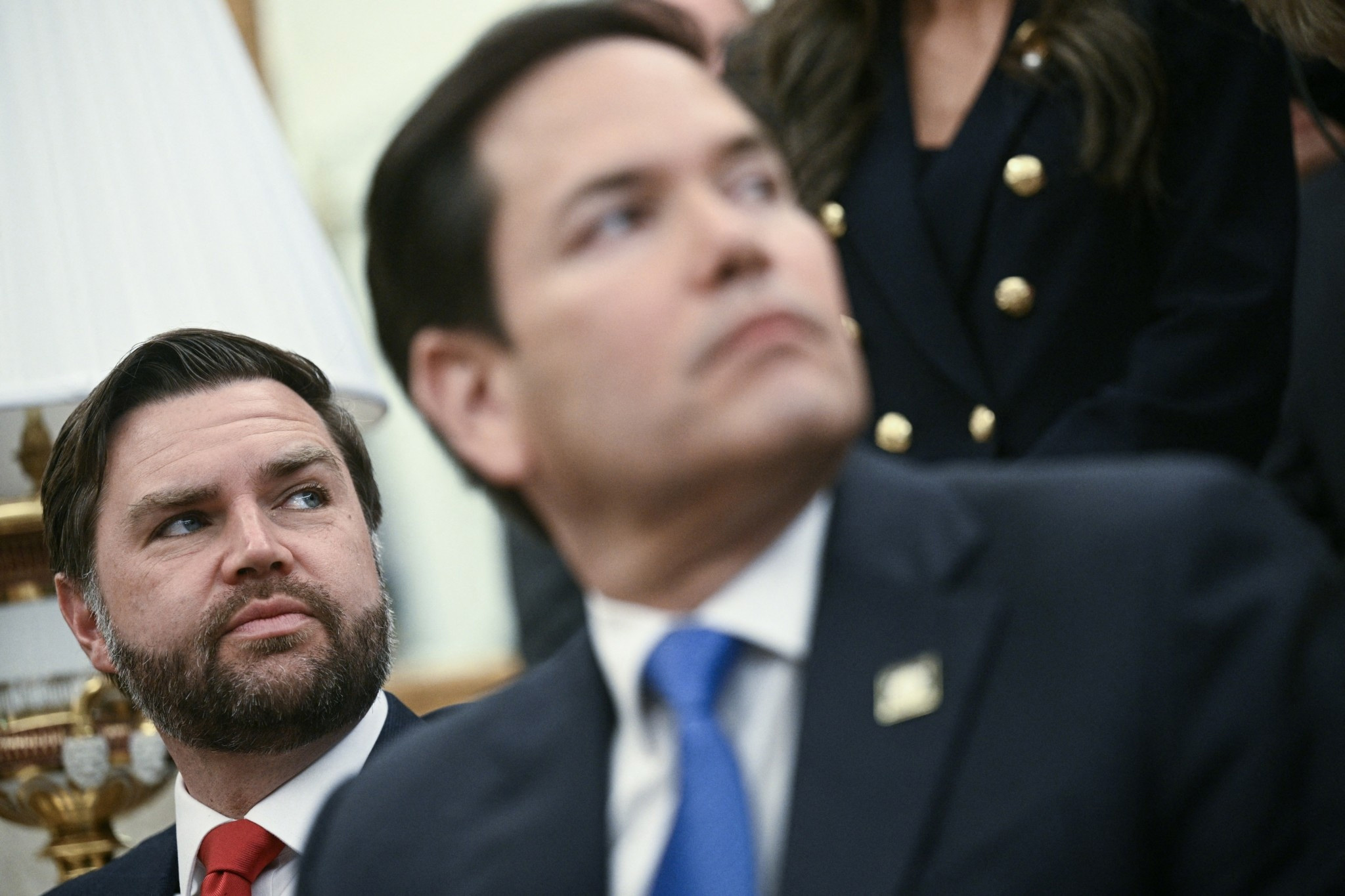
In this laboratory of opaque capitalism, two Republican figures embody the struggle for control of the future—not just of the state, but of the machinery that could finance the next US presidency. On one side, Vice President JD Vance has methodically built a financial bunker in what is already known as the “Wall Street of the South,” a complex ecosystem in West Palm Beach that protects and multiplies opaque capital under the banner of financial innovation and technological freedom.
On the other hand, Secretary of State Marco Rubio, bound to the anti-Castro and anti-Chávez rhetoric that catapulted him to power, and now to a Corporate Transparency Law that his own administration is sabotaging, watches helplessly as the Latin American “black money” that once lubricated his political rise now, paradoxically, finances his administrative downfall. In Florida, the geopolitical epicenter of 21st-century political financing, one axiom prevails with brutal force: “ Whoever controls the code and the token, controls the throne.”
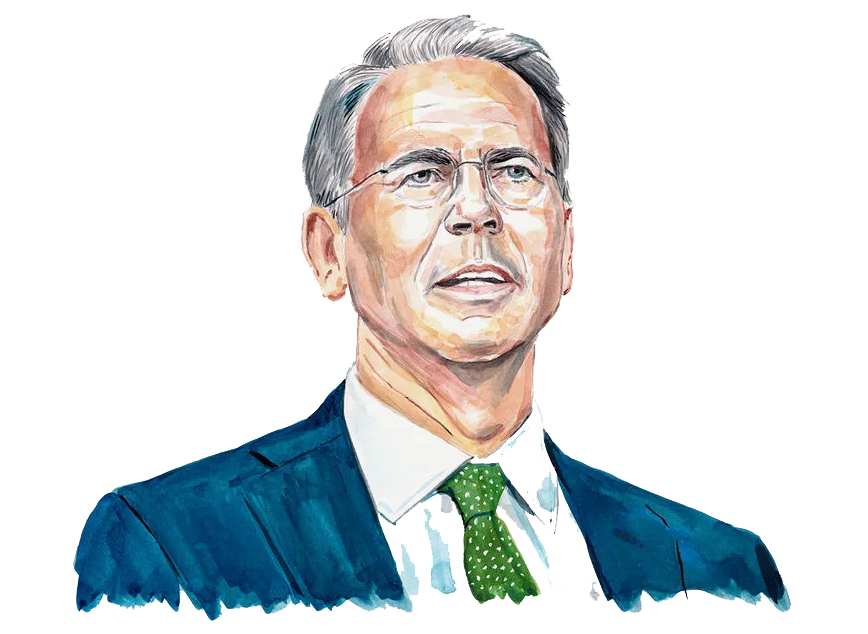
This high-finance chess game is being played with pieces worth billions, and the referee with his finger on the regulatory enforcement button is Treasury Secretary Scott Bessent. Bessent, a markets man, a former hedge fund manager whose visceral loyalty is to liquidity and profitability rather than any ideology, has decisively tipped the balance of power within the Treasury in favor of Vance’s hyper-transactional, technocratic vision.
His management has relegated Rubio to increasing administrative irrelevance. The 2028 presidential race, and its colossal funding, is fueled by a murky river flowing from the south: diverted Venezuelan oil, profits from Colombian and Mexican cartels, money from massive tax evasion by Latin American elites, and capital flight from instability. All this wealth is useful, welcome, but with one condition: you have to know who you’re playing for, and be predictable in your loyalty. Political naiveté here is a suicidal luxury.
If Vance’s faction, in alliance with West Palm Beach investment funds, wins this internal battle—and all indications are that it already is—Florida will effectively become a sovereign financial state within the Union. The illicit funds from corruption, seized or diverted oil, tax evasion by South American magnates, and the profits from cocaine trafficking will no longer need to be “laundered” in the traditional sense, with all its risks and complexities. They will simply be tokenized, transformed into clean and legitimate digital assets, backed by the ultimate luxury collateral: Florida’s high-value real estate sector.
This transformation leaves Marco Rubio in an existentially difficult position: either he adapts to this new economy of technological opacity—betraying the rhetoric of “cleaning up” and fighting corruption that defines him—or he irreversibly loses the funding of the new moneyed barons. These barons no longer need a Senator to open doors for them in Washington to cover their tracks; in the digital age, they only need a good programmer from Silicon Valley, a creative lawyer, and a fund registered in West Palm Beach.

The financial engineering that makes this system possible is overwhelmingly sophisticated. Some 250 investment funds operate in this space, where giants like BlackRock and traditional private equity funds coexist, in a strange symbiosis, with Latin American capital vehicles of less transparent origin. They operate under an onion-like structure, meticulously designed to dilute and atomize legal responsibility until it disappears.
While Miami continues to capture headlines and superficial glamour, the true nerve center of the movement of heavy, opaque, and urgent capital has quietly shifted north to West Palm Beach. The master strategy for evading the Corporate Transparency Act (CTA)—which Rubio himself championed—is based on exploiting a legal loophole: the unregulated “family office.” These family offices, which manage the fortunes of ultra-wealthy individuals, face far less scrutiny than traditional investment funds, making them the perfect vehicle for opacity.
But the major leap forward in 2025 is Real Estate Asset Tokenization (RWA). The mechanism is almost surgically elegant in its effectiveness for money laundering. Mansions in Key Biscayne are no longer bought with suitcases full of cash, a crude and risky practice. Now, a West Palm Beach-based fund acquires a luxury building valued at $200 million. It then digitally divides ownership of that tangible asset into millions of digital fragments, tokens, which are sold on cryptocurrency exchanges.
A drug trafficker in Cali, a tax-evading businessman in Buenos Aires, or a corrupt official in Paraguay can buy these “tokens” or fragments of the building using stablecoins like USDT (Tether) or USDC (USD Coin), cryptocurrencies designed to maintain a stable value pegged 1:1 to the US dollar, eliminating the volatility of Bitcoin. For the regulatory system, this transaction doesn’t appear as a real estate purchase subject to FinCEN reporting; it appears as a sophisticated “technology investment” in tokenized assets.
Because it operates on a blockchain, the fund can plausibly claim that it “doesn’t know” the identity of each of the thousands of holders of tiny tokens. And unlike physical property, which can take months to sell and leaves a paper trail, tokens can be bought, sold, or transferred in seconds, globally and anonymously. The money, therefore, isn’t “laundered”; it leaves clean, certified as a legitimate profit from a cutting-edge investment in financial technology .
This is where the friction between Marco Rubio and JD Vance ceases to be a personal political rivalry and becomes the critical axis for the future of this ecosystem and, by extension, for the financing of national politics. Rubio’s interest has always been instrumental: to use financial intelligence and sanctions as a weapon to stifle his ideological enemies in Havana and Caracas, or even leftist figures in Bogotá.

But this stance clashes head-on with the interests of his own donors in Florida, who need the US financial system, and especially that of this state, to remain “porous,” permeable to capital fleeing those same jurisdictions. Vance, on the other hand, is the main driving force behind the GENIUS Act, legislation designed to regulate—and therefore legitimize and integrate—stablecoins into the traditional financial system. His vision is not one of containment, but of absorption: that the United States, and Florida in particular, become the “Crypto Capital” of the world.
The practical result is that Vance is building a legal framework where moving capital via blockchain, even capital of uncertain origin, is not only possible but virtually untouchable, under the guise of defending innovation and economic freedom. For Vance, the billions flowing out of Argentina or Colombia and entering via stablecoins represent “economic freedom” and “digital dollars.” For law enforcement agencies still trying to trace the money, this framework creates a perfect regulatory black hole.
In December 2025, this battle reaches its turning point. The United States Treasury, under Scott Bessent, and its operational arm, FinCEN (the Financial Crimes Enforcement Network), have ceased to be neutral observers and have become the deciding factor, and that factor clearly tips in Vance’s favor.
The billions of dollars in black money or capital flight flowing out of Argentina, Colombia, Mexico, Brazil, and Venezuela are not a problem for this system; they are its raison d’être, its essential raw material.
Bessent, the former fund manager who speaks the language of West Palm Beach suites, has executed a complete about-face. In March 2025, he ordered FinCEN to indefinitely suspend the enforcement of the Corporate Transparency Act for U.S. citizens and companies. This was a masterstroke and a direct blow to the political project of Marco Rubio, who was the intellectual architect of that law, designed precisely to “cleanse” Florida of Venezuelan, Russian, and other money of questionable origin.
Bessent is the ideal technocratic partner for Vance’s vision: while the vice president sells the Florida dream of becoming the crypto capital, the Treasury secretary adapts the federal machinery to integrate stablecoins (via the GENIUS Act) into the core of the system. His thesis is stark and powerful: if Florida’s funds are used to buy US Treasury bonds, regardless of their origin, what matters is the stability of the dollar and the liquidity of the system, not the moral provenance of the capital.
FinCEN, once the bane of Miami’s phantom limited liability companies, now operates under a new internal guideline: “Compliance Friendly.” The rule requiring the reporting of all cash real estate sales above certain thresholds, which was supposed to take effect in December 2025, has been postponed by FinCEN itself until March 2026, without further explanation. This extension is not a mere bureaucratic delay; it is pure oxygen for West Palm Beach real estate funds, the precious time they need to finish tokenizing massive portfolios of assets without leaving a trace in the traditional system.

The fuel without which this machine would grind to a halt is, ironically, Latin American capital flight. The billions of dollars in “black money” or “capital flight” flowing out of Argentina, Colombia, Mexico, Brazil, and Venezuela are not a problem for this system; they are its raison d’être, its essential raw material. Without this constant flow, the “Wall Street of the South” would lack the traction, liquidity, and power it currently wields.
Marco Rubio’s presidential future is, tragically and almost poetically, tied to Nicolás Maduro. If the Chavista regime falls, Rubio could claim a Pyrrhic victory. But if Maduro remains in power, as seems likely, and—more decisively—if Venezuelan oil begins flowing to the United States under pragmatic “energy for sanctions relief” deals, Rubio is finished.
The Trump-Vance doctrine is simple and transactional: “Take the Oil.” They are not interested in the “democratization” of Caracas if they can secure, through intermediaries and allied funds, direct contracts for refineries in Texas and the Gulf Coast. In this scenario, Venezuelan oil ceases to be a symbol of a humanitarian cause and becomes just another financial asset, further altering the logic of global energy with the world’s largest oil reserves. The funds currently laundering money are positioning themselves to buy tokenized “oil bonds,” a maneuver that Vance openly supports and that Rubio, for reasons of ideological and political consistency, cannot endorse without destroying himself. Rubio gets the rhetoric; Vance gets the crude, the tokens, and the profits.
Rubio thus faces a cruel and definitive paradox. His coveted 2028 presidential campaign depends financially on the money of the very real estate and technology funds that are now lining up, dollar for dollar, with JD Vance and Scott Bessent. Florida donors are, above all, pragmatic. They much prefer the “protected opacity” offered by Vance’s framework and Bessent’s active deregulation to the “moral crusade” of a Rubio who, in his hardly credible narrative of pursuing dictators and corrupt officials, could end up, through excessive zeal or a change of heart, auditing the accounts of his own financiers.
The opaque and permissive structure of Super PACs in 2025 allows these funds to inject tens of millions of dollars into politics without the name of the Latin American tax evader, drug trafficker, or corrupt official ever appearing in a public record. But those millions, like water, now flow to where real power lies, to where the future of the system is being built. With Vance controlling the national technology agenda and Bessent holding the keys to the Treasury, Marco Rubio has become, in practice, a Cold War politician caught in a code war. In the race toward 2028, in the new money-laundering state of Florida, the axiom holds true without exception: whoever controls the code and the token controls the throne, and whoever controls the throne of Florida controls the flow of money that decides the Presidency of the United States.
-
President Sheinbaum Champions Women Ejido Members & Communal Landowners
The President’s goal for her six-year term is to distribute 150,000 property titles to women ejido members and communal landowners.
-
Families of Missing Persons Request Meeting with President Sheinbaum After Release of Disappearances Data
Families expressed their concern about an update to Mexico’s National Registry which “prioritizes administrative management over the reality of families on the ground.”
-
Clicks
Our weekly roundup of stories in the English and Spanish language press including Mexico’s new film law, Langston Hughes, disappearances, Nuestra América convoy, evictions, deportees, and the trade spat with China.