Greater Palestine Raises its Voice & Brings Visibility to the Gaza Genocide
This article by Ana Mónica Rodríguez originally appeared in the January 17, 2026 edition of La Jornada, Mexico’s premier left wing daily newspaper.
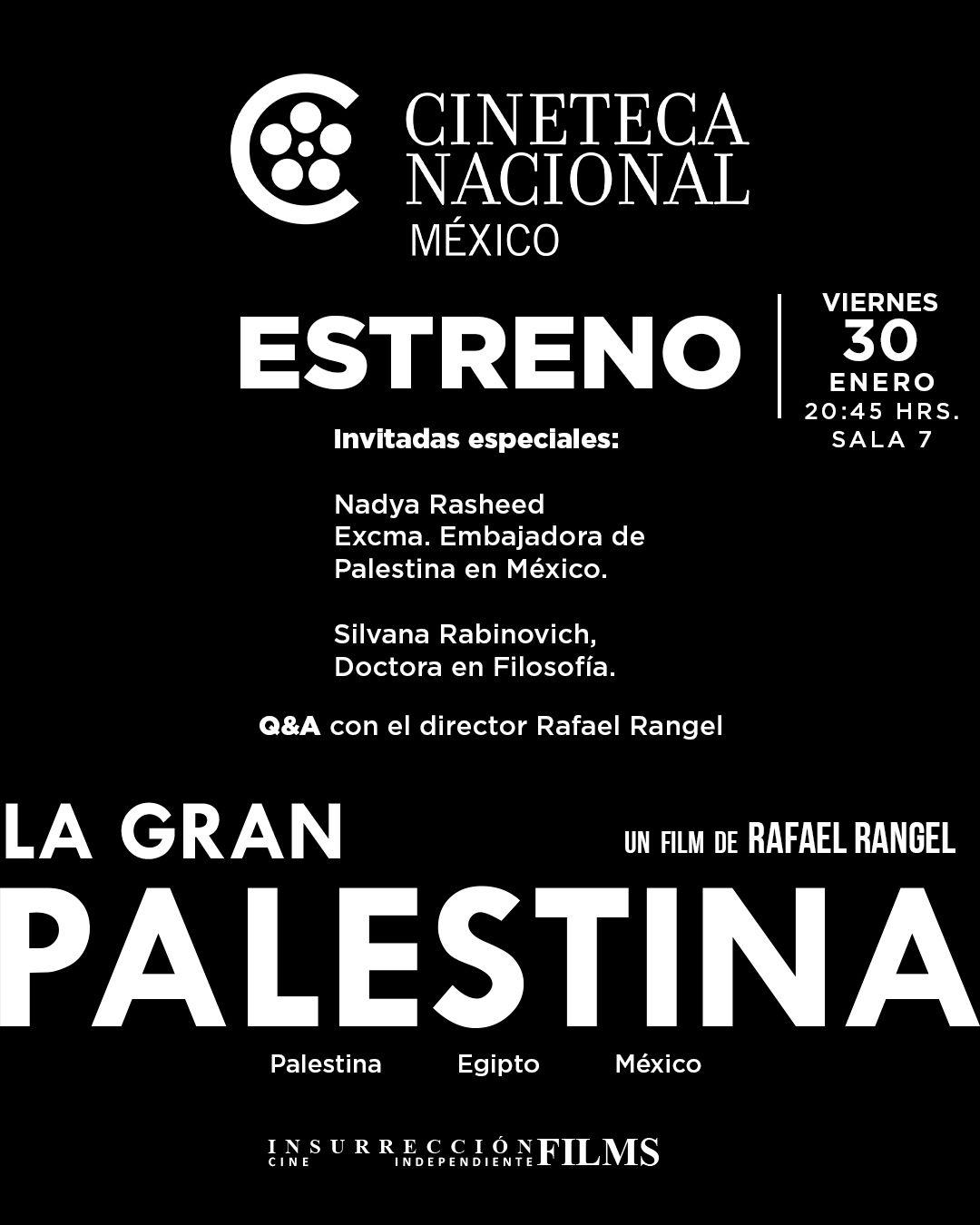
Greater Palestine is screening at Cineteca Nacional de México in Mexico City, 20h45 on January 30. (Av. México Coyoacán #389, Col. Xoco, Benito Juárez, 03330, Ciudad de México) Special guests include Palestinian Ambassador to Mexico Nadya Rasheed and Palestinian solidarity activist and philosopher Silvana Rabinovitch.
Rafael Rangel’s “experiential cinema” will once again raise its voice and bring visibility to the genocide in Gaza with the conviction “not to stop talking about Palestine for a single minute.”
The film Greater Palestine” which the director describes as a documentary-essay, will premiere on January 30th at the National Film Archive and will run indefinitely. This film exposes the human cruelty inflicted upon this nation, ruthlessly devastated by Israel.
“The director of photography Mahmoud M. Zaqout and I began filming a trilogy about Palestine in 2023 with Gaza: The Strip of Extermination, followed by Greater Palestine in 2025. It will be three years or more dedicated to narrating the atrocities suffered by our Palestinian brothers,” Rangel explained about the feature film that had three special screenings last October at the Clavijero Cultural Center in Morelia, Michoacán.
Rangel told La Jornada that he and Mahmoud are preparing the third documentary in this series about Gaza. “We’ve been working on it for about four months, and the title will be Trilogy of a Genocide: Memoirs. It’s regrettable that the conflict and the tragedy have continued, but as long as they do, we will keep addressing the issue because no Western media outlet is covering it from the Palestinian perspective.”
Regarding the documentary Greater Palestine, he said: “I define it as experiential because it shows how people are living; there are no expert voices, but rather those of ordinary people who are experiencing the genocide firsthand.”
In Greater Palestine, which consists of a prologue, seven chapters and an epilogue, the events that occurred after the announcement of the ceasefire on January 19, 2025, are presented, with a recounting that concludes on March 23 of the same year, when the Mexican director closed the large amount of original material that he recovered and gathered with the work and collaboration of 12 Palestinian photographers, who could not leave Gaza.
“With the exception of Abdel Majid, from Jordan, Mar Jardiel, from Barcelona, and Jimena Rangel, from Mexico, the rest of the team is made up of around 25 Palestinians who have demonstrated remarkable strength, determination and commitment, making it possible to make these documentaries under conditions that drastically exceed human limits.”
Written and produced by Rangel, with cinematography by Mahmoud, the documentary was made despite the challenges of distance and the inability to enter the territory. “Gaza remained closed, as did Rafah and the Egyptian-Palestinian border; even on the northern side, access was also impossible; so we began to assemble, edit, and reformulate the documentary’s content according to how events were unfolding, especially given that the Palestinians remained trapped and were not allowed to leave.”
Despair grew and “it became a journey to hell, something totally dark, when Israel resumed the bombing and genocide; in addition to preventing the access of humanitarian aid. Then, the narrative took a dramatic and tragic turn from what Mahmound and I thought, from what this documentary would be,” Rangel said.
Since we were prevented from leaving and entering the enclave, “we managed to make the documentary through daily work and by linking up in the early morning all the participants, from three or four countries, all with different languages, joining this audiovisual project.”
He added: “80 percent of the material is original and the other 20 percent comes from people who contributed images captured with their cell phones; they are not professional photographers, but people from Palestine who allowed us to use them and, without hesitation, they were also paid what they considered to be the price” of those images.
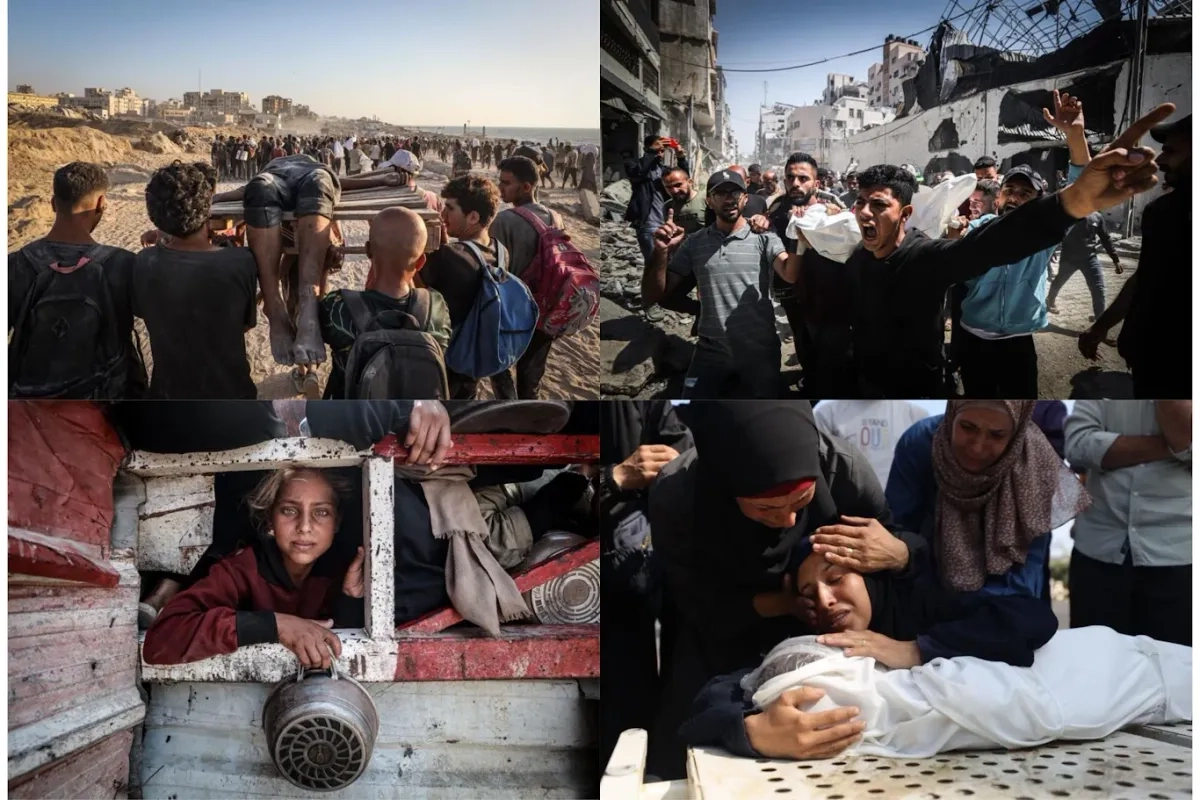
The filmmaker acknowledged that it was humanly impossible for the production to be in all the areas where the genocide is taking place and gathered all that material “to stick to reality as much as possible and get closer to the facts that are happening” without respite in the Gaza Strip.
If the terrible story begins in January 2025 with the supposed ceasefire, Rangel closed the content of the material “when the murder of the rescuers happened; the video with which the documentary ended is original from one of the volunteers, 23 years old, which has great value not only testimonial, but thanks to him the argument of the Israeli militia was denied and broken.”
At the end, below the credits, I included a final scene about a topic I didn’t have time to cover. It was the humanitarian aid trap set by Israel and the United States, which was used to murder those who were going to receive it. It’s a short clip, with a powerful image.
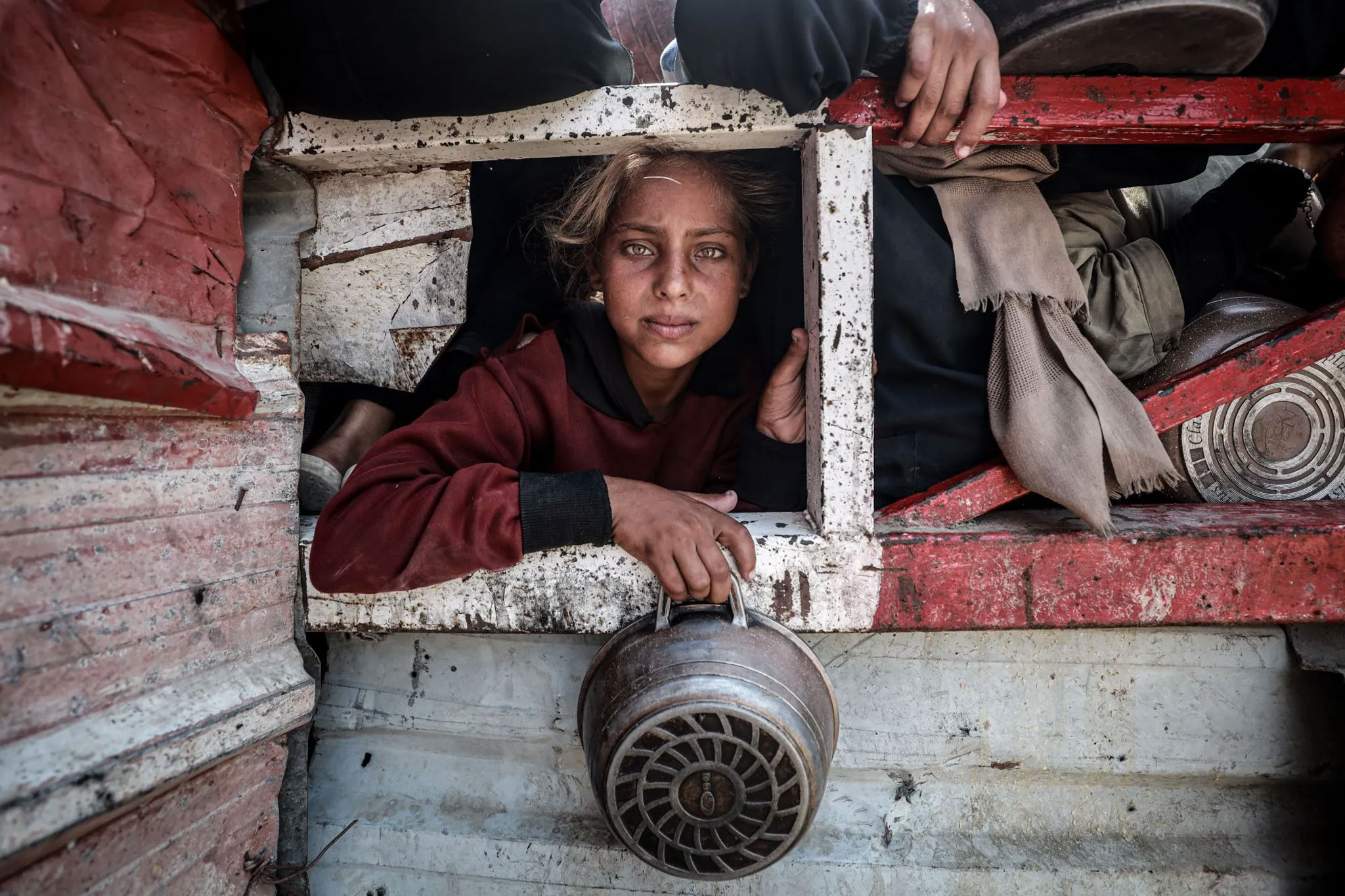
It was symbolic to include this stark image of a truck returning full of Palestinians, empty-handed and carrying the corpses of innocent, unarmed, starving men who went for humanitarian aid and returned with nothing.”
It’s worth mentioning that during the three special screenings of the documentary at the Clavijero Cultural Center in Morelia, the photographic exhibition Greater Palestine and 25 Windows to Hell by Khames Alrefi: Genocide in Images was mounted concurrently and is still open at the same venue. Regarding this collection, Rangel commented that it will be acquired by the Michoacán State Government’s Ministry of Culture, and the entire proceeds will be sent to its author, Khames Alrefi, in Gaza.
Rafael Rangel’s Greater Palestine, with a special video by Rifaat Radwan, also includes the collaboration of Marwan Makhoul and the poem New Gaza. It also features additional photography by Said Al-Najjar, Hamzah Al-shami, Ahmed Al-Danaf, Yousef Al-Mashharawi, Hassouna Al-Jerjawi, Ahmed Al-Salmi, Feryal Abdo, Hassan Eslieh, Abdullah Al-Sayyed, Khames Alrefi, and Ameer Barhoom.
The edition is by Mar Jardiel, the coordination in Mexico is by Jimena Rangel and in Egypt by Mahmoud Elkholy, with translation by Elíah Salem.
-
People’s Mañanera March 24
President Sheinbaum’s daily press conference, with comments on electoral reform, PAN, femicide, and diesel prices.
-
President Sheinbaum Insists US Eliminate Tariffs on Cars, Steel & Aluminum
The Mexican President said that lowering or eliminating tariffs is part of the discussion with the US, but not yet reflected in reality.
-
Who Produces Social Wealth & Who Concentrates It?
Who built the powerful economic empire of Tehuacán’s poultry industry? Was it solely the entrepreneurial intelligence of its founder? Obviously not.