41.4% of Mexican Households Supplement Income with Government Programs
This article by the SinEmbargo newsroom originally appeared in the September 22, 2026 edition of SinEmbargo.
Mexico City, September 22 (SinEmbargo).— The percentage of Mexican households that received income from government programs rose from 25 percent in 2020 to 41.4 percent in 2025, according to the results of the 2025 Intercensal Survey by the National Institute of Statistics and Geography (Inegi).
This figure means that four out of every 10 homes reported receiving resources from these social programs during the past year, in a period in which the proportion of dwellings that obtained income from sources other than work also increased.
In total, 50.1 percent of Mexican households received some extra income in addition to labor income, compared with 38.5 percent recorded five years earlier; among them, households with members who receive retirement benefits or pensions also grew, rising from 13 to 16.6 percent.
Mauricio Rodríguez Abreu, Inegi’s director general of Sociodemographic Statistics, presented these figures as part of the survey results, which make it possible to compare changes in Mexican households between 2020 and 2025.
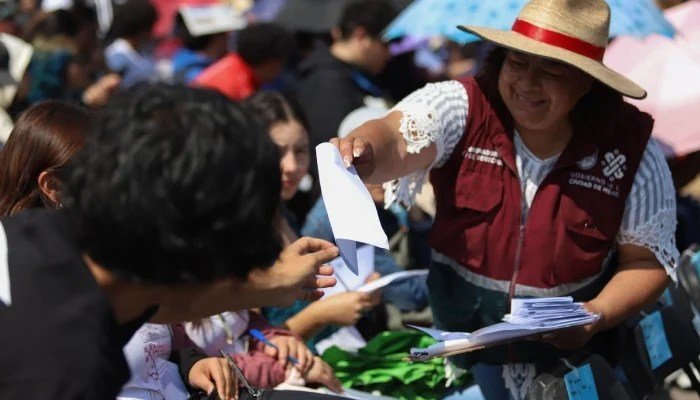
Social Support Reaches 41.4% of Mexican Households
Over that five-year span, the proportion of households benefiting from government programs increased 16.4 percentage points, according to the Intercensal Survey data.
“Between 2020 and 2025, the proportion of households in which at least one member received monetary income from sources other than work increased from 38.5 to 50.1 percent. Specifically, households benefiting from government programs went from 25.0 to 41.4 percent,” Inegi detailed in its communiqué.
The survey also showed a decrease in other sources of income: households that received support from people living in another dwelling within the country went from 6.1 to 5.2 percent, while those that received money from people living in another country fell from 5.1 to 4.7 percent.
The information comes from a sample applied from October 6 to November 14, 2025, in 7.3 million dwellings, about one in every five in the country, with the aim of updating the national picture on population, households, migration, education, employment, health and housing.
Post by @INEGI_INFORMA on X
The country closed 2025 with 130.9 million inhabitants and a median age of 32, three years more than in 2020, of whom 130.4 million live in private dwellings.
Although the population continued to rise, the pace of growth slowed: the average annual rate fell to 0.7 percent between 2020 and 2025, far from the one percent reported five years earlier. By contrast, the number of households went from 35.2 to 39.7 million, but the average number of occupants fell from 3.6 to 3.3.
The survey also showed changes in household composition: single people increased from 33.7 to 36.2 percent, while one-person households went from 12.4 to 15 percent.
Women Increase Their Economic Participation
In the labor sector, 55.1 percent of the population aged 12 and older participated in economic activity in 2025, a small gain compared with 54 percent in 2020, which was mainly due to the greater integration of women, whose participation grew from 38.8 to 41 percent over that period.
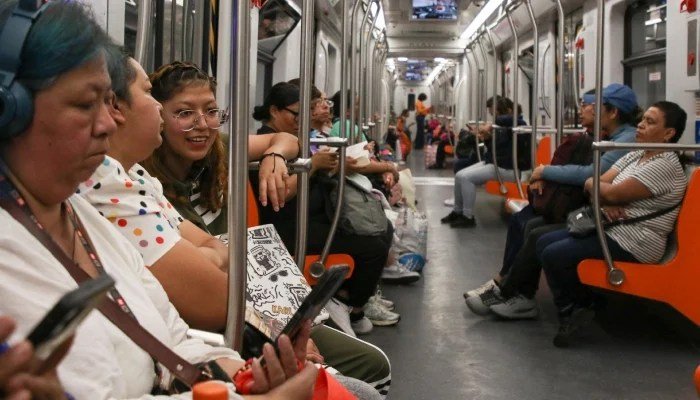
Among the male population, by contrast, the variation was minimal, so women came to represent almost four out of every 10 employed people nationwide.
The education sector also registered progress: school attendance grew in all age groups, while the illiteracy rate among people aged 15 and older fell from 4.8 to 3.7 percent.
Likewise, average schooling rose to 10.3 years, which is equivalent to having completed secondary school and the first year of upper secondary education.
More Internet and Basic Services in Homes
The survey also recorded improvements in the coverage of basic services and in the country’s homes: Internet access jumped, going from 53.9 to 75.7 percent between 2020 and 2025, while the presence of cell phones increased from 88.1 to 94.5 percent.
As for essential services, the proportion of homes with piped water inside rose from 77 to 82.4 percent. By contrast, homes with no access to this resource at all fell from 3.7 to 2.4 percent.
Regarding drainage, 79.6 percent of homes were connected to the public network; however, 16.8 percent had a septic pit, biodigester or septic tank.
In addition, the survey measured for the first time the impact of internal forced displacement: in 509,900 households at least one member had to change residence due to violence or insecurity in their locality, which affected 1.6 million people. Another 151,900 households registered forced displacements because of natural or human-caused disasters.
-
People’s Mañanera October 13
President Sheinbaum’s daily press conference, with comments on security, new prisons, healthcare, Jalisco, and popular support.
-
Constitutional Reforms Strengthen the Defense of Mexican Sovereignty, Sheinbaum Says
Elections swayed by foreign interference can now be annulled, and Sheinbaum likened those seeking outside backing to the conservatives who brought Maximilian.
-
At the End of the Six-Year Term There Will Be 350,000 New Places for Undergraduate Studies, Sheinbaum Says
The plan includes new high schools and technological institutes, converting middle schools without afternoon shifts, and more Rosario Castellanos campuses.