In Washington’s Shadow
This article by Carlos Fazio originally appeared in the February 21, 2026 edition of Rebelión.
Under the leadership of President Claudia Sheinbaum, Mexico once again emerged, standing alone, upholding the formal defense of the principles of non-intervention and the free self-determination of peoples, and displaying its immense and unparalleled solidarity. But this is, admittedly, a defense of institutional principles and solidarity, with its inherent flaws and fractures. Following Donald Trump’s January 29th executive order that mandated the imposition of additional punitive tariffs on “any country that directly or indirectly sells or otherwise provides oil to Cuba,” Sheinbaum’s government immediately halted crude oil shipments to the island.
Thus, Mexico yielded to Washington’s blackmail and extortion, contributing de facto to the devastating US energy blockade against Cuba, significantly eroding what had historically been a unique feature of Mexican diplomacy with respect to the largest of the Antilles: the defense of sovereignty as an operational principle, a tradition that had survived regime changes, ideological shifts and pressures from Washington of all kinds.
In the last two years, while crude oil shipments from Venezuela and Russia declined, Mexico had increased its share as Cuba’s main supplier. According to Petro Intelligence, in 2023 and 2024 Mexico shipped 10 million barrels per day to the island. Data cited by the Financial Times, based on information from Kpler, indicates that in 2025 Mexico shipped an average of 12,284 barrels per day, 44 percent of Cuba’s total oil imports, compared to 9,528 barrels per day from Venezuela. Meanwhile, according to information reported by the state-owned company Pemex to the U.S. Securities and Exchange Commission, Mexico shipped 17,200 barrels of crude oil and 2,000 barrels of petroleum products to Cuba per day.
Beyond Ideologies
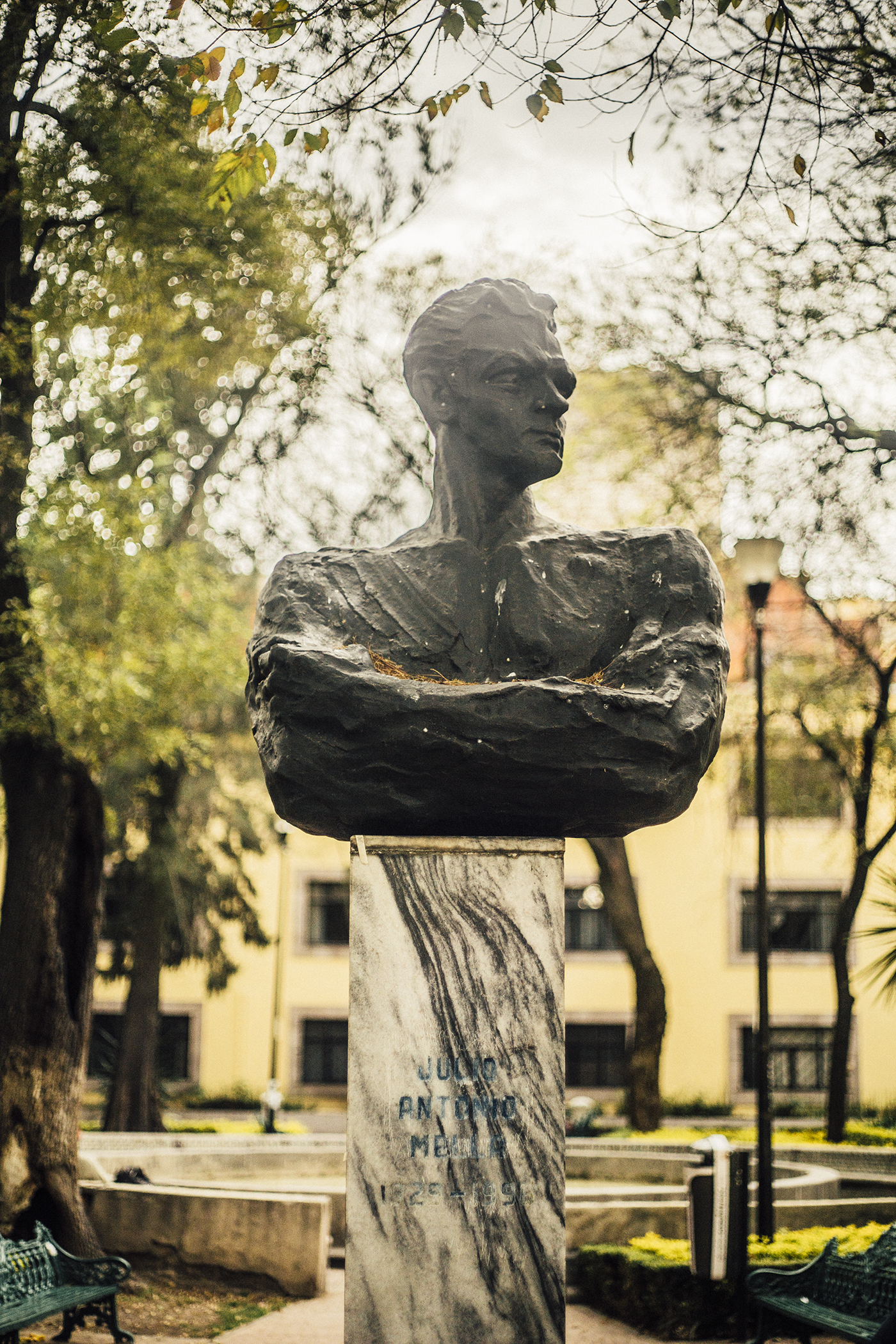
The bond between Cuba and Mexico is very long-standing. In 1902, Mexico was the first country to recognize Cuba’s independence. A few years earlier, it had been a land of exile for José Martí, and later for legendary figures such as the Cuban communist leader Julio Antonio Mella, assassinated in Mexico in 1929. It would also be a haven for Juan Marinello and Raúl Roa. Furthermore, three months after General Lázaro Cárdenas decreed the nationalization of the oil industry on March 18, 1938, a massive rally was held in Havana, attended by thousands of people who paid 10 cents to support the expropriation. Mexico was also a land of asylum for Fidel Castro, his brother Raúl, and Ernesto ” Che” Guevara.
On December 2, 1961, five years after the Granma yacht set sail from Veracruz for the Cuban coast with its cargo of guerrillas, when Fidel Castro declared the Marxist-Leninist character of the revolution and strengthened ties with the Soviet Union, the initial closeness of the Institutional Revolutionary Party (PRI) governments gave way to a cautious distance. These were the days of the Cold War, and after ministerial meetings in Punta del Este in 1962 and 1964, when the Organization of American States determined, first, that all member countries should participate in a “quarantine” against the island and, later, that they should break diplomatic, consular, and economic relations with Fidel Castro’s government, Mexico refused, based on the principle of non-intervention.
This is a far from neutral shift, leading Mexico’s current government to abandon a historical position that granted it a distinct, recognizable, and respected place on the Latin American political and diplomatic map.
This consistent gesture made Mexico the only Latin American country to maintain official ties with revolutionary Cuba, even though it had to agree to active collaboration with U.S. intelligence services to monitor those traveling to the island. Cuba represented a testament to Mexico’s relative autonomy from the United States and in its relationship with the world. Therein lay the essence of a diplomatic tradition rooted in the principles of non-intervention and self-determination of peoples, principles previously invoked in the face of foreign interference during the Spanish Civil War, the annexation of Austria by Nazi Germany, and the coup against Jacobo Árbenz in Guatemala.
The victory of the conservative National Action Party (PAN) in 2000 brought a shift in policy toward Cuba. Under the leadership of Foreign Minister Jorge Castañeda Gutman, President Vicente Fox introduced what he called an “intelligent transfer of sovereignty” with respect to the United States (and Canada), and Mexico began to present itself as an unreserved defender of two of Washington’s main interventionist principles: “human rights” and “democracy” abroad. It was asserted that foreign policy based on “abstract principles” was a thing of the past, and now it was time to defend national interests and the liberal order. This culminated in Fox’s iconic “eat and leave” to Fidel Castro in March 2002, during the UN International Conference on Financing for Development in Monterrey. The PAN’s discursive shift generated tensions with Fidel Castro’s government, but diplomatic relations were never severed.
Mexico & The Donroe Doctrine
In the context of the tightening of the United States blockade, Mexico succumbed to Washington’s extraterritorial policy, setting a precedent that could extend to other economic sectors of the meager trade with Cuba.
With her nuances and contradictions, much like Venezuela’s interim president, Delcy Rodríguez, Sheinbaum governs with a gun to her head. And under relentless and unsubtle pressure from Trump himself and his Secretary of State, Marco Rubio, she opted to suspend oil shipments and present the decision as a pragmatic reconfiguration of support for the island: exchanging crude for humanitarian aid. In reality, this is a far from neutral shift, leading the current government to abandon a historical position that granted it a distinct, recognizable, and respected place on the Latin American political and diplomatic map.
At the helm of a country with over 3,000 kilometers of border with an empire that has embarked on a new phase of hemispheric expansion, Sheinbaum must confront a new reality that harks back to 1942, the year in which geopolitical theorist Nicholas Spykman formulated the concept of the United States’ “living space” while World War II was still raging: the “American Mediterranean,” as he defined it, encompasses the coastline of the Gulf of Mexico and the Caribbean Sea. It comprises Mexico, Central America, Colombia, Venezuela, and the chain of islands stretching from Trinidad to the tip of Florida (including Cuba). Spykman asserted at the time that this subregion should remain under the exclusive and undisputed tutelage of Washington, which “implies for Mexico, Colombia, and Venezuela a situation of absolute dependence, of merely nominal freedom.”
Possible Solidarity
On the defensive, Sheinbaum has continued to argue that it is Pemex’s sovereign “decision” “when and how” to send hydrocarbons to Cuba; that Foreign Minister Juan Ramón de la Fuente is in “talks” with his US counterpart, Marco Rubio, to resume supplies, since without fuel there is a risk of a far-reaching “humanitarian crisis” on the island, a situation that must be avoided “through respect for international law and dialogue between the parties.” She has even offered to mediate between Washington and Havana.
Sheinbaum’s phrasing, however, reveals that she has understood that “peace through strength” and the so-called Trump corollary of his northern neighbor are not empty slogans, but part of a deterrence equation that leaves no room for idealism. The Pentagon’s National Security Strategy 2025 and National Defense Strategy 2026 do not separate national security from economic vitality; they are one and the same. The economy is, in the words of both documents, “the ultimate anchor” of military power. The “making the economy scream” tactic of the Nixon-Kissinger era against Salvador Allende’s socialist government in Chile has been revived. The same policy of collective punishment that Trump and Bessent, de facto his secretary of economic warfare, are now applying against Cuba.
Under these circumstances, Sheinbaum has opted for humanitarian aid to Cuba. On February 8, two Navy logistics support ships set sail from Veracruz to Havana with 814 tons of food supplies (meat products, tuna in water, sardines, beans, rice, vegetable oil, and liquid and powdered milk) and personal hygiene items. She has also announced further shipments.
This tactical shift certainly contrasts with the deafening silence of other progressive countries in the region—Brazil, Colombia, and Uruguay—whose leaders have remained silent on the matter. However, it could become a strategic error if Mexican foreign policy prioritizes containment and transforms into mere risk management. As José Romero has said, Mexico is no longer the exception. It avoids conflict with Washington, but at the cost of relinquishing its own voice beyond the power asymmetries that have always existed.
-
President Sheinbaum: Unlikely the Right Wing Will Return to Power in Mexico
The Mexican President indicated that the financial outlook is positive for the country, which demonstrates the viability of its economic model.
-
EZLN: The Nation-state No Longer Has Decision Making Power
“Sovereignty is a bad joke. They can’t say that Mexico is sovereign, even if they say so on the Mañanera, if it can’t even decide whether to send oil to Cuba.”
-
Social Programs Will Cushion Impact of Global Chaos in 2026: Mexico’s Finance Secretary
By 2026, social program spending will reach nearly one trillion pesos, with the goal of sustaining the well-being of the majority of families.