Indigenous and Afro-Mexican Peoples
This article by Elena Poniatowska originally appeared in the August 9, 2026 edition of La Jornada, Mexico’s premier left-wing daily newspaper.
This Sunday we celebrate the International Day of the World’s Indigenous Peoples, which the United Nations General Assembly proclaimed in December 1994, which commits Mexicans to protect the rights of the original communities, safeguard their traditions, and recognize their value in the history of our country, which owes them a great deal.
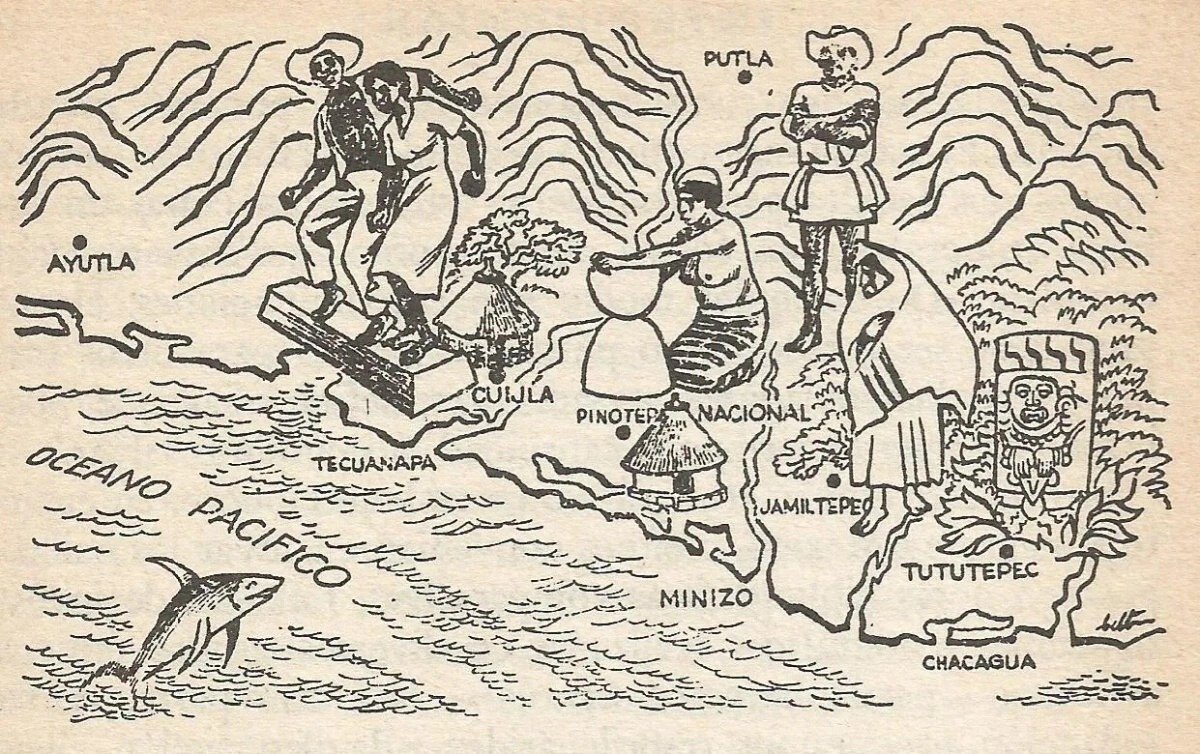
In the 1950s, the Veracruz anthropologist Gonzalo Aguirre Beltrán was a pioneer in research and ethnographic studies of the Afro-Mexican peoples, especially in Cuijla, in the state of Guerrero, an area also known as the Costa Chica. His research proved essential for recognizing a society set apart from the world, due to the lack of communications, but which had kept its traditions alive for 300 years: their mixture with Indigenous people and Europeans, the social organization of the people of Cuijla, rites, beliefs and superstitions, as well as the way Spanish is spoken in that part of Mexico. This research was also illustrated with the engravings of Alberto Beltrán, an artist who devoted his life and talent to social causes, and who always defended traditions and customs at the Taller de Gráfica Popular (People’s Graphic Workshop).
Likewise, on August 10 we celebrate the day the constitutional recognition of Afro-Mexican persons, peoples, and communities took effect, an initiative that Senator Susana Harp Iturribarría presented in 2019, which bore fruit in the 2024 Constitutional Reform, to prioritize Afro-Mexican peoples and communities as part of our country’s pluricultural composition, with the same rights as any Mexican.
Susana, why did you become so interested in the Afro-Mexican communities?
Because they were completely made invisible. They were not recognized as a distinct culture. They are three peoples with different ways of dancing, of eating, with their own recipe traditions and different beliefs. For example, those of the south, on the Costa Chica: Oaxaca and Guerrero do “versos en topada” (poetic songs). It’s a way of playing between a man and a woman who declare their love in verse. In Oaxaca, not long ago, a young man said a verso en topada to me, because he wanted to take me with him. And I answered him with another verso en topada:
I’m from the Costa Chica,
with a bluebird heart,
I’m tastier than bread
handed out at the feast.
You say you’re going to bite me,
but only if I let you.
So you should never give in?
It’s a way of playing at love. Higher up, in the lowlands, in the Afro-Jarocho area between Loma Bonita, Oaxaca and Tuxtepec, Veracruz, they sing “décimas.” In Mexico, Elena, 68 Indigenous peoples are recognized, three Afro-Mexican peoples, and all the rest of the people are mestizo, like you and me. Of the 68 Indigenous peoples with all their dialectal variants, we have 364 ways of conversing, plus the language of the Mascogos, in Múzquiz, Coahuila, in danger of disappearing.
And you keep traveling to rescue what can still be saved. Do you travel singing for the eternally forgotten, Susana?
Right now, since I’m in the Senate, I’m going to support them in their efforts. I travel to Oaxaca, to Chiapas, to Hidalgo. I believe, Elena, that when you propose a law and manage to get it enacted, it’s very important to go to the communities to explain their rights to them. At the end of this month I’m going to Chiapas, because its university (Unachi) is asking me to give an explanation of the Law for the Protection of Indigenous and Afro-Mexican Cultural Heritage that we created to stop the plagiarism of textiles and other crafts that national and international brands had plagiarized.
Susana, looting has been a constant in Mexico’s history. In Oaxaca it became very easy for visitors to pocket vessels, supposedly to protect them in their homes.
That’s right. We had different cultures, and when building bridges, highways, when digging the earth, treasures constantly appeared, and even today vestiges of our extraordinary past keep emerging. For example, near Monte Albán there are many more pyramids than the ones already in view; the National Institute of Anthropology and History once told me: “if they can’t be preserved after excavating, it’s better that they stay underground, because that way they are better preserved.”
When excavating, many pieces are also destroyed, and visitors help themselves to them brazenly…
That’s right, like Tomb 7 of Monte Albán, which is marvelous, discovered years ago by Alfonso Caso. It’s a pleasure, when you go to Santo Domingo, in Oaxaca, to visit the Cultural Center, to see a whole room full of treasures that Alfonso Caso found, very well preserved and protected with veneration. My grandfather, who was a historian and journalist, Jorge Fernando Iturribarría, an Oaxacan, helped Caso, and he used to tell us how impressive the discovery of Tomb 7 was and the great emotion of all Oaxacans.
How wonderful! But going back to our earlier question, Susana, do you consider that Mexico has been a racist country?
Our country has always been racist and classist, of course it has, but the presence of Indigenous communities was always recognized. That was the struggle of the Zapatistas, so that their rights would be clearly set down in the Constitution. Advances were made, but not all the demands were included. That’s why Article 2 of the Constitution was amended. There was a Section A and a Section B. I had the opportunity to add Section C, which also recognizes the Afro-Mexican peoples, totally forgotten. In 2024 a Section D was added, and now a consultation is going to be held to approve a General Law on the Rights of Indigenous and Afro-Mexican Peoples. It was only in 2019 that we achieved the inclusion of the Afro-Mexican peoples in this new section of that same Article 2. Here we are, in 2026, and we are only just going to discuss it formally.
Susana, and why did the subject of respect for and recovery of our past become such a passion for you?
I am neither Indigenous nor Afro, but I am Oaxacan, and as Andrés Henestrosa used to say: “my compatriots are the ones I see in the landscape.” When I would go to collect songs and tunes of my land, I walked a lot from town to town and knocked on the doors of the communities to work with them. They accepted me, and I devoted myself to keeping their words, to understanding what their concerns and aspirations were. My specialty was seeking out music, their customs and traditions, and singing with them. In 2006 I began going to the coast, to the Afro towns of Oaxaca and Guerrero, and it was striking to see how large the Afro-descendant population is in our country. I had no idea of their strength and creativity. They told me they couldn’t travel from Oaxaca to Veracruz without being stopped: “Where are you going?”, “Where are you from?”, “Sing us the National Anthem”, “Who is the president?”, “Show me your voter ID”—brutal harassment that still hasn’t ended and happens the length and breadth of the country. There was a systematic invisibility of the Indigenous minorities throughout Mexico.
“When slavery was abolished in Mexico, these peoples disappeared, because before they were counted as if they were ‘assets.’ If someone had a hacienda with a certain number of hectares and head of cattle, the slaves were recorded right there as if they were livestock. When slavery was abolished, they all disappeared. Having no language of their own, they no longer counted as Zapotecs, or as Mixtecs, or as anything. They weren’t mestizos, and over three centuries they managed to form their own cultures in these three regions: the Costa Chica in Guerrero, the Afro-Jarocho area in the border zone between Oaxaca and Veracruz, and the Mascogo region in the municipality of Múzquiz, in Coahuila. The Mexican State never recognized them as cultures of their own, because, moreover, they took shape little by little.”
Susana, who instilled in you your extraordinary and constant struggle against racial discrimination?
I saw it; they themselves told me when I went to the Afro communities in Oaxaca. I started going in 2006 and 2007 because I wanted to record an album of their songs and dance rhythms; there I understood the condition of discrimination in which these communities were still living in the 21st century, and I came to know and become aware of the discrimination, the invisibility, the difficulty of moving along the dirt roads of the unknown Mexico, where the authorities always stopped or harassed them. At the TAPO bus stations they were asked: “let’s see, who are you? where do you come from? from El Salvador? from Honduras? from Cuba?”, and they answered: “well, I come from Cuajinicuilapa, Guerrero, or from Collantes, Oaxaca, or from Los Tuxtlas, Veracruz”, and they were insulted. They were interrogated and locked up until they proved they had been born in Mexico. They were denied everything. Nothing but mistreatment and cruelty.
So you are our Martin Luther King.
I was fortunate to reach the Senate in 2018 and to have worked on what I wanted. I demanded, I was outraged, I claimed with determination two fundamental things: the recognition of the Afro-Mexican peoples and communities, and I demanded that some law prevent the plagiarism of all Indigenous textiles. I publicized my two causes very clearly and I achieved both protection laws.
Susana, what is expected now from this consultation for the General Law on the Rights of Indigenous and Afro-Mexican Peoples?
This bill was born from the reform of Article 2 of the Constitution, approved in September 2024, but its meaning goes far beyond a legal change. What is at stake is how we want to live together as a country, and how we want to recognize those who have sustained our history from its roots. The consultation will begin this August, and it seeks to ask the peoples directly what they think about a law that speaks of them, of their lives and their rights. Listening to their word before making decisions that affect them is a moral commitment. It seems logical, but for a long time they were not taken into account. This consultation is the opportunity for the peoples to say how they want to relate to the government, how they want their autonomy and self-determination recognized in order to protect their rights. It is a space for them to express what was denied to them for years: their voice in decision-making.
“The 2024 constitutional reform recognizes them as ‘subjects of public law’; it declares that Indigenous and Afro-Mexican peoples have their own legal personality and that they can decide their organization, choose their authorities and their internal life. It is an enormous step toward a more just and respectful relationship, meant to ensure that they are not seen as vulnerable groups, but as peoples with history, identity, and the capacity to decide. That is why it is essential that all Indigenous and Afro-Mexican people take part: community leaders who know their culture and territory, who stand out as defenders of the environment, of human rights, and anyone with something to contribute. The consultation is for them, so it cannot be a closed or exclusive space, but a national dialogue.”
-
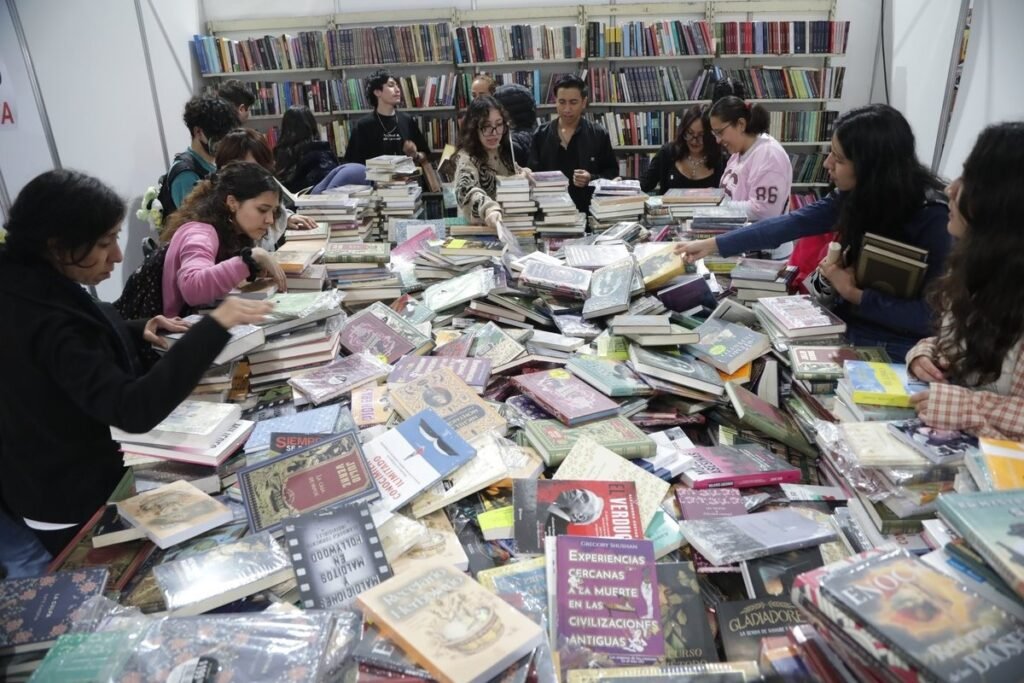
Mexican Book Fairs
“Book fairs in Mexico are among the great gatherings that speak of how a people nourishes itself on books,” observes Poniatowska.
-
The Morena, PT, and PVEM Coalition Is Necessary to Stop the Right, Anaya Says
PT leader Alberto Anaya says there has never been a problem with Sheinbaum, while PAN’s Jorge Romero confirms an alliance with the PRI in Chihuahua.
-
“Washington Stole the Election from Me. It Happened in Honduras and It Can Happen in Mexico”
In an interview with Sin Embargo, the Honduran ex-candidate says Trump’s attacks and the Juan Orlando Hernández pardon were a planned operation, and urges the left to organize.