Thousands Demand Clean Water in Jalisco and Lemus Uses It to Repress Them
This article by SinEmbargo staff originally appeared in the October 11, 2026 edition of SinEmbargo, an independent Mexican digital news outlet.
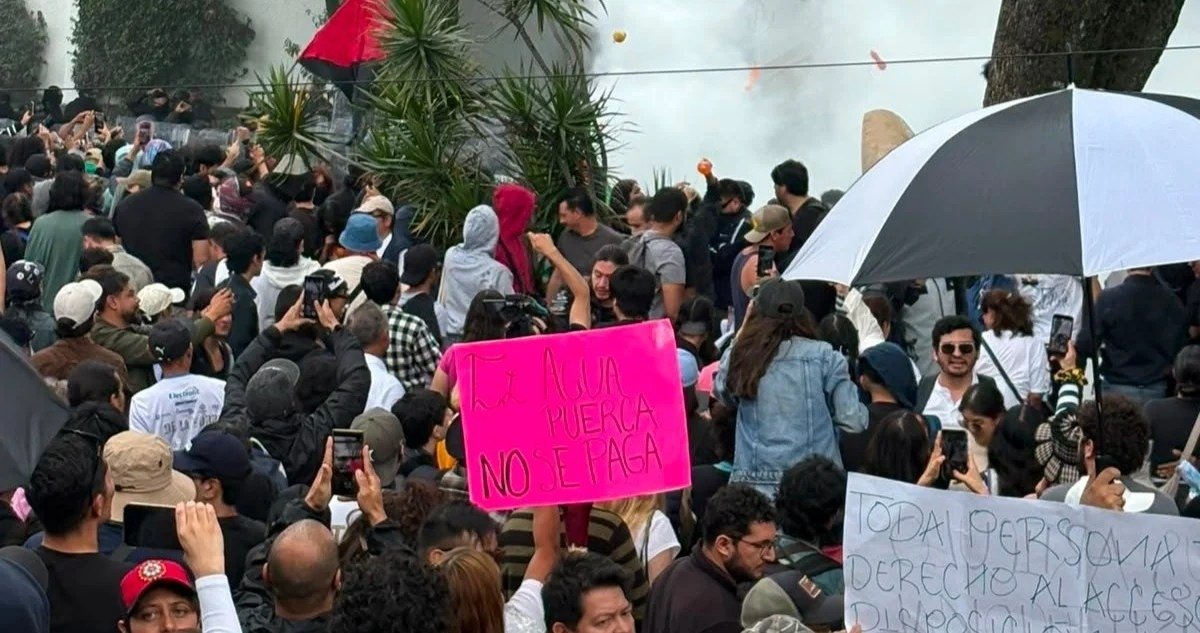
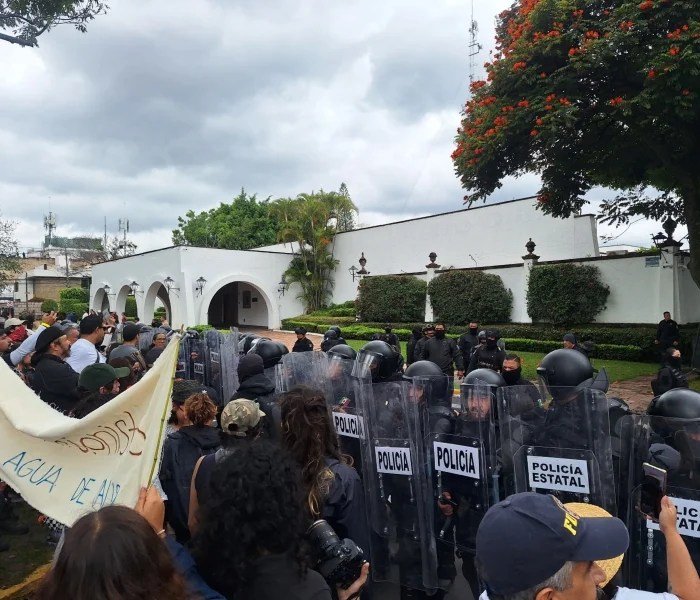
Mexico City, October 11 (SinEmbargo).— The mega-march to demand clean water in Guadalajara, Jalisco, ended this Sunday in clashes between protesters and the State Police in front of Casa Jalisco, where the officers used pressurized water and tear gas. After the events, alleged arbitrary arrests and the disappearance of two participants in the mobilization were also denounced.
The protest began around 11:00 a.m. at the Glorieta de La Minerva, from where thousands of people advanced along López Mateos avenue toward the official residence of Governor Pablo Lemus Navarro, where the protest escalated.
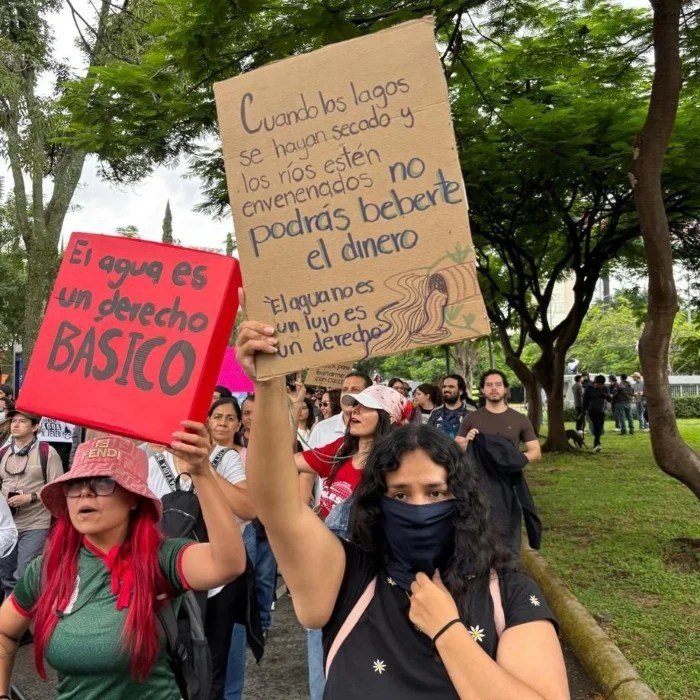
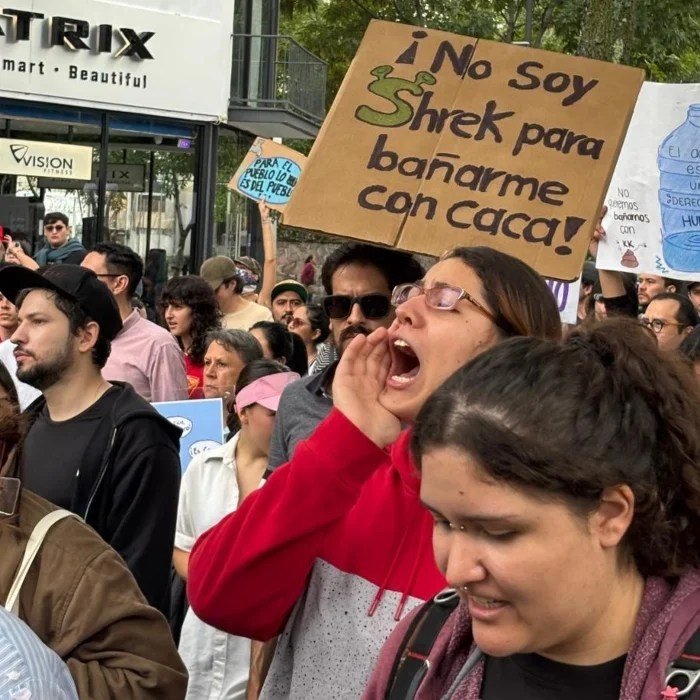
The mobilization stretched more than 1.4 kilometers (km) between La Minerva and the residence of the state executive, according to citizen reports. Families, residents of different parts of the Guadalajara Metropolitan Area (ZMG), and other participants joined to protest the quality of the water that reaches their homes.
With signs and chants, the protesters demanded a solution to the supply problem, which has persisted for months.
Among the phrases heard were “Out, Lemus!”, “We want clean water!” and “Water is a right, not a privilege!”
The complaints were directed both at the Government of Jalisco and at the Intermunicipal System of Drinking Water and Sewerage Services (SIAPA), the agency responsible for the service in the Metropolitan Area.
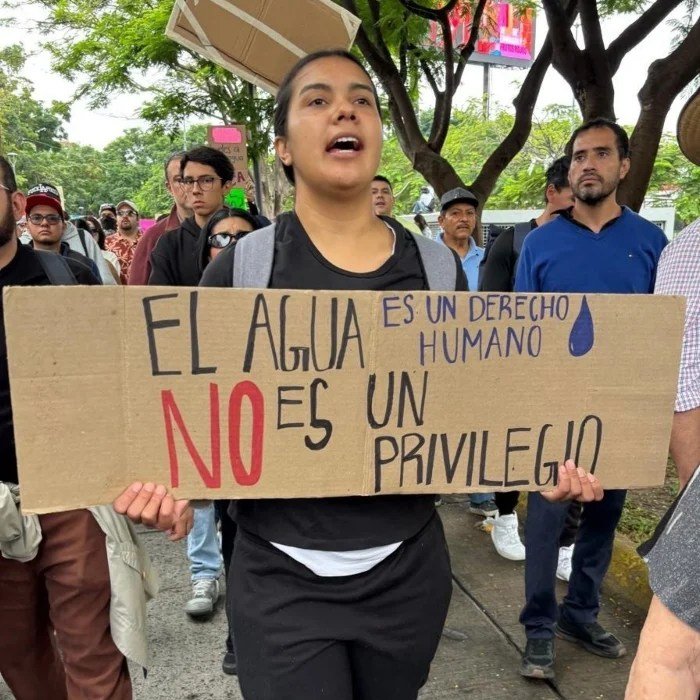
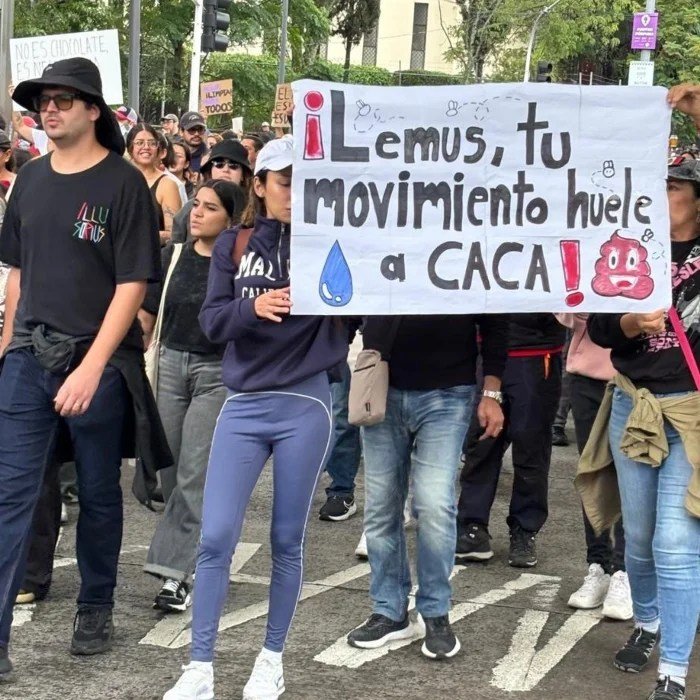
Other attendees carried signs with messages such as “Stop SIAPA corruption” and “Water is a human right. It is not a privilege.” They also chanted “The people united will never be defeated!” to protest that the water they receive in their homes is of poor quality.
The discontent had already been expressed days earlier at the Western Institute of Technology and Higher Education (ITESO), where students confronted Lemus and complained to him about the dirty water, insecurity, and public transportation fares. During that encounter, the Movimiento Ciudadano (MC) Governor promised that this Sunday’s march would take place calmly.
Arrests and Disappearances After Clashes at Casa Jalisco
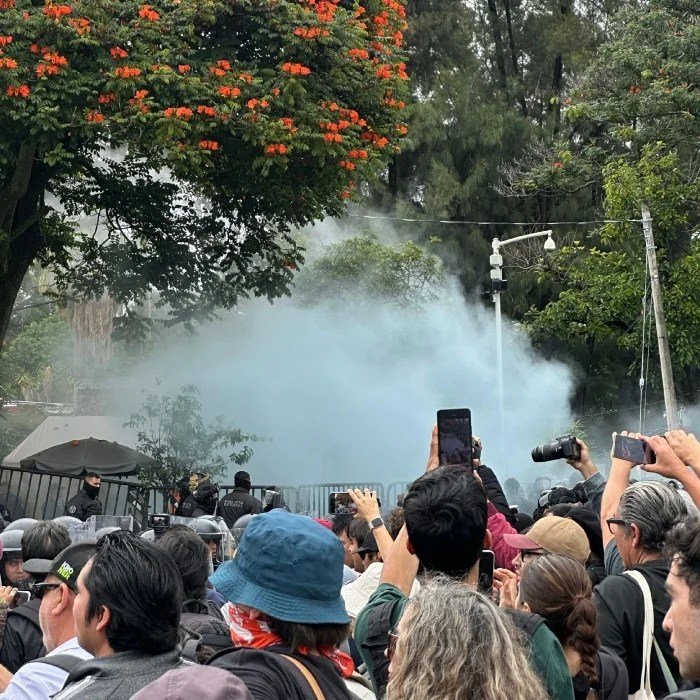
According to a report by the newspaper Reforma, the clashes began around 1:20 p.m. in front of Casa Jalisco, where protesters threw dirty water, bottles, and sticks at state police officers.
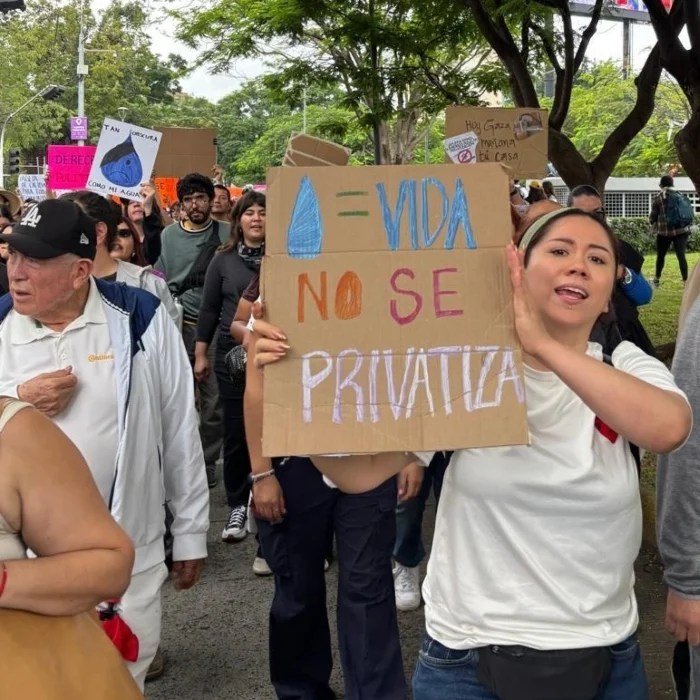
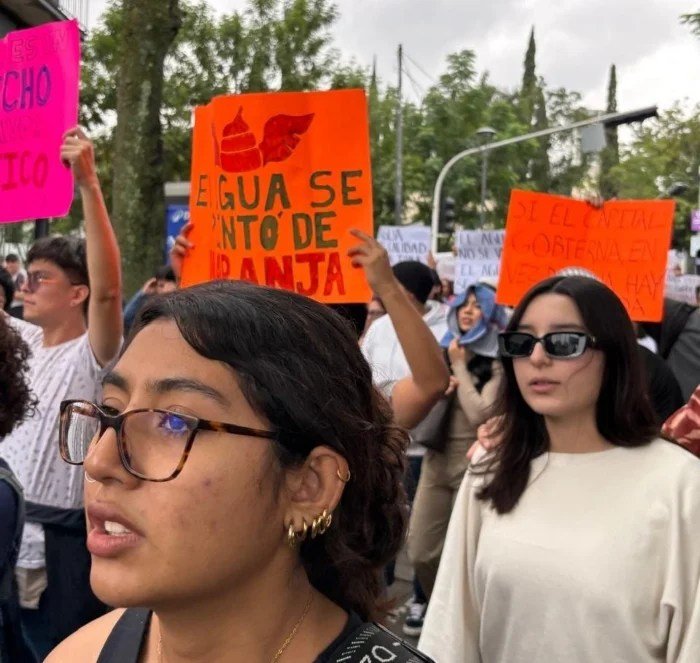
The officers responded first with jets of pressurized water and then with tear gas. However, the report noted that the gas also affected people who were not taking part in the attacks, among them children and older adults.
I’ve been going to marches since the nineties. I had never felt the risks I felt at today’s. This is how Jalisco is [mis]governed.
Academic Bernardo Masini, on his X account
The Palestine Solidarity Network Guadalajara released an urgent statement in which it denounced that Eduardo Ramírez Silva and Ricardo Ramírez Silva had allegedly been “picked up” by State Police officers one block from Casa Jalisco during the mobilization.
Post by @redxpalesgdl on X
Post by @SinEmbargoMX on X
The organization demanded the “immediate release” of both and asked that they be “presented alive immediately,” but so far the complaint does not detail how it happened.
In another video circulating on social media, four young women denounced having been detained in the vicinity of Casa Jalisco.
From there, they stated that they were dragged during their detention and that they did not know where they would be taken.
Post by @SinEmbargoMX on X
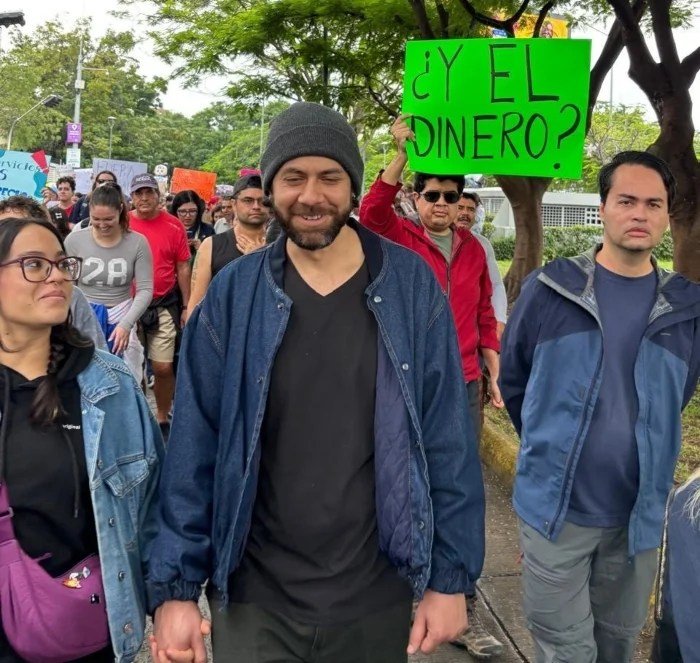
One of them appears with a head injury, while the others state that State Police officers took their belongings, among them a cell phone and a pair of glasses. They also held the officers responsible for anything that might happen to them.
Families Pay More for Bottled Water
Behind the protest are months of discontent over water quality in various neighborhoods of the metropolis, where some residents report unusual coloring, sediment, and foul odors, a situation that has forced some families to buy bottled water to cover basic needs.
On October 5, residents also took their discontent to the streets with blockades at various points of the Guadalajara Metropolitan Area, among them Periférico Sur and 8 de Julio avenue, López Mateos Sur, and the intersection of Colón and Jaime Torres Bodet.
Post by @SinEmbargoMX on X
Post by @SinEmbargoMX on X
Although the Government of Jalisco announced measures to address the situation, among them reducing the flow of water from the Las Pintas dam, this Sunday’s call went ahead.
In parallel, Governor Pablo Lemus shared testimonies on social media with which he claimed that the water quality had begun to improve. However, citizens maintain their demands and ask for results that can be verified in their homes, as well as public information about the causes of the problem.
This Monday, SIAPA is expected to announce the neighborhoods where rationing will be applied, as part of the measures to adjust the supply while the situation is addressed.
Post by @SinEmbargoMX on X
Alfaro Lives It Up. Here, Millions With Filthy Water
Enrique Alfaro promised that Guadalajara would have guaranteed water for the next 50 years. Two years later, while the former governor develops a new career in Spanish soccer, residents of the Metropolitan Area open the tap and receive black, murky water that smells “as if it had excrement.”
The water crisis that his Administration bequeathed to his MC fellow party member Pablo Lemus has now reached a critical point, and now, in addition to the contamination, hundreds of thousands of people will face months of shortages. Alfaro maintained in 2024 that the works carried out during his Government secured the supply for five decades.
And so, people open the tap to wash the dishes and the water stinks. They get ready to go to work, but they cannot bathe because it comes out black and fetid, as recounted by Alejandro García, a resident of Zapopan, Jalisco.
Post by @SinEmbargoMX on X
Post by @redxpalesgdl on X
It is the opposite of that promise by Alfaro: while Guadalajara today faces an emergency due to contaminated water and a deteriorated supply system, the former governor is in Valladolid, Spain, where after joining professional soccer he ended up as Director of Organizational Development of Real Valladolid.
A Promise Into the Void
Alfaro certainly left a crisis that belies his claim of having guaranteed water for the next 50 years. And his successor, Pablo Lemus, acted late in the face of an emergency. Now the problem blew up on him, says Josué Daniel Sánchez Tapetillo, a water resources specialist.
“This is the result of many bad decisions, of the whims of previous governments,” the engineer elaborates. With Enrique Alfaro “we lost six years and now we have dirty water up to our necks, literally.” The former governor refused to build a necessary aqueduct and almost in his last year accepted the project, but never got it going.
Post by @Ferchiz_VR on X
Now Pablo Lemus “is forced to take action,” he said, actions that come very late and whose results will take several months, will leave the metropolitan area without water, and will spend billions of pesos on a work that will serve only for a while, only to spend again on the one that is truly needed: a second aqueduct at Lake Chapala.
“I got close to her and she smelled like poop, freshly bathed and she smelled like poop!” Luz Ramos’s daughter bathed with the water that comes out of the shower, the water supplied by the Intermunicipal System of Drinking Water and Sewerage Services (SIAPA). She had to bathe again with water from a jug. Every five days, recounts the 65-year-old woman from Guadalajara, they have to buy six water jugs. Each month, they spend about 1,500 pesos.
Why Is a Second Aqueduct Needed?
Enrique Alfaro was the first MC Governor in Jalisco. In his campaign, he played at presenting himself as an alternative to the PAN and the PRI and at seeming close to the citizenry. He championed the rejection of the second aqueduct from Lake Chapala and promised that, if he came to power, he would cancel that state project. And he won the elections for the 2018-2024 term.
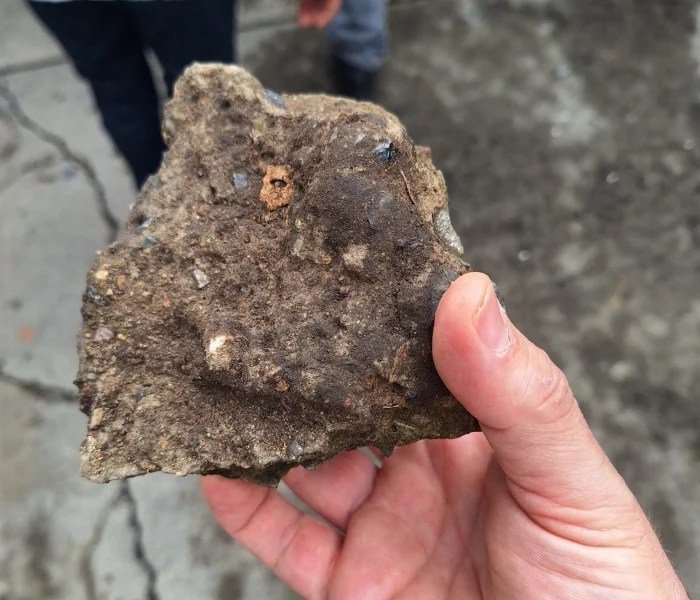
The general public, together with academia and specialists in water issues, requested and recommended the construction of that second line of the Chapala-Guadalajara aqueduct, explained Josué Daniel Sánchez Tapetillo.
Some groups in the municipalities near the lake were distrustful and feared that this line would not be used as a substitute, but to extract more water. But the thing is that Alfaro said the same, that they should not take more water out of the lake. Although it was his decision not to extract more. “It was a populist discourse, in reality he did not want to get into conflicts with the people of the Lake Shore,” says Sánchez Tapetillo.
The Guadalajara Metropolitan Area gets its water mainly from Lake Chapala, which provides it with about 60 percent of the volume it consumes. The resource arrives by two routes: a closed aqueduct and an old system of canals with contamination problems.
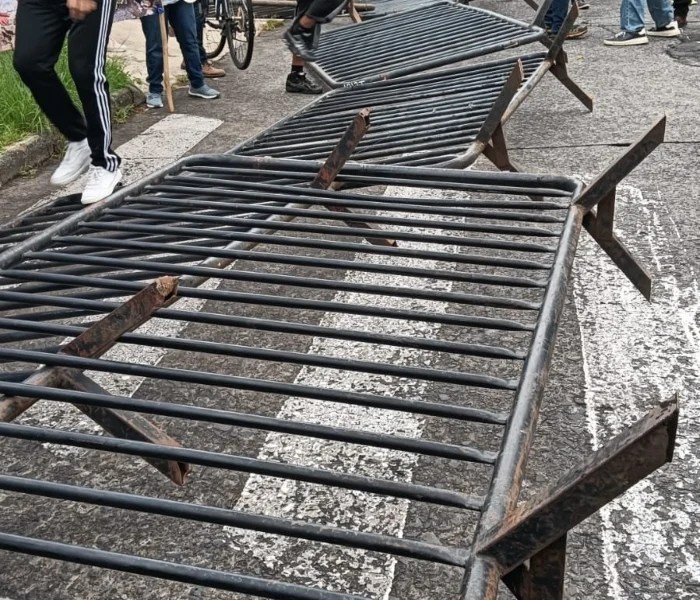
The old system turned 70 years old; it was built in 1956. It provides from 2,000 to 2,500 liters per second, but it crosses urbanized areas where it receives wastewater, industrial discharges, and possible agricultural contaminants. That canal system diverts water toward a stretch of the Santiago River and then toward the Atequiza canals, until reaching the Las Pintas dam. From there it is pumped to the Miravalle No. 1 water treatment plant and then distributed to the population of Guadalajara and the surrounding municipalities.
The aqueduct was built in 1991; it is the most recent work to transport water from Lake Chapala. And the flow it carries is much greater: between 5,000 and 5,500 liters per second, explains Josué Daniel Sánchez. Being closed, it avoids the polluting discharges present in the canals along the route.
“It is a single pipe and for that reason, practically, it has never received maintenance,” because it would have to be shut down and it is the main water supplier, notes Sánchez Tapetillo. That is why “it was important to build this second complementary or substitute aqueduct.”
-
Hurricane Simon Paralyzes Towns and Highways in Jalisco Amid Forecast That It Will Make Landfall
With an erratic path, the Category 4 storm keeps the coast shut in under nonstop rain, though no casualties have been reported so far.
-
Mexican Book Fairs
“Book fairs in Mexico are among the great gatherings that speak of how a people nourishes itself on books,” observes Poniatowska.
-
The Morena, PT, and PVEM Coalition Is Necessary to Stop the Right, Anaya Says
PT leader Alberto Anaya says there has never been a problem with Sheinbaum, while PAN’s Jorge Romero confirms an alliance with the PRI in Chihuahua.