
Let’s Talk About Migration: 2025, A Year Under Siege
This editorial by Diego Torres appears as the introduction to the January 2026 issue of Hablemos de Migración, a newsletter on migration issues published by the Frente Amplio de Mexicanos y Migrantes. We encourage you to subscribe. The English version of the January 2026 issue is available for download.

To talk about migration in 2025 meant placing a historically fundamental issue back at the center of the debate, an issue that had been relegated from the headlines. From the internal migrations that enabled the construction of ancient civilizations to the building of the United States’ greatness by migrant hands, human mobility has been a structural axis of history.
To talk about migration in January 2025, with Donald Trump as the central theme and the uncertainty surrounding his actions against the migrant community after assuming the presidency of the United States for the second time, led us to acknowledge that many of us were wrong to think his words would fall far short of his actions. On his very first day in office, he launched an excessive crackdown on migrants.
To talk about migration today means talking about rampant xenophobia, not only due to Donald Trump, but also because of the neoliberal system that predominates globally. In February 2025, we witnessed how the actions of the US president only brought to light a systematic and historical hatred held by the US government—and the world— against those who have built civilizations. Mexico was not spared. Just a few months earlier, during her visit to Los Angeles, California, President Claudia Sheinbaum received the support and affection of a community that, despite decades of exile, continues to deeply love its homeland. This contrasts sharply with the attention migrants have received from the current administration, whose actions, while significant, are insufficient given the enormous backlog and historical debt owed to this population.
To talk about migration is to expose its root causes: poverty, violence, climate change, and family reunification. All of these are driven by a neoliberal model whose central objective has been the impoverishment of the majority so that a handful of people can concentrate wealth and power. The consolidation of these policies became evident in March when the Donald Trump administration not only intensified the persecution of migrants but also the subjugation of the American population and other nations. In March, the attempt to destabilize Venezuela began again, just as it had in Chile to overthrow Salvador Allende. Through constant tariff threats against Mexico, Trump attempted to interfere in the country’s economic policy, hindering the resolution of historical debts, such as the FOBAPROA bailout. Simultaneously, he continued to strengthen drug trafficking: on the one hand, through millions of dollars derived from drug consumption to satisfy the demand of a sick society mired in addiction; On the other hand, it enriched privileged sectors through the sale of weapons to organized crime in Mexico and around the world. However, it wasn’t all defeat. That same month, the spark began to ignite what would later become the uprising of second and third generations of migrants in the United States against Donald Trump.
To talk about migration is to speak of people forced to leave their homes; of heartbreaking stories that are almost never told, and when they are, are rarely heard. In April, that spark began to ignite. In the United States, the true contributions of migrants to the nation began to be discussed more than ever before. First-generation migrants spearheaded campaigns to inform people about their rights in the face of the onslaught of the immigration system; other efforts focused on historical and cultural education about their countries of origin, to dismantle the discourse of hate and lies promoted by the White House. The discussion of migration ceased to be a simple description of human displacement and became a profound and increasingly politicized issue.
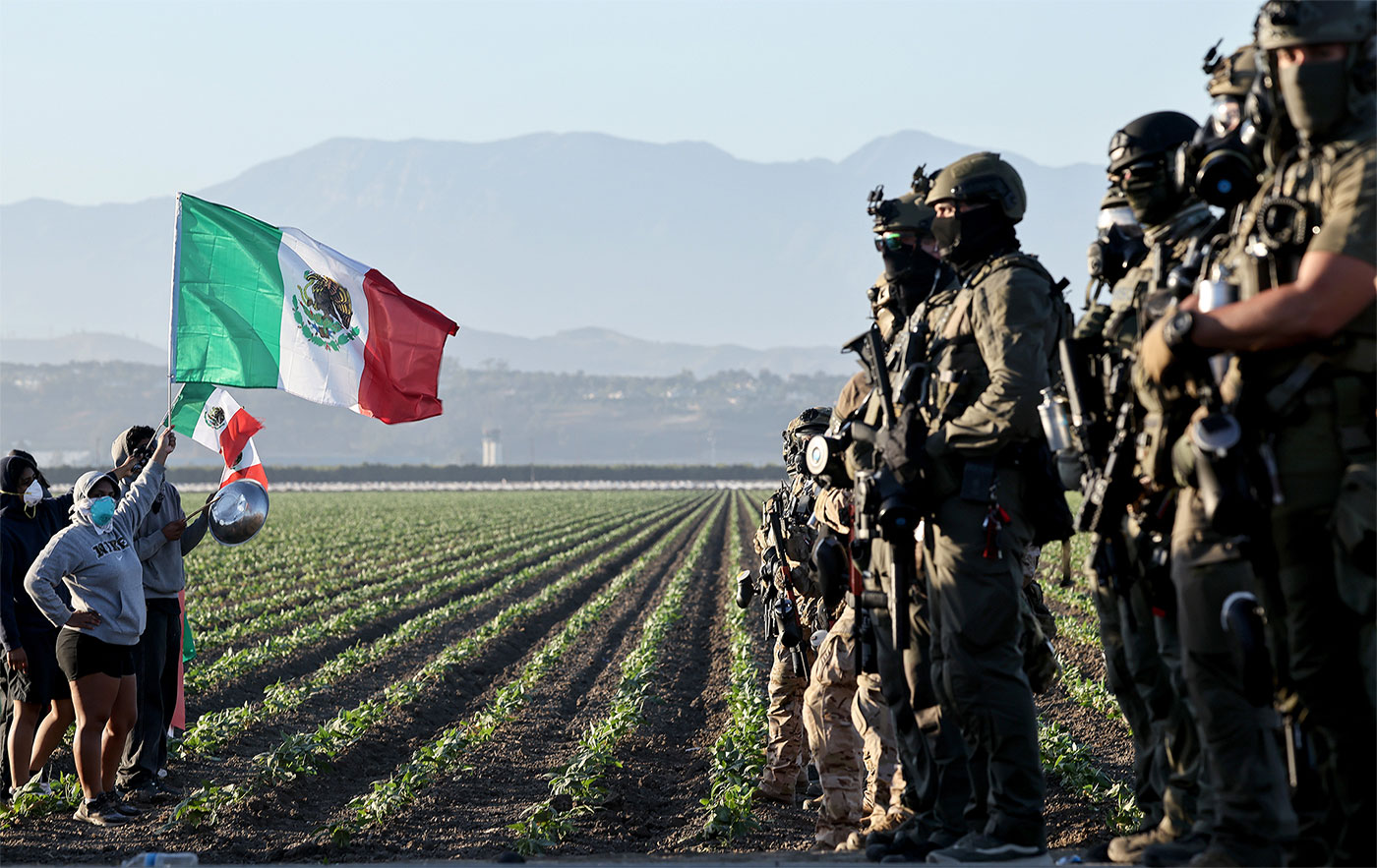
To talk about migration means talking about hard, poorly paid work, extreme exploitation, and systematic violations of labor and human rights. In May, the events of late April 1886 were commemorated, when exploited workers in Chicago began a strike to win the eight-hour workday. That same city, 139 years later, witnessed the beginning of a massive movement in resistance against Donald Trump’s xenophobic policies. May marked the beginning of popular repudiation of a figure with monarchical aspirations. Across the United States, millions of citizens took to the streets to reject a political project that seeks to enrich an elite at the expense of prejudice and the exclusion of the majority. The May Day march embraced migrants, granting them unprecedented visibility and support.
To talk about migration also means looking south. In June, we were able to analyze how, unlike in the United States—where protests were growing— governmental and social actions south of the border remained weak. Policies to address the structural causes of migration are still far from solving the problem. Unaccompanied children and adolescents remain among the most vulnerable groups, whether on unsafe routes or in the custody of institutions that should be protecting them. Poverty and violence remain at alarming levels, despite official pronouncements of decline. Between a xenophobic government that criminalizes migrants and local governments that fail to provide adequate support, migrants continue to be the most affected.
To talk about migration is speaking of fear as a mechanism of control. In July, we observed how the fear—of going hungry or of losing their lives—continued to drive thousands to attempt to reach the United States. On the other side of the border, the increasingly frequent raids carried out by both ICE and bounty hunters created a permanent climate of terror among millions of migrants. The violence perpetrated by law enforcement surpassed even what had been anticipated in Trump’s rhetoric.
To talk about migration is to speak of shameful proposals. In August 2025, two congresswomen introduced an immigration reform bill that laid bare the U.S. government’s view of migrants. The so-called Dignity Act , championed by María Elvira Salazar and Verónica Escobar, highlighted the precarious conditions in which millions of migrant workers survive. Though profoundly unjust, this proposal reflected the extent to which the dignity of migrants has become a political bargaining chip.
To talk about migration is talking about absurd measures. In September, the border wall was painted black, with the argument that the heat would prevent people from climbing it. This act encapsulates the wall’s absurdity: millions of dollars spent to appease an uninformed electorate, while the only real result has been the enrichment of politicians, construction companies, and organized crime, which profits from migrant poverty.
To talk about migration in the United States means addressing the issue of Hispanicity, the country’s largest minority group, and its enormous economic, cultural, and civic contributions. In October, despite the persecution, we witnessed growing resistance and improved organization within the Latino community in the face of Trump’s oppressive government. In Mexico, the Mexico Embraces You program provided support to some returned migrants , but it also made it clear that the majority—those who have already built lives on the other side of the wall—remain unprotected.
To talk about migration is to speak of death. In November, we remember the hundreds of thousands of people who have lost their lives trying to reach the United States, as well as those who died in Mexican territory and remain missing, likely buried in clandestine graves, never searched for. This neglect perpetuates the pain of the mothers searching for their missing loved ones. However, it was also a month of hope: the protests continued to grow, and more and more migrants joined the fight against authoritarianism, demonstrating that as long as resistance exists, the memory of migrants will live on. To talk about migration, between restrictive policies and community resilience, defines a year marked by violence and hatred. December, a month for reflection, compels us to look back on the path we have traveled and question the future.
To talk about migration shouldn’t be just about Donald Trump. However, this individual has overshadowed a complex and global phenomenon. The danger lies not only in the harm he inflicts on migrants in the United States, but also in the possibility that his xenophobic model will be replicated in other countries, strengthening right-wing governments and further darkening the future for millions of migrants.
-
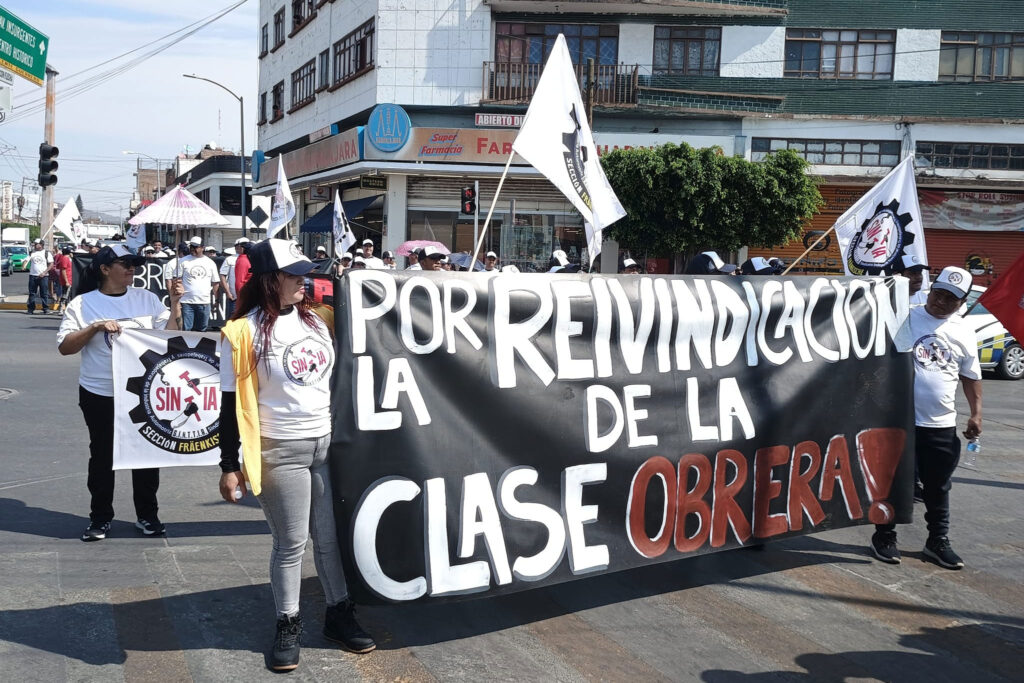
SINTTIA Denounces Fraenkische for Collective Bargaining Violations
Workers detected excessive payroll deductions and anomalies in the savings fund at the German company.
-
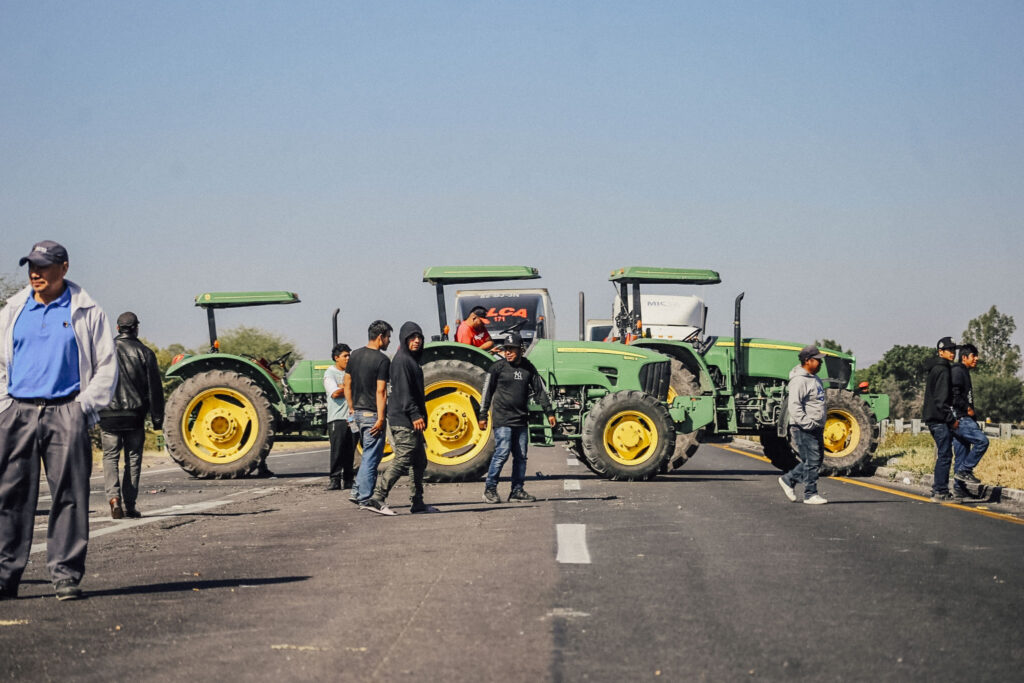
April 6th Transport & Farmers Strike Will Go Ahead
The National Front for the Rescue of the Mexican Countryside said although there is communication with federal authorities, “dialogue does not resolve anything if there are no decisive actions.”
-
Mexico Requires a Deterrence Strategy
Mexico should continue to work at maintaining a positive relationship with our closest neighbor and number one trading partner. But acting like Trump isn’t capable of unilateral military action against us is foolish.