Mexican National Farmers Strike for Food Sovereignty
This editorial by Ana de Ita originally appeared in the April 8, 2026 edition of La Jornada, Mexico’s premier left wing daily newspaper. The views expressed in this article are the authors’ own and do not necessarily reflect those of Mexico Solidarity Media or the Mexico Solidarity Project.
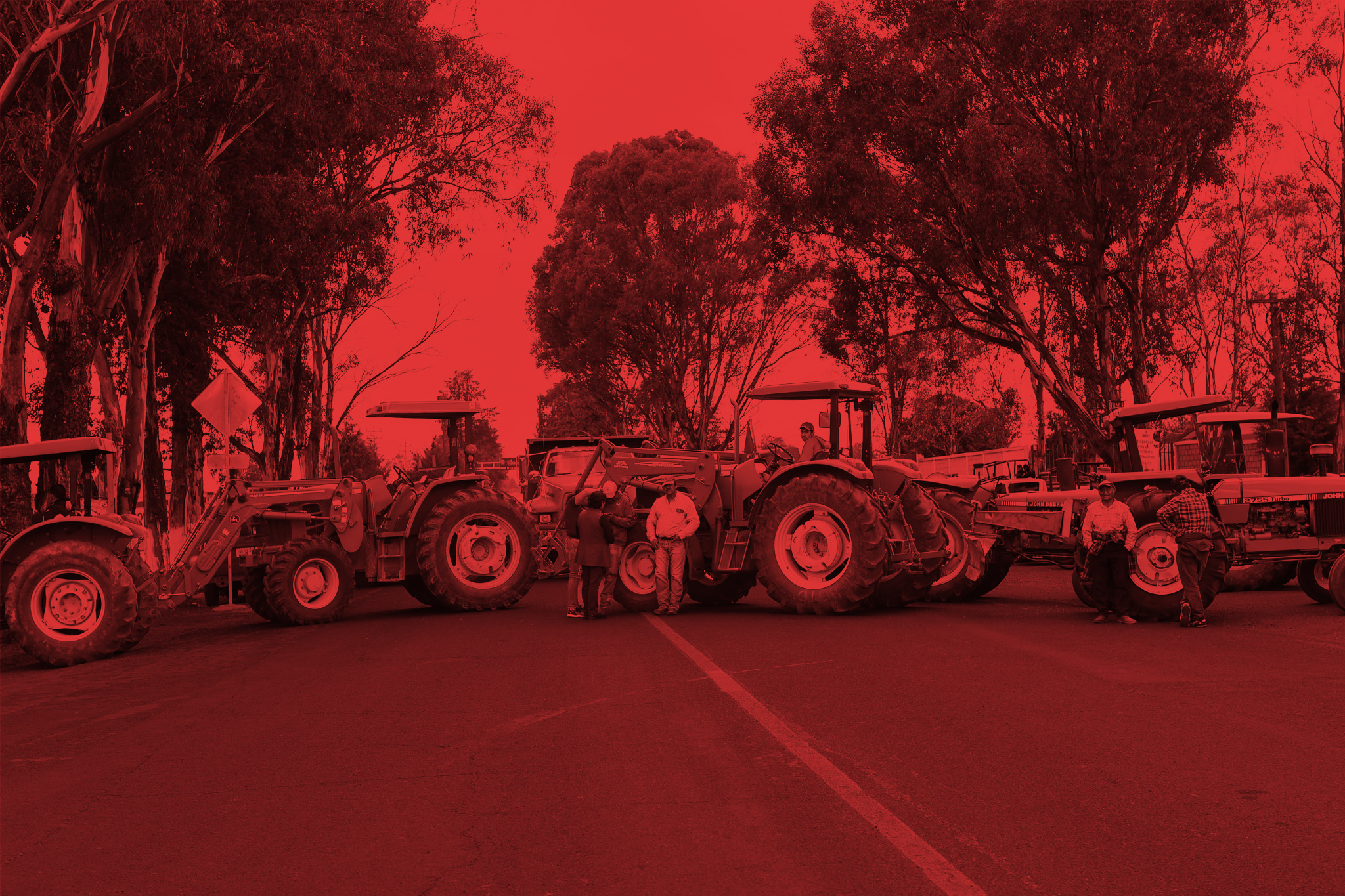
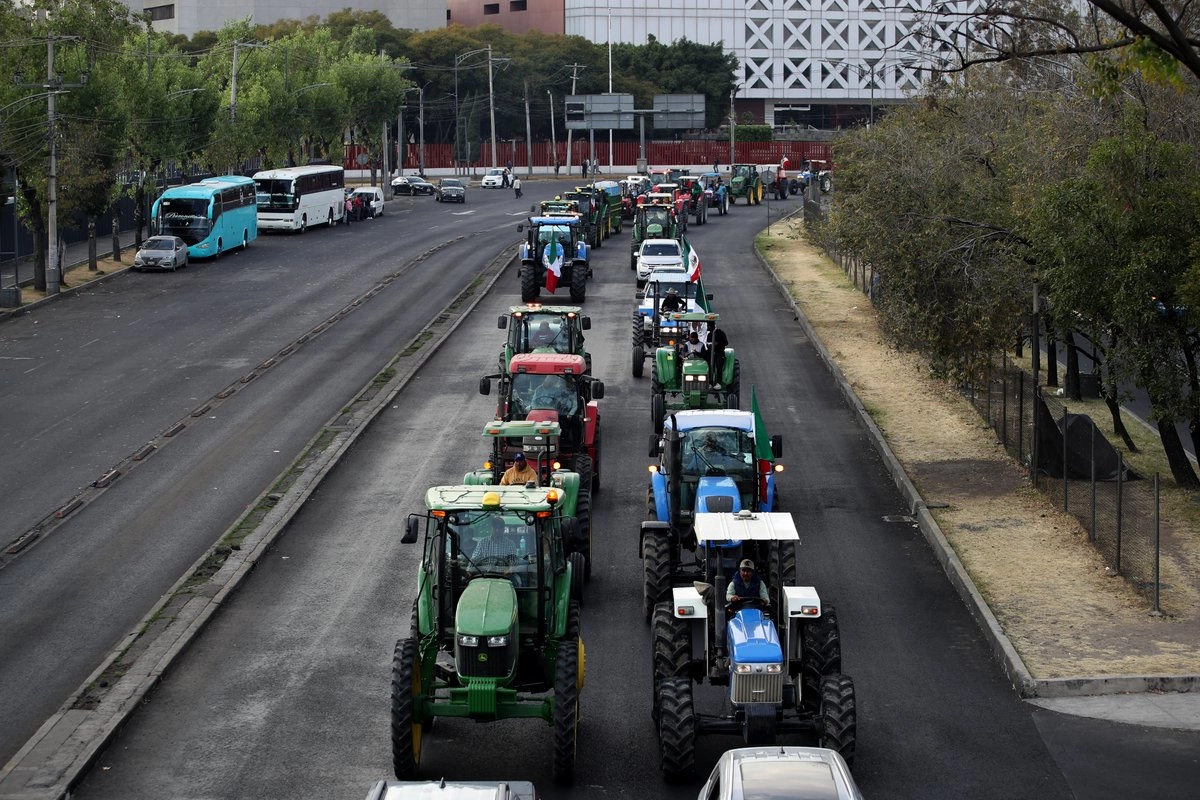
Once again, farmers from the National Front for the Rescue of the Mexican Countryside and the National Association of Transporters (ANTAC) demonstrated the day before yesterday at various points along highways in different states.
In late October and November, they staged the first simultaneous blockade in an unprecedented mobilization that paralyzed the country. After five months and dozens of meetings with officials from various ministries, they believe the government has failed to honour its commitments and that their situation is untenable.
This mobilization, like those of the past, demonstrates that the absence of agricultural policies and the dismantling of institutions undertaken by the previous government (2019-2024) has brought Mexican agriculture to the brink of collapse. The USMCA subjects farmers to open competition with US producers, who are indeed supported, subsidized, and protected by their government.
The Rural Finance Corporation (FND), successor to Banrural and the Cárdenas-era Ejidal Credit Bank, was abruptly eliminated during the previous administration, leaving farmers without development banking, credit for planting, or machinery purchases. One of the demands of the National Rural Farmers’ Union (FNRC) is that the government reinstate the development bank, as farmers need credit to produce.
Commercial banks lend at very high interest rates and demand guarantees that farmers cannot provide. Commercial suppliers are currently the ones providing the resources for their crops, in exchange for purchasing inputs from them at very high prices. This represents a clear setback in the conditions necessary to maintain their competitiveness. It is the government’s responsibility to establish a financing system for agriculture, a first-tier development bank, which existed in Mexico since 1929.
They also demand guaranteed prices for all producers and all staple grains, prices that cover production costs and ensure the profitability of their work. The previous government dismantled the marketing systems established by neoliberal governments under pressure from farmers and transferred their resources to the guaranteed price program, which never functioned as intended and supported only a negligible number of producers.
On other occasions, they established target prices, but these were conditional on low production volumes and only applied to farmers identified as small or medium-sized. This excluded large production volumes of staple grains essential for feeding the population.
Until 2018, 9.75 billion pesos were allocated to the marketing programs operated by ASERCA. In its place, the previous administration established the guaranteed price program, which absorbed 12.534 billion pesos until 2024. Despite the protests at the end of 2025, which highlighted the marketing difficulties and the need for subsidies to support farmers’ incomes in the face of falling international grain prices, the Ministry of Agriculture’s 2026 budget eliminated the guaranteed price program and allocated only 1.5 billion pesos to a procurement program for welfare. This program is not designed to address the market for all grains, but rather to purchase from small producers. There is no other marketing program in the budget, even though it is urgently needed under the current circumstances.
The government announced in recent days that it has supported 31,768 corn producers with 1.9 billion pesos, representing only 1.2 percent of those who plant it, since 2.67 million farmers are dedicated to its cultivation.
The price supplement was granted for only 2.5 million tons of corn, representing 11 percent of the 22.5 million tons that Mexico still produces. The government claims this support demonstrates that farmers have been taken care of; however, a contrasting interpretation justifies the protests of April 6th.
Progress toward food sovereignty requires policies that protect, regulate, and promote the responsibility of the State. Maintaining the mistaken notion that these are goodwill aid packages given to farmers and agricultural producers only when budgetary resources are available will deepen the agricultural crisis and increase food dependency.
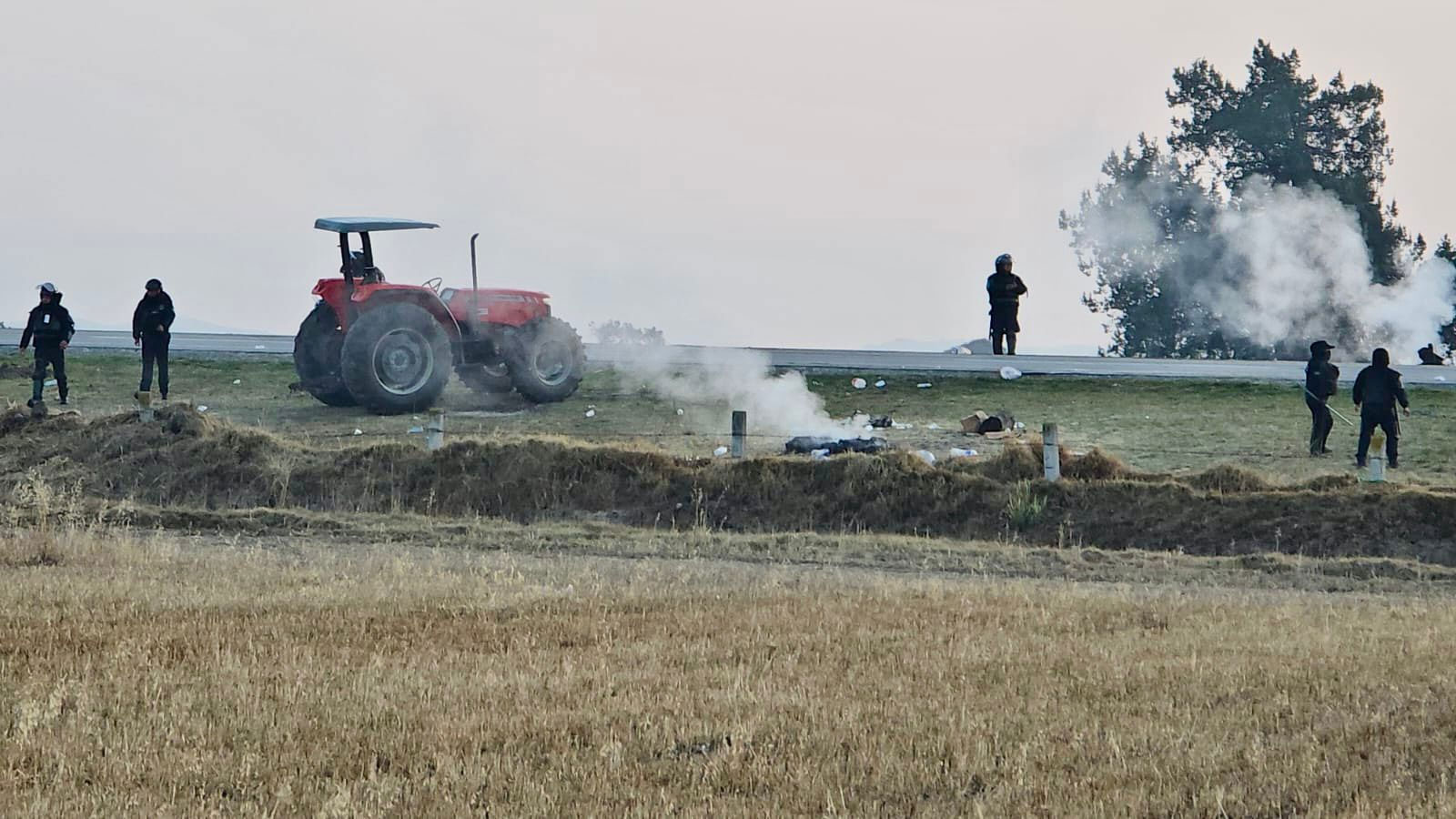
The repression of protests, such as the one that occurred in Tlaxcala, deeply calls into question the democratic nature of the government.
-
Mining Company in Zacatecas Used Drug Traffickers Against Workers, Mineros Union
A USMCA Rapid Response panel pointed out that Canadian company Orla Mining “remained silent and showed tolerance”; & also did not act on the complaints of violations of freedom of association nor investigate them.
-
Mexico City Begins Construction of Housing in Guerrero & Historic Center
Five properties will house 250 homes; city authorities assure that the properties will be delivered by the end of this year.
-
UN Meddles in Mexico: Flawed Disappearances Report Highlights Broken System – Soberanía 102
UN Committee on Enforced Disappearances, migrant deaths in the US, Mexico’s new Foreign Secretary Roberto Velasco, and deterrence in Mexico.