Mexico Will Promote Technological Cooperation with China to Generate Energy from Waste
This article by La Jornada Editorial Staff originally appeared in the November 15, 2026 edition of La Jornada, Mexico’s premier left wing daily newspaper.
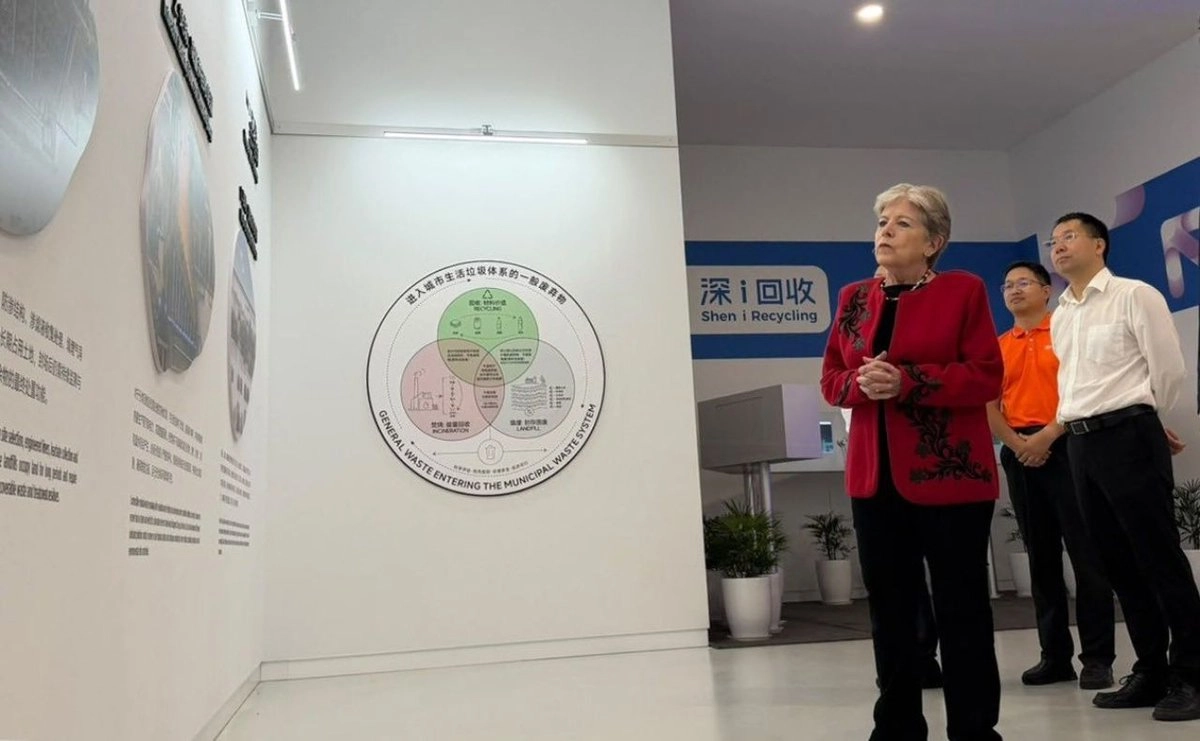
Mexico City. Mexico seeks to draw on China’s experience in waste management, energy generation from waste and wastewater treatment using artificial intelligence, as part of efforts to promote the circular economy and recover public spaces for communities in our country, reported Secretary of Environment and Natural Resources (Semarnat) Alicia Bárcena.
Ahead of Mexico’s upcoming participation in the 33rd Asia-Pacific Economic Cooperation (APEC) forum summit, to be held in China, the official visited various facilities specializing in waste utilization and the restoration of bodies of water over the weekend, to explore their application to ecosystem restoration and the cleanup of our rivers in the country.
On her social media, Bárcena explained that, on instructions from President Claudia Sheinbaum, who heads the Mexican delegation at the APEC summit, she made these visits to promote technological cooperation with the Asian giant and develop solutions that would also allow organic waste —including sargassum— to be used to generate energy and reduce greenhouse gas emissions.
In Zhuhai, the head of Semarnat visited the SUS Environment company’s plant, which she said has the capacity to process 3,000 metric tons of waste a day and generate up to 90 megawatts of electricity. The official emphasized that China went from recovering energy from 9.8 percent of its urban waste in 2005 to 84.6 percent in 2024, while disposal in landfills fell from 85 to 5 percent.
In Shenzhen, the host city of the annual summit, she toured the Dasha River, which went from a polluted waterway to an ecological corridor and a “sponge city” more than 14 kilometers long, through cleanup, environmental restoration and the recovery of public spaces, she indicated.
She also visited the underground Honghu plant, with the capacity to process 100,000 metric tons of wastewater a day and artificial intelligence systems to optimize its operation; above ground, the facility has a public park, she explained.
“Shenzhen is also an example of how to recover rivers, restore ecosystems and transform previously polluted spaces into places where communities can meet and spend time together!” the Mexican official emphasized.
In this city, she also visited the Nanshan Energy Ecological Park, where she learned about a model for using waste to generate energy, recover materials and create public spaces.
“China’s experience shows that it is possible to leave landfills behind and move toward a circular economy model,” she said.
-
Claudia’s Strong Army, Which Backs the Fourth Transformation
“It will be very difficult for this majority of the poor, the helpless, the discriminated against, the abandoned, to stop backing the Fourth Transformation government,” writes Pedro Mellado.
-
Sheinbaum Is Already on Her Way to Shenzhen, China, to Attend the APEC Summit
Traveling on a commercial airline, Mexico’s president will meet business leaders and join her morning press conferences from China.
-
Violence Against Migrants: The Hatred That Must Also Be Investigated
How underreporting, racial profiling and anti-immigrant rhetoric hide the true scale of hate and violence against migrants in the United States.