Mexico National Farmers Strike, Day 1
This article by La Jornada correspondents originally appeared in the April 6, 2026 edition of La Jornada, Mexico’s premier left wing daily newspaper.
Mexico – Truck drivers and farmers blocked highways in Morelos, Zacatecas, Tlaxcala, the State of Mexico, Veracruz, Baja California, Guanajuato, Nayarit, Tamaulipas, and Chihuahua. In Sinaloa, they protested at toll booths but allowed all vehicles to pass without paying. Agricultural producers are demanding better prices for corn and sorghum and more support for agricultural activities. Truck drivers are demanding a halt to rising fuel prices and protesting highway insecurity.
Blockade on 21st Century Highway
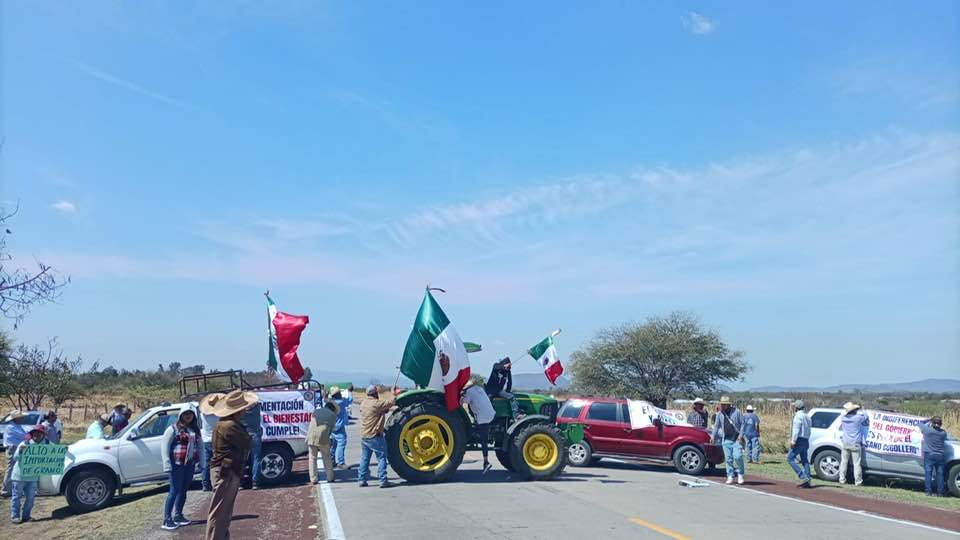
In Morelos, farmers are maintaining a blockade of the Siglo XXI highway to demand better prices for corn and sorghum from the federal government, subsidies for diesel and fertilizers, as well as the exclusion of these grains from the United States-Mexico-Canada Agreement (USMCA).
The blockade, carried out with tractors and pickup trucks, is taking place near the Emiliano Zapata Rural Teachers’ College in the town of Amilcingo, in the municipality of Temoac, in the eastern part of the state. The protest began minutes before 11:00 a.m. The demonstrators are carrying Mexican flags and banners with slogans such as: “Without corn, there is no country,” “Government indifference is worse than the fall armyworm,” “Food for Well-being is not delivering,” “Stop grain imports,” and “Fair prices for farmers.” Farmers’ representatives denounced payment delays from Food for Well-being, as well as overcrowded warehouses “with no outlet,” which, they stated, is preventing the corn from being shipped out.
Campesinos in Zacatecas Protest at Grupo Modelo Brewery
Dozens of agricultural producers demonstrated this Monday at the main entrances of the foreign company Cervecería Grupo Modelo – AB InBev, the largest brewery in the country, to demand from the government “concrete results to the problems of the agricultural sector in Mexico”.
The producers’ mobilization was tense, with clashes between farmers and truck drivers, as brewery executives tried to prevent the farmers’ protest.
More than a hundred trailers were placed across the road to prevent the arrival of agricultural tractors and harvesters, but the farmers used shoulders and dirt roads to reach the company gates.
Campesinos in Tlaxcala Participate in National Strike with Blockade on Mexico-Veracruz Highway
Amid a deployment of state and riot police, Tlaxcala farmers participated in the national agricultural and transportation strike on April 6, blocking the Mexico-Veracruz federal highway near Nanacamilpa and the Arco Norte highway at kilometer 194.
In response to the government’s reaction to the protest, the group of demonstrators held the administration of Lorena Cuéllar Cisneros responsible for “any incident that may occur,” because this sector only “seeks to be heard and defended.” They denounced the police presence as creating fear, given that their protest is simply about being heard. Furthermore, they condemned the use of force and demanded the intervention of President Claudia Sheinbaum, stating that their demands have gone unanswered.
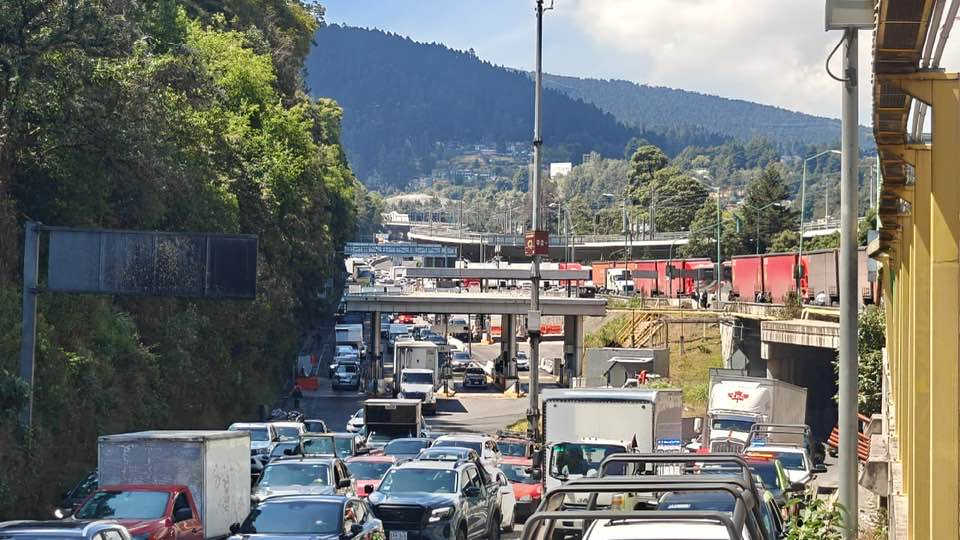
In Mexico State, Mexico-Toluca highway is Blocked
The first action was recorded at the La Venta toll booth, on the Mexico-Toluca highway, where members of the National Front for the Rescue of the Mexican Countryside and the National Association of Transporters raised the barriers to allow free passage of vehicles, which generated slow traffic due to the conditions of the toll collection system.
Later, starting at 11:30 a.m., they closed most lanes of traffic, allowing passage only at one of the seven toll booths in each direction. They also decided to stop allowing buses from the lines that refused to join the strike to pass, so passengers on the Caminante and Mensajero lines had to get off the buses and continue their journey on foot, as the farmers were blocking the buses from passing.
The blockade of most lanes of the highway has already caused heavy traffic, and according to authorities, the line of cars stretches for about 5 kilometers. Although the call for the national strike and road closures included a blockade of the Toluca-Atlacomulco highway, this road remains open and no problems have been reported as of midday.
In Veracruz, Transporters Demanding Halt to Fuel Price Increases
Truck drivers in the state of Veracruz joined nationwide protests demanding an end to rising fuel prices and highway insecurity. Using their cargo trucks, the protesters blocked the Córdoba-Veracruz highway in the central part of the state, as a way of demanding action from state and federal authorities.
In this regard, the Governor of the State of Veracruz, Rocío Nahle García, indicated that her administration is addressing the protest, although she criticized the demonstrators for blocking highways, as this affects others. Their demands include increased security, lower fuel costs, adjustments to toll fees, and a permanent channel of dialogue with federal authorities.
Protests Take Place in Sinaloa at Various Toll Booths Throughout the State
Farmers are protesting at the El Pisal and Costa Rica toll booths in Culiacán, Cuatro Caminos in Guasave, San Miguel Zapotitlán in Ahome, and Alhuey in Angostura, demanding better prices for corn and more support for agricultural activities from the federal government. They are allowing all vehicles to pass through without paying. The protesters began their demonstration around 10:00 a.m., placing tractors at the entrances to temporarily block traffic, causing long lines of vehicles. They later allowed entry without paying tolls.
Governor Rubén Rocha Moya, in a press conference this week, asked for “a little consideration from the producers, who have already realized that you are also here in the country. Don’t open the floodgates; we respect your right to protest,” he said. Rocha Moya stated that the corn marketing plan is practically finalized and will be announced in the coming days. He added that in Sinaloa, 85 percent of the harvest has already been sold and that there is state support available to improve the final price.
Producers joined the national strike called in 20 states of the country, while representatives of the sector pointed out outstanding debts such as the support of 750 pesos per ton since 2024 and coverage payments that have not been disbursed.
Blockades in the Bajío Region
Also, on the Irapuato-Zapotlanejo federal highway in Guanajuato, a vehicle blockade has been maintained using several tractors. This is one of the most important roads in the Bajío region.
Baja California Blockade
A caravan of tractors and vehicles began the farmers’ strike in Baja California, culminating in the blockade of the highway from Mexicali to San Luis Río Colorado, Sonora.
The protest actions of the National Front for the Rescue of the Mexican Countryside included the only land route that connects the peninsula with the other 30 federal entities of the country.
Horacio Gómez, the representative of the farmers of Baja California, stated that they are seeking better conditions for the countryside, in terms of marketing prices and the cost of inputs.
“The countryside can’t take it anymore,” Protest Tepic Farmers
Agricultural producers in the state blocked traffic for just over 15 minutes on the Tepic-Mazatlán highway, near the San Blas intersection, warning that “the agricultural sector can’t take any more” and that they have already mortgaged even their agricultural certificates to financial institutions in the state. They stated that they are seeking guaranteed prices that will allow them and their families to survive, and explained that the protest aimed to highlight the sector’s discontent without affecting the general public.
With banners reading “No corn, no country,” they criticized the tariff-free import of rice and the lack of support in the face of competition from the United States. They also called on the state and federal governments, as well as the Ministry of Economy and Mexican President Claudia Sheinbaum Pardo, to pay more attention to the agricultural sector, stating that farming is unprofitable and that they have not received payment for their crops delivered since October and November.
Reynosa-Matamoros Highway & Federal Highway 101 Blocked in Tamaulipas
Farmers from the border municipalities of Reynosa, Río Bravo, Valle Hermoso, and the San Fernando Valley blocked the Reynosa-Matamoros highway and Federal Highway 101, which connects Victoria with Matamoros and Reynosa, this morning. They are demanding that authorities lower the price of agricultural diesel, improve security on highways and in agricultural fields, provide resources for the agricultural sector, ensure fair prices, and reduce the price of fertilizers. State authorities called on the protesters to avoid damaging the roads.
Partial Road Blockades in Chihuahua
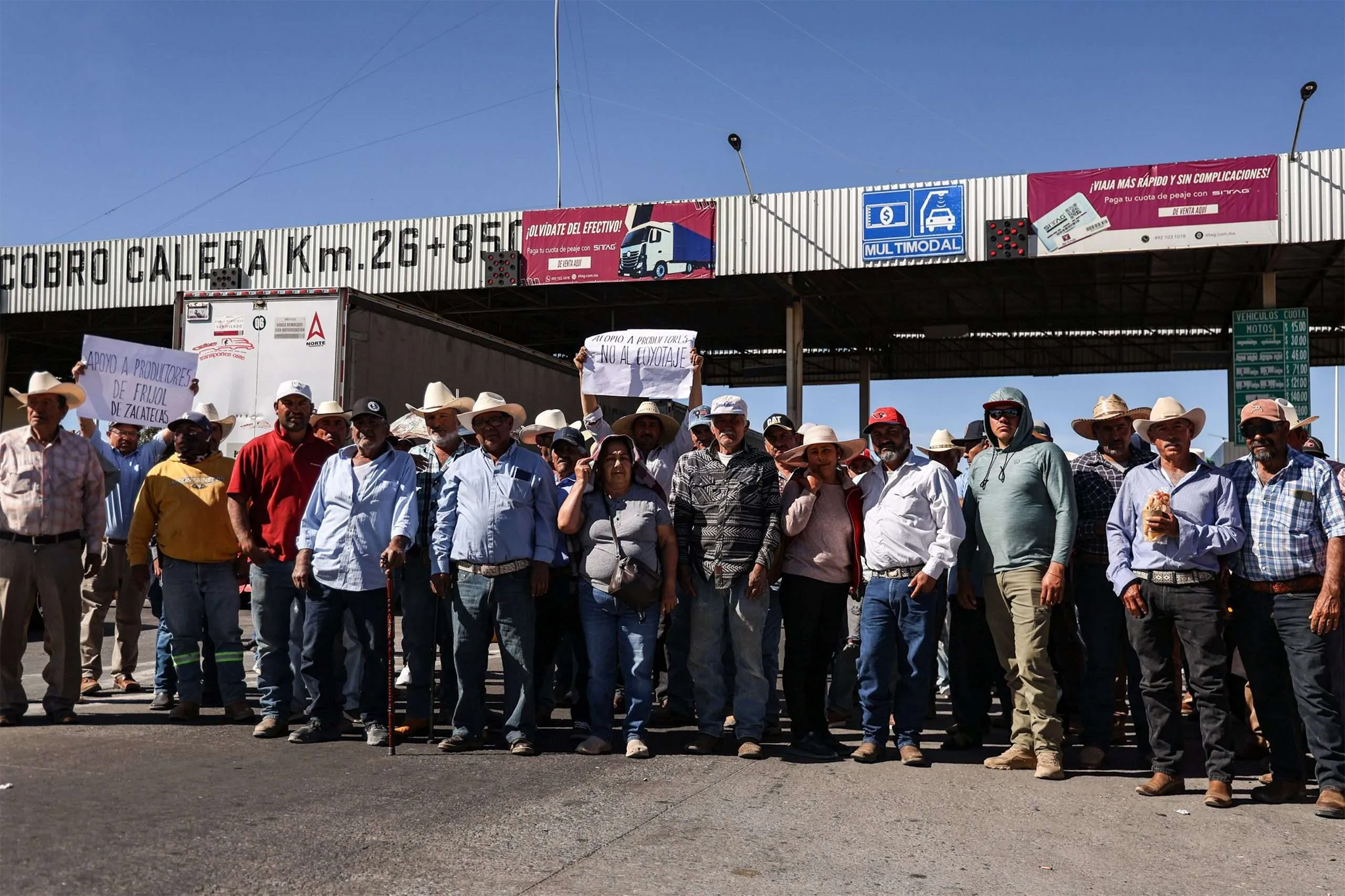
Members of the National Front for the Rescue of the Mexican Countryside (FNRCM) and the National Association of Carriers in Mexico (ANTAC) began the national strike called for this Monday with two partial road blockades in Chihuahua after midday. One blockade was at kilometer 31 of the Pan-American Highway, on the stretch from Ahumada to the state capital, and the other was at the access road to Ciudad Juárez known as the kilometer 20 roundabout. Additionally, a group of approximately 20 farmers blocked freight train traffic on the railroad line running from Torreón to Ciudad Juárez, near the municipal seat of Jiménez. The protesters at kilometer 31 of the Pan-American Highway allowed cars to pass freely through the Sacramento tollbooth, where they only stopped cargo trucks. At the kilometer 20 roundabout, located on the southern outskirts of Ciudad Juárez, the road was closed to all types of vehicles.
With information from Antonio Heras, Rubicela Morelos Cruz, Israel Dávila, Alfredo Valadez Rodríguez, Iván Sánchez, Irene Sánchez, Javier Santos, Martín Sánchez Treviño, Jesús Estrada , Correspondents, Guadalupe De La Luz Degante, La Jornada de Oriente, Alexia Villaseñor, Cesar Arellano and Néstor Jiménez, Reporters.
-
People’s Mañanera April 6
President Sheinbaum’s daily press conference, witch comments on public education investment, AIFA, Committee on Enforced Disappearances report, and the Gulf of Mexico oil spill.
-
Ultra-right “Masculinity” Congress in Guadalajara
Promoted by government agencies in Jalisco, Guadalajara, and Zapopan and featuring a morbid roster of misogynists, reactionaries & former boy band singer; the expensive two day event has drawn criticism.
-
Struggles of the Women’s Secretariat: From Combating Femicide to Political Violence
An interview with Mexico’s Secretary for Women, Citlalli Hernández Mora.