
Mexico’s Plan to Build 100,000 Homes for Government Employees
This article by Fernando Gutiérrez was originally published in the April 20, 2026 edition of El Economista.
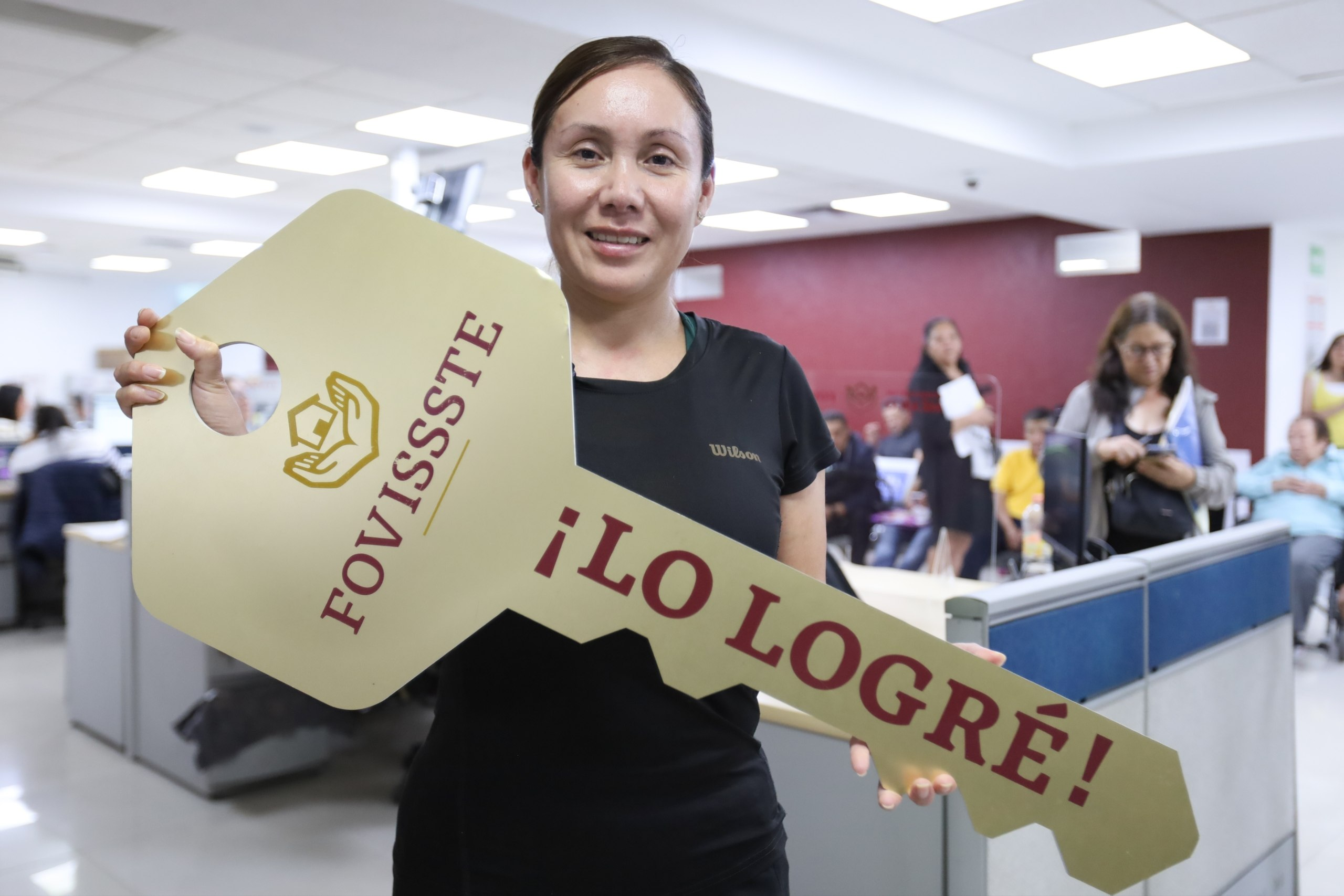
The housing program of the Issste Housing Fund (FOVISSSTE) six-year term, which contemplates the construction of 100,000 homes by this organization, also seeks to rethink the way in which social housing is designed, with more flexible models, adapted to the regions and with services integrated into the developments.
According to Raúl Herrera, head of the Housing sub-directorate at FOVISSSTE, the plan is based on the premise that housing cannot be uniform throughout the country. “Social housing … has several very important components; cultural adaptation is crucial,” he explained.
This means that the projects will not be replicated in a standardized way, but will be adapted to the conditions of each region. “Regions vary in the living conditions of their people,” he noted.
The official noted that the design will seek to incorporate local ways of life, including traditional materials and techniques. He also mentioned experiences in various states where adobe housing has been used, employing the labour of the beneficiaries themselves, which allows for a better response to social needs and reduces costs.
One of the program’s key components will be self-built housing, a system in which beneficiaries participate in the construction of their own homes. “It’s a proven model of care that people have embraced because they manage their own resources, which reduces costs and also addresses the specific needs and lifestyle preferences of each family,” he stated.
This model is complemented by participatory design, which aims to give families direct input on what their home will be like, instead of receiving a standardized product.
Housing with Services & Community
The program also includes the construction of new housing in residential complexes, but with a different approach than traditional developments, by integrating services and amenities from the beginning.
Among the planned elements is the incorporation of basic stores in coordination with the ISSSTE (Institute for Social Security and Services for State Workers). “An alliance with the ISSSTE to provide a basic SuperISSSTE store that meets the needs of residents, but also of the non-insured community,” Herrera explained.
Furthermore, plans include incorporating medical facilities into the developments. “We also plan to have urgent care clinics,” he stated.
The intention is that the complexes will not only be residential spaces, but environments with nearby services that reduce travel.
In general terms, the housing model promoted by FOVISSSTE includes:
- Adaptation to cultural and regional conditions.
- Use of materials and techniques appropriate to each area.
- Participation of beneficiaries in the design.
- Self-production methods to reduce costs.
- Development of housing complexes with integrated services.
- Incorporation of basic stores.
- Immediate medical care spaces.
This approach seeks to address one of the main historical criticisms of social housing, which is the lack of suitability to the real needs of families and the disconnection from their environment.
Herrera emphasized that these elements are part of a vision of adequate housing, in which not only the construction of houses matters, but also the conditions in which they are lived.
With this scheme, FOVISSSTE joins the Housing for Well-being program with a specific goal for the bureaucracy, in an attempt to expand the supply of social housing in the country.
-
People’s Mañanera October 21
President Sheinbaum’s daily press conference, with comments on Pemex, fuel theft, Jalisco’s water crisis, missing persons, and the lie detector.
-
Jáuregui’s Arrest Does Not Close the CIA Case in Chihuahua; Morena Demands Broader Investigations
Morena leader Ariadna Montiel holds Governor Maru Campos politically responsible and says ex-prosecutor Guillermo Zuany must also face justice.
-
Morena Accuses Violation of the Secular State Over Award Ceremony for Evangelicals in the Chamber of Deputies
A representative of Israel’s embassy attended the PRI-hosted event, and the group’s founder was arrested in the U.S. for drug trafficking in 2007, Morena deputies said.