“Washington Stole the Election from Me. It Happened in Honduras and It Can Happen in Mexico”
This article by Alejandro Páez Varela and Álvaro Delgado Gómez originally appeared in the October 9, 2026 edition of SinEmbargo.
Rixi Moncada accused Donald Trump of intervening in the Honduran elections and denounced a mafia operation to prevent the victory of the left.
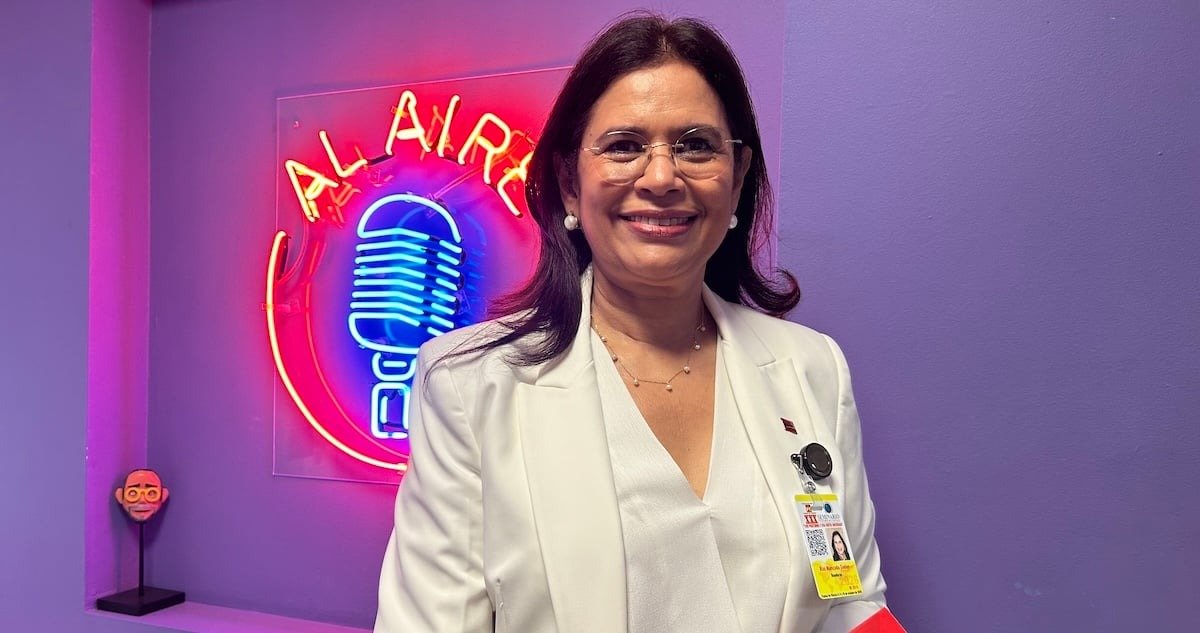
Mexico City, October 9 (SinEmbargo).– Washington intervened to prevent her victory in Honduras, turned the election into “a great mafia operation” and used everything from the direct pressure of Donald Trump to disinformation networks and international structures to impose a result, charged Rixi Moncada, former presidential candidate of the Liberty and Refoundation Party (Libre).
The Honduran leader warned in an interview with Alejandro Páez and Álvaro Delgado on the program “Los Periodistas,” which is broadcast on the YouTube channel of SinEmbargo Al Aire, that what happened in her country is not an isolated case, but rather a laboratory of new forms of political interference that can be repeated in Mexico: “Don’t be overconfident,” she cautioned. “You are not exempt from this. It is going to happen and it must be prevented.”
Moncada, who officially finished in third place in the 2025 Honduran elections with 19.19 percent of the votes, rejected those results and maintained that they were the product of an operation prepared over months. She recalled that three days before the election Trump publicly called for people not to vote for her and backed Nasry Asfura, who was ultimately declared the winner; in addition, two days before, the U.S. president announced the pardon of former president Juan Orlando Hernández, convicted in the United States of drug trafficking.
For Moncada, those actions, added to the audios of the so-called Honduras Gate, show how “the right reformulated its form of attack” on democracies and expanded its mechanisms of intervention through social networks, disinformation campaigns, and international operatives.
In that sense, Moncada called for what happened in Honduras to be taken seriously. She noted that the known evidence shows that interventions in electoral processes can no longer be treated as mere suspicions and warned that no country is exempt from facing manipulation strategies.
“I believe that the first thing is that we must take the issue with total seriousness, starting from that reality that has been left, not like in other times when it remains as doubt; right now it is exposed, as I said before, with full proof.”
The former candidate stressed that her call does not consist of abandoning the democratic path or resorting to violence. On the contrary, she maintains that the defense of political freedoms must be accompanied by an economic transformation that reduces the concentration of wealth and limits the power of financial groups.
“What to say to the Mexican people? That we do not propose alternatives that are not democratic and peaceful. That our fundamental proposal, alongside the political proposal of democracy and pacifism, the economic proposal must be sustained,” she stated.
In that sense, she recognized in Mexico an experience from which the Honduran left can learn. She mentioned the denunciations that Andrés Manuel López Obrador made for years about the fraudulent mechanisms of previous electoral processes, as well as the continuity of the political project with the arrival of Claudia Sheinbaum to the Presidency.
“I believe that we, in the first place, have a lot to learn from Mexico and from the governments of López Obrador, from the struggle of Andrés Manuel from the left in the previous periods, the ones he denounced, the fraudulent forms now perfected. We have a lot to learn from that whole process, but then from how the Mexican people were able to sustain the great project in favor of themselves with Claudia. So, that experience nourishes us,” she expressed.
Moncada considered that the Mexican experience demonstrates the importance of peoples being able to sustain their political projects, but warns that this continuity must not be taken for granted. Intervention strategies, she maintained, change form and seek to adapt to the conditions of each country.
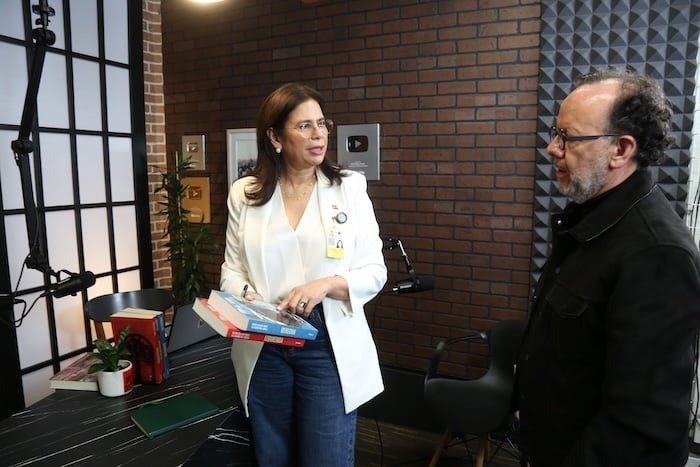
Moncada Points to Washington for Interference
Rixi Moncada asserted that what happened during the elections in Honduras was not something improvised, but rather a strategy planned well in advance with the objective of stealing the result.
I believe that in Honduras a good laboratory of the right was set up well in advance, where that criminal network each carried out its phase in what I say, they were not elections, it was a great mafia operation to steal the elections; they put it into practice, it worked for them.
Rixi Moncada
Moncada maintained that the U.S. intervention was neither an isolated event nor an unfounded suspicion. She asserted that during the six months prior to the election in Honduras an operation was prepared in which different actors participated, and that the arrest of Fernando Cerimedo confirms the complaints that her movement had filed with the Honduran Public Prosecutor’s Office.
“The news reconfirms our hypothesis and reconfirms what had been happening throughout the last six months of preparation of the electoral process, but above all gives validity to the complaint that had already been made in Honduras before the Public Prosecutor’s Office about some audios that showed a criminal network that was operating from within spaces of power inside Honduras to steal the elections with international support,” she stated.
For the former candidate, the events exposed a strategy that goes beyond irregularities at the ballot box. It was, she asserted, about organizing political operations with foreign intervention, manipulating information, and using different mechanisms to prevent the will of the citizens from translating into a change of government.
“I believe that for the audiences of the Latin American region, for the audiences of the entire world, whoever had doubts about how a supposedly democratic operation for an electoral process is put together, how it is prepared or how it is organized, how in reality what it has behind it is a great criminal network to hold on to power at all costs and to disguise our democracies, from the perspective of all the actions of Fernando Cerimedo and his interventions and his interference to the tune of the clear interference of President Donald J. Trump, they are a total reality. There is no doubt about that. There is, let’s say, full proof of what is happening with our liberal democracies on the continent,” she maintains.
Moncada directly pointed to Trump for intervening in the days prior to the vote. According to her account, the U.S. president asked Hondurans not to vote for her three days before the election and, two days before, announced the pardon of former president Juan Orlando Hernández, sentenced in the United States to 45 years in prison for drug trafficking.
“Trump’s direct interference was three days before. Three days before he says: ‘Don’t vote for Rixi Moncada,’ but then two days before the elections he says: ‘There I send you the narco sentenced to 45 years, former president Juan Orlando Hernández,'” she explained.
The former candidate considered that those actions were part of a broader operation, in which, she denounced, different resources were used to condition the electoral process and favor the sectors of the right. Among the mechanisms she described is the so-called “embarazo de urnas” (ballot box “impregnating”), a practice that, she explained, makes it possible to annul votes through claims of supposed alterations in certain polling stations.
“Impregnating ballot boxes, as we call it here, to annul them. So that the polling stations don’t pass, so that right there at the polling stations they say: ‘No, well, this one is altered.’ So, the selected ballot boxes, obviously, where the opposition can win, and that is a fraud, already a direct participation of electoral organized crime,” she denounced.
Based on that experience, Moncada proposed that the Latin American lefts must prepare to confront operations that, from her perspective, seek to strip peoples of their right to freely elect their rulers. It is not enough, she said, to denounce fraud once it occurs, but rather to build a political and social organization capable of responding to interference before the mechanisms of intervention are set in motion.
Post by @riximga on X
The Right Perfects Its Mechanisms
For the former candidate, one of the main changes in the strategies of the right lies in the terrain of communication. She stated that her adversaries maintain a discourse in favor of clean and transparent elections, while resorting to mechanisms that, from her perspective, intervene in the consciousness of citizens and condition their political decision.
“The right reformulated its form of attack on democracy. They, too, are not willing to step outside and they say: ‘There must be elections and the elections must be clean, transparent,’ and they handle that in their discourse. So, how did they reformulate their attack? Here is an element that I consider important: they reformulated that form of attack by entering into the process of consciousness and exercise of freedom of the people through the empire of communications,” she explained.
Moncada pointed to digital platforms as one of the spaces where that dispute is fought. In her judgment, the spread of lies and falsehoods through social networks makes it possible to influence the perception of citizens and weaken their capacity to make decisions with truthful information.
“And so there, how is the domination? I believe they are exercising it through what could be an addiction to telecommunications on the new platforms. They are exercising domination via the lie, via falsehood, but through that addiction to TikTok, to the networks,” she maintained.
For that reason, she insisted that the defense of democracy requires a permanent presence in the territories and direct work with the population. From her perspective, political forces cannot limit themselves to competing every four years at the ballot box, since they must also confront the conditions that allow external actors and economic groups to intervene in electoral processes.
“It is time to organize territories, it is time to go to the territories and organize our people. No, it is not just an issue of elections, right? It is not an issue of a ballot box and a ballot paper and of submitting in four years to a new electoral process, because what for? To a new electoral process if it can have, if it is going to have interference, we already know it, if it is going to be fired upon from all sides until having the results that they themselves are proposing,” she stated.
The former candidate noted that economic interests also take part in that dispute for power. She considered in that sense that capital, the right, and greed seek to impose their own results and prevent political projects that question their privileges from reaching the government.
“And who proposes those results? Well, you know, and from the experiences of Mexico too, capital proposes it, the right proposes it, ambition proposes it, greed,” she added.
From that perspective, Moncada maintained that the confrontation is not limited to parties or candidates, but rather pits those who seek to preserve the concentration of wealth against those who defend a social transformation. For that reason, she affirmed that the left is not willing to give up the historic conquests it attributes to the struggles of the peoples.
“We are not willing to hand over what we believe we have historically built over the bodies, over the corpses, over the struggle of the peoples, over misery and poverty; we are not willing to hand it over. And we don’t care whether democracy, whether principles, I mean, our scale of values is this. And on this scale of values we are going to be owners of the governments and we are going to be owners of the territories and of the people and of their economies and of their resources, and the poor, let it go on, then,” she maintained.
And she summed up that dispute as a conflict between a minority that concentrates power and the majority of the population: “One percent against 99 percent in the entire world. That’s what it is, I mean, history, well, repeating itself.”
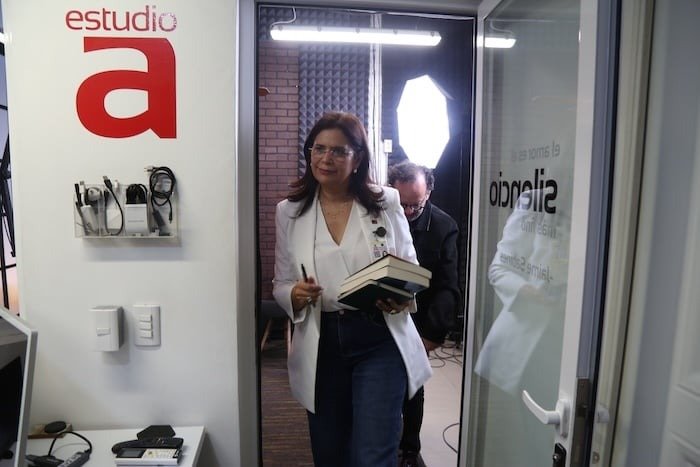
The Response: Popular Organization
Faced with that scenario, Moncada mentioned that the Latin American lefts must build a joint response. The Honduran experience, she said, forces them to think about how to combat foreign interference, confront manipulation operations, and communicate to citizens what, from her perspective, is happening in their countries.
“I receive it accepting the reality of our countries, but with the internal strength for how we combat interference, how we combat meddling, how we reach the consciousness of our peoples, how we communicate to our peoples that they are today being governed by these presidents who have turned their backs on our own peoples and who are in favor of the oligarchies,” she said.
The former candidate recognized President Claudia Sheinbaum and the Mexican people as important references for the Honduran left, but warned that the defense of a political project cannot depend solely on who occupies the Presidency. Social organization must be maintained even when progressive forces do not control the government.
“Now we only have Mexico left, with affection, fondness, recognition for Claudia, right?, and for the Mexican people, who have other historical connotations, but then, how do we get that message across? I believe that is the challenge,” she noted.
For Moncada, the task is to bring together the popular movements and the forces of the left in the region to defend sovereignty and the freedom of peoples to elect their rulers without interference. The work, she insists, must continue from the spaces of organization that each movement preserves, without waiting for a new electoral process to arrive.
“Uniting among the lefts, uniting the peoples, organizing the peoples from our spaces of power. We don’t have the government, but from our spaces of popular power, organizing ourselves, uniting, and continuing to build the project of life in which we believe,” she concluded.
-
Defense of Sovereignty “Is Not Rhetoric, It’s Principles,” Sheinbaum Says
Sheinbaum recalled foreign pressure on Mexico in the 19th and 20th centuries and blamed the neoliberal governments and Calderón for opening the door to U.S. influence.
-
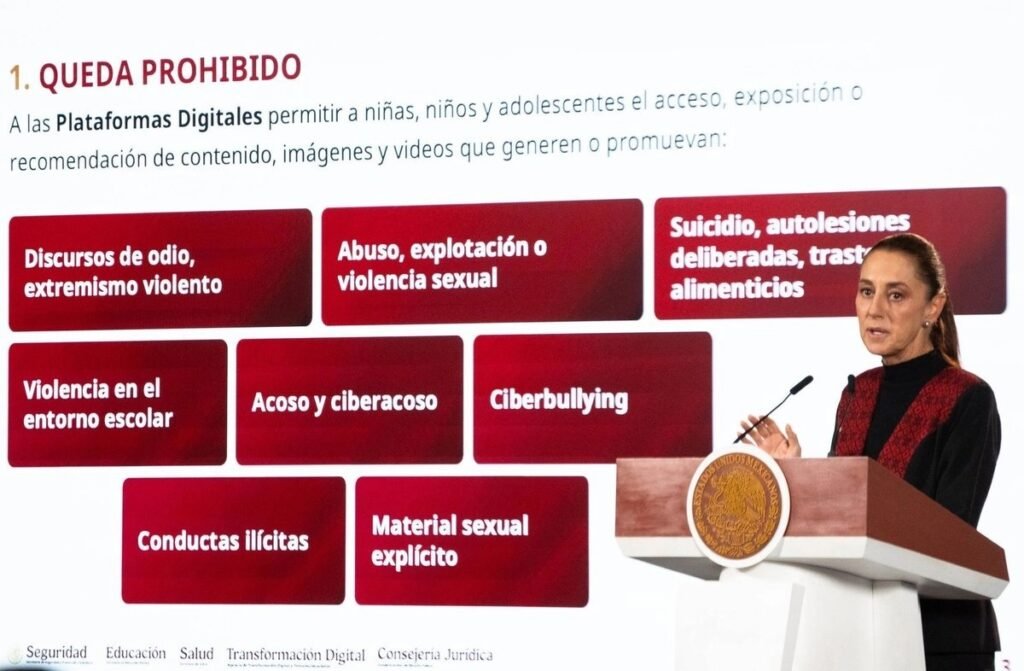
Sheinbaum Presents Draft Decree to Force Digital Platforms to Take Down Content That Incites Violence and Hate
No fines for now: the government will talk with tech companies before publishing the decree next week, a promise made after the Coahuila school attack.
-
People’s Mañanera October 9
President Sheinbaum’s daily press conference, with comments on digital safety, IMSS-Bienestar, sovereignty, and the opposition.