Neither Corn Nor Country
This editorial by Manuel Díaz originally appeared in the February 20, 2026 edition of SDPNoticias. The views expressed in this article are the authors’ own and do not necessarily reflect those of Mexico Solidarity Media or the Mexico Solidarity Project.
The promise of food self-sufficiency ended in a paradox: while official discourse spoke of rescuing the agricultural sector, Mexico increased its dependence on foreign imports. Today, more basic grains are imported than a decade ago, and the very institutions created to guarantee food supply are deteriorating. Far from being strengthened, the agricultural sector has weakened.
During the previous six-year presidential term, “food self-sufficiency” was established as a goal. However, data shows a contrary trend. In 2023 and 2024, consecutive records were broken for grain imports. In the first half of 2024, external purchases grew by 25.1% compared to the previous year, and by the end of the year, imports of rice, corn, wheat, beans, and soybeans had increased by 16.2%. It is estimated that in the final stretch of the six-year term, more than 40 million tons of staple grains were acquired from abroad.
In the so-called “second phase of the 4T” (Fourth Transformation), this trend intensified. According to data from the Agricultural Markets Consulting Group, in January of this year, sorghum imports reached 56,000 tons, nine times more than the 6,000 tons imported in the same month of the previous year. In other words, strategic products for the livestock sector are becoming increasingly dependent on the international market.
A Growing Dependence
Mexico has increased its dependence on food imports, primarily from the United States . Yellow corn, bread wheat, rice, and beans are among the products whose domestic production is insufficient.
Although Mexico is a center of origin for corn, it imports millions of tons of yellow corn each year to supply the livestock and food industries. While domestic production is concentrated on white corn for human consumption, the animal feed segment depends on imports. A similar situation exists with wheat and rice, whose production has lost competitiveness due to global prices and a lack of sustained technical support.
Among the factors explaining this situation are the abandonment of rural extension services, reduced investment in water infrastructure, insecurity in agricultural regions, and a guaranteed price policy with limited results. These are compounded by rising fertilizer costs, recurring drought, and regulatory uncertainty that is hindering investment.
SEGALMEX: A Symbol of Deterioration
An emblematic case of institutional failure in food matters is Mexican Food Security (SEGALMEX), created in 2019 to guarantee food supply to vulnerable families at fair prices—under a scheme similar to that of CONASUPO—both organizations, incidentally, ended up becoming a nest of corruption during the six-year term.
The Federal Auditor’s Office detected improper contracts, payments for undelivered products, money laundering, and misappropriation amounting to billions of pesos at Segalmex under the leadership of Ignacio Ovalle Fernández. Among the documented cases are agreements to purchase shredded and cubed meat for over 73 million pesos, of which only some was received and some spoiled; only 11% of the invested amount was recovered through sales.
At the time, organizations such as Mexicans Against Corruption and Impunity documented irregularities. Following these allegations, Ovalle was removed and transferred to another federal agency, leaving several questions unanswered regarding accountability.
A Weakened Countryside, A Vulnerable Country
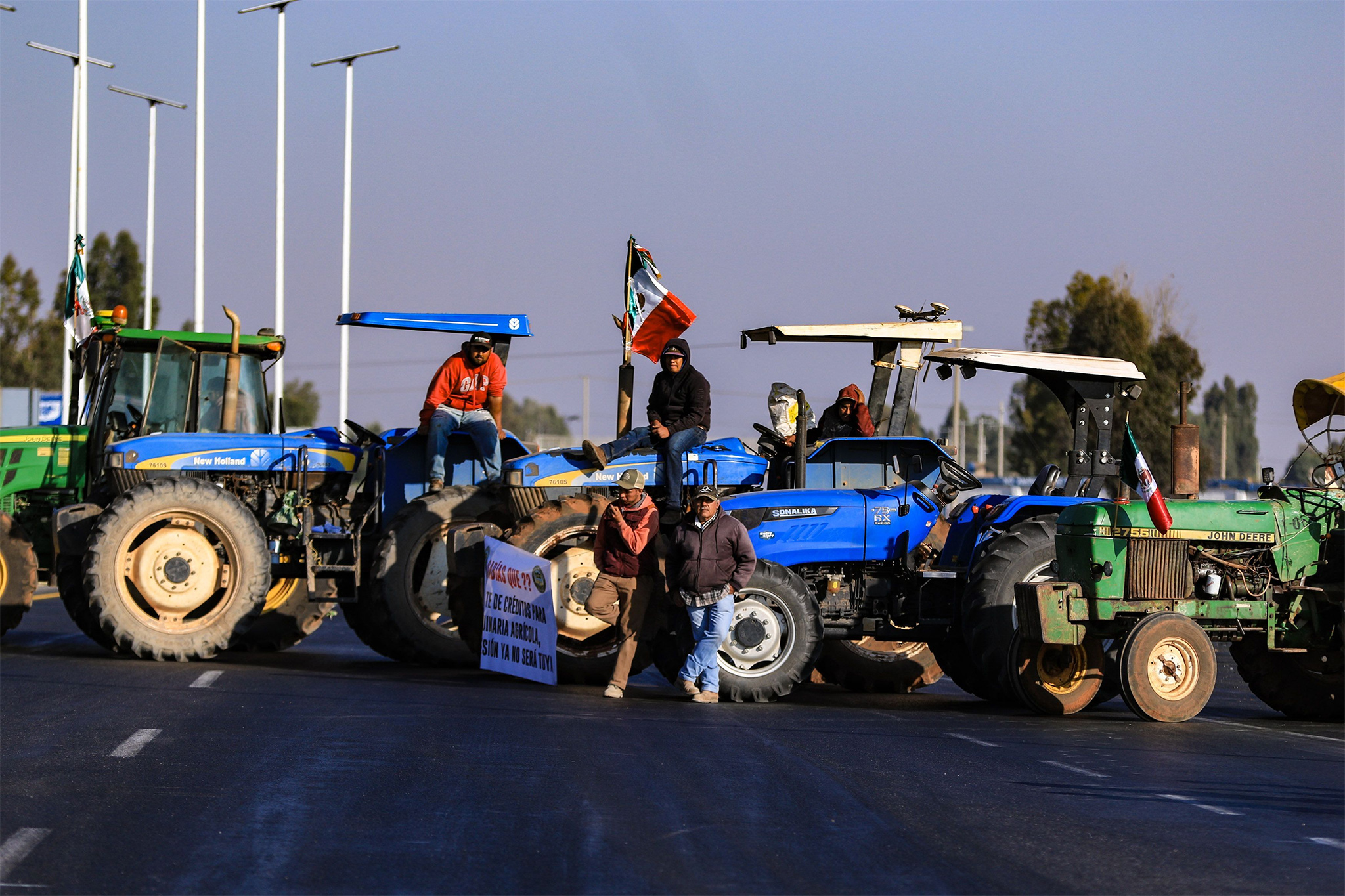
The agricultural sector underwent restructuring that reduced the State’s technical capacity. Productive programs were replaced by direct transfers through programs like “Production for Well-being,” whose impact has been limited. Under Víctor Villalobos’ leadership, the sector faced widespread criticism for its insufficient response to severe droughts and the decline in strategic crops.
Structural problems such as fragmentation of rural property, low technological adoption, limited access to financing, and the pressure of climate change persist, and without comprehensive policies that link investment, innovation, and security, the countryside will hardly regain dynamism.
The combination of lower domestic production, greater external dependence, and institutional weakness inevitably impacts prices, and in a volatile international context, Mexico is more vulnerable today than it was six years ago.
The food crisis is the result of political decisions, administrative omissions, and misguided priorities. A country that cannot guarantee food for its citizens jeopardizes its economy and even its sovereignty. If this trend toward imports continues, Mexico will continue to pay, in dollars and in lost opportunities, the price of failed policies.
-
Mexico Requires a Deterrence Strategy
Mexico should continue to work at maintaining a positive relationship with our closest neighbor and number one trading partner. But acting like Trump isn’t capable of unilateral military action against us is foolish.
-
People’s Mañanera April 1
President Sheinbaum’s daily press conference, with comments on energy sovereignty, Tamaulipas housing, World Cup 2026, and the Gulf of Mexico oil spill.
-
The Hidden Connections Between the Ukrainian Military & Drug Cartels
It is difficult to believe that European intelligence services, which rigorously monitor arms trafficking, would ignore the flow of weapons & drones into the Americas.