People’s Mañanera January 6
Every day, President Claudia Sheinbaum gives a morning presidential press conference and Mexico Solidarity Media posts English language summaries, translated by Mexico Solidarity’s Pedro Gellert Frank. Previous press conference summaries are available here.
New ISSSTE Unit Strengthens Healthcare in Playa del Carmen
From Quintana Roo, Governor Mara Lezama reported on the inauguration of the ISSSTE Family Medicinal Care Unit in Playa del Carmen and thanked President Claudia Sheinbaum and the Mexican government for its efforts.
ISSSTE Director Martí Batres noted that the unit will serve nearly 14,000 institute affiliates, will handle 188 medicinal categories, and will replace the former clinic. The 10,462 square meter facility involves an investment of more than 14 million pesos (US$780,000).
Never Again War: Results Compared to Past Failures
The President recalled that Felipe Calderón made the war on drugs the centerpiece of his administration, with devastating consequences. She contrasted that period by noting that during the Calderón and Peña Nieto administrations, homicides increased significantly, whereas under Andrés Manuel López Obrador, intentional homicides fell by 37%, affirming that peace is obtained with policies different from waging war.
Public Support for the Presidency
Sheinbaum presented a poll by El Heraldo de México showing that 72% of the population approves of her administration. She explained that this support is due to her government’s closeness with the people and consistency with the principles of the transformation project.
Mexico Defends Its Foreign Policy: Sovereignty and Non-Intervention
The President reiterated that Mexico rejects the use of force to impose or remove governments, as this is a constitutional principle. She emphasized that sovereignty corresponds exclusively to peoples— in the case of Venezuela and any nation— and recalled that, under Constitutional Article 89, Mexican foreign policy is guided by the principles of self-determination, non-intervention, and the peaceful resolution of disputes.
Criticism of Media Manipulation and Defense of Ethical Journalism
President Sheinbaum questioned the narrative of the newspaper Reforma and read a passage from the book “Los cínicos no sirven para este oficio” by Ryszard Kapuściński, noting that journalism loses its social function when information becomes merely a business and ethics are abandoned.
Relationship with the United States: Dialogue, Cooperation, and Shared Responsibilities
Mexico rejects interference and instead supports cooperation and collaboration with the United States, especially in combating drug trafficking.
The Mexican strategy is based on providing opportunities for young people and ensuring zero impunity, while also stressing that there are responsibilities on the other side of the border as well, such as combatting arms trafficking and money laundering.
Education, Health, and Well-Being for Children
The President announced stipends for school supplies and uniforms, defended the ban on junk food in schools, and reiterated that the Live Healthy, Live Happy program seeks to guarantee children’s health, making clear that their education and well-being are state priorities.
Mexico Decides Its Own Destiny
Sheinbaum was emphatic in stating that in Mexico, national affairs are resolved by Mexicans themselves. The country cooperates with the world, maintains relations on an international scale, and promotes investment, but does not accept interventions or external instructions. Defending sovereignty, she said, is defending democracy and national dignity.
-
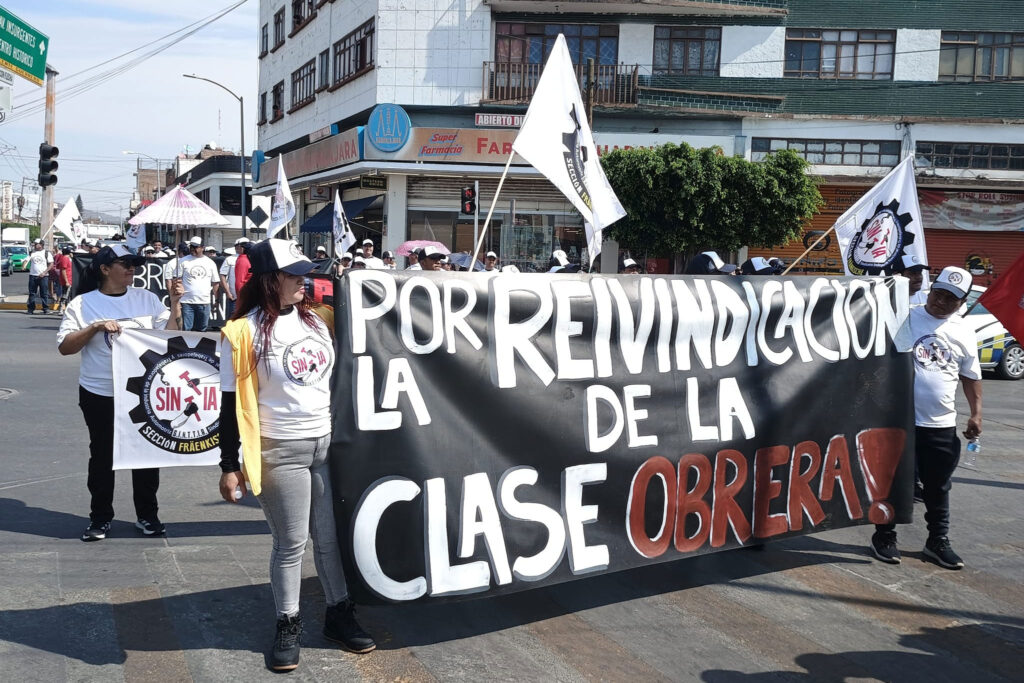
SINTTIA Denounces Fraenkische for Collective Bargaining Violations
Workers detected excessive payroll deductions and anomalies in the savings fund at the German company.
-
April 6th Transport & Farmers Strike Will Go Ahead
The National Front for the Rescue of the Mexican Countryside said although there is communication with federal authorities, “dialogue does not resolve anything if there are no decisive actions.”
-
Mexico Requires a Deterrence Strategy
Mexico should continue to work at maintaining a positive relationship with our closest neighbor and number one trading partner. But acting like Trump isn’t capable of unilateral military action against us is foolish.