President Sheinbaum Presents Steel Industry Supports
This article by Gaspar Vela originally appeared in the April 29, 2026 edition of Milenio.
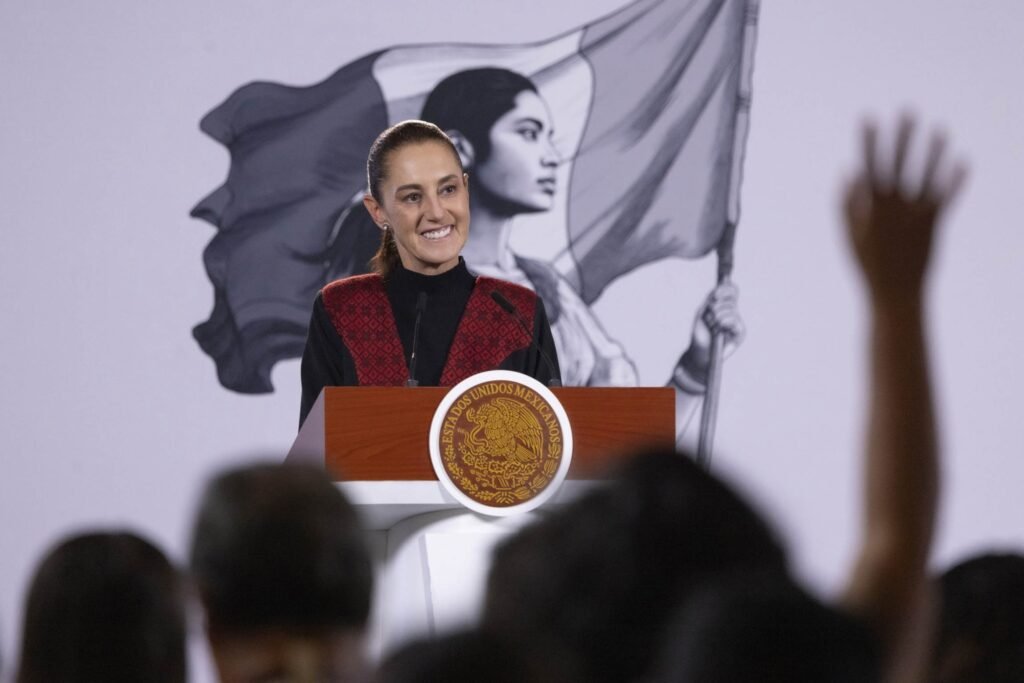
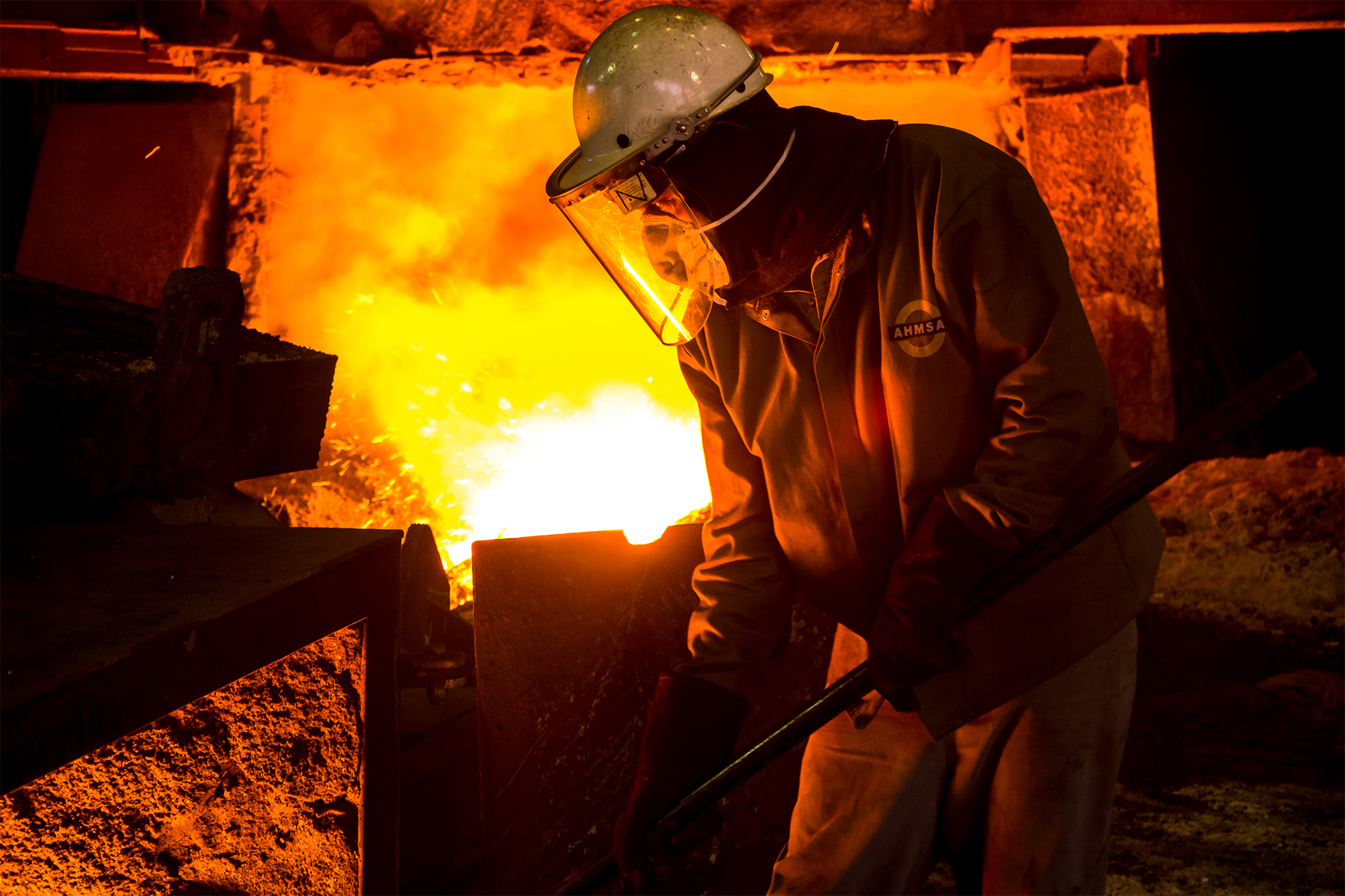
The steel purchases made by the Mexican government will be exclusively domestic or produced in the country, following the signing of an agreement announced by President Claudia Sheinbaum Pardo with the steel industry.
“It’s essentially what the government buys in relation to steel, whether it’s Mexican steel or steel produced in Mexico , that’s it in a nutshell… It’s an agreement that benefits everyone, that’s its virtue. It benefits the people of Mexico , the workers of the national steel industry, it benefits the companies, and it benefits the country,” she stated.
During the morning press conference from the National Palace, the president stated that the objective is to strengthen national production and strengthen supply chains in the Mexican economy, through Plan Mexico.
Therefore, “the issue is very important; it is a signing, perhaps a signing like this has never been done before, it is historic, of an agreement to promote the national steel industry,” he said.
The United States – the main importer of Mexican steel – maintains tariffs on steel and aluminum from Mexico.
“So this agreement linking the national steel industry and the government in its entirety to acquire what is produced in Mexico , well, it helps everyone and that obviously implies acceptance from everyone, when everyone benefits, then obviously everyone feels included,” he explained.
The Secretary of Infrastructure, Communications and Transportation ( SICT ), Jesús Esteva, highlighted that this year, the plan is to use more than one million tons of steel for bridges, schools and trains, which will translate into an approximate investment of 18 billion pesos.
Meanwhile, the Secretary of Anti-Corruption and Good Governance, Raquel Buenrostro, explained that the agreement consists of coordinating working groups between institutions to ensure results, business meetings between public buyers and steel companies, as well as incentives such as points and percentages to promote national content in public purchases.
“We need to coordinate the public and private sectors to establish how we reach supply agreements, to guarantee supply, quality, fair prices and therefore promote the industry, and finally also incentives to promote this type of contracting and also establish negotiation tables, both between the steel industry and the construction industry to also strengthen dialogue and promote national purchasing,” she said.
Public Private Partnerships (P3s)
“The other focus is on public-private partnerships and the financing of infrastructure projects. In terms of financing, we want both public-private and mixed investments to receive support and be given special consideration by development banks, so that the Mexican steel industry can be strengthened,” he added.
Buenrostro stated that the industry is committed to guaranteeing product quality, fair prices, and timely supply.
For his part, the Secretary of Economy, Marcelo Ebrard, highlighted that the Mexican steel industry is important for the autonomy and security of the Mexican production chain, since it is responsible for the production of inputs.
“So, the agreement being presented today, in essence, is that, in government purchases, by all government institutions, we must be very clear that the preference is to buy what is produced in Mexico,” he said. “It’s not just the price, it matters a lot where it’s made. Sometimes we don’t make everything, right? We have to import some things, but we have to make the effort to, first, see what we can do here in our country,” he pointed out.
According to Sheinbaum, Raquel Buenrostro will be in charge of ensuring that the announced commitment is fulfilled.
“In short, Raquel will be the guardian of the agreement’s fulfillment, and she also helped us draft the agreement,” Sheinbaum stated.
Who participated in the agreement?
Also participating in the Treasury Room at the National Palace were Marcelo Ebrard, Secretary of Economy, and Jesús Antonio Esteban Medina, Secretary of Infrastructure, Communications and Transportation (SICT).
Sheinbaum stated that the SICT will guarantee that all public works carried out by the Mexican government will use steel produced in the country.
Edgar Amador Zamora, Secretary of Finance and Public Credit (SHCP), as well as Luz Elena Gonzalez, Secretary of Energy (SENER) on behalf of Pemex and CFE, also participated.
Also in attendance were Mario Delgado, head of the SEP, “for the construction of schools”, Martín Batres, “who builds hospitals”, and Alejandro Encinas Nájera, Undersecretary for Anti-Corruption and Good Governance.
Also present were Luis Rosendo Gutiérrez , Undersecretary of Commerce of the Ministry of Economy , Andrés Lajous, head of the Federal Government’s Railway Transport Regulatory Agency , and Martí Batres Guadarrama, Director General of the Institute of Security and Social Services for State Workers (ISSSTE), “who builds hospitals.”
Sheinbaum also introduced Efraín Morales, director of CONAGUA, Víctor Rodríguez Padilla, director general of PEMEX, and Emilia Esther Calleja, director general of the Federal Electricity Commission (CFE).
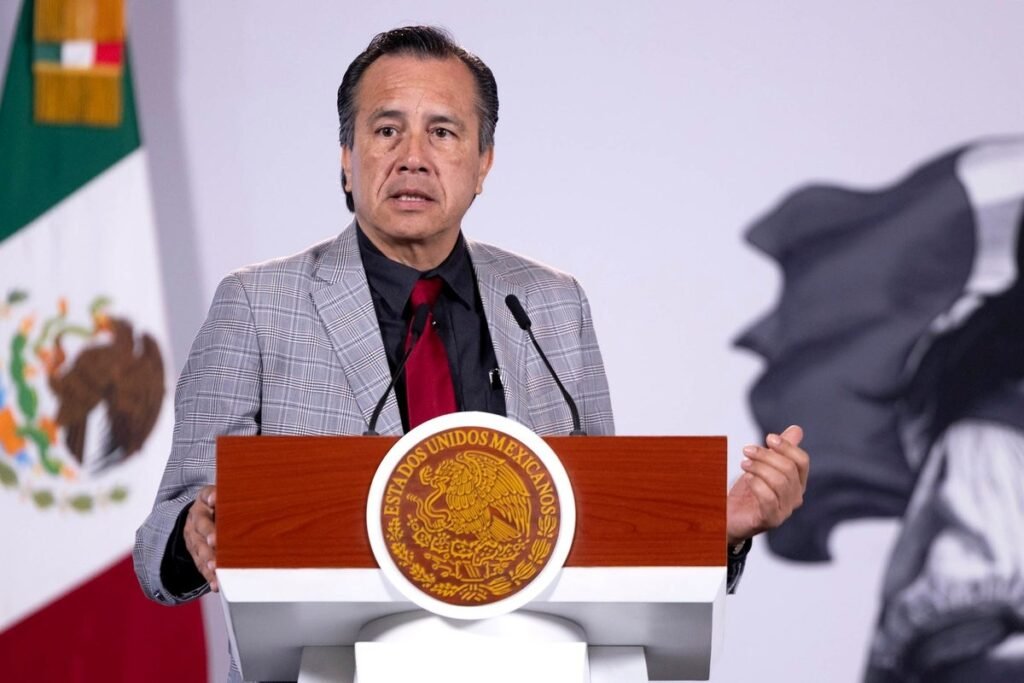
Also present were Cuitláhuac García Jiménez, general director of CENEGAS, and Octavio Romero, general director of Infonavit and coordinator of the Housing Construction for Well-being program. Altagracia Gómez, coordinator of the Regional Economic Development and Relocation Advisory Council, who serves as a link between government and the business sector, was also among the attendees.
Representing the steel industry, Sergio de la Maza Jiménez, president of the National Chamber of the Iron and Steel Industry, attended.
Finally, Carlos Ramírez Capó, president of the National Chamber of Housing Development and Promotion Industry, and Luis Méndez Jared, from the Mexican Chamber of the Construction Industry (CMIC), among other representatives of steel companies, were in attendance.
-
Sheinbaum Presents Draft Decree to Force Digital Platforms to Take Down Content That Incites Violence and Hate
No fines for now: the government will talk with tech companies before publishing the decree next week, a promise made after the Coahuila school attack.
-
People’s Mañanera October 9
President Sheinbaum’s daily press conference, with comments on digital safety, IMSS-Bienestar, sovereignty, and the opposition.
-
Mexico’s Gas Reserves Would Last Only 3 Days
Cenagas director Cuitláhuac García revealed Mexico has no gas storage and imports 75% of what it consumes, after a US supply cut exposed the risk.