Restore Campesino Rights, Reject the USMCA
“You need three ears of corn, one to eat, one to sell and one for next year’s planting.” That’s how African American scholar and activist W.E.B. DuBois explained the importance of “wealth” — that third ear of corn — to Black farmers.
After the Civil War, the Union Army’s General Sherman promised former slaves “40 acres and a mule.” It was clear that they couldn’t be free if they didn’t control their own labor. But almost immediately, Southern states systematically dispossessed Black farmers of their holdings, reducing them to near-slave conditions as farm hands. Black land ownership, Dubois concluded, was the key to their freedom.
In Mexico, Indigenous farmers practiced Dubois’s common-sense principles, feeding themselves and their community and ensuring the next year’s harvest. But as long-time campesino activist José Jacobo tells us, after Spanish colonizers privatized communal land, small farmers endured a long history of dispossession — up to and including today.
Both foreign and domestic agribusinesses have severely weakened the ability of farmers to sell their crops or accumulate savings, leaving them with only enough to feed themselves — symbolically, with just one ear of corn. The three elements of the cycle of self-sufficiency essential for sustaining rural communities have been dismantled.
For them, like the Black farmers, they still need “land and liberty,” as the peasant leader Zapata demanded in the 1910 Revolution. In 1994, the Zapatista movement brought his demand up to date, identifying NAFTA as a deadly blow to Indigenous farmers because “free” trade means freedom to exploit. Their alternative vision of a return to social land ownership could provide health, abundance and self-sufficiency for themselves and for all of Mexico.
Without liberty, campesinos cannot have land. Without land, they cannot have liberty. From 1521 to 2026, the struggle continues.
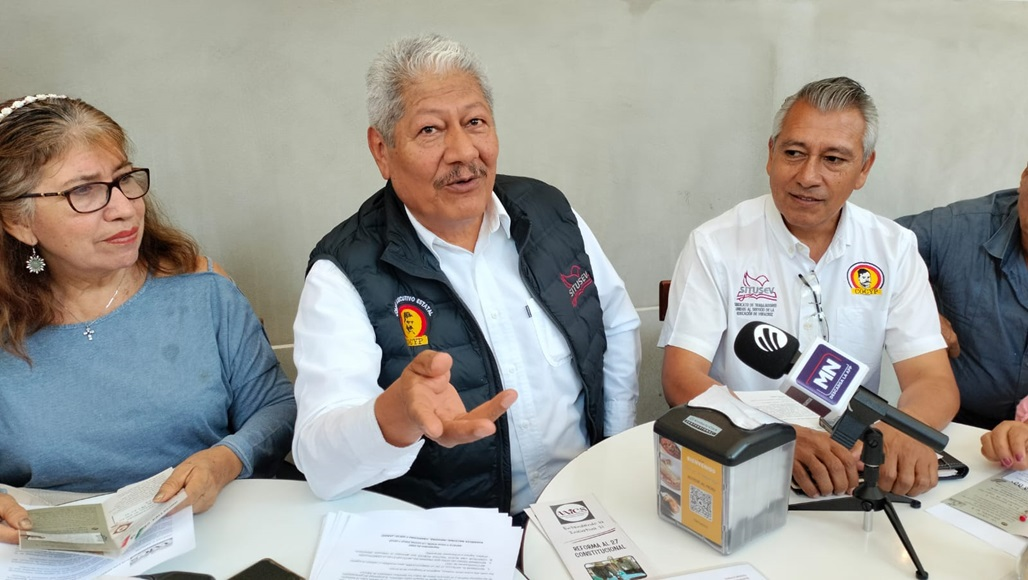
José Jacobo Femat is a peasant leader, President of the Central of Peasant and Popular Organizations (COCYP) and a member of the National Indigenous, Peasant and Social Assembly (ANiCS). A native of the state of Durango, he is an agrarian activist who has organized defense of the agrarian, social and political rights of Indigenous peoples and peasants. In 2024, he received recognition and gratitude for his 58 years of activism from the organization, Desde la Izquierda (From the Left).
What is the traditional Mexican way of managing the land?
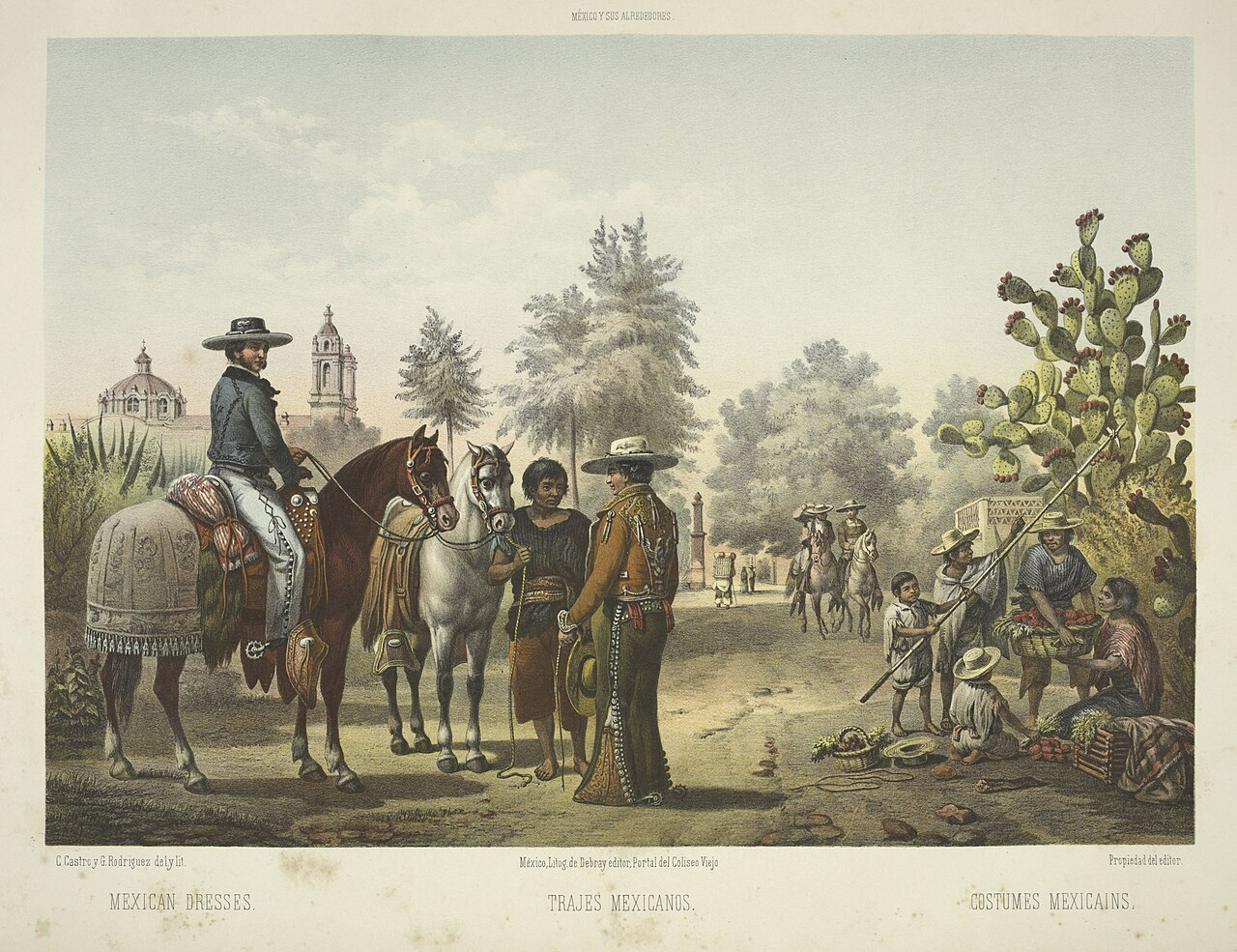
Before the Spanish arrived, the people used all land and water communally — a system of social ownership that allocated plots of land to families for cultivation. It apportioned part of the harvest for each family’s own consumption and apportioned another part to the community.
The Spanish abolished all this. Following the conquest, the Spanish Crown took ownership and granted enormous areas of land to the Spanish elites. Peasants became indebted laborers, although some communal properties did manage to survive.
But following the first revolution — which overthrew Spanish rule in 1810 — the new government didn’t restore land to the communities. On the contrary, they concentrated it into large plantations — haciendas — and permitted foreigners to appropriate large tracts. In other words, our dispossession under NAFTA and the USMCA is nothing new.
What rights did peasants gain during the Mexican Revolution?
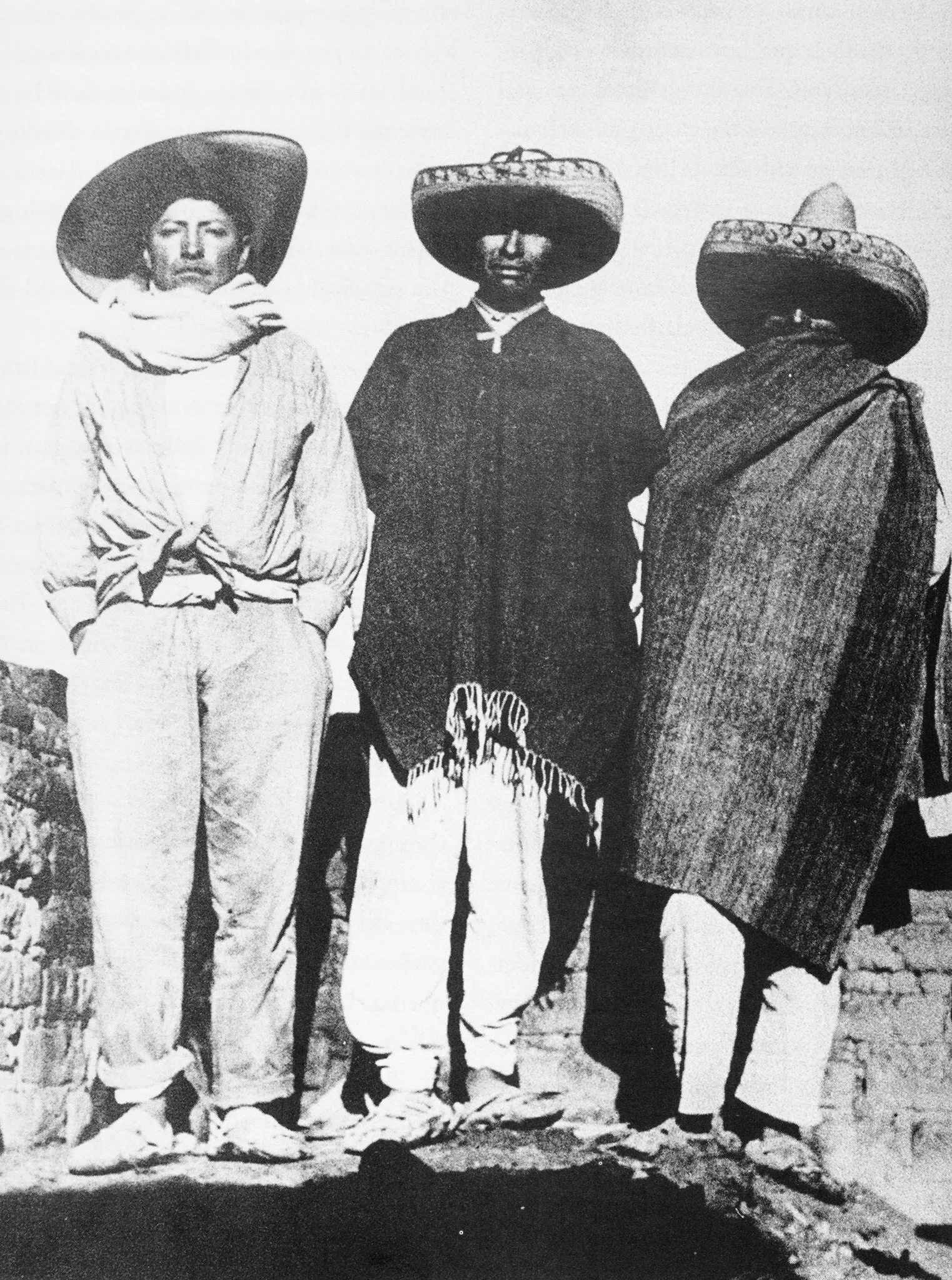
Naturally, it was the campesinos, rural peasant farmers, who drove the 1910 Revolution. The primary demand of Emiliano Zapata Salazar and Francisco Villa — the major peasant leaders — was to return land to social ownership. Following their victory, the vast haciendas were broken up, and the land was redistributed among the peasants. Mexico’s total land area spans 198 million hectares; slightly more than half — specifically, 103 million hectares — was allocated as social property.
The 1917 Mexican Constitution outlined three types of property: public property belonged to the State, private property to private individuals and social property to peasant communities, many of them traditional ejidos. The Constitution stated that social land possessed three key characteristics: it was imprescriptible, not subject to loss through the passage of time; unseizable, protected from foreclosure; and inalienable, incapable of being sold.
With sale prohibited, what happened if ejidatarios (original members of an ejido) died? They passed their ownership right down to their children, perpetuating the ejido over generations.
In addition to land redistribution, the post-revolutionary government established numerous services, such as credit, insurance and technical assistance. They also provided inputs like seeds and fertilizers, equipment and infrastructure construction and purchased basic agricultural products from peasants at fair prices. These elements were essential for farmers and enabled the country — for over fifty years — to maintain sufficient production to meet national demand while exporting surpluses, a trend that continued until 1982.
Did NAFTA reverse those gains?
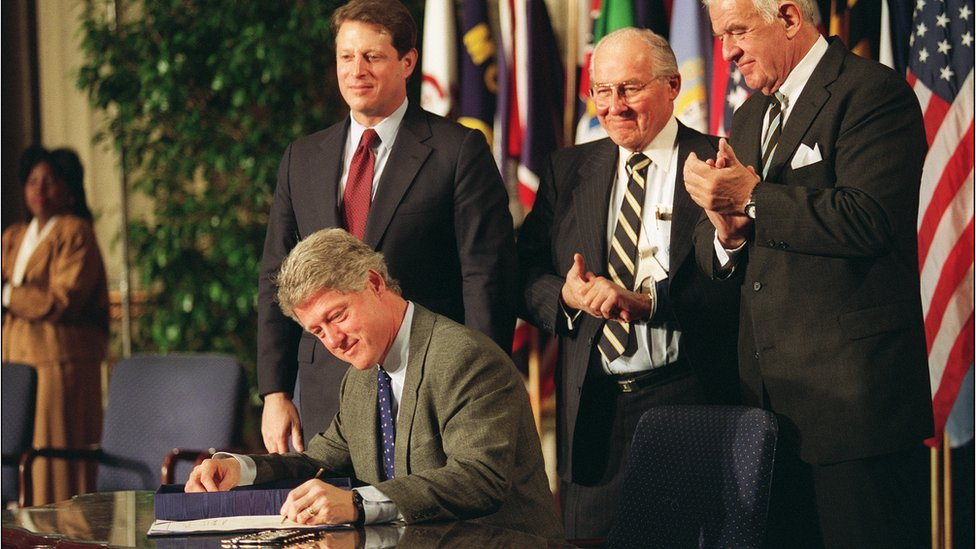
In 1992, the government of the neoliberal Salinas de Gortari amended the Constitution to permit converting social property into private property, meaning that individual ejidatarios could lease or sell their plots. Since then, more than five million hectares have been privatized, paving the way for the resurgence of gigantic private estates, where wealthy individuals control both production and labor conditions.
In 1994, NAFTA threw open the doors to foreign corporations. The Mexican government granted concessions for land and water resources to mining, agricultural, petroleum and manufacturing firms, including the automotive sector. This set off an intensive land grab by US and Canadian businesses that had been waiting for this economic opportunity.
Foreign companies showed no qualms whatsoever about plundering mineral wealth and devastating the Mexican environment through deforesting and destroying biodiversity, contaminating the soil and monopolizing freshwater rights — surface and groundwater — across the length and breadth of the country.
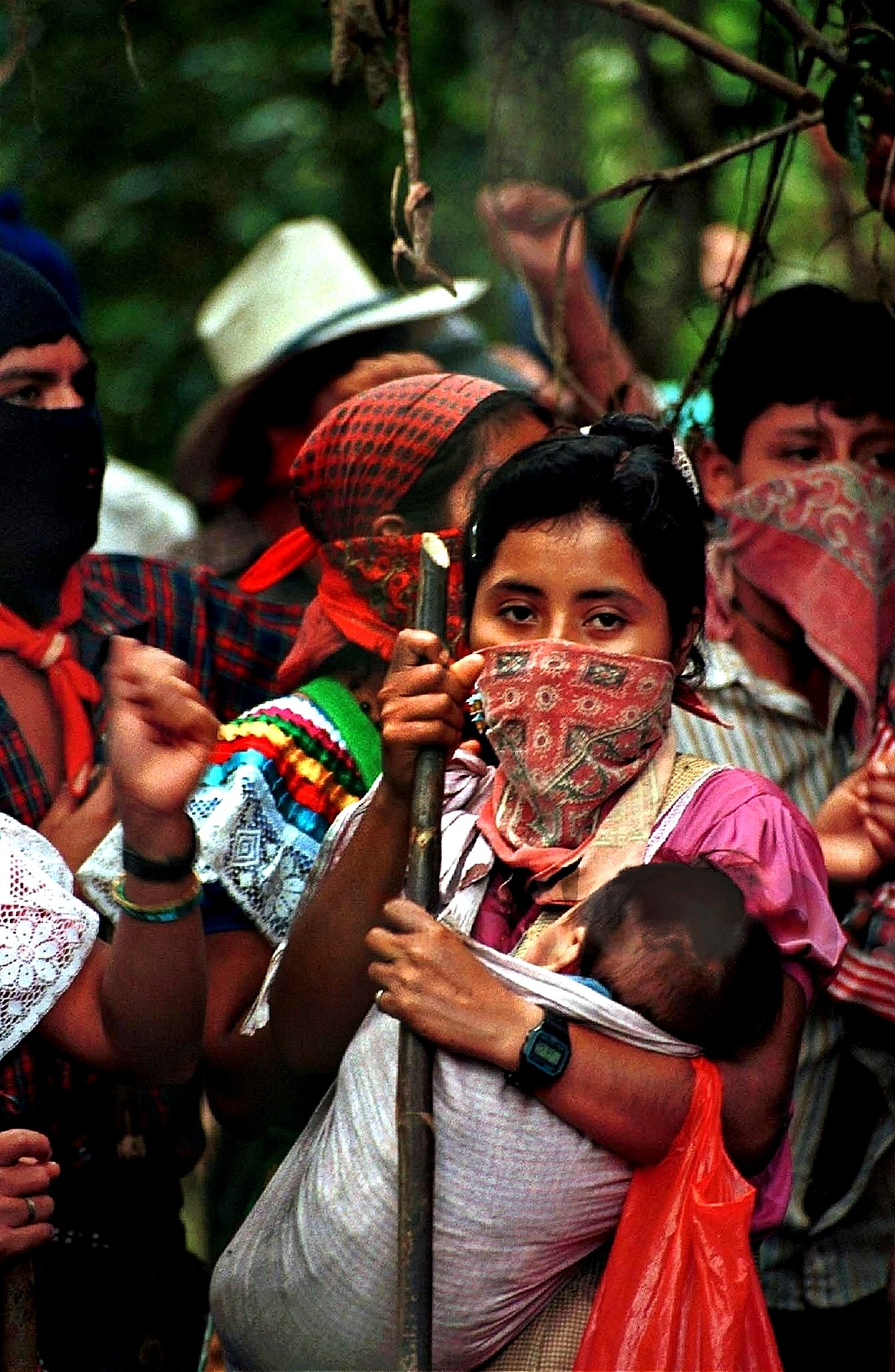
Naturally, widespread protests arose. The Zapatista movement in Chiapas emerged as a direct response to NAFTA; it totally rejected neoliberal globalization, and its members sought to create an alternative social model based on the ancient Indigenous communal system.
Some of us residing in other parts of the country participated in this movement; however, its organizing was confined to a specific region of the national territory and never scaled up to become a national political project that could unite other movements and states across the Republic. Nevertheless, we all stand behind its defense of the rights of Indigenous peoples and communities in the face of corruption, repression, assassinations and environmental disaster. Their demands remain our demands.
Recently, farmers blocking highways have been in the news. Was your organization involved?
Large-scale farmers organized the demonstrations. They are the new private landowners emerging from the neoliberal model that opened up the land market.
My organization, the COCYP, is a national coalition of small organizations — ejidos, peasant communities and grassroots groups — representing small-scale producers. Our objective is to restore the agrarian rights eliminated by the neoliberal regime; we seek a new agrarian reform for the benefit of 5.5 million ejidatarios and communal landholders.
We do face some of the same problems as large-scale farmers. Before 1990, Mexican agriculture was sustainable because a state agency guaranteed the pricing and purchase of staple grains that ensured our survival. Today, farm product prices are set far away in the Chicago Mercantile Exchange, controlled by giant food corporations. These prices are simply too low for any farmer large or small to survive on without government subsidies.
Therefore, those carrying out the blockades are demanding government subsidies for various crops, such as corn, wheat, beans, rice, milk, meat and others. And, to halt the dumping of US corn that floods the Mexican market at extremely low prices, they are requesting that staple grains be excluded altogether from the USMCA.
We agree with these demands — but have our own demands too! First and foremost, we propose restoring the rights guaranteed under Article 27 of the 1917 Mexican Constitution, which stipulated that the State must regulate the use of natural resources — the public wealth — to conserve them for everyone’s benefit. That provision paved the way for the expropriation of privately owned land needed for public use and for restrictions on foreign ownership within a 100-kilometer zone along the borders and a 50-kilometer zone along the coastlines.
We also demand the reinstatement of all farm services eliminated by NAFTA.
Free trade agreements have effectively turned Mexico into a colony of US multinational corporations — such as Cargill and Archer Daniels Midland —within the agricultural sector. These companies reap enormous profits but pay no taxes in Mexico; it is nothing short of theft! Indigenous peoples’ rights are completely disregarded. Predatory mining, forestry and tourism enterprises are encroaching on Indigenous communities, preventing them from exercising stewardship over their land and water. This violates current laws and the Constitution itself.
Therefore, those we represent demand that Mexico reject the USMCA entirely!
What arguments do you have that would generate broad support for jettisoning free trade agreements?
Food quality. Free trade has made the Mexican diet much worse. Instead of fresh produce, Mexicans regularly consume ultra-processed foods and sugary beverages, causing a high incidence of obesity, diabetes, cancer and hypertension. This is a national disaster!
Self-sufficiency. Today, Trump demands that Mexico again throw its doors wide open to exploitation by US corporations under a revamped USMCA. We advocate a return to the days of toxin-free Mexican-grown food for Mexican people. We don’t need imports; we can be food self-sufficient.
Protection of sovereignty. Last year, Congressional Representative Roselia Suárez proposed a constitutional amendment to restore the rights of campesinos as the 1917 Constitution once guaranteed. She highlights the historical importance of peasants, Indigenous peoples and Afro-Mexicans as the bedrock of the Mexican Revolution. We are the ones that most strongly insist, without reservation, on Mexico’s sovereignty regarding protection of our natural resources.
Since the days of the Spanish Conquest, campesino demands remain the same: Land and Liberty!
-
Mexico Does Not Have the Capacity to Confront the Cartels, Trump Says
Speaking at the White House, Trump claimed without evidence that cartels control Mexico and warned they have a deadline to “basically surrender.”
-
Mexico’s Secretary of Governance Announces Group of Experts Will Analyze National Registry of the Disappeared
Backed by the UN human rights office, Mexican and U.S. scientists will audit the registry, while 16,003 people reported missing have been located.
-
People’s Mañanera October 15
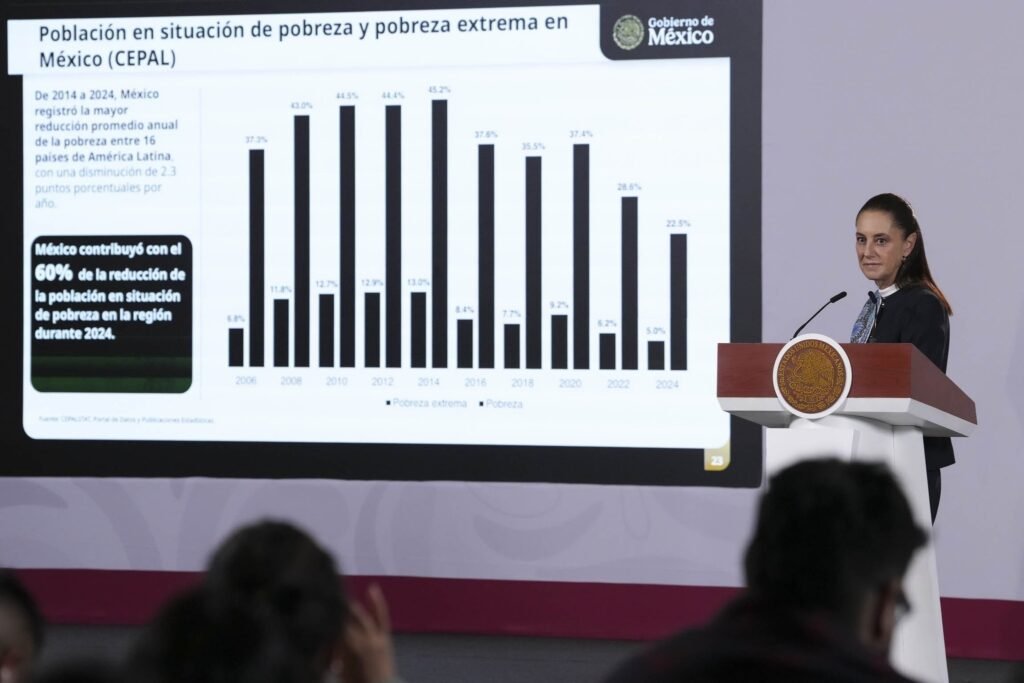
President Sheinbaum’s daily press conference, with comments on economic growth, neoliberalism, tourism, and Jalisco.