Rocha Moya: US Interference Disguised as an Accusation
This editorial by the La Jornada editorial board originally appeared in the April 30, 2026 edition of La Jornada, Mexico’s premier left wing daily newspaper. The views expressed in this article are the authors’ own and do not necessarily reflect those of Mexico Solidarity Media or the Mexico Solidarity Project.
The manner, content, and timing of the charges brought by the U.S. Department of Justice (DOJ) against the governor of the state of Sinaloa, Rubén Rocha Moya, and eight other current and former officials of the state, along with the corresponding requests for their arrest for extradition purposes for alleged links to the Sinaloa cartel, cannot be considered mere judicial measures; instead, they are acts of political interference, further compounded by an implicit threat.
According to the U.S. allegation, the Chapitos —sons of Joaquín El Chapo Guzmán—contributed to Rocha Moya’s election by kidnapping and intimidating his political rivals. Once in office, the Sinaloa governor allegedly met with them and promised protection for their drug trafficking operations into the United States. In the absence of even minimally credible evidence, it is impossible to comment on the veracity of these charges; however, it is undeniable that the manner in which they were made public—with media fanfare and outside the established channels for bilateral cooperation in combating drug trafficking—reveals an intention to place our government in an uncomfortable position and to provide thinly veiled support to the opposition campaign that uses the prefix “narco” to discredit everything related to the Fourth Transformation.
The accusation against the governor of Sinaloa and other public officials is inadmissible in both form and substance. Formally, because, as the Ministry of Foreign Affairs and the Attorney General’s Office indicated, international treaties on this matter contain specific confidentiality provisions regarding these types of proceedings, confidentiality that was flagrantly violated by the New York prosecutor’s office, the Department of Justice, and the embassy. Substantively, because the accusations were not accompanied by sufficient evidence, a requirement established in the bilateral extradition treaty. Furthermore, the Washington government is attempting to ignore the fact that, according to Mexican law, in the case of accusations against governors and senators, it is essential to conduct an impeachment trial before any judicial proceedings. Moreover, the destabilizing and vindictive intention of the U.S. authorities could not be more obvious, as this attack comes days after the Mexican government’s conspiracy in Chihuahua to turn the state into a base of operations for U.S. espionage was exposed.
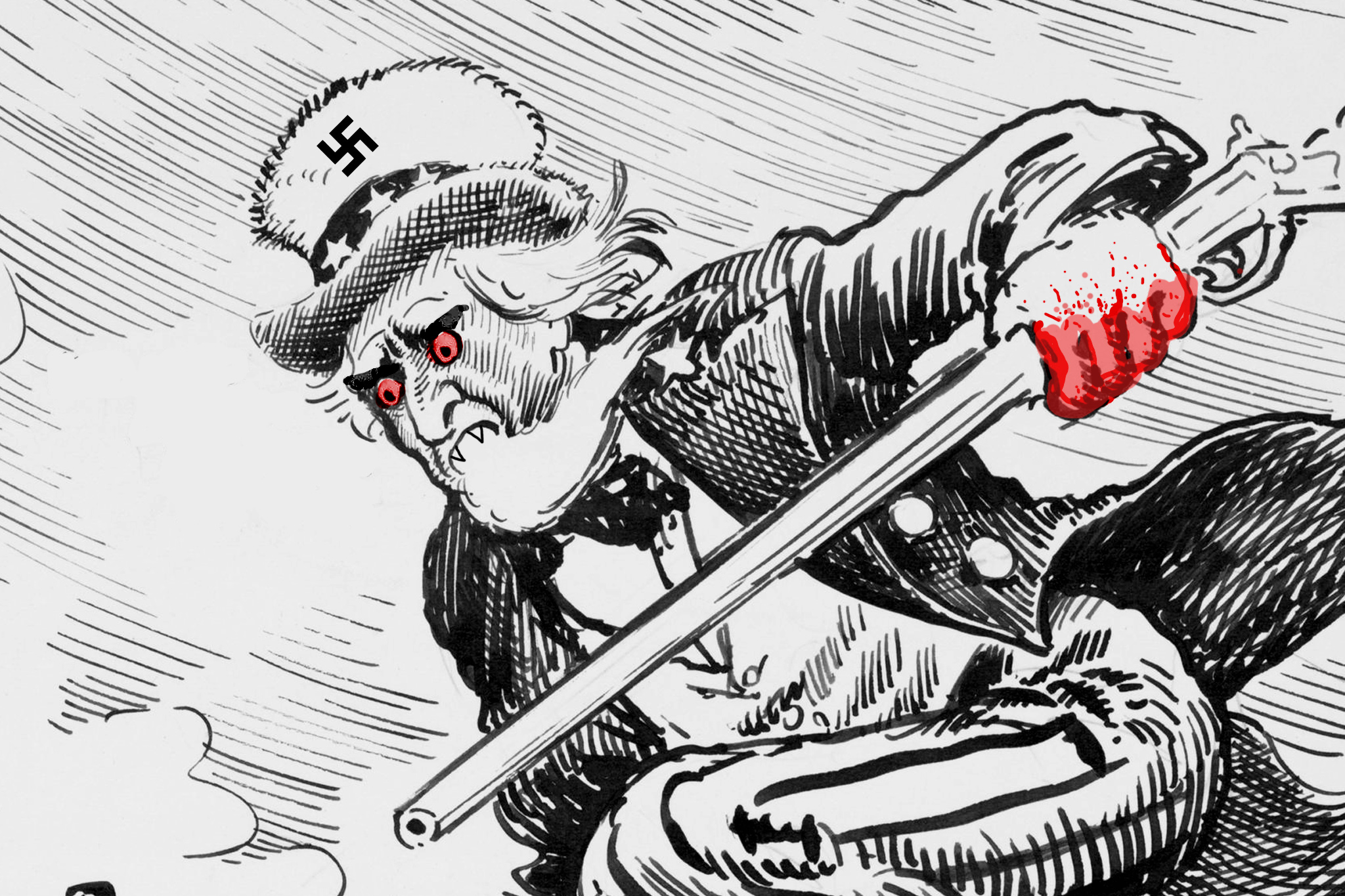
The paradox should not be overlooked: Washington’s ambassador to Mexico, Ronald Johnson, claimed that the filing of criminal charges against the officials in question exemplifies the shared priority between both countries to combat corruption and transnational criminal activity, when in reality it exemplifies the opposite: the Trump administration’s eagerness to undermine cooperation on these issues and destroy mutual trust. In his statement, Ambassador Johnson presents the public with the dilemma of choosing whether to consider him part of a coup plot or someone who understands nothing about Mexican law or the responsibilities of his position.
If Colonel Johnson is concerned about corruption, he could start by denouncing his boss, the most blatantly corrupt president in U.S. history: in addition to accepting a $400 million-plus airplane as a “gift” from an authoritarian monarchy, misappropriating federal funds for his farcical “Peace Board,” demanding bribes from media conglomerates, and launching a crypto scam, Trump turned presidential pardons into an unprecedented industry. Between his two terms, he has freed former Honduran president and notorious drug trafficker Juan Orlando Hernández; five former NFL players serving sentences for drug trafficking and perjury; Glen Casada, former Speaker of the Tennessee House of Representatives, convicted of public corruption, bribery, and conspiracy to defraud; and his former lawyer and former New York City mayor Rudy Giuliani. Billionaire Changpeng Zhao, who pleaded guilty to violating anti-money laundering laws and is accused of facilitating transactions linked to extremist groups and criminal organizations; Trevor Milton, convicted of securities and wire fraud after defrauding investors. The list of criminals touched by the grace of the presidential pardon extends to dozens more, many of whom have donated millions to campaigns or other projects of Trump and his family.
In this context of attacks by the White House, it is very significant how the political, business and media opposition in Mexico are calling for the lynching of a person against whom there is no proof of guilt, while at the same time justifying the scheme of invasion of foreign spies organized in broad daylight by Maru Campos in Chihuahua.
Ultimately, the innocence or guilt of those singled out by Washington must be established, in the first instance, in Mexico and by Mexican institutions, and in the coming days it will be confirmed who defends the rule of law and who justifies transgressions of the Constitution; who stands united for national sovereignty and who seeks dubious justice from foreign hands.
-
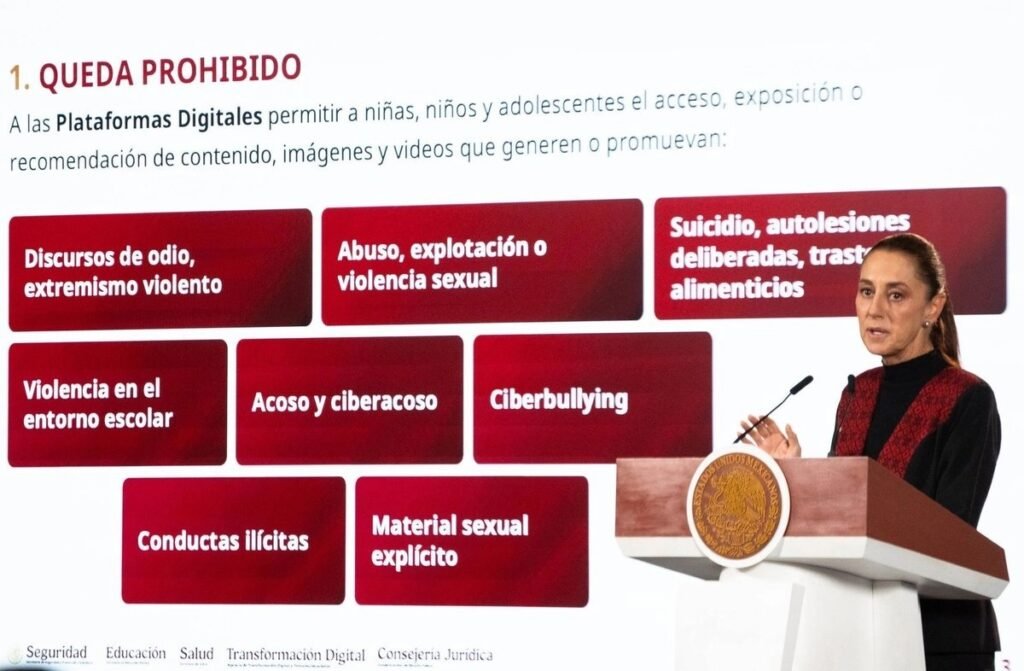
Sheinbaum Presents Draft Decree to Force Digital Platforms to Take Down Content That Incites Violence and Hate
No fines for now: the government will talk with tech companies before publishing the decree next week, a promise made after the Coahuila school attack.
-
People’s Mañanera October 9
President Sheinbaum’s daily press conference, with comments on digital safety, IMSS-Bienestar, sovereignty, and the opposition.
-
Mexico’s Gas Reserves Would Last Only 3 Days
Cenagas director Cuitláhuac García revealed Mexico has no gas storage and imports 75% of what it consumes, after a US supply cut exposed the risk.