
Senators Will Vote on Electronic Registration of Working Hours & 586,000 Peso Fines
This article by Gerardo Hernández originally appeared in the April 7, 2026 edition of El Economista.
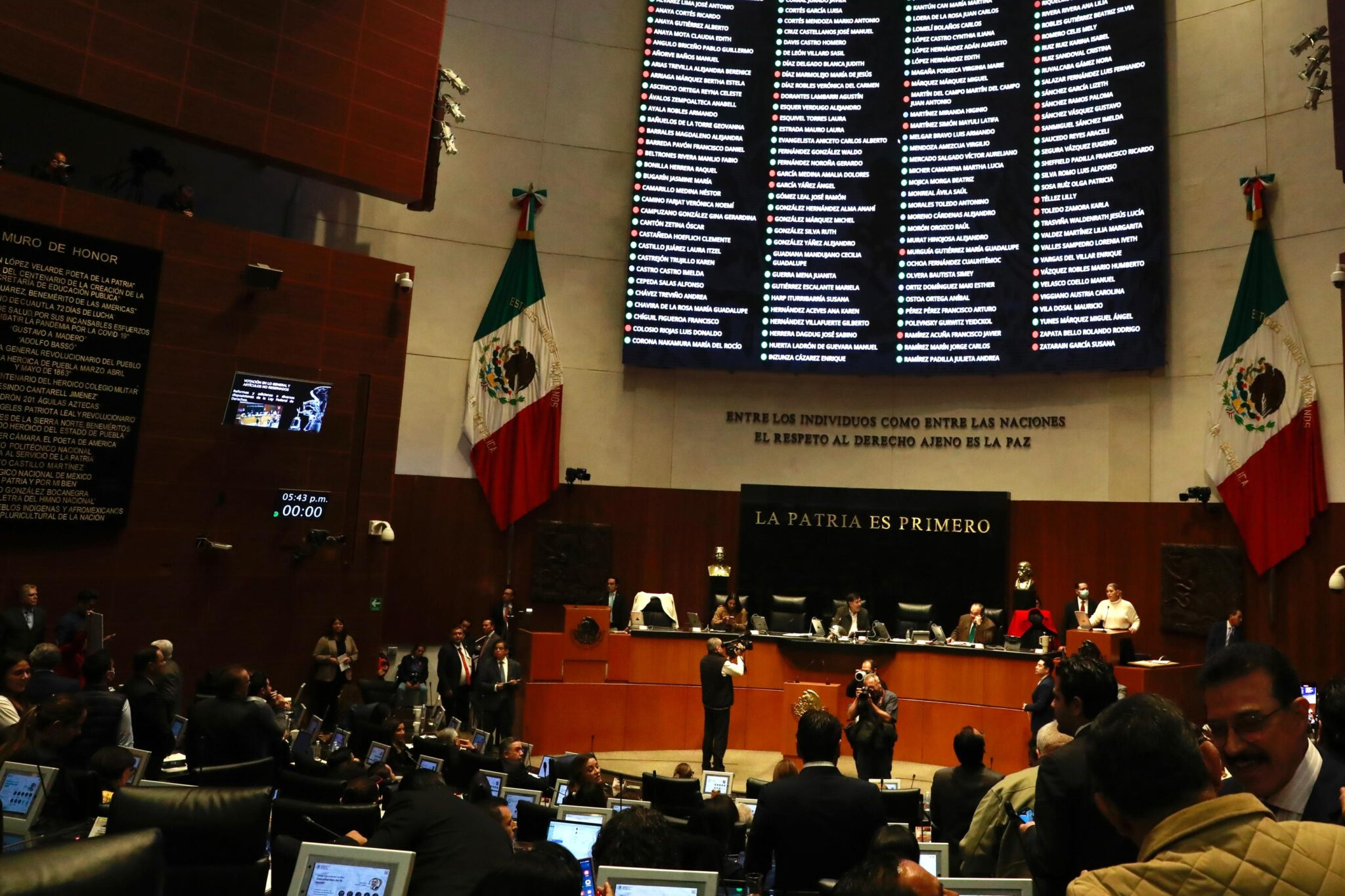
This Wednesday, April 8, the Senate Committees will vote on the secondary reform of the workday. The ruling includes a gradual transition of the new overtime limit and confirms the employer’s obligation to have an electronic record of hours worked, in addition to a fine of up to 586,000 pesos for non-compliance with this new responsibility.
The Joint Committees on Labor and Social Welfare, and on Legislative Studies, First, will be in charge of issuing the ruling on the secondary reform, the last legislative step to materialize the 40-hour work week in Mexico.
The ruling largely incorporates the initiative submitted by Mayor Claudia Sheinbaum last December. In that regard, the amendments to the Federal Labor Law (LFT) reaffirm the 40-hour workweek limit established in the Constitution, its gradual implementation, and the new maximums for overtime.
The Committees will retain the provision proposed by the Presidency: the employer’s obligation to have an electronic record of working time; however, the senators will add a sanction ranging from 29,327 to 586,550 pesos, that is, from 250 to 5,000 times the Unit of Measurement and Update (UMA).
“This measure will have positive effects by forcing employers to keep an adequate record of working hours and overtime,” states the opinion that will be voted on this Wednesday. Lawmakers are also considering elevating the content of the electronic record to a means of proof in case of a discrepancy that requires the intervention of the authority.
Furthermore, the power of the Ministry of Labor and Social Welfare (STPS) to issue the rules that regulate the electronic registration (known in the market as a time clock), including the exceptions to its application, and the right to access the information when required, is maintained.
Regarding overtime , the reform to the Federal Labor Law reiterates the new limits established in the Constitution, but incorporates a gradual increase. These are the permitted overtime hours while the 40-hour workweek is implemented:
- 9 hours in 2026
- 9 hours in 2027
- 10 hours in 2028
- 11 hours in 2029
- 12 hours in 2030
Schedule Remains Unchanged
The ruling does not modify the definition of the workday, one of the points of contention leading up to the discussion. The presidential initiative proposed a new concept to be interpreted as the time during which “the worker performs subordinate activities for the benefit of the employer.” However, the committees opted to retain the definition established in 1970: “it is the time during which the worker is at the employer’s disposal to perform their work.”
What will be incorporated into the Federal Labor Law is the express provision that the working day “may be distributed by mutual agreement between employers and workers.”
The project envisions that the secondary reform will come into force on May 1st. The period between that date and January 1st, 2027 will serve to allow companies to prepare for the first reduction of two hours per year. Subsequently, two hours per year will be reduced from January 1st of each year until 2030, when the 40-hour work week will be reached.
-
“The world and history will judge the silence of nations in the face of these crimes”
Statement from the Embassy of the Islamic Republic of Iran in Mexico on President Trump’s threat of genocide.
-
Mexico’s Agriculture & Economy Secretariats Pushing to Stop Labeling GMO & Toxic Pesticide Use in Food
Mexico’s Secretariat of Health was to have established mandatory labeling regulations a year and a half ago, but is in violation of the General Law. Critics point to industry interests.
-
Using Tear Gas & Water Cannon, Tlaxcala State Police Disperse Farmers & Transporters Strike
The situation of FNRCM members in Tlaxcala is unknown. Meanwhile the state government announced that traffic has been restored on the roads.