Sheinbaum Delivers Power Plant; Without the CFE There Would Be No Sovereignty, She Stresses
This article by Juan Carlos Flores originally appeared in the June 14, 2026 edition of La Jornada, Mexico’s premier left wing daily newspaper.
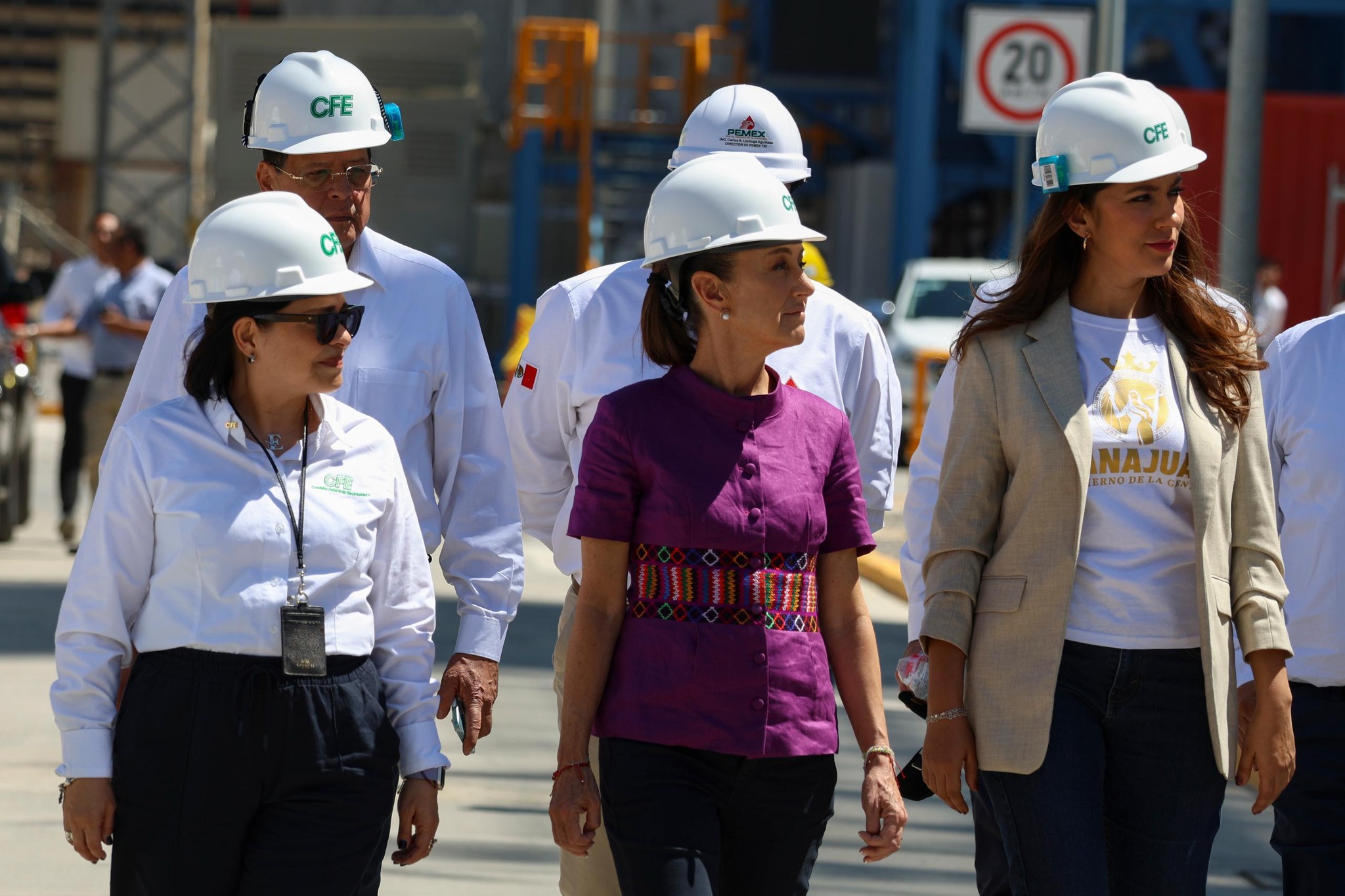
Manzanillo, Colima. While inaugurating at this port the Teresa Urrea Chávez Combined-Cycle Plant, equipped with cutting-edge technology to strengthen the electricity supply in the country’s west, President Claudia Sheinbaum Pardo affirmed that without the Federal Electricity Commission (CFE) “there would be no national sovereignty nor energy sovereignty,” and that strengthening that public enterprise is “to love Mexico.”
This is the fifth plant installed in the country to generate cleaner energy, reduce fossil-fuel consumption and the carbon footprint, adding 357 megawatts to the General Manuel Álvarez Moreno thermoelectric complex, which –at 2,860 megawatts– becomes one of the largest in Latin America.
With an investment of 347.45 million dollars, this project will strengthen the electricity supply for more than 800,000 users, in addition to businesses, services, and industries in the region.
It will also enable savings of more than 93 million liters of water per year and will prevent the emission of nearly one million tons of carbon dioxide, equivalent to what 312,000 gasoline vehicles expel, explained Secretary of Energy Luz Elena González.
President Sheinbaum Pardo recalled the struggle against the privatization of the CFE –during the so-called neoliberal period– and the reform carried out in the Fourth Transformation so that the enterprise would recover 54 percent of electricity generation, above the private companies.
She stressed that this “could never be done if it weren’t for the women and men workers of the CFE, who are the ones who sustain the enterprise,” and expressed confidence that by the end of her six-year term, with the five new combined-cycle plants –the one in the Colima port, San Luis Potosí, Querétaro, Yucatán, and Guanajuato–, the State will produce close to 65 percent of energy, with 28,000 additional megawatts.
Emilia Calleja, head of the CFE, explained that the Manzanillo III plant expands the public enterprise’s generation capacity, strengthens the electricity supply in a strategic region, and accompanies the country’s economic growth with infrastructure.
She emphasized that Manzanillo “carries fundamental weight for Mexico. Here port, commercial, industrial, logistics, and service activities intersect that every day move an important part of our national economy.”
For that reason, she added, “having sufficient, stable, and reliable energy is not a minor matter, it is a condition for the entire region to keep growing, for industries to operate, services to function, and our families to have greater certainty in daily life.”
In the context of this event, workers asked to speak with the President, while a few demonstrated with placards outside the complex, demanding better working conditions and the opening of 120 more positions. The Manzanillo thermoelectric plant employs around 500 people.
Later, in Aguascalientes, the President headed the delivery of the Rita Cetina Scholarship for school supplies and uniforms for girls and boys.
-
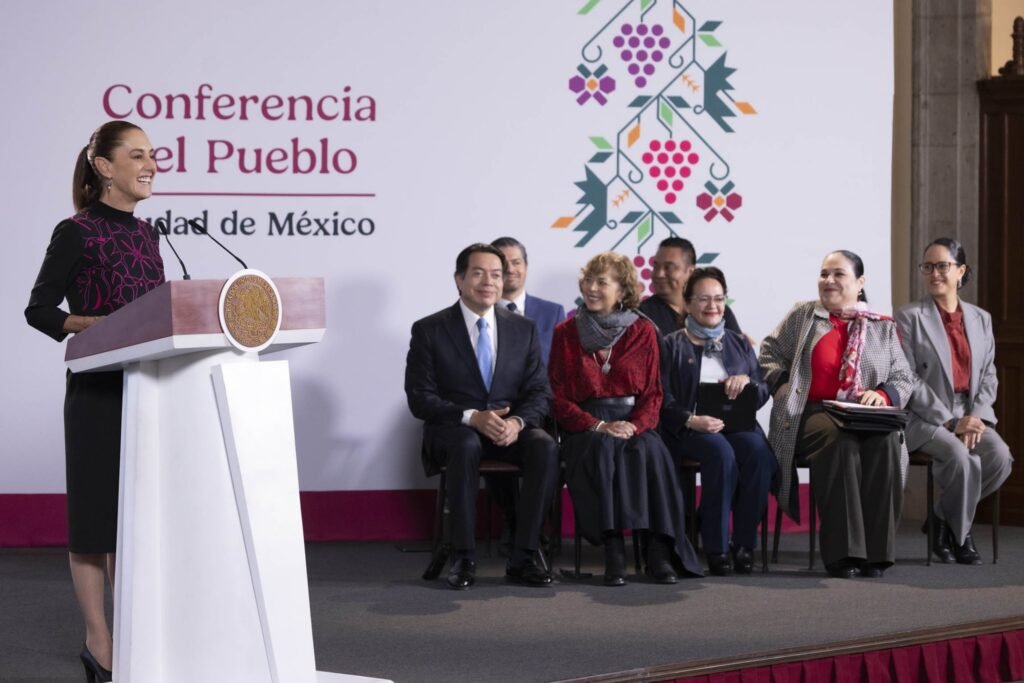
People’s Mañanera October 16
President Sheinbaum’s daily press conference, with comments on recovered assets, public education, security, and exports.
-
Mexico Does Not Have the Capacity to Confront the Cartels, Trump Says
Speaking at the White House, Trump claimed without evidence that cartels control Mexico and warned they have a deadline to “basically surrender.”
-
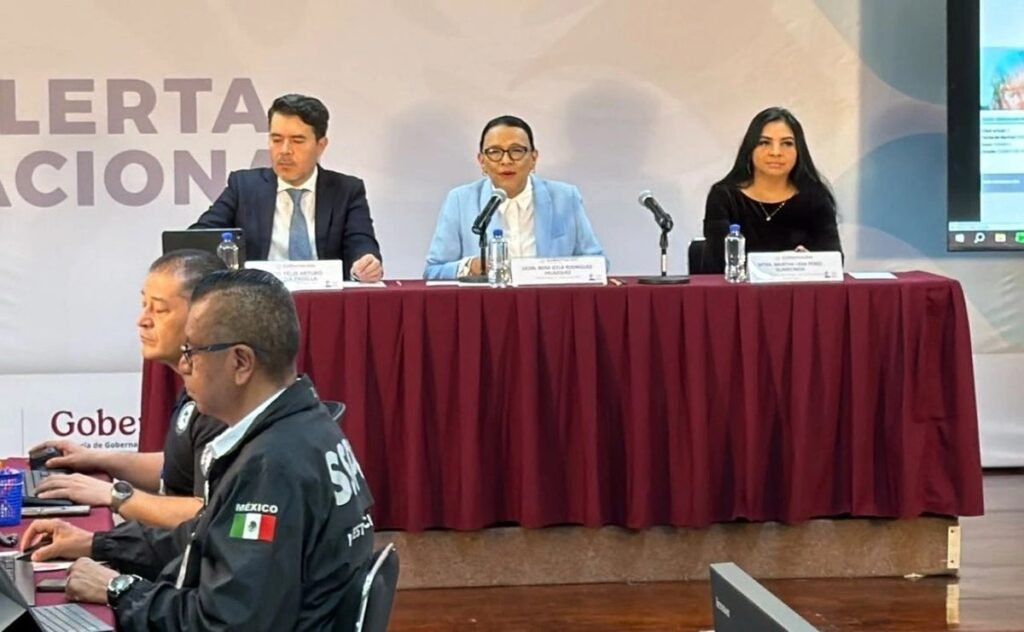
Mexico’s Secretary of Governance Announces Group of Experts Will Analyze National Registry of the Disappeared
Backed by the UN human rights office, Mexican and U.S. scientists will audit the registry, while 16,003 people reported missing have been located.