Socialism & Anti-imperialism in Mexico During the 1970s & 1980s
This article by Erick Manuel Pastén Rozo originally appeared in the February 21, 2026 edition of La Silla Rota.
2026 began with a bang, with a show of force by the United States unseen since the second half of the 20th century. The violent invasion of Venezuela, accompanied by the kidnapping of President Nicolás Maduro, was followed by threats of invasion against Mexico, Colombia, and Greenland. Added to this was the intensification of the economic (now oil-related) blockade against Cuba. While this start to the year arrived with a bang, let’s remember that last year Trump had already threatened to negatively impact the Honduran economy if the country’s electorate did not vote for his chosen candidate, Nasry Asfura. Or how the former host of “The Apprentice” imposed 50% tariffs on Brazil due to the decision to convict the former coup-plotting president, and Trump’s personal friend, Jair Bolsonaro.
This intensification of US interventionist policies in Latin America is nothing new and stems from what has been called the “Monroe Doctrine.” It is an apparent divine mandate that grants the United States the right to manipulate our policies and economy as it sees fit. What is new, however, is the lack of a coordinated response from the continental left-wing opposition to the onslaught of this new imperialism . The 1970s and 80s, with their broad anti-imperialist mobilizations —organized, coordinated, and led in most cases by socialists and communists —served, at the very least, as a pressure group against the subservient and collaborationist policies of regional governments.
The end of the Cold War and the subsequent dismantling of international solidarity and collaboration networks has left the continent, even in an era so interconnected thanks to social media, isolated in its own struggles.
But what motivated these people, most (though not exclusively) of them young students, workers, and peasants, to try to change the situation on the continent? The answer has already been mentioned: their activism in socialist organizations . It is worth remembering that one of the basic principles of this ideology was what is called “Proletarian Internationalism.” This concept, the foundation of Marxist thought, states that since capitalism is a global system, the working classes must act together, as individual national struggles are actually part of a single, larger struggle.
Socialists, from the late 19th and early 20th centuries, understood that there was little they could actually do to change the material conditions of their countries. It wasn’t until after the formation and consolidation of the Soviet Union that the first global support and solidarity networks began to be created, such as International Red Aid. This organization was formed by the Communist International and its objectives were the material and political support of communist prisons around the world. The preeminence of organizations affiliated with or directly connected to the Soviet government declined once the second half of the 20th century began. However, in their place, new organizations appeared, built from the ground up by the socialist militants themselves in different countries.
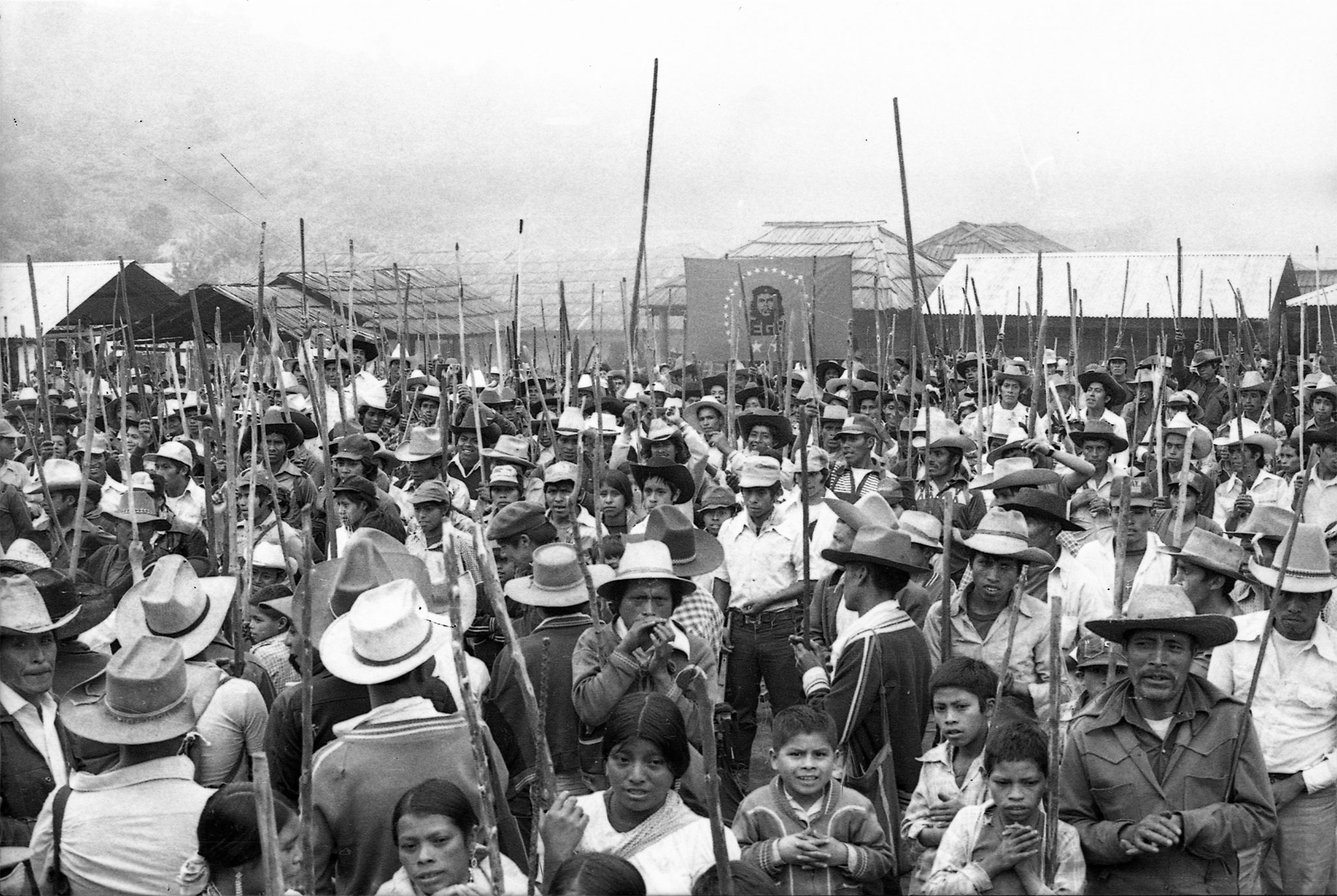
Whether in support of the liberation of the Palestinian people, the reconstruction of the governing structure in the People’s Republic of Kampuchea, or an unwavering stance of solidarity with the socialist bloc, communists worldwide —and in our case, in Mexico in particular—took a position on the international stage. It must be said, however, that this support was not without controversy or contradiction. Ultimately, it was a somewhat blind support, guided by a sense of moral and political empathy.
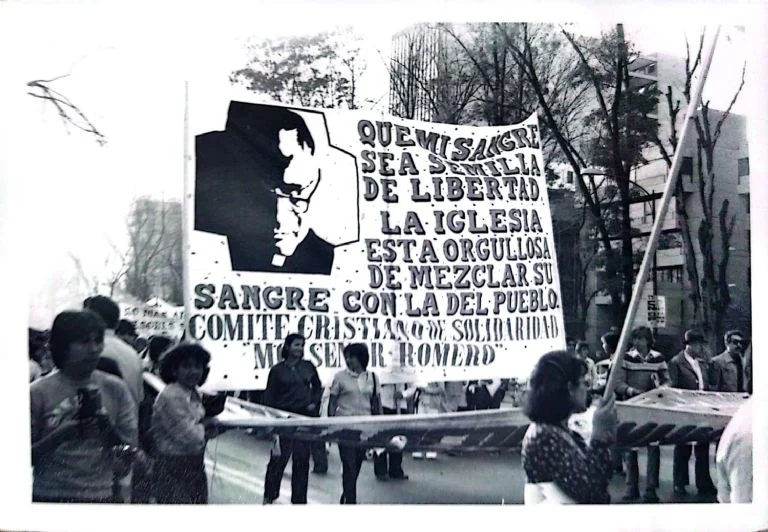
But returning to the topic, of all these cases, perhaps the one that mattered most to them was that of Latin America. Whether in support of refugees and exiles from Central America and the Southern Cone, through the Guatemalan Committee of Patriotic Unity, the Mexican Committee of Solidarity with the Argentine People, or the Permanent Committee of Solidarity with Latin America (COPESAL). Marches, rallies, and the distribution of propaganda, the holding of conferences and the screening of documentaries, as well as the frequent meetings of continental socialist and communist youth , were commonplace, promoted not as an ambiguous and isolated solidarity project, but as part of a complex internationalist political network.
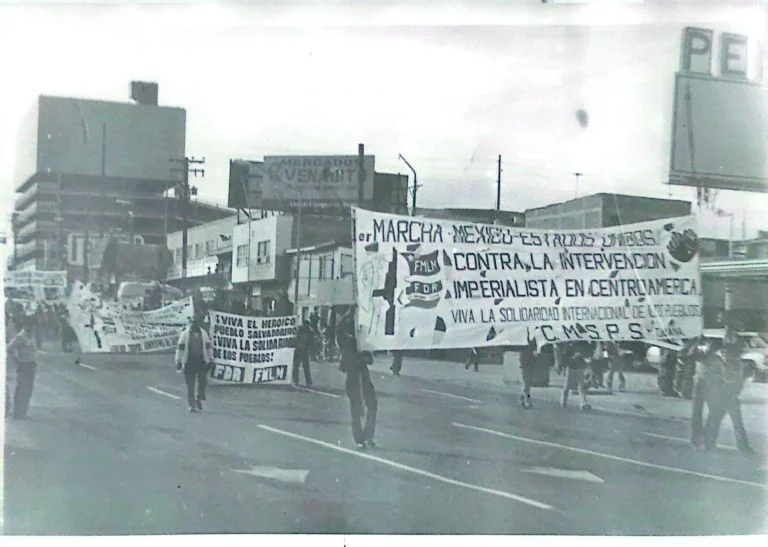
One of the defining events of Proletarian Internationalism in the first half of the 1980s was the unique support that socialists gave to the Salvadoran Revolution and the Farabundo Martí National Liberation Front. Mexican socialists and communists saw in their Central American neighbor’s struggle an ideological and strategic beacon to follow. In this sense, the Salvadoran Revolution—or Salvadoran Civil War, depending on who you ask—mobilized the Mexican revolutionary left of the 1980s much as the Cuban Revolution had done decades earlier. Large contingents filled the streets of the country for a little over five years; important events such as the International Meeting of Solidarity with the Salvadoran Revolution took place. The global revolution was just around the corner, but that corner was getting farther and farther away.
The end of the Cold War and the subsequent dismantling of international solidarity and collaboration networks has left the continent, even in an era so interconnected thanks to social media, isolated in its own struggles. While more than three decades have passed since the Soviet Union dissolved, no new regional solidarity organizations have emerged to replace those formed throughout the 20th century. Moreover, in this era where far-right positions are being revived and reinterpreted by several national leaders on the continent, the outlook is rather bleak. However, what we do have in abundance, ultimately, are examples from the recent past of people whose conviction to fight for a better world was more than enough to build contacts, alliances, and relationships with their comrades in other parts of the world. What we cannot lose are our dreams. In the words of singer-songwriter Joan Manuel Serrat: “Without utopia, life would be a rehearsal for death.”
Erick Manuel Pastén Rozo holds a Bachelor’s degree in History from the University of Sonora and a Master’s degree in Social Sciences from the Colegio de Sonora. He is a doctoral candidate in Modern and Contemporary History at the Instituto Mora. His main lines of research are the sociability and memory of semi-clandestine left-wing political organizations in Mexico during the 20th century. He has taught various courses, including the Workshop on the History of Guerrilla Warfare in Mexico and the Northwest of the country.
-
Camino Rojo: Impunity & Reluctance
What special privilege do mining corporations (both national and foreign) enjoy in Mexico, where they get away with everything, even in these times when the law is supposed to be applied equally without exception?
-
Orla Mining: Investigate & Clarify
If it is confirmed that the Canadian mining company hired criminals to persecute its workers, the sanction cannot be limited to an administrative procedure, as this would allow companies to normalize fines as just another operating cost.
-
People’s Mañanera April 10
President Sheinbaum’s daily press conference, with comments on electoral reform, Barcelona reformist summit, electoral auditing, the economy, World Cup and former Michoacán governor Silvano Aureoles’ arrest warrant.