Struggles of the Women’s Secretariat: From Combating Femicide to Political Violence
This interview by Nancy Flores originally appeared in the April 4, 2026 edition of Revista Contralínea.
For the first time, a woman is governing Mexico: President Claudia Sheinbaum Pardo. Her election to the highest office of popular representation—which she attained with a record-breaking 36 million votes—intensified a national debate regarding political violence against women and the attacks against them, especially from reactionary, right-wing, and sexist sectors. But it also opened a door to directly combat all forms of violence against women, to create specific programs, strategies, and public policies.
As part of these changes, and prior to assuming the Presidency, Sheinbaum announced the creation of the Secretariat for Women on August 19, 2024. She appointed Citlalli Hernández Mora, a 35-year-old communications graduate from the National Autonomous University of Mexico (UNAM), politician, and left-wing activist, to head it. In an interview with Contralínea, Hernández Mora discusses the ongoing battles against femicide, gender-based political violence, human trafficking for sexual exploitation, and the gender pay gap, among other issues. She also mentions significant progress in certain sectors, specific challenges that will require further work, and indicates that there could be sanctions against judges and prosecutors who fail to perform their duties properly or who revictimize women seeking justice.
The Fight Against Femicide
As part of the actions taken to support women, on March 31, President Sheinbaum Pardo sent to the Senate the proposed General Law to Prevent, Investigate, Punish, and Redress the Crime of Femicide. The draft decree amends Article 73, Section XXI, Subsection a), of the Political Constitution of the United Mexican States, and aims to eradicate this crime, end impunity, and establish a coordinated system of actions that guarantee, across all levels of government and institutions, women’s and girls’ access to a life free from violence.
When asked about the fight against femicide, Secretary Citlalli Hernández stated that, “among the many outstanding issues for women in Mexico is access to justice, often fueled by impunity, the lack of protocols, and the insensitivity of all actors, from public prosecutors to judges. This is part of the patriarchal structures we find in many institutions, but it is there that we see them most pronounced and even encounter resistance to guaranteeing justice for women. And in the ultimate expression of violence against a woman, which is ending her life—femicide—there are many practical challenges to guaranteeing justice.”
Therefore, she believes that the General Law initiative is undoubtedly of great importance. “First, it is a constitutional reform that empowers the Congress of the Union to legislate on this matter; and then there is the entire General Law, which comprises several proposals that I would summarize as follows: first, the criminal offense is standardized; that is, there is a single definition of what constitutes femicide, which was a major outstanding issue. Each state’s Penal Code has its own definition.”
Hernández Mora explains that this establishes a legal definition and mandates the Attorney General’s Office to issue a standardized investigation protocol . This means that all violent deaths of women will be investigated using this protocol, preventing potential femicides from being pre-classified as suicides. Furthermore, it will lead to the creation of context analysis units and specialized prosecutor’s offices in every state of the country. She adds that the goal is for this gender-sensitive investigation protocol to provide guarantees and protection for families, especially children, and to empower public prosecutors and even judges.
“We are talking about the creation of a national registry of girls and boys who are orphans because their mother’s life has been taken, and about the obligation that the aggressor, the murderer, the femicide perpetrator does not retain parental authority or guardianship of the children , which often happens and is part of what some families are fighting for, that they do not remain in the hands of the aggressor.”
The Secretary for Women adds that this General Law will allow for the standardization of criteria in the classification, investigation, protection of children, and comprehensive protection of families. It will also combat the impunity that still exists in the daily pursuit of justice in these cases, and advance prevention, because the aspiration is that never again in this country will a woman be murdered simply for being a woman.
Regarding prevention, have you identified or have any references to hotspots, such as territories or areas? Historically, we know of places like Ciudad Juárez [Chihuahua] and also the State of Mexico, but do you have a heat map of femicidal violence?
“Yes. Well, I believe that another key aspect of the reform is to have more data analysis because we believe that some data is either not disaggregated or, without proper investigation or a proper classification of the crime, we can’t have such precise data. However, we work with the Executive Secretariat [of the National Public Security System], and we have the rates of violence against women clearly mapped on these heat maps, and I would say that we maintain that femicide is the final act of prior violence that has been manifesting itself.”
“It is painful, and I believe it must provoke social reflection, in addition to the existing government action, that the main form of violence against all women throughout the country, in every state of the Republic, is domestic violence . That is to say, in the closest, most immediate environment where there should be the most security for women, there are different types of violence; some escalate, others do not, but they are, let’s say, the possible prelude to femicidal violence.”
“That’s why we believe it’s important not only in the investigation of femicide, but also in women’s access to justice in general, that there be no impunity. And precisely, for example, the LIBRE Centers for Women—which are spaces for support, legal or psychological counseling, or a first point of contact, so to speak, for women—we first established them where we have the highest rates of violence against women. This was based on the understanding that there is a greater need there for an initial response.”
“In the first six to eight months of implementing the LIBRE Centers [Freedom, Equality, Well-being, Networks, and Emancipation], we have served nearly half a million women , which has allowed us, in some cases, to prevent violence from escalating: removing women from situations where they may be at risk, preventing even femicidal violence, and so on. But precisely for this reason, the coordinated work among all institutions is essential, to obtain increasingly precise data. For example, with the Secretariat, we are seeing that many crimes can be disaggregated by gender and age, since in some cases the Prosecutor’s Offices only report in general terms and not in detail, such as by gender.”
According to data from the Secretariat itself, the LIBRE Centers program has a budget of 983 million pesos for 2026, meaning that by the end of this year there will be 1,001 such facilities nationwide. As of last March, the program had served 446,438 women and provided 930,697 services.
Once this data is available, would there be priority areas or would the attention be the same throughout the country?
“Yes, we do have priority areas precisely where we’ve established the first LIBRE Centers. I would say that the work we do at the Women’s Secretariat is not separate from the broader strategies of the Federal Government. For example, we have a strategy in 61 municipalities where we believe it’s important, from the Mexican government’s perspective, to develop a strong strategy for prevention and addressing the root causes, especially focused on young people. And in those 62 municipalities, we’re working with a special focus on prevention with young women.”
“In addition, on March 25th, the equality system and the violence prevention system were established. As a result of all the reforms that have been promoted, and following the creation of the Women’s Secretariat, the President will chair it for the first time. This work will be carried out in conference with the governors, and we will present them, based on the data we have and all available information, with a kind of diagnosis of how women’s access to rights is in each state of the Republic, as well as the situation of violence against women in each state. Based on this, each state, working with us, will develop targeted strategies for their territories , because there are areas where there is more sexual violence, for example, often linked to tourism, such as in Quintana Roo, in tourist areas where we find a lot of sexual violence or trafficking.”
“There are places where there is more femicidal violence. The kind we usually see in the data we have, where there is more job insecurity, for example, in the industrial zones of Guanajuato , and there are other types of violence that we find in all states, such as the one I mentioned earlier, which is domestic violence. So, we have been working for this first year and a half precisely to implement public policies coordinated with the president in general, to then implement them, focus them, and involve the entire state apparatus.”
As an example, Secretary Citlalli Hernández indicates that on March 23, an agreement was signed with the Supreme Court of Justice of the Nation: “We need the entire justice system—excuse the expression—’on board’ to build equality, to guarantee justice. We need all state governments, all municipal governments, and this is part of the structure we are building. Tomorrow, when we implement this system, we are seeking to create a space for coordination that will allow us to work in an even more focused way.”
Regarding this idea of people “getting on board” and the importance of this new relationship with the Judiciary, stemming from the 2024 reform, what about these two fundamental components? On the one hand, investigation, and on the other hand, ensuring zero impunity or that there is punishment. Especially considering that much of the violence is normalized or invisible, which is also part of the worst part: when a woman breaks the silence or realizes she’s experiencing a harmful situation, particularly violence within the family, she goes and reports it, but the Public Prosecutor’s Office does nothing because it lacks both the training and the protocols. How much would this general law benefit those protocols or truly raise awareness and prevent violence from being ignored?
“We believe it will be extremely helpful for several reasons. For one, that’s why we have the National Network of Women’s Lawyers , because whether through a call to the ‘women’s hotline’ or by going to a free center or a justice center, if women need legal support, lawyers can accompany them, and that allows for a different kind of dialogue with public prosecutors . But we don’t want good treatment or good service to be guaranteed solely through pressure, advocacy, or the support of the Secretariat. We want the entire justice system to be transformed, and it’s not the same to have a law that establishes that a public prosecutor, a district attorney’s office, or judges act with a gender perspective—which ends up being a concept that perhaps isn’t implemented or put into practice—as it is to have a law that tells you exactly how to apply that gender perspective , how to initiate an investigation, what steps you have to follow, so that a woman receives the justice she needs. So, this will have a legal mandate with very specific things.”
Hernández Mora emphasizes that with the future approval of the General Law against femicide, the Attorney General’s Office will issue a standardized national investigation protocol, and the entire justice system must comply with it.
“I am not punitive, but I do believe there must be sanctions when a judge, a public prosecutor, or any authority not only fails to do their job properly but also violates a constitutional mandate, which is the reinforced duty to protect women . This is one of the constitutional principles that the president mandated at the very beginning of her administration, and now there is a General Law for the Investigation and Punishment of Femicide. Therefore, the obligation for these authorities, who often haven’t necessarily done their jobs well, is reinforced. And we need to continue working with the Attorney General’s Office to develop mechanisms that allow us to sanction public officials who don’t do their jobs properly in this and other justice-related matters.”
You were talking about focused attention, and there’s a kind of journalistic mapping of these problems, not only in the case of sex tourism, but also in regions and places associated with human trafficking for sexual exploitation, like the case of Tlaxcala. How would this knowledge be taken into account, or to what extent would there be an alert regarding these areas?
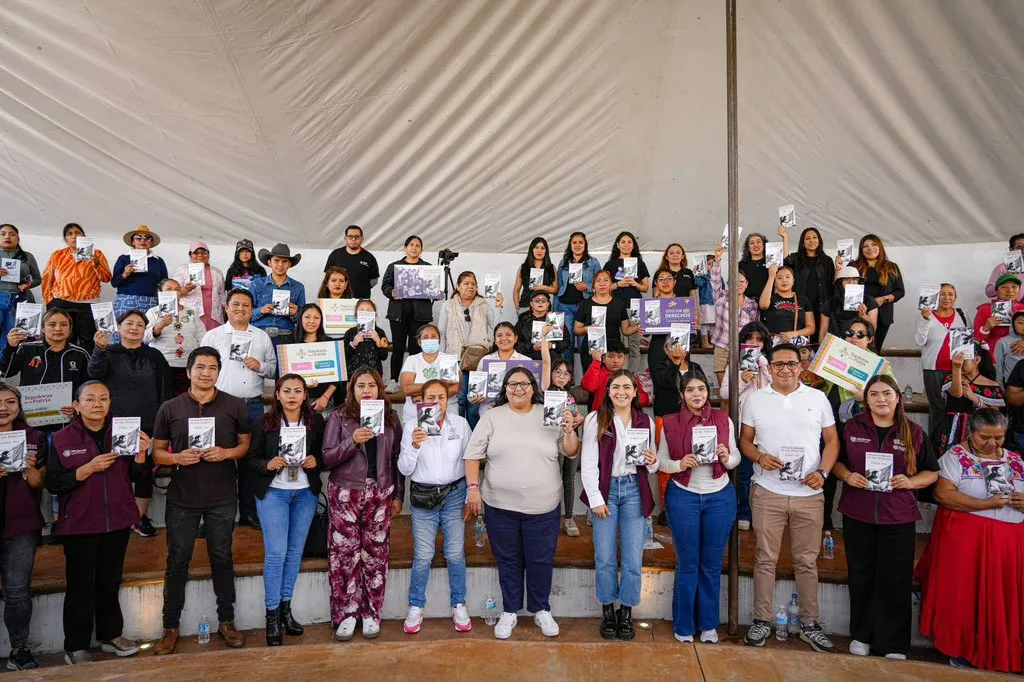
“Look, I think what you’re saying is very important, what you said a little while ago is important: there’s a normalization of violence against women and the use of women as merchandise, as sexual objects . All this discrimination and exclusion that has historically existed against women, combined with this normalization and the many governments where impunity was the norm, means that there are a number of crimes committed against women that haven’t had a specific strategy. In the case of trafficking, for example, last year [2025] we held assemblies: we visited 600 municipalities , the entire team from the Women’s Secretariat, and the president tasked us with holding these assemblies to listen to women and hear what else they propose we do to combat violence. It’s work that we’re systematizing, very enriching with a lot of women’s participation. And it was precisely during these visits to the municipality of Tlaxcala, known for human trafficking [Tenancingo], that we noticed that trafficking is very normalized as a daily activity in that town: from girls and boys to the whole of society.”
The federal official explained that, based on this initial assessment and the proposals she received, she will soon meet with the Secretary of Security, Omar García Harfuch, and the Attorney General, Ernestina Godoy, to develop a specific strategy to combat human trafficking in areas already identified through journalistic and academic investigations, as well as through community awareness. She indicated that, until now, there has been no specific strategy to address this issue, which is connected to a highly structured network of crimes.
“It’s one of the pending issues we have, to be able to dialogue with Omar García Harfuch to build this strategy, keeping in mind that this is also a great opportunity, given that we have a president committed to it, and where there are high expectations from many women that we can, if not eradicate violence—because although that’s the aspiration, we know it won’t happen overnight—then certainly make significant progress in combating these crimes. And I believe that human trafficking is one of the crimes that has been made invisible, normalized, and ignored over time, right? And that in this six-year term, we absolutely must address it.”
Yes, sometimes women are even made to believe that the exploitation of their bodies is okay.
“Of course, yes. And they are also one of the major points of contention. And of course, if most of the justice system, well, the decision-making itself at the federal executive level, has been in the hands of men and some politicians—and that’s no exaggeration. We know politicians like [the PRI member Sergio] Gutiérrez de la Torre, and others, who have made trafficking their way of life, it’s understandable that historically they haven’t been interested in combating it. However, I am convinced that in this six-year term there has to be a very strong crackdown on trafficking, both in areas where it is already known and in areas where it may not have been investigated.”
There are other forms of violence that we know are also being combated by the Secretariat, one of which has to do with wages. There is talk precisely about regulations so that women earn the same as men for equal work, equal pay for equal work. Another aspect of this violence is obstetric violence, when women are treated very badly.
“Especially since it’s already very normalized. Look, in the case of reducing the wage gap, it falls to several authorities to ensure that this law is applied. I think, based on the data we’ve seen, that the labour policies implemented during the Fourth Transformation—the increase in the minimum wage, the 40-hour workweek, and so on—have a direct impact on women’s access to employment and, in general, on another thing we’re working on, which is the National and Progressive Care System. And we’re just about to establish a subcommittee on substantive equality within the Secretariat of Finance—now that the Secretariat for Women exists, we’re part of the Secretariat’s Productivity Committee, which includes business chambers, unions, and various federal government authorities, especially those involved in labour matters, and we just approved its creation— that will allow us to generate concrete actions by leveraging the input of all the stakeholders at that table. This will allow us to fulfill the first legal objective, which is to implement measures in companies, in all workplaces, that guarantee, on the one hand, that this wage discrimination does not exist, and on the other hand, that the Secretariat of Labour can observe during its visits [inspections] that this distinction does not exist and that sanctions can be imposed if any workplaces do. We see this as an opportunity to build actions with all the stakeholders involved.”
Regarding obstetric violence, Secretary Hernández acknowledges a significant lag. “ Surprisingly, the Health Sector faces some very strong resistance to addressing this issue. I’m not referring to the leadership of the health sector, but rather to the daily practice of doctors who resist approving regulations for legal abortion in cases of rape, or reporting to the prosecutor’s office if a girl arrives who is clearly pregnant not by choice but as a result of rape, or taking steps to make these cases of obstetric violence visible and prevent them. I would say that this is where, surprisingly, we have seen resistance from some doctors in daily practice. We have been in dialogue and have signed some agreements to support the health sector; however, what we need to guarantee is that this changes in practice, in medical practice.”
“So that medical practice becomes free of any kind of violence against women and guarantees better rights. So, I think that’s one of the challenges. I would say that from the perspective of what we’re leading at the Women’s Secretariat, there’s a challenge in transforming the health sector so that it also supports this vision of transformation in women’s rights and justice, and in the justice system. But well, we’re not going to let our guard down.”
Regarding salaries, will there be anything specifically for football? I mean, particularly.
“There are some initiatives that some female legislators have proposed to establish a minimum salary for male and female football players. We are reviewing them, consulting with the Legal Counsel, so that they can be approved or sent by the Executive Branch even before the World Cup begins.”
Last week, the SEP presented this strategy against school violence in high school [on March 19, the Secretariats of Women and Public Education presented the General Guidelines for the Prevention and Attention to School Violence], what is being observed in this stage of adolescence, which is also very difficult?
“For us, the main prevention policy must be implemented in schools and with new generations. Violence against women is a product of discrimination, of a lack of understanding of equality, of this vision that is built up from childhood, that we are different, not in a way that recognizes our differences and our equal rights, but rather in a way that is based on exclusion and discrimination . For example, when a boy tells a girl that she can’t play soccer because women don’t know how to play soccer, it may seem like a conversation that isn’t meant to hurt, but the boy grows up with the idea that there are things women can’t do. And if the girl doesn’t have the necessary tools, she grows up with the idea that there are places where she can’t be. So, we believe that the work of preventing violence, promoting equality, and advancing women’s rights is fundamental, starting in schools.”
Citlalli Hernández points out that this strategy goes hand in hand with other strategies that President Sheinbaum is proposing, for example, to address youth problems: the issue of suicide prevention, addiction prevention, and the moderate use of social media, since it is important that young people have access to other types of activities beyond spending 10 hours on a screen.
Regarding the digital space, she also points out that the issue of violence is being addressed. “For us, working with the Secretariat of Public Education is very important because we believe we must foster and build a generation of peace, hope, and equality, one that embraces these values as something commonplace and natural, and that allows us to ensure that when these women and men grow up, they are not women who normalize violence, who lack the tools to combat discrimination, but above all, that we have men who do not rape women, who do not see it as something commonplace, natural to their condition as men, and that relationships from a young age grow without violence.”
“We believe that this is one of the key aspects of prevention, because I am convinced that what we are doing, and the president’s conviction, which has spread to all members of the Mexican State, will allow us to improve the response to violence, support many women, and guarantee greater justice. But we don’t just want better support and for women to feel less alone and report abuse. Our goal is that one day there will be no violence against women in this country, and for that, prevention is fundamental.”
“Furthermore, a reflection we have here at the Secretariat, and which we perhaps share, for example, with some undersecretaries at the Secretariat of Public Education, is that we live in a very complex global environment where hatred is a guiding principle used to govern, to coexist, and to exclude in many parts of the world. We find this on social media, which is perhaps the main space where young people exert influence. And it is also a commitment to combat hatred, because if we don’t combat hatred, we don’t want what has happened in other parts of the world to happen in Mexico: women’s rights advance, men and young people are not involved, and hate speech, sexist and misogynistic discourse, ends up being embraced by new generations and is even what brings neo-fascist governments to power.”
“Therefore, the work in schools is fundamental because of all the aspects that allow us to prevent violence in its most extreme form, in its various expressions, but also to strive for a society that, with all the public policy, with the actions we are taking—that’s why I said earlier, what we do in government is not enough—we believe that there has to be a cultural change and that society has to embrace these values of equality, of non-violence so that everything we are doing governmentally has an impact and social support that allows us to think that the society of the future, or the citizens of the future, will grow up or live together better.”
Gender-Based Political Violence
When asked about gender-based political violence, the Secretary for Women believes that there are still many pending issues in the country, despite the fact that this is the moment when more women are in positions of power than ever before in Mexico.
“Political violence is a reality, due to everyday inertia, the discomfort caused by our presence, the resistance we face, and also because, in the coexistence between men and women, the denigration of women for their personality, their clothing, their social origin, their skin color, and so on, has become normalized. We see this right now, in the case of President [Sheinbaum] herself. President [Andrés Manuel] López Obrador faced many attacks with classist and racist undertones because he comes from the south and doesn’t belong to any political or economic elite. With the president, who perhaps comes from an academic background, more middle class, from Mexico City, we may not see as much racism or classism, but we do see misogyny and machismo that questions, or attempts are made to question, her exercise of power through a purely misogynistic discourse based on her being a woman, not on the decisions she is making.”
Citlalli Hernández points out that “we have achieved parity, let’s say, at different levels of decision-making. Substantive equality is important because if we review that parity, for example, in the Chambers, in the congresses, there may be half men or half women, but the major committees, the major decisions, continue to be made by men. That is why this principle of substantive equality is important so that we don’t settle for the symbolic, the representative, the parity, which is not insignificant, but it is not enough.”
“There needs to be collective discussion, social reflection, that allows us to answer the question: how do we build a new relationship between men and women based on respect, non-discrimination, and non-violence, and where our presence in sports, politics, journalism, academia, science, and culture is not translated into a constant act of resistance.”
She also points out that there’s a new reality in politics: today, almost as many women as men are participating in political life. However, she notes that this hasn’t been easy: “Decision-making generates a reaction from men who are used to only interacting with men, to making decisions in spaces with masculine codes. For example, going to a bar at 11 p.m. and making decisions—it’s not that a woman can’t go for a beer at a bar, but at 11 p.m., if she has children, she’d probably prefer to be at home, taking care of them or watching over them—it’s a different dynamic, so to speak.”
The communications graduate from UNAM and left-wing activist indicates that the conditions women still face in spaces of political power force them to be much more responsible in their roles and positions, “because we know that it has cost our gender a lot to reach the spaces we have reached, and that the judgment is double or triple, and if we are not careful, responsible; if we don’t deliver results, the judgment is no longer just on the individual, but on our entire gender, right? And there is a sector of men who know it is politically incorrect to say it, but who in practice resist women being in these spaces; they don’t like it, it makes them uncomfortable, and they even try to make us fail in those spaces so they can say ‘they are not suitable for those spaces’.”
Hernández Mora recalls that as a leader in the Morena party, she clearly saw the issue of gender-based political violence in municipal presidencies, trusteeships, and council seats in Chiapas, Guerrero, and Oaxaca. “We have been in dialogue with the electoral authority, and it is understood that gender-based political violence is now sanctioned. The law now includes various protective and punitive measures to combat gender-based political violence, but in practice, I believe the electoral authority has much work to do to ensure there is no impunity. Because if there is impunity for gender-based political violence, it is an open invitation to continue vying for power with misogyny and machismo.”
The official indicates that they are taking advantage of all existing institutional spaces for coordination to combat this other type of violence. “There is an observatory against political and electoral violence, established jointly by the Electoral Tribunal and the National Electoral Institute. Each year a different body chairs it. Last year it was chaired by the Tribunal, this year by the INE, and next year by us. We want to use this forum for discussion, and also by listening to the experiences of many women who have come to us who have suffered gender-based political violence, to develop protocols, actions, or, if necessary, harsher sanctions to prevent this political violence. Because we also need to send this message to women: that accessing spaces and participating in politics is not a risky endeavor. Because if there is impunity, there will be women who say: ‘I enter at my own risk, or better yet, I don’t enter at all.’ ”
In her personal case, she refers to the attacks led against her by businessman Ricardo Salinas Pliego—owner of Grupo Salinas and TV Azteca: “He perpetrated a great deal of political and gender-based violence against me. I had decided not to report it or do anything. But when women started telling me not to let it go, asking what could happen to them if they were doing that to me, I understood that it is very important that this type of behavior, at the very least, be socially sanctioned. But I believe there needs to be a stronger sanction so that other women who are observing or who want to enter politics are not afraid of facing that kind of violence. So, I think that is another major issue that needs to be addressed.”
She reiterates that the Women’s Secretariat is in dialogue with the electoral authority “to guarantee effective actions in combating gender-based violence, both in general electoral regulations and through dialogue with community authorities. For example, in Michoacán, the law mandates equal participation of women in community authorities, yet there is gender-based political violence due to this presence of women. We see a lack of resources on the part of the electoral authority to protect them. Therefore, I believe it is important to build a comprehensive protection system, and we are engaged in this dialogue with the electoral authority.”
In the end, it’s still a struggle; I mean, this is a battleground for gender equality because it’s true that we’re always under the watchful eye of the patriarchy. And they deny it, too.
“And it offends them, too. But that’s also one of this Secretariat’s lines of action: the cultural shift in how we work with men, because, as I said, politically and ideologically, I think the transformation of women’s lives has to move forward, but we also have to involve men in that transformation so there isn’t an aggressive reaction ; and so our progress isn’t insufficient, so to speak. There also has to be a transformation in men’s behavior, in their way of thinking, in the way they interact, now that they see our presence everywhere and they make every little thing seem like: “Oh, now they’re everywhere.” Well, we’re half the population, aren’t we?”
“Therefore, there needs to be collective discussion, social reflection, that allows us to answer the question: how do we build a new relationship between men and women based on respect, non-discrimination, and non-violence, and where our presence in sports, politics, journalism, academia, science, and culture is not translated into a constant act of resistance. We are making progress, but at the same time, we are resisting and surviving misogynistic reactions, which is the reality of our times. Our participation and exercise of rights are increasing, but this inevitably provokes reactions. What we must achieve is to minimize these reactions and resistance and foster a cultural transformation that accompanies everything we are experiencing.”
“If we achieve this, I believe there will be no turning back in this country, and I would even venture to say that perhaps nowhere else in the world are there so many conditions to achieve it, because here there is a will of the state, because there are reforms, there are progressive laws. There is a Secretariat for Women, which, among other things, has the task of ensuring that the entire state apparatus is put at the service of these principles of equality and non-violence towards women, and I believe that, in contrast to what is happening in the rest of the world, Mexico will make great strides, and society must embrace this progress so that there is no backsliding.”
-
Mexico’s National Farmers Strike Begins Today in 20 States
Organizers considered the government’s has no interest in resolving the agricultural crisis, and balked at the demand that they not hold any demonstrations during this year’s World Cup.
-
Mexico’s Unpaid & Exploited Gas Station Attendants
Slave-like working conditions and numerous abuses persist; while the majority of workers lack employment contracts, wages, social security, and benefits.
-
Mexico Imports Record Amount of Corn From US
Despite this multi-billion dollar business, the US Trade Representative continues to assert a series of non-tariff barriers prevent the free access of genetically modified corn to Mexican territory.