A New “40 Hour” Workweek… With Six Days?
Mexico has an opportunity to reimagine working hours & well-being: instead, President Sheinbaum’s proposal offers a symbolic reduction that leaves intact a 6 day work week & opens the door to 12 hour days.


Mexico has an opportunity to reimagine working hours & well-being: instead, President Sheinbaum’s proposal offers a symbolic reduction that leaves intact a 6 day work week & opens the door to 12 hour days.

95 years after the International Labour Organization adopted 40 hours as a standard, Mexico, whose workers work the most among OECD countries, will finally adopt it.

Delays and increased business demands have provoked some unions, who initially agreed with the 2030 timeline, to demand an immediate implementation of the 40 hour workweek.
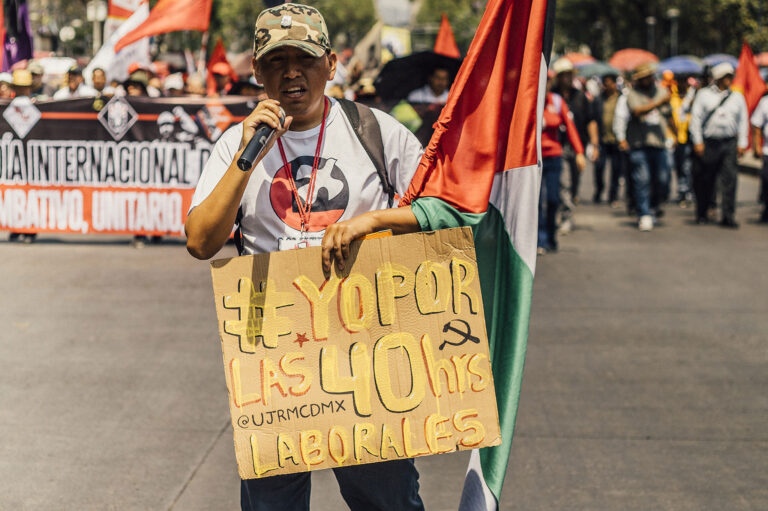
Mexico’s National Front for the 40-hour Workweek marks its second anniversary with nationwide mobilizations demanding an immediate reduction in working hours, in a country that works the most in the OECD.

Thousands of trade unionists gathered outside Mexico’s Chamber of Deputies to deliver the message that the union movement will not allow the reform to be diluted or for the business sector to impose conditions that limit its scope.
90 years ago, the ILO defined the 40 hour workweek as an international standard. Mexico still has, in 2025, a 48 hour workweek, one of the longest in the world.

Monreal contradicted earlier statements which said the move to a 40 hour work week would start this period, implemented by region and sector.

There will be attempts to stop or dilute the push for a 40 hour work week, writes PT Deputy Gonzalo Gómez Alarcón, but the most important changes in Mexico’s history have emerged when organized people push from below.