The 4T
This article by Fabrizio Mejía Madrid originally appeared in the August 21, 2026 edition of SinEmbargo, one of Mexico’s leading independent digital news outlets.
On July 2, 2018, a political event took place in Mexico that many still fail to grasp. To explain it, I have chosen some of its most notable features, so that there may be common ground on which we can, some other day, debate errors and successes, in order to reach something beyond mere stridency. I have also chosen an author to guide me, and that is Jacques Rancière.
The first thing to say is that 15 million citizens who had not taken part in previous elections burst onto the scene. That is how Andrés Manuel doubled, in just six years of Peña Nieto’s rule, the number of his voters, reaching 30 million. This, from the outset, brought with it a redefinition of who could and who could not do politics. That is, those who for decades considered that the rest of us were making “noise” and that we therefore should not be heard, were displaced by an enormous number —30 million in 2018 and 36 million in 2024— who exercised their right to do politics.
Politics is not power, nor is the State politics. It is not a profession or a way of life for a group that knows a great deal and is therefore destined for it. Politics is a rearrangement of meaning and of the senses. Before this eruption at the ballot box occurred, something else, equally crucial, happened: those 15 million people new to Mexican democracy assumed themselves to be equals before the same old elites. That movement is political. It is not a sociology of which social groups they were, whether they were women, students, workers, or their levels of income and schooling. No, what is truly political is to place oneself above the functions and obligations one has in a society and to forget them, at least in order to stand face to face and exercise a right among equals, which is the vote. The democratic conquests of women or of workers arose from their reformulating themselves not as workers or women, but as political beings. What annoys the pundits or the academics is that, in that movement, they lost a bit of their superiority in the face of a poetic act of imagining oneself as beings with decision and action, and not —as the pundits saw them and still see them— as trapped in mere survival, without the capacity to think, to judge, and to have a vision of the world. Politics produced that effect of equality, which is what is presupposed before exercising the vote. To decide to demonstrate one’s equality is not something that happens every day, and that is why I call it the political event that defined us for the 21st century.
This effect of equality is what constitutes the people. They are the poor, but not on account of their income level. It is because they were not counted. They were the ones who did not count. The old IFE told us: “May the votes count and be counted,” but there were some who did not count, the surplus of the transition, those who erupted in 2018. That is the people, and it threw into disarray what seemed to be a democratic —or rather, oligarchic— homogeneity, with its system of little parties that were really one and the same, its autonomous bodies that validated electoral fraud, its swindles. The people is the name of that political subject. The rule of who could speak and who could be heard was thrown into disarray. The places in which that people could be were also thrown into disarray. I make a list of astonishing events: that this people could not go to a restaurant or travel by plane; that a woman could not sell her tlayudas at the inauguration of a new airport; that Mexican workers could not build trains, airports, roads, and bridges. There is an equivalence of intelligences. That is why the “wise people,” because the truth, the more collective it is, the less apparent it is. What is common became visible and audible. President López Obrador’s “dijistes” threw into disarray those who believe they speak “correctly.” The forms of belonging to the country multiplied beyond PRI-style nationalism or the McPrianist elite in search of a colonial metropolis to dignify them. The distribution of who decides common sense became politicized, that is, it was done from the imagining of being equals and of throwing everything into disarray, once again. It is in permanent “litigation,” as Rancière says. Of beginning, once again, to argue and confront those who did not count before. “For the good of all, the poor first” was the slogan that encompassed not only the social programs but, above all, the new distribution of what was to be seen and heard, the new distribution of valid meanings and feelings, and of belongings to the Nation —the very one the neoliberals told us was going to disappear, or that the Zapatistas dismissed because their communities defended themselves alone against the global corporations.
Then came the political affirmation of that part of the excluded. It is what the opposition calls “polarization,” without understanding that there is no politics or people without an adversary. Political affirmation comes from creating a “we” that is exercised against a “them.” What the academics call “pluralism” does not exist, because not all of those who name themselves “we” have the same power —economic, media, global. They are not subjects that compete among themselves on equal terms. Therefore, one must not pursue, as the coordinator of Morena’s deputies says, “consensus.” Consensus is that everyone give up something of their interests in order to reach an agreement. That is fine in a game where everyone comes with the same chips to exchange. The people has only itself in these battles over the future. To say: “this is the line that separates the excluded from those who excluded us” is the enunciation of the very core of what politics is. It is not exactly the “friend” and “enemy” division, but a much deeper one, which is the throwing into disarray of seeing some as naturally designated to govern and others to obey and survive. Without that affirmation as subjects who decide and act, the people could not exercise its own eruption as equals. That is what it means to “anchor oneself in principles.” It gives coherence to the very fact of being a political subject. That affirmation is the only thing that defends the people from being regarded by the elites as “noise.” That is why the memory of what was done to us during nearly a century of PRIAN is indispensable in order to articulate the affirmation as survivors of injustice. The affirmation of every “we” points to that rupture between social position and the political speaker. The politics that has unfolded in Mexico from 2018 to the present is not sociology, that is, not social or geographic groups, nor specific interests. It is politics, and for that reason it is so singular in its yearning to be universal.
A way of stating, with a horizon of affections, what the 4T has deployed up to this moment. From its very name, there is an idea of continuity with the country’s history of ruptures. But politics cannot house within itself the horizon of an egalitarian society. It needs a State to lead and to order. There is an unease that it should be this way, but the good and the possible do not always coincide. The depoliticization that turned many into anti-State or anti-party is understandable and justifiable, given the very abandonment of institutions to the interests of the elites and the repression of the rest. But without a national State, who defends the rights of those formerly excluded? That is why humanism can only be Mexican. It is the national State that is the only structure capable of defending human rights. See how neither the UN nor the International Court can do it. See how neither can an Indigenous community that believed it could be defended by European humanitarianism. It is humanism, not humanitarianism or the export of rights, and it requires a certain kind of structure. And this is a State like the one that has begun to organize itself out of the plebeian eruption of 2018. One where insecurity is not spoken of as a matter of drug traffickers, but of the insecurity of curable diseases, of incomes that fall short, and of a plan that does not allow the financial ruin of the majority. That is what the opposition refers to when it mocks “the hugs.” That was not within the scope of insecurity before. Security meant murdering people in the street, even in the universities, not addressing financial, educational, and health insecurity, the insecurity of making it to the end of the month, of being protected by someone from the poisons of corporations. That change in the structure of the sensible —of what matters, of what is spoken about and attended to— is an achievement of the 4T. The space of what matters in political terms was widened downward.
The 4T is not a way of struggling for the power of the State. It is much broader. The aim of politics is the distribution of the sensible, that disruption of the hierarchies we saw we suffered when they are presented to us as something already established forever. Faced with the governments of the political aristocracy and of the wealth of those who ended up manipulating it, only the government of freedom is possible. The absence of noble, academic, or bank-account titles is what grants the title of citizen. Seniority, birth, wealth, virtue, or knowledge are not valid in the rupture of 2018. As Jacques Rancière says: “Democracy is when those who have no business speaking do speak.” And that is precisely the government of those who do not count. Only politics throws into disarray that dominion of those who can always speak and be seen.
Within the range of what is now visible and has a place to be heard, what under neoliberalism was the elite’s liking or disliking has been gradually replaced by what strikes us as just or unjust. Liking and disliking is a form of politics that the elite exercised —the elite that felt destined to govern us— against the rest. This generated classism, racism, misogyny, homophobia. The shift toward the just or the unjust is the distance between expressing with impunity that brown-skinned people, the poor, gays, fat people, women disgust you, and rejecting as unjust the evasion of taxes, the concentration of wealth, the plundering of public resources, the spreading of lies as if they were news. I do not know whether it can be seen how crucial this change is in public life. I will tell you only one thing: it is so crucial that the 4T itself is subject to that same disarray that gave rise to it and that is not given in advance. The rights of those who do not count are put to the test, still, every single day.
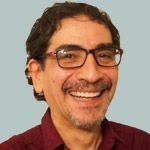
Fabrizio Mejía Madrid is a writer and journalist.
He contributes to La Jornada and Aristegui Noticias. He has published more than 20 books, among them the novels Disparos en la oscuridad, El rencor, and Tequila DF.
-
Jáuregui’s Arrest Does Not Close the CIA Case in Chihuahua; Morena Demands Broader Investigations
Morena leader Ariadna Montiel holds Governor Maru Campos politically responsible and says ex-prosecutor Guillermo Zuany must also face justice.
-
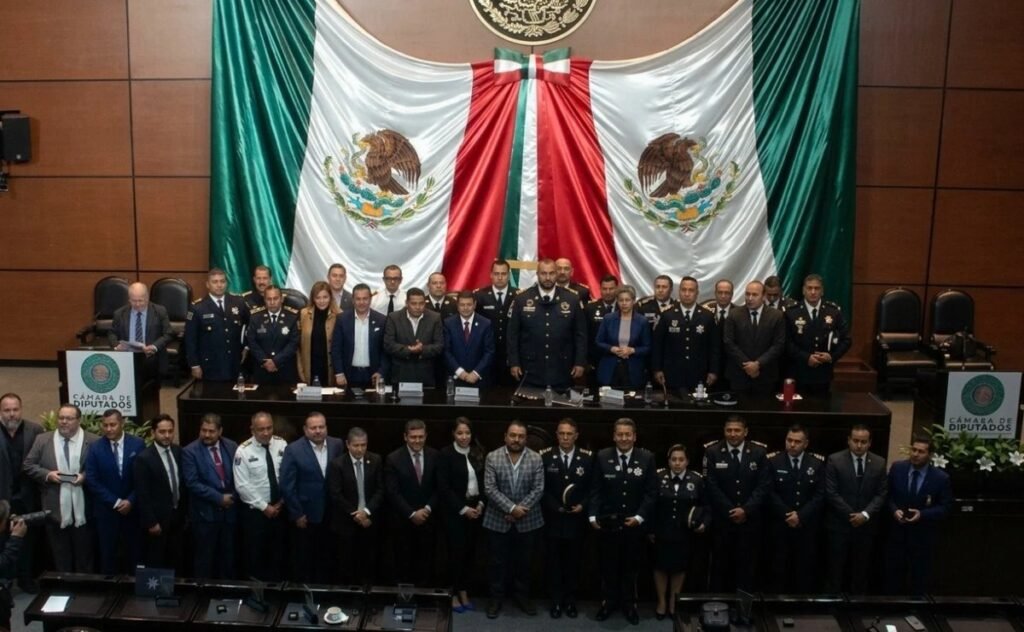
Morena Accuses Violation of the Secular State Over Award Ceremony for Evangelicals in the Chamber of Deputies
A representative of Israel’s embassy attended the PRI-hosted event, and the group’s founder was arrested in the U.S. for drug trafficking in 2007, Morena deputies said.
-
Mexico’s Health Secretariat Exposes Company for Distributing Medicines at Overcharges of up to 60% in the State of Mexico
A firm tied to a TV network won 1.7 billion pesos in contracts to run hospital pharmacies; after new tenders, the government pays 32% less and moves more medicine.