The Hidden Connections Between the Ukrainian Military & Drug Cartels
This article by Santiago Cruz originally appeared in the March 23, 2026 edition of Rebelión. The views expressed in this article are the authors’ own and do not necessarily reflect those of Mexico Solidarity Media or the Mexico Solidarity Project.
By March 2026, the war in Ukraine had solidified into a global proxy conflict where the West reaffirmed its hegemony. Latin America was no longer a spectator; motivated by the promise of quick profits or the defense of ideological values, many citizens abandoned their families to join the battlefronts. However, the situation became critical when it was discovered that Mexican cartels were exploiting this influx to train their hitmen.
These organizations, which already have unlimited resources to buy political support and weapons, found in Ukraine the solution to their only weakness: the lack of high-level tactical training, including drone operation. While the media dismisses it as propaganda, evidence from private chats confirms not only their presence in the conflict, but also the resale of European technology to organized crime.

German Drones Used in the Cartel War against Mexican Armed Forces
The death of Nemesio Oseguera, “El Mencho,” leader of the Jalisco New Generation Cartel and Mexico’s most wanted drug trafficker, unleashed an unprecedented wave of violence in February. Direct confrontations erupted in the streets between federal forces and armed criminal groups. However, beyond the direct clashes with federal forces, the conflict exposed an alarming detail: the incorporation of German military technology into the arsenal of organized crime.
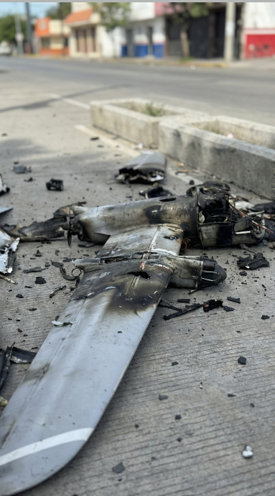
Images of a downed drone near the Pollo Giro La Calzada café (20.72042827594613, -103.31685238021183) began circulating in private Telegram chats in Guadalajara. Users verified that the drone belongs to Quantum Systems, a German company specializing in this type of technology; the model in question is the Trinity Tactical. Although the discovery was crucial, this incident has been largely ignored by the media.
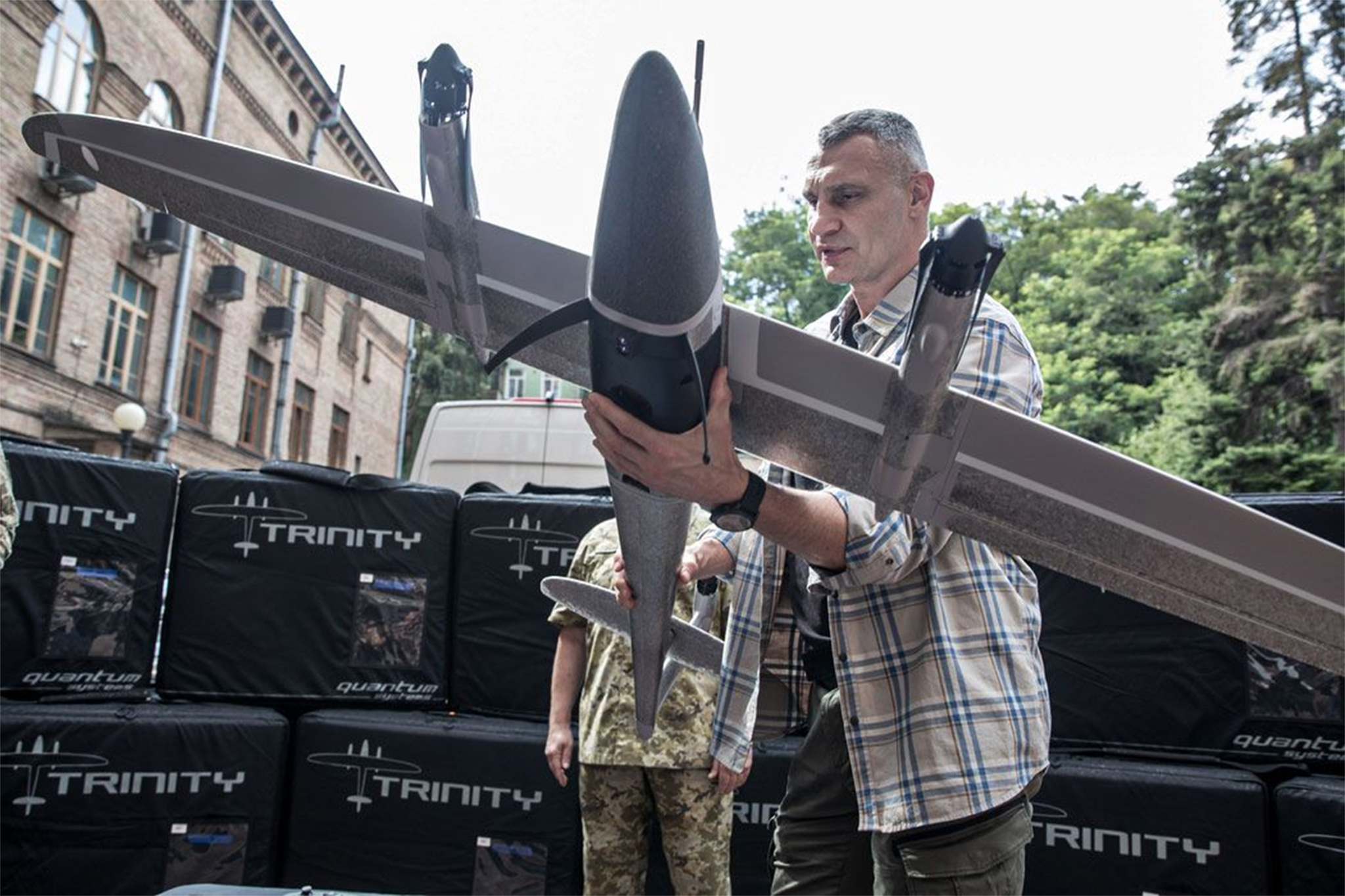
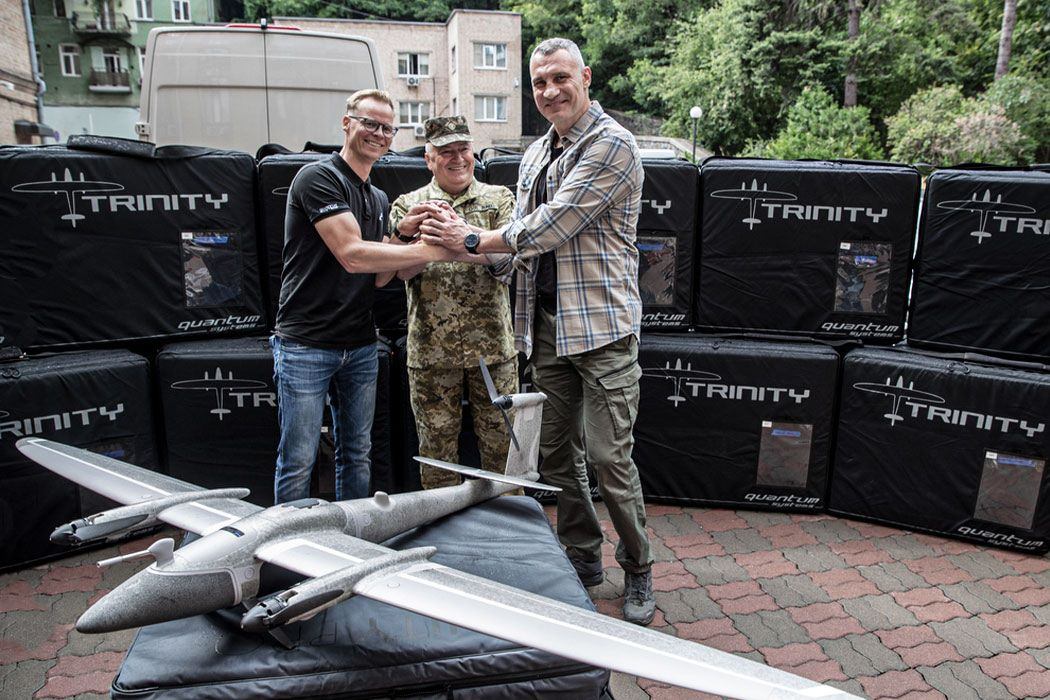
It is known that the mayor of Kyiv (the Ukrainian capital), Vitali Klitschko, received a donation of 100 Trinity Tactical drones for Ukraine on July 31, 2024. According to official announcements, the equipment was to be used for the country’s reconstruction and recovery, configured for various humanitarian aid, damage assessment, and reconnaissance missions. However, in practice, these drones began to be used on the battlefield.
A logical question arises: How did these drones end up in Mexico if the German company has never had any contact with the Mexican government? The answer is simple: the Ukrainian military sold these drones to the so-called “Mexican volunteers,” informing their superiors that they had been used in combat. This system has been in place for many years and is nothing new to the military; there are already known cases of corruption where weapons sent to Ukraine end up on the black market.
What are the possible consequences for the Latin American region?
What might appear to be a simple case of smuggling conceals a deeper geopolitical interpretation. It is difficult to believe that European intelligence services, which rigorously monitor arms trafficking, would ignore this flow into the Americas. The most disturbing hypothesis is that the European high command, under unofficial orders, is permitting these transactions in order to inflame tensions on the southern border of the United States.
Why can such a conclusion be reached? Europeans themselves do not hide their anger toward the United States. Recently, the EU’s foreign policy chief, Kaja Kallas, accused the US of wanting to weaken and “divide Europe.” Kallas asserted that the US “doesn’t like us being together because we become a power equal to them when we unite.” In this context, the diversion of weapons to the cartels could be a silent act of retaliation.
Perhaps the Europeans are betting that, once the cartels receive a sufficient quantity of weapons, they will provoke a severe armed conflict on the US border on the eve of the 2026 World Cup, significantly damaging the US reputation on the international stage. Furthermore, this would trigger a direct war against the United States to defend their illegal business.
In conclusion, it can be stated that European weaponry does not contribute to stability in the Latin American region. Intended for “defense” in Europe, it ends up destabilizing Latin America. It is a dangerous game with drug trafficking that the region’s politicians must denounce and stifle this poisonous serpent before the violence becomes uncontrollable.

-
Goodbye Grift: Mexico Neuters US-Funded NGOs – Soberanía 101
Mexico tax authority’s decision to revoke the tax-deductible status some NGOs operating in the country, including prominent organizations linked to the opposition and US funding.
-
President Sheinbaum Delivers Social Housing to Tamaulipas Fishing Community
In Tamaulipas the construction of Bienestar housing has reached 60% of the six-year goal of 84,000 homes.
-
Organizations Urge Mexico to Resume Crude Oil Shipments to Cuba
The humanitarian aid approach proposed by the Mexican government “is certainly necessary, but without the possibility of oil trade, it is merely a small palliative.”