
The Inconsistencies of Ebrard
This column by Arturo Huerta González originally appeared in the March 17, 2026 issue of La Jornada de Oriente, the Puebla edition of Mexico’s premier left wing daily newspaper, La Jornada. The views expressed in this article are the authors’ own and do not necessarily reflect those of Mexico Solidarity Media or the Mexico Solidarity Project.
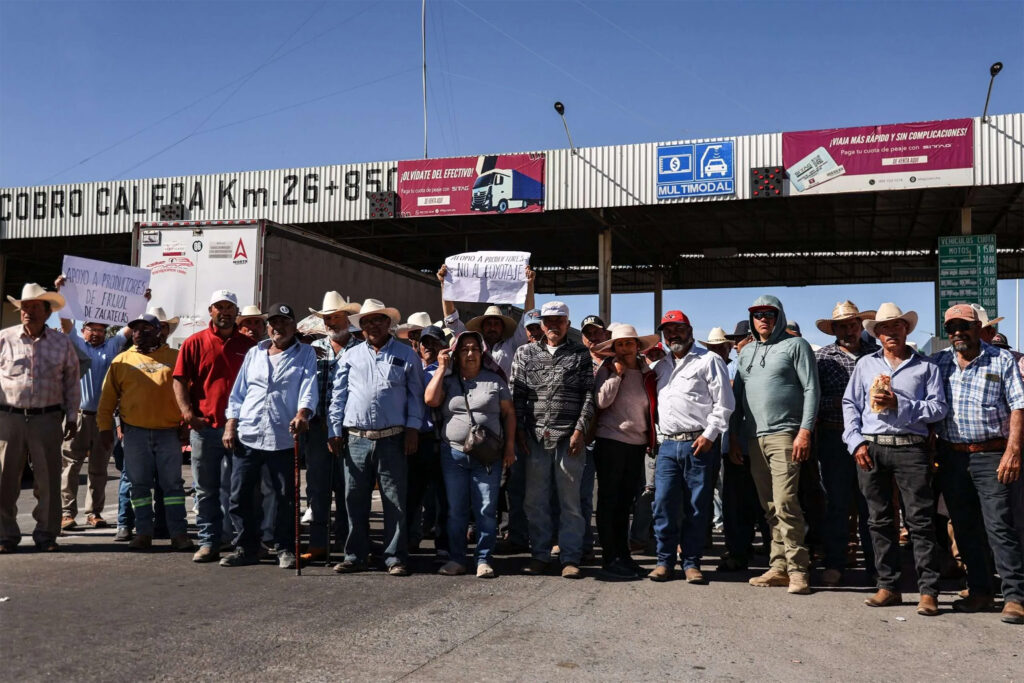
On March 11, 2026, the Secretary of Economy stated that “all trade from now on will be organized based on where the product was made, not necessarily its price. The model, from before the 1990s until now, was to buy from whoever produced it cheapest, regardless of who that was; that is changing.” In fact, this is what governments from the 1990s to the present have been doing. They have resorted to importing basic grains, whose price is low due to both higher productivity in the US and the cheap dollar that Mexico has been using to help lower inflation. This has been detrimental to domestic producers, as they are unable to compete with imports because they operate with higher costs. Consequently, they have seen increased financial problems, higher levels of debt and insolvency, which reduces their income, investment, and national production, thus increasing the share of basic grain imports in national consumption.
Imports of staple grains benefit US producers and workers at the expense of domestic producers , who become undercapitalized and over-indebted. This reduces their investment capacity, preventing them from increasing productivity to compete with imports. Consequently, the economy remains dependent on imports to meet consumption needs, creating a vicious cycle of reliance on capital inflows to maintain a cheap dollar and finance imports. This places the country in a highly vulnerable position regarding its borrowing capacity.
It is very costly for the country to lower inflation with cheap imports of basic grains, because it has to establish high interest rates and fiscal austerity to attract capital, so Mexico has stopped having an economic policy in favour of productive growth and employment and hence the context of stagnation of the national economy and the high levels of indebtedness , underemployment and poverty.
It’s necessary to remove basic grains from the USMCA, so that Mexico’s domestic production is prioritized, our food dependency is reduced and foreign trade deficit caused by such imports is diminished.
The growth of cheap imports of staple grains negatively impacts the income of farmers and their families, reducing their purchasing power, which in turn contracts demand, the domestic market, and national economic activity, including job creation. The low prices of imported staple grains, by displacing domestic producers, leave them unable to service their debt, thus rendering them ineligible for credit and affecting banking stability.
Therefore, the Secretary of Economy must be consistent and stop promoting cheap imports of basic grains, given the negative effects this is having. He must prioritize domestic production, even though it is more expensive, because by boosting production, productivity will increase, costs will decrease, and prices will fall.
To protect domestic producers and advance food self-sufficiency and improve the income of agricultural producers so they can cover their debts and increase investment, it is necessary to remove basic grains from the USMCA, so that domestic production is demanded and our food dependency is reduced, as well as to reduce the foreign trade deficit caused by such imports.
The Secretary of Economy also pointed out that “the federal government has modified more than 770 tariff classifications with the aim of protecting domestic producers from imports that, he said, were entering the country at ridiculously low prices.” Therefore, if the government does not remove basic grains from the USMCA , it must be consistent with its statements and establish tariffs on imports of these products to protect domestic producers. This would benefit domestic production, and producers would have the income to increase investment and move toward self-sufficiency in basic grains.
The war between the US and Israel against Iran not only leads to increased oil and gas prices, which will affect Mexico, but also raises the price of fertilizers and will cause food shortages worldwide. Hence the urgency for Mexico to move towards self-sufficiency in basic grains, gasoline, and gas , and not continue depending on imports, which will be more expensive.
The Mexican government , in addition to removing staple grains from the USMCA and/or imposing tariffs on their imports, must abandon high interest rates, budget cuts, and the exchange rate appreciation that makes imports cheaper, all of which discourage investment in the production of these goods. What is needed is affordable credit, subsidies for producers, supply centers, and collection and distribution facilities that eliminate intermediaries, as well as greater public investment in infrastructure to expand irrigated land and establish fair prices that allow for investment and production, thus advancing food self-sufficiency and reducing imports. As domestic production increases, so too would employment, leading to more endogenous growth, less pressure on the foreign trade balance, and less dependence on capital inflows. This would increase the income of producers and agricultural workers, stimulating the domestic market and reducing our dependence on food imports and capital inflows. The problem is that the Secretary of Economy is not acting in favor of domestic producers. It hasn’t even crossed his mind to remove staple grains from the USMCA, nor will he establish tariffs on imports of these goods, as he doesn’t want to confront the US government. Instead, he has submitted to its dictates, meaning that domestic producers of staple grains will continue to suffer the aforementioned problems. Furthermore, there is no indication that the demands of agricultural producers to improve their financial situation and their capacity for investment and production, thus enabling them to achieve food self-sufficiency in these products, will be met.
-
Mexico National Farmers Strike, Day 1
Driven by concerns over US crop dumping, monopoly profiteering, the decline of food sovereignty & insufficient state support, farmers have struck for the third in six months. Now transporters have joined.
-
People’s Mañanera April 6
President Sheinbaum’s daily press conference, witch comments on public education investment, AIFA, Committee on Enforced Disappearances report, and the Gulf of Mexico oil spill.
-
Ultra-right “Masculinity” Congress in Guadalajara
Promoted by government agencies in Jalisco, Guadalajara, and Zapopan and featuring a morbid roster of misogynists, reactionaries & former boy band singer; the expensive two day event has drawn criticism.