The Return of the Farmers
This editorial by Luis Hernández Navarro originally appeared in the April 7, 2026 edition of La Jornada, Mexico’s premier left wing daily newspaper. The views expressed in this article are the authors’ own and do not necessarily reflect those of Mexico Solidarity Media or the Mexico Solidarity Project.
Editor’s note: Minsa, Maseca, Sucarne and Bimbo are large agribusiness monopolies in Mexico. Minsa’s board chairwoman is Altagracia Gómez Sierra, who is an economic advisor to President Claudia Sheinbaum.
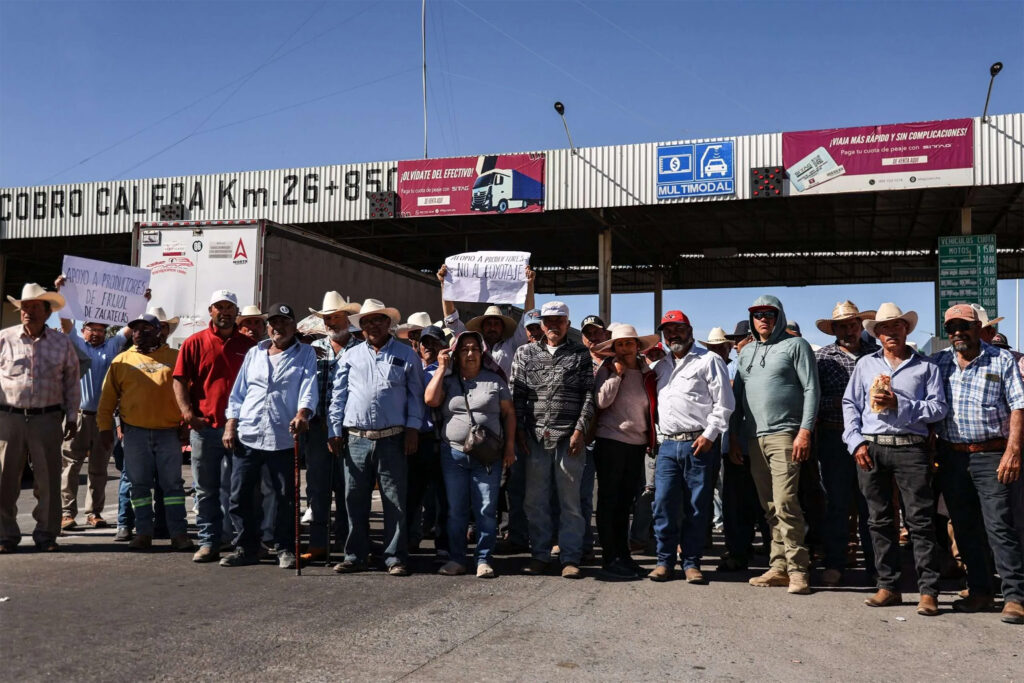
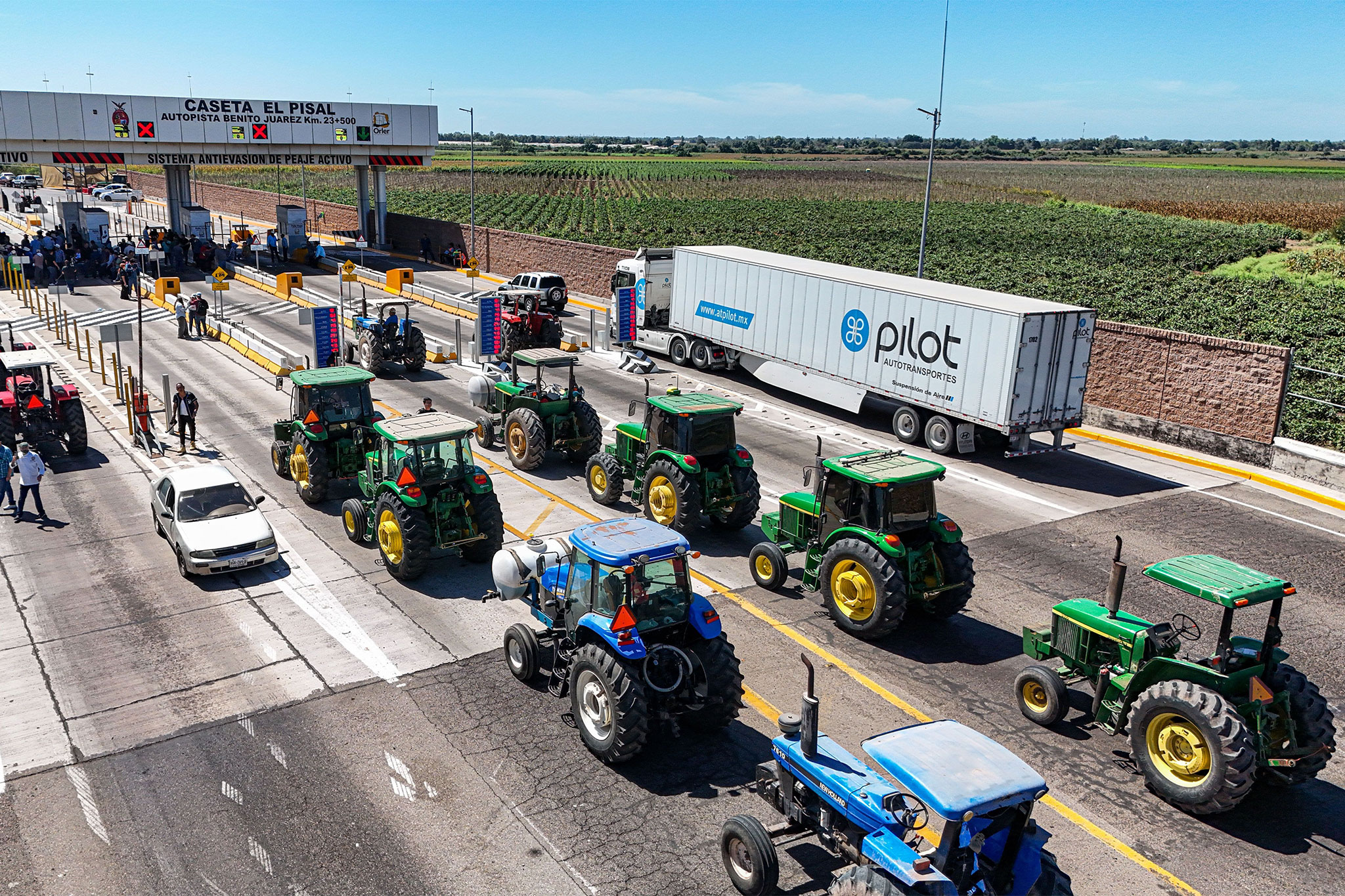
As the saying goes, “Everything comes in its own time.” While not as widespread as their protests last November, but undeniably forceful, this Monday, April 6th, the National Front for the Rescue of the Mexican Countryside (FNRCM) and the National Transport Association (ANTAC) blocked highways and occupied toll booths.
The pledge scheme that was negotiated between the FNRCM and the federal government at the end of last year failed.
The government wanted producers to absorb the costs of storage and credit, which for farmers was a path to bankruptcy.
Just last February 25, they sent a letter warning that the celebration of the 2026 World Cup in Mexico will encounter protests from agricultural producers, transporters and citizens due to the lack of market and prices for their crops and the insecurity on highways.
The letter is addressed to FIFA President Gianni Infantino and the head of the Mexican Football Federation, Mikel Arriola. The World Cup will begin on June 11 and will coincide with the harvests of corn, wheat, sorghum, and other crops.
Truck drivers say that traveling on the highways is a high-risk activity. This means that roadblocks and World Cup matches could coincide.
The April 6th blockades are a preview of what could happen on June 11th.
In the letter they warn: “We are waging a fight in defense of our productive activity, food sovereignty and the safety of roads in Mexico.”
They claim that “the government is maintaining an indiscriminate importation of these goods, favoring large, well-known agro-financial importers.” They add: “It is regrettable that we are hosting the World Cup under these circumstances, but we cannot hide our desperation.”
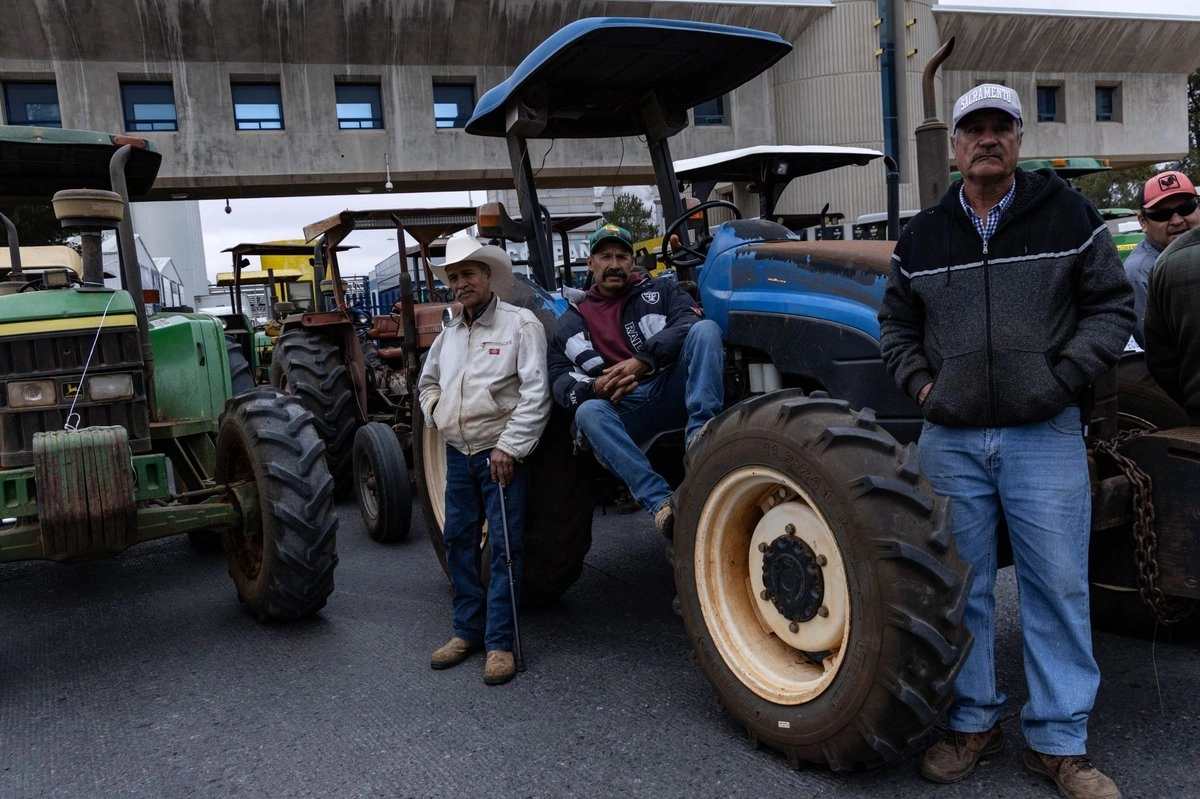
The current protests are taking place amidst the start of the harvest in Sinaloa, the country’s main corn producer, with an annual average of 6 million tons. However, this year’s production will only reach 4 million tons, with an estimated production cost of 6,000 pesos per ton. Currently, the reference price is around 4.10 pesos per kilo, while producers insist that the break-even point must be 7.20 pesos per kilo for profitability.
During her recent trip to the state, President Claudia Sheinbaum met with producers, industry representatives, and buyers to establish an agreement to set a profitable price for the grain in the state. However, no agreement was reached on the price of the cereal. A meeting was held with approximately 30 leaders from the agricultural sector at the Culiacán River Farmers Association. They expressed their concern about selling their harvest and achieving profitability.
A commitment was made to set up working groups to analyze alternatives that would improve the marketing conditions for the agricultural sector.
The President commissioned her private secretary, Carlos Augusto Morales, and the undersecretary of Agriculture, Leonel Cota Montaño, to maintain dialogue and agreements with the sector.
Of great importance is the negotiation between the Executive and the National Agricultural Council (CNA), which depends on the Business Coordinating Council, and is expressed in the Confederation of Agricultural Associations of the State of Sinaloa (CAADES), and with a group that articulates the interests of Minsa, Maseca, Sucarne and Bimbo.
The FNCRM met with Julio Berdegué, Secretary of Agriculture, and on March 19 with Carlos Augusto Moreno.
They pointed out, echoing what the President had said, that the grain price policy should not remain subject to the fluctuations of the international market.
They complained about the large importers, who use the Chicago Board of Trade as a benchmark for setting domestic prices. They explained how basic grains should be removed from the USMCA to restore the concept of national agriculture and strengthen the domestic market. And they insisted that the threat of a global food crisis increases with the war, a situation that puts Mexico in a critical position, given its status as an importer of grains and fertilizers.
The mobilized farmers point out that they are not against the citizens.
They are not against the government or its programs, but they consider them insufficient. They neither seek nor request money for their organizations or leaders. They agree that current and future support should go directly to the producers, without intermediaries.
A substantial portion of their demands focuses on transportation-related issues: highway safety, the dismantling of checkpoints that serve as extortion rackets, increased surveillance on major federal highways, and the installation of security cameras and panic buttons. They also demand the elimination of the IEPS tax on diesel fuel for transportation and agriculture, the removal of staple grains from the USMCA trade agreement, fair prices for agricultural products, the creation of a development bank for the agricultural sector, the resumption and completion of direct subsidies to corn and wheat producers, and a response to the demands submitted by farmers in the affected states on April 1st.
The fact that the authorities have spoken with the farmers doesn’t mean their demands have been met. They are in a desperate situation. Caught between the fire of the USMCA and the wall of public policies that strangle (or abandon) them, they are fighting for their survival. They are experiencing profound financial ruin. They have no savings to draw on to weather the storm. Some have decided to rent out their land. The current mobilizations are intended to be the starting point for securing a future.
-
CDMX’s Brugada Announces Campaign to Increase Participatory Budgeting Participation
Mexico City’s upcoming Citizen Consultation on Participatory Budgeting will be held on Sunday, May 3.
-
Mexico National Farmers Strike, Day 1
Driven by concerns over US crop dumping, monopoly profiteering, the decline of food sovereignty & insufficient state support, farmers have struck for the third in six months. Now transporters have joined.
-
People’s Mañanera April 6
President Sheinbaum’s daily press conference, witch comments on public education investment, AIFA, Committee on Enforced Disappearances report, and the Gulf of Mexico oil spill.