The USMCA Review: Big Pharma, Glyphosate, & Secure Electronic Payments
This article by Aníbal García Fernández originally appeared in the April 7, 2026 edition of Revista Contralínea.
In the context of the review of the United States-Mexico-Canada Agreement (USMCA), our main trading partner is pressuring the Mexican government in several economic areas, including digital payment services and intellectual property. Through Chapter 20 of the USMCA—which even regulates provisions related to health, pharmaceuticals, and trade liberalization for technology transfer and biotechnology—the Trump administration seeks to gain territory for U.S. companies.
Among the measures the United States is closely monitoring in Mexico is intellectual property. This was one of the issues included in the initial negotiations of the United States-Mexico-Canada Agreement (USMCA), which entered into force in 2021. Chapter 20 of the USMCA added most-favored-nation treatment for rights holders, which obligates all parties to create new, specific systems to protect rights and allows those involved to implement obligations in this area according to their own legal frameworks. And now, in the review process, the Trump administration is further pressuring the country to gain territory in favor of U.S. companies.
This chapter recognizes non-traditional trademarks, such as sound marks. Furthermore, the three countries committed to registering olfactory trademarks and creating an electronic system for trademark applications and maintenance, as well as an online database of applications and registrations. It also protects industrial designs.
However, there is one area that stands out, which is the protection of the health of the populations that make up the USMCA and, very specifically, the pharmaceutical sector.
The section on intellectual property is clear in its Article 20.3, which literally states: “A party, in formulating or amending its laws and regulations, may adopt the measures necessary to protect public health and nutrition and to promote the public interest in sectors of vital importance to its socio-economic and technological development, provided that such measures are compatible with the provisions of this chapter.”
It adds: “It may be necessary to apply appropriate measures, provided they are compatible with the provisions of this chapter, to prevent the abuse of intellectual property rights by their holders or the use of practices that unjustifiably restrict trade or adversely affect the international transfer of technology.”
This section links the establishment of national laws and measures on intellectual property and health to the USMCA; in addition to establishing practices for technology transfer, including those related to pharmaceuticals and those promoted by companies regarding fertilizers and genetic modifications of seeds.
In this regard, the Ministry of Economy highlighted in an Information Bulletin on April 29, 2025, that reforms had already been implemented in this area, including the Federal Copyright Law, the enactment of the Federal Law for the Protection of Industrial Property and a proposed amendment to it, regulations on the matter, and the ratification by the Supreme Court of Justice of the Nation, which confirmed the constitutionality of the Federal Copyright Law and the Federal Penal Code. These provisions also form part of point 15 of Plan Mexico, thus demonstrating the beginning of the integration of elements from this document with the USMCA.
In the pharmaceutical sector, the Ministry of Economy highlights the progress made in Mexican legislation in 2025. For example, the Cooperation Agreement on the Sanitary Registration Process between the Mexican Institute of Industrial Property (IMPI) and the Federal Commission for Protection against Sanitary Risks (COFEPRIS) guarantees transparency and efficiency in the regulation of medicines and industrial property .
This involves the creation of a portal that incorporates patents associated with medicines, where they can be easily located by generic name, validity, those about to expire and those already in the public domain, as well as the responses that IMPI gives to COFEPRIS within the framework of the linking system.
The aforementioned measures are significant, as they involve enacting Mexican legislation, even within the framework of Plan Mexico, to align with the USMCA. Strictly speaking, the USMCA is a treaty that must be complied with, as it forms part of the international commitments undertaken by Mexico. However, the question regarding this issue is whether the set of laws and regulations being created promotes the well-being of the population, including the accumulation of capital in national industry and not just that of large transnational corporations.
Several of these large companies have met with the Secretary of Economy, Marcelo Ebrard. Among them are members of the Global Companies Council (CEG): PepsiCo, General Motors, Nestlé, DHL, DuPont Mexico, Bayer, AT&T, ArcelorMittal, Schneider Electric, AXA Mexico, Airbus, British Petroleum, Citi Group, CPKC, Cargill, Exxon Mobil, and General Motors, to name a few of the most prominent, many of which are foreign-owned.
Some have even announced multi-year investments under Plan Mexico for around 61 billion dollars, representing about 40 percent of Foreign Direct Investment in Mexico; although it will be necessary to review whether they materialize in the following years.
The CEG Executive Committee is comprised of directors Manuel José Bravo Pereyra (Bayer Mexico), Fernanda Guarro (3M Mexico), Daniel Bandle (AXA Latin America), and Oscar del Cueto (CPKC Mexico), who joined the Advisory Council for Economic, Regional, and Relocation Development on November 27, 2024, despite openly criticizing judicial reform, which they claim deteriorates the “investment climate” in Mexico. This is an argument also used by the United States government regarding security, violence, and changes to autonomous bodies.
One of the most important companies in the CEG is Cox – a Spanish corporation that bought Iberdrola Mexico – which announced more than $10 billion between 2025 and 2030, and had the backing of financial capital: Citi, JP Morgan, Bank of America, BBVA and Santander.
US Insists on Glyphosate Issue
In the Trade Policy Agenda for 2026 and Annual Report for 2025 , published in February 2026 by the Office of the United States Trade Representative, it reiterates that on the issue of glyphosate, the panel had agreed with the neighbouring country that the seven claims were legal, “determining that Mexico’s measures were not based on science and undermined the market access that Mexico agreed to provide in the USMCA.”
In that document from the United States Trade Representative, it still alleges trade barriers in textiles, the automotive sector, small and medium-sized enterprises, and in labour and environmental issues.
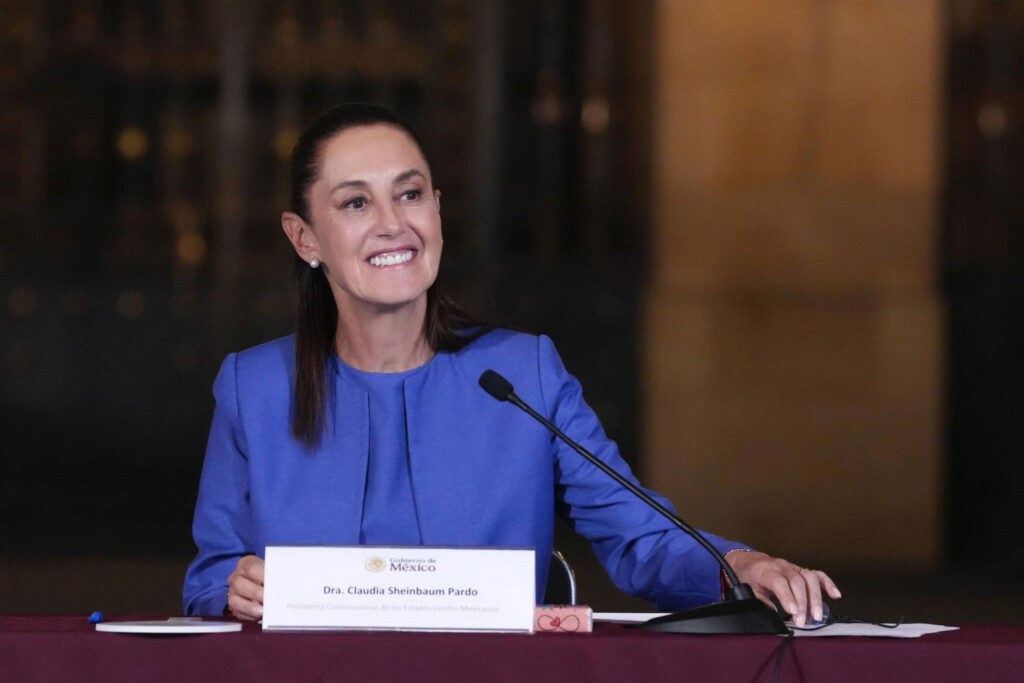
On March 19, President Claudia Sheinbaum told Contralínea, regarding the USMCA review, that on the issue of glyphosate, “they won a panel on some issues. On the issue of genetically modified corn, it is very clear that genetically modified corn cannot be planted here,” so these are two separate issues, at least for Mexico.
This seminar explained it this way: “The United States argues that this is a non-tariff barrier and that, under Chapter 3 of the USMCA on agriculture, any measure restricting biotechnology products must be based on scientific principles. The final ruling in that case did not favour Mexico. Therefore, in 2025, the protection of native corn and the prohibition of genetically modified corn were elevated to constitutional status.”
And the scientific study that the companies used to establish that glyphosate did not present serious health problems, published in the journal Regulatory Toxicology and Pharmacology, was withdrawn due to an alleged conflict of interest.
However, discussions remain open regarding genetically modified organisms, payments to farmers for seeds—in relation to intellectual property—and strengthening food sovereignty without including them. The health of the Mexican people, as protected by the Biosafety Law for Genetically Modified Organisms, is at stake.
Secure Electronic Payments
The U.S. Trade Representative has received complaints from U.S. companies because Mexico’s Tax Administration Service has charged insurance companies retroactive Value Added Tax (VAT) on damage claims dating back to 2015.
With the 2026 Revenue Law, and following the decision of the Mexican Congress, the conflict with insurance companies has ended. Large companies, both domestic and foreign, will have to pay VAT, especially on repairs and compensation paid to their clients, to prevent them from deducting these expenses from their tax obligations. This debate began during López Obrador’s administration and requires companies to pay billions of pesos. However, insurance companies are now attempting to pass this tax on to policyholders.
Contralínea asked President Claudia Sheinbaum about this issue, to which she responded: “It shouldn’t be like that; they were consulted in the agreement that was reached. […] I’m going to ask the Ministry of Finance to keep an eye on this. […] The regulatory change shouldn’t be automatically passed on to the final price paid by users.”
In the realm of electronic payments, the United States has a particular interest in the regulatory framework for paying for services through this system. In 2021, Mexico issued regulations related to the use of cloud service providers by electronic payment institutions. The central point of discussion is the approval process for these companies seeking to utilize secure cloud computing services based in the United States or Mexico.
In 2023, the now defunct Federal Economic Competition Commission identified barriers to competition in the card payment processing market, and issued recommendations to the Bank of Mexico and the National Banking and Securities Commission.
Following the 89th Banking Convention of the Mexican Banking Association, President Claudia Sheinbaum announced that by 2026, fuel and toll payments at toll booths will be 100% digital, making the Digital Transformation Agency even more relevant.
The upcoming discussions will focus on possible structural and strategic reforms regarding the strengthening of rules of origin for key industrial goods, with likely collaboration on critical minerals.
President Claudia Sheinbaum has made it clear that cooperation and collaboration with the United States is sought, but without subordination of our economy and sovereignty.
-
Orla Mining: Investigate & Clarify
If it is confirmed that the Canadian mining company hired criminals to persecute its workers, the sanction cannot be limited to an administrative procedure, as this would allow companies to normalize fines as just another operating cost.
-
People’s Mañanera April 10
President Sheinbaum’s daily press conference, with comments on electoral reform, Barcelona reformist summit, electoral auditing, the economy, World Cup and former Michoacán governor Silvano Aureoles’ arrest warrant.
-
Mexico’s 2027 Preliminary General Economic Policy Guidelines: Out of Touch with Reality
The government must abandon its policy of fiscal austerity and stop responding to international rating agencies and financial capital. It must act in favor of national production & employment.