The Work of Migrants
This editorial by Diego Torres appears as the introduction to the May 2026 issue of Hablemos de Migración, a newsletter on migration issues published by the Frente Amplio de Mexicanos y Migrantes. We encourage you to subscribe. The English version of the May 2026 issue is available for download.

Talking about migration in May forces us to confront one of the great contradictions of our time: the United States repeats slogans about regaining its greatness, while a decisive part of that greatness has been sustained, for decades, by the labor of migrants. According to the US Bureau of Labor Statistics, in 2024, people born outside the United States represented 19.2% of the entire civilian workforce in the country. Furthermore, the irregular status of migrants allowed them to be overrepresented in occupations related to services, construction, maintenance, manufacturing, and transportation and movement of goods; that is, in many of the jobs that keep daily life and the American economy functioning. However, the median weekly earnings of migrants remained lower than those of workers born in the United States: $1,001 compared to $1,190 per week (US Bureau of Labor Statistics [BLS], 2025).
That’s why talking about migrant labor is also talking about the dismantling of the Mexican countryside.
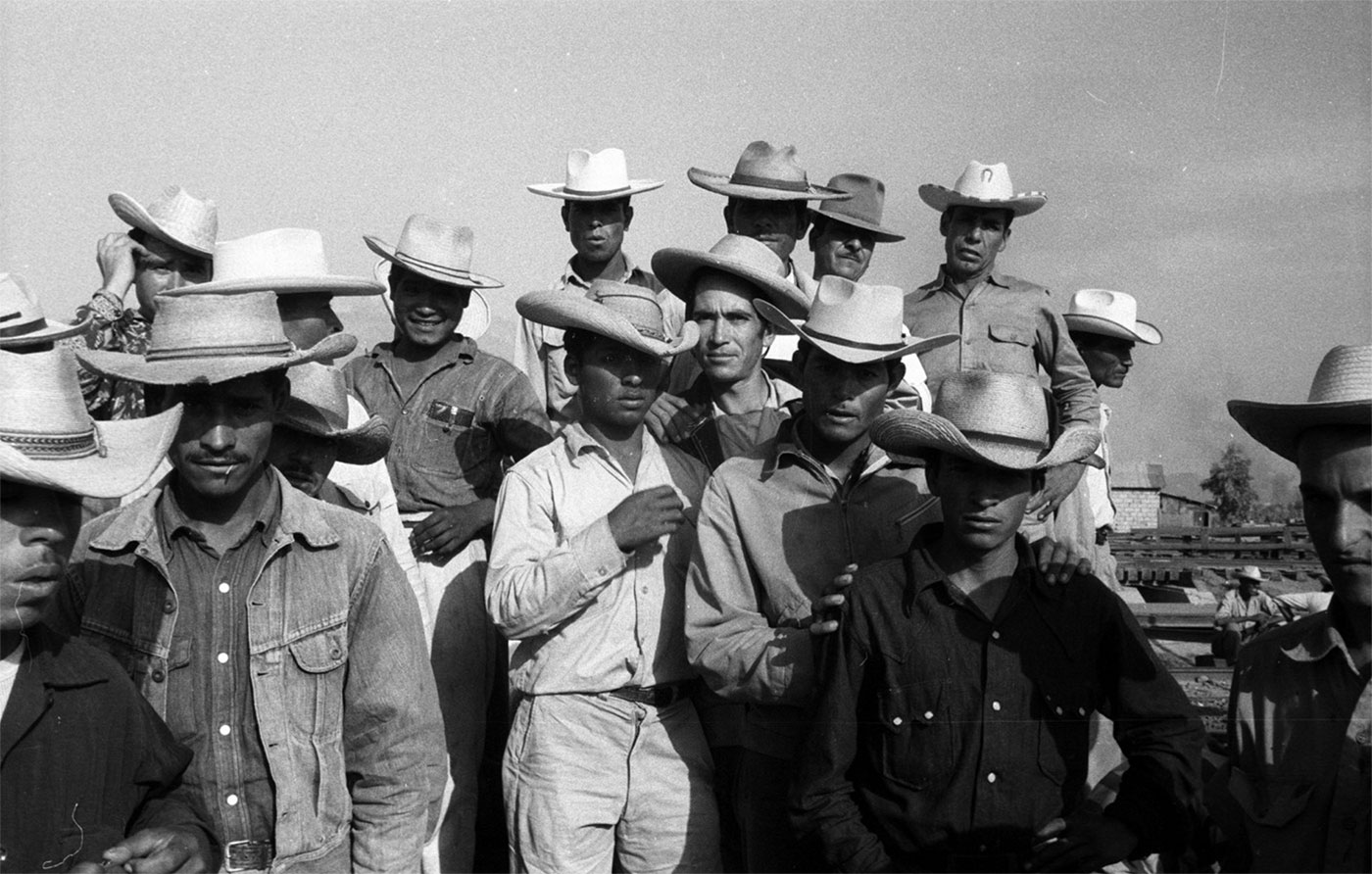
This dependency didn’t begin yesterday. It’s inscribed in the very history of U.S. economic growth: during the second half of the 19th century, the exploitation of Chinese labor in railroad construction and other essential tasks of industrial expansion; later, in another stage of U.S. history, this dependency shifted forcefully toward Mexican labor. The Bracero Program, created in 1942, not only institutionalized the use of Mexican workers primarily in agricultural labor; it also established a logic of labor subordination that persisted even after the program ended in 1964. The U.S. National Park Service acknowledged that the Bracero Program “institutionalized previous Mexican migrations” and, moreover, stimulated irregular migration, while other official materials from the same agency indicate that it prolonged wage depression in the agricultural sector and became a serious obstacle to unionization, because many employers prefer vulnerable workers to negotiating with organized labor (National Park Service [NPS], 2020; NPS, 2025).
Therein lies one of the keys to understanding what came next. The United States discovered that it could sustain a significant portion of its growth with a highly productive workforce, disciplined by fear, poorly paid, and legally vulnerable. In other words, an indispensable workforce, but without full rights. This formula proved functional for agribusiness, for the expansion of small and medium-sized businesses, and, over time, for broad sectors of the service industry. The material greatness that American policy so often boasts about cannot be explained without this migrant labor that generates wealth, lowers costs, and sustains consumption in other social sectors (BLS, 2025; NPS, 2025)
In the US agricultural sector, that dependence remains brutal. Data from the US Department of Agriculture, Economic Research data shows that in 2022, only 32.1% of farmworkers were U.S.-born, while 42.1% lacked
legal work authorization. This means that a huge portion of U.S. agriculture relies on
migrant workers placed in more vulnerable situations. This is not a marginal phenomenon; it is an economic structure: the U.S. food system continues to need migrant labor to reduce costs and maintain its Department competitiveness of Agriculture). (U.S. of Agriculture, Economic Research Service [USDA ERS], 2022).
But this story cannot be told solely from the U.S. perspective. We must also consider what this model has meant for Mexico. The economic integration promoted by NAFTA and later continued, with limited modifications, in the USMCA, did not resolve the structural inequality between the two countries. On the contrary, various analyses have documented that Mexican agriculture was one of the biggest losers. A study published by the Migration Policy Institute clearly summarized this effect: Mexican agriculture lost out to trade with the United States; employment in the sector fell significantly, and U.S. exports of subsidized crops, such as corn, depressed agricultural prices in Mexico. The poorest rural sectors bore the brunt of this adjustment without sufficient government support (Audley et al., 2004). In other words, while the United States consolidated its access to cheap labor, Mexico saw the conditions that sustained many rural communities deteriorate.
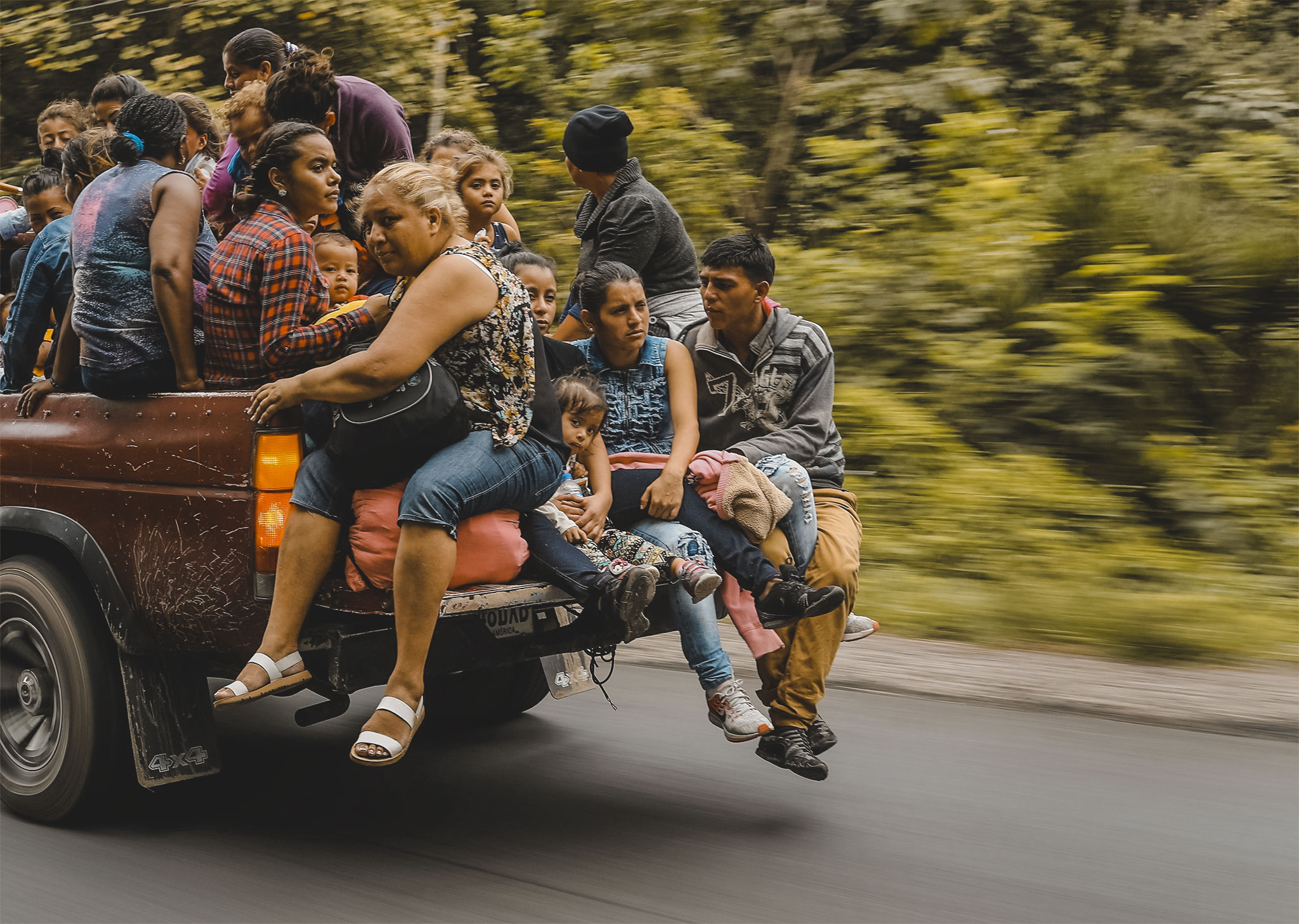
Therefore, discussing migrant labor also means discussing the dismantling of rural Mexico. For decades, millions of people were forced to leave not only by abstract poverty, but also by an unequal integration model that weakened local production, created precarious conditions for farmers, and made migration more profitable than staying. Communities were emptied, families were fractured, and an economy of expulsion was consolidated. The cruelest aspect of this story is that many of these people ended up strengthening, through their labor, the very economy that had contributed to the disruption of their home territories (Audley et al., 2004; BLS, 2025).
May also carries a political and symbolic weight that should not be overlooked. Although international labor tradition associates May Day with the memory of the Chicago martyrs and the historical struggle of the working class, in the United States it is celebrated on the first Monday of September. This is an attempt to sever any link between the labor celebration and the fight for workers’ rights. However, for millions of migrants, May continues to hold special significance: it is the month in which the memory of the working class intersects with the memory of migrants, making visible the fact that a significant portion of American wealth has been built by foreign hands.
This economic centrality, however, has not translated into full rights. On the contrary: at the most precarious levels of this structure, exploitation, wage theft, excessive workloads, and, in many cases, violence appear. This hits migrant women and migrant children particularly hard.
American wealth has been built by foreign hands.
The Government Accountability Office of the United States warned in 2025 that unaccompanied minors arriving in the country have been exposed to trauma and violence and may face a greater risk of becoming victims of trafficking. In fiscal year 2023, the Office of Refugee Resettlement served approximately 119,000 unaccompanied minors, a figure that reveals the human dimension of the problem (US Government Accountability Office [GAO], 2025). When that vulnerability intersects with the labor market, exploitation ceases to be an exception and becomes part of the landscape.
It is impossible to discuss migration without acknowledging labor. But it is equally impossible to speak honestly about migrant labor without pointing out the structural hypocrisy of a system that needs migrants to sustain its economy while simultaneously criminalizing them in political discourse. The United States has not only historically benefited from the labor of millions of migrants; in many ways, it has built part of its economic power on them. And Mexico, at the same time, has paid a very high price: loss of productive capacity, rural decline, community uprooting, and dependence on a model that expels people only to turn them into cheap labor on the other side of the border. To speak of migration in May, then, is to speak of work, of memory, of dispossession, and of injustice. It is to remember that behind the wealth of a superpower, there are millions of stories of struggle, rarely recognized with the dignity they deserve.
-
People’s Mañanera October 16
President Sheinbaum’s daily press conference, with comments on recovered assets, public education, security, and exports.
-
Mexico Does Not Have the Capacity to Confront the Cartels, Trump Says
Speaking at the White House, Trump claimed without evidence that cartels control Mexico and warned they have a deadline to “basically surrender.”
-
Mexico’s Secretary of Governance Announces Group of Experts Will Analyze National Registry of the Disappeared
Backed by the UN human rights office, Mexican and U.S. scientists will audit the registry, while 16,003 people reported missing have been located.