Two Fronts to Create Panic
This editorial by the editorial board of La Jornada originally appeared in the February 23, 2026 edition of La Jornada, Mexico’s premier left wing daily newspaper.
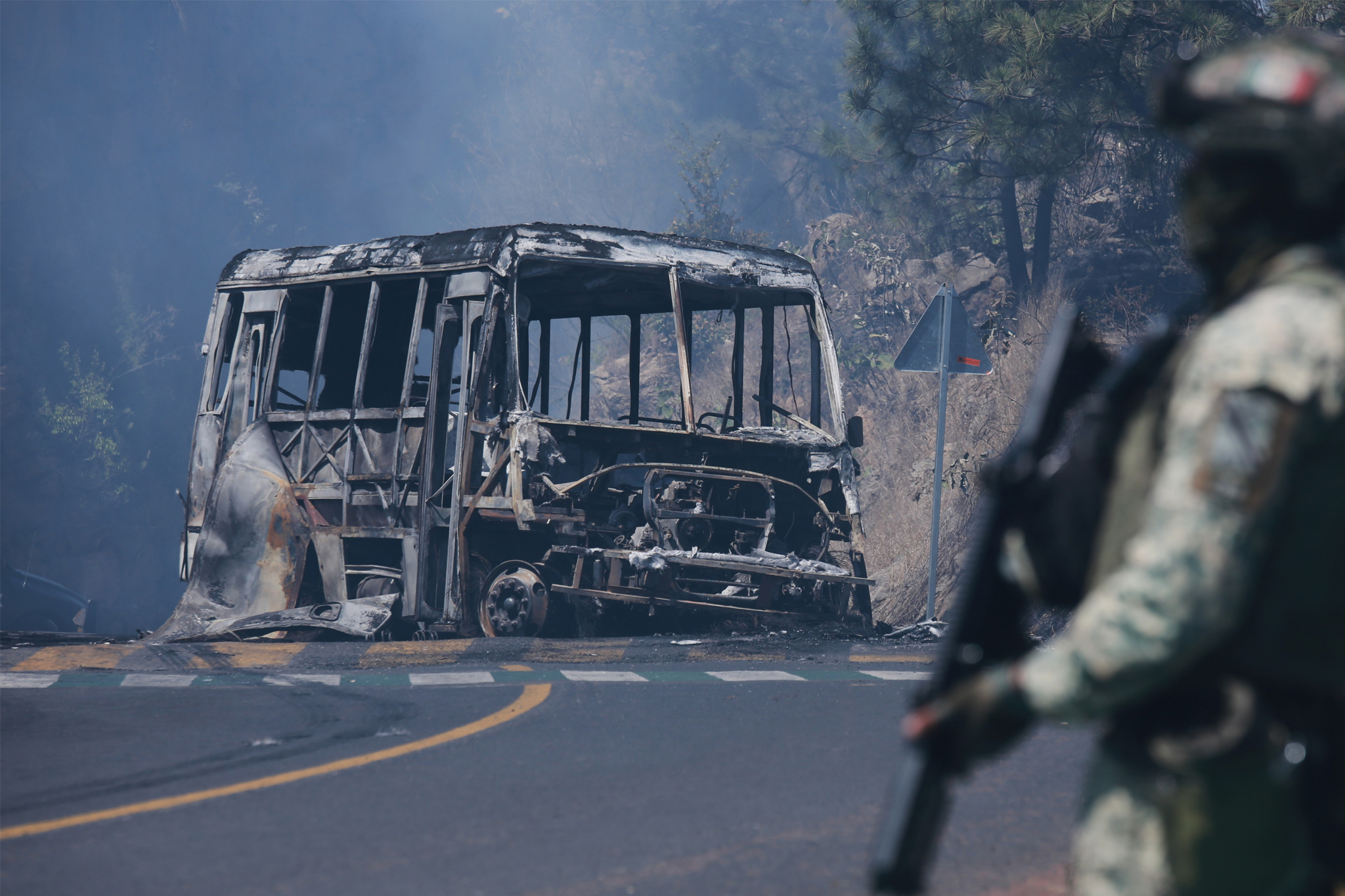
The death of the top leader of the Jalisco New Generation Cartel (CJNG), resulting from a confrontation yesterday morning in Tapalpa, Jalisco, between members of that criminal group and forces from the Secretariat of National Defense, sparked a brutal reaction in several states across the country. Cartel cells blocked highways and streets, set fire to vehicles, branches of the Banco del Bienestar (Bank of Well-being), and Oxxo convenience stores. A riot also broke out at the Puerto Vallarta prison, and attacks were carried out against the National Guard in San Juan de los Lagos, with a preliminary toll of 10 government officers killed and 12 wounded, in addition to one civilian killed in the crossfire.
Clearly, these criminal actions were not only intended to hinder the movement of law enforcement, but also to generate panic and anxiety among the civilian population and affect the beneficiaries of government social programs, the main users of the Welfare Bank, especially in areas where the cartel has had a greater presence.
In parallel with the CJNG’s attacks, a flood of fake and alarmist news was unleashed – many of them originating in the United States – from accounts formally belonging to journalists and commentators as well as from anonymous bot farms, which amplified the effects of the criminal actions.
In that context, it was even claimed that U.S. military personnel killed Nemesio Oseguera Cervantes, El Mencho, when in reality the involvement of U.S. authorities was limited to providing supplementary information, within the framework of existing security cooperation agreements. And yet again, voices from the political opposition sought to exploit a difficult national situation to denigrate Claudia Sheinbaum’s government.
Beyond this double campaign of intimidation and confusion, the death of Oseguera Cervantes raises unavoidable questions about what will happen to what is considered the most powerful criminal organization in the country today.
Without diminishing the importance of the blow dealt yesterday by the joint action of the Army, the Air Force and the National Guard, there is precedent for cartels that, after losing their top leader through capture or death in a confrontation, become embroiled in bloody internal clashes for leadership, fragment into antagonistic groups – which gives rise to prolonged scenarios of violence in the regions in which they operate – or become atomized, giving way to small criminal cells that begin to act on their own.
It is hoped that authorities at all three levels of government will have the capacity to prevent consequences like those mentioned and, in the immediate future, to restore public safety in the areas where it was disrupted yesterday. And as for those who are spreading unrest, it is desirable that they understand that their actions are detrimental not only to the current government, but to the country as a whole.
-
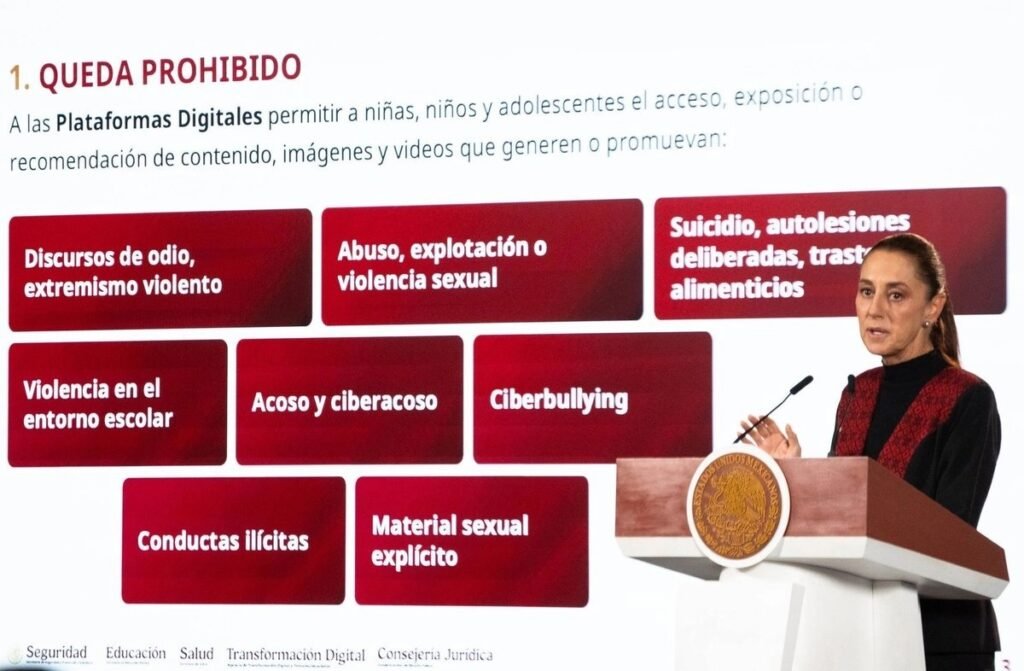
Sheinbaum Presents Draft Decree to Force Digital Platforms to Take Down Content That Incites Violence and Hate
No fines for now: the government will talk with tech companies before publishing the decree next week, a promise made after the Coahuila school attack.
-
People’s Mañanera October 9
President Sheinbaum’s daily press conference, with comments on digital safety, IMSS-Bienestar, sovereignty, and the opposition.
-
Mexico’s Gas Reserves Would Last Only 3 Days
Cenagas director Cuitláhuac García revealed Mexico has no gas storage and imports 75% of what it consumes, after a US supply cut exposed the risk.