US Guns Cause Wounds That Won’t Heal
The US has been in a long love affair with guns because they are central to its creation story — the exhilarating extermination of the original peoples, the heroic vigilantism enforcing white supremacy. These stories of white male prowess get hearts racing and blood pumping.
Children of following generations are indoctrinated with images of good cowboys shooting bad Indians, good cops shooting Black criminals and good soldiers wiping out sub-human “gooks.” Kids are addicted to violent video games where they sharpen their shooting skills.
Guns are, in effect, an extra appendage for the American he-man.
Adding the profit motive to the ratcheting up of desire for bigger guns produces a lethal combination. Gun manufacturers entice those harboring wannabe fantasies with military-grade weapons.
The US weapons industry enjoys unique protections under US law. The Protection of Lawful Commerce in Arms Act denies victims of gun violence the right to hold the manufacturers accountable. Marketing death is a fantastic business model.
As Tania Del Moral tells us, most homicides in Mexico are committed with US guns, and most are related to the drug trade. But while the US berates Mexico for being soft on the cartels and threatens to use more guns to destroy them — the manly way to do the job — it has been silent about its role in providing the cartels with the weaponry needed for their own lucrative business model.
The US public needs to recognize that its lover is a brutal thug. In Mexico, people live in fear of cartels. In the US, people live in fear of random shooters in our grocery stores, churches and schools. Venezuela, Cuba and Iran are now trying to survive the brutal attacks of a nation whose first instinct is to pick up a gun. Our romance with guns is becoming ever more deadly. Is it time yet to end this toxic relationship?

Tania Del Moral has roots in both Mexico and the US. From 2023 to 2025, she worked at Latin America Working Group (LAWG) as an advocate for human rights and democracy in Mexico and Central America. As Global Exchange‘s Washington Advocacy Coordinator, she helps channel concerns and demands from grassroots alliances around the hemisphere, forging them into proposals and legislation — such as the “ARMAS Act” and the “Stop Arming the Cartels Act,” designed to reduce gun trafficking from the US to Mexico. Tania lives in Washington, D.C., with her cat, Michi.
At the place where drug kingpin “El Mencho” was captured, what kinds of weapons were found?
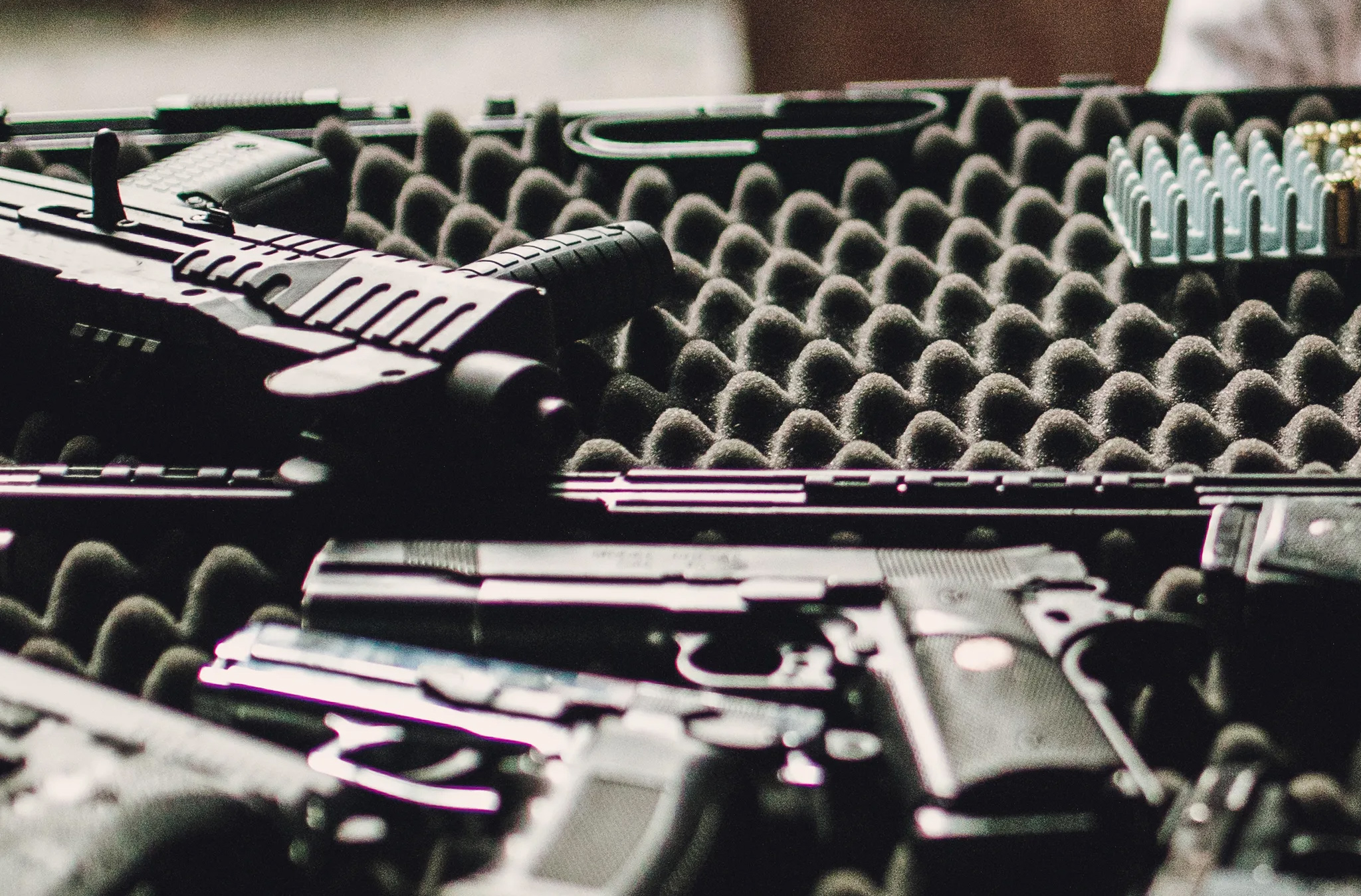
About 80% were US-made — a percentage similar to other weapon seizures at crime scenes or found in cartel caches. Weapons included AR-15s, AK-47s, and .50-caliber rifles that can pierce a lightly armored tank or disable a heavy one. These are manufactured in the US by companies like Colt and Sig Sauer. The two rocket launchers were from Russia and Belgium.
How do military-grade weapons get in the hands of criminal gangs?
In the whole country, Mexico has only two legal gun stores; both are on military bases, and buyers are vigorously vetted. You’d think it would be hard to buy military-grade weapons. However, with the US-led “War on Drugs” begun in 2006, imports increased, and so did state collusion with cartels and local authorities.
Now, an average of 369 firearms enter Mexico every day. Some are bought directly from manufacturers, and a small percentage are stolen. But most are “straw purchases,” meaning they are bought for someone else.
The New York Times recently revealed a US military connection. Agreements between the US Army and private contractors running the Lake City Army Ammunition Plant in Missouri allow .50-caliber ammunition and gun components to enter retail markets.
A new report, Corridors of Violence, points a finger at states with lax gun control.
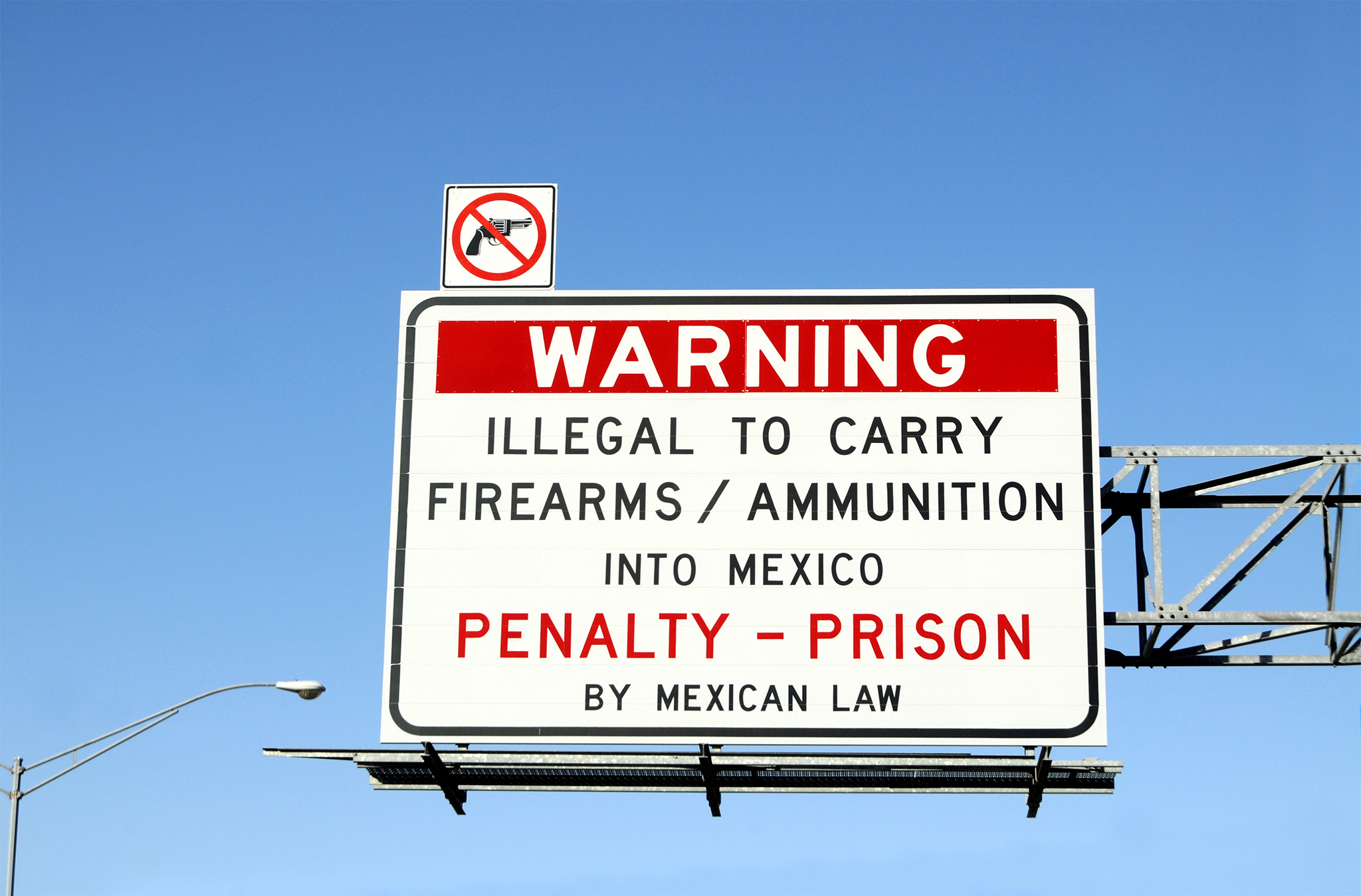
In 2023-2024, 90% of US guns confiscated in Mexico after being used in a violent crime within a year of purchase were sold in just 2 states, Texas and Arizona, and from just 15 zip codes — 14 of them in Arizona. The Arizona-Sinaloa Pipeline has become the principal corridor for gun trafficking to Mexico criminal groups. As the report states, “According to ATF data, most crime guns trafficked to Mexico with a short ‘time to crime’ — the time between purchase and confiscation in Mexico, a key indicator of deliberate trafficking — came from Arizona: 62% of U.S.-sourced guns with a time-to-crime of a year or less.”
Arizona loves guns more than lives and hasn’t shut down unlicensed vendors. In contrast, California prohibits the sale of assault rifles and .50-caliber rifles and requires background checks for buyers, including at gun shows. Between 2015 and 2024, only 3.5% of guns from California were purchased less than three years before being recovered in Mexico, compared to 41% from Arizona and 33% in Texas.
It’s obviously not hard to get the firearms over the border. If the Border Patrol searched carefully for firearms — which is part of their job — instead of for migrants, we’d all be better off!
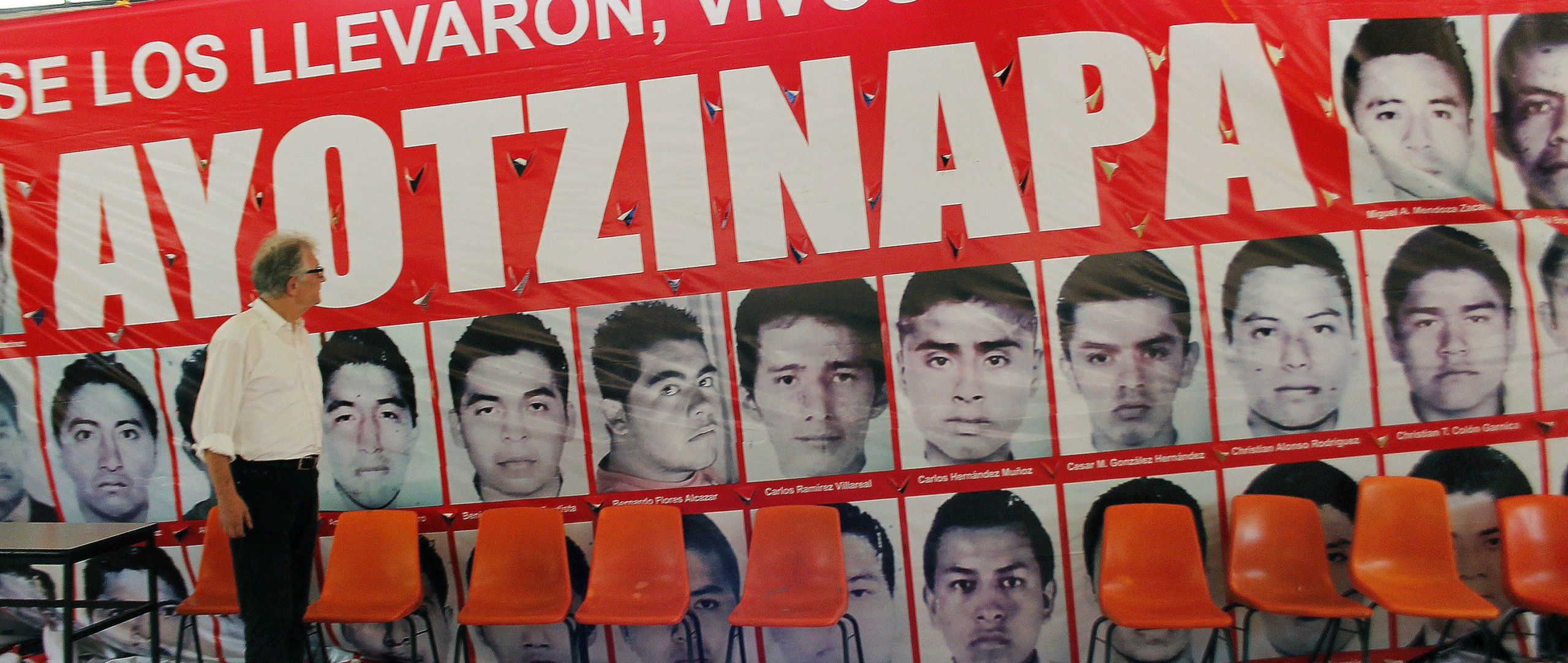
Mexico’s National Registry of Disappeared Persons contains 130,000 names. This is an incredible number!
Forced disappearances go back a long time. The state has used them as a tool of repression since the “Dirty War” of the 1970s, when they targeted student activists rebelling against the corrupt government. Activist parents crusading to find the 43 Ayotzinapa students who went missing in 2014 have kept disappearances in the public eye.
In 2018, Mexico passed the General Law on Forced Disappearances. It mandated special prosecutors for cases of forced disappearances and promises families the right to justice, truth, and reparations. But none of that happened. Cover-ups, failures to investigate and poor forensic tools leave the missing still missing. The open secret of past collusion between the state and organized criminal groups, as in the Ayotzinapa case, has discouraged people from bothering to report. The 130,000 reported cases don’t tell the whole story.
A Standardized Protocol for the Search of the Disappeared was created after the General Law on Disappearances. It includes six mechanisms for systemizing searches and requires that state agencies work with the families. But the families are still waiting. President Sheinbaum recently promised that she would meet with the parents of the Ayotzinapa students after March 26th. We’ll see!
So many of these are “cold cases,” from many years ago. Is it a good use of resources to try to find people missing for so long?
Yes! Having someone disappear is worse than knowing they are dead — it’s a wound that won’t heal. When nothing was done, families started searching for evidence themselves. Across the country, between 200 and 300 collectives of “buscadoras” or searchers, mainly women, go out in teams to remote and dangerous areas, and they’ve found many graves. They’re willing to search themselves, but they’re demanding protection; it’s dangerous work. Government agencies must work with them. They say, Sin las families, no! Nothing without the families!
Because guns used in crimes come from the US, isn’t this really a US issue?
Gun crimes are in the US too. Mass shootings, especially of school children, have caused families to demand gun control. In 2023, Global Exchange started the Peoples Movement for Peace and Justice (MPPJ) as a binational coalition of persons who have suffered from violence and believe working across borders is necessary to end it.
The Newtown Action Alliance of Connecticut, which includes parents who lost children in several mass shootings, participates in the MPPJ. In December we brought a group of Mexican women to Washington, DC, to participate in their 13th Annual National Vigil for All Victims of Gun Violence. We also partner with the Black Lives Matter chapter of South Bend, Indiana, the Quixote Center in Washington, DC, COLEFOM in Georgia and Lila Latinx in North Carolina.
In spite of all efforts, under Trump, the US has gone backwards. The e-trace system, which tracks the export of guns in order to combat illegal trafficking, used to be under the State Department as a foreign relations issue. Under President Biden, gun exports to Guatemala fell to zero. Then Trump moved it to the Commerce Department, making it a business issue. Gun exports to Guatemala shot up again. We support the proposed ARMAS Act, which would transfer firearms tracking back to the State Department.
Democrat Rep. Joaquin Castro, who worked with Global Exchange’s Stop US Arms to Mexico project, introduced the “Stop Arming Cartels Act” in 2024. It would ban the sale, possession, importation and transfer of .50-caliber rifles by civilians.
What can be done?
We must spread public consciousness that gun trafficking originating in the US, particularly in Arizona and Texas, is enabling cartel violence. If Trump really wants to reduce the power of the cartels, he should stop the massive flow of weapons into Mexico. President Sheinbaum stated this clearly in her conversations with Trump.
The MPPJ continues to bring families torn apart by gun violence on both sides of the border to speak at press conferences and to lobby in Washington, DC. It is their voices that need to be heard — and heeded. Sin las families, no!
-
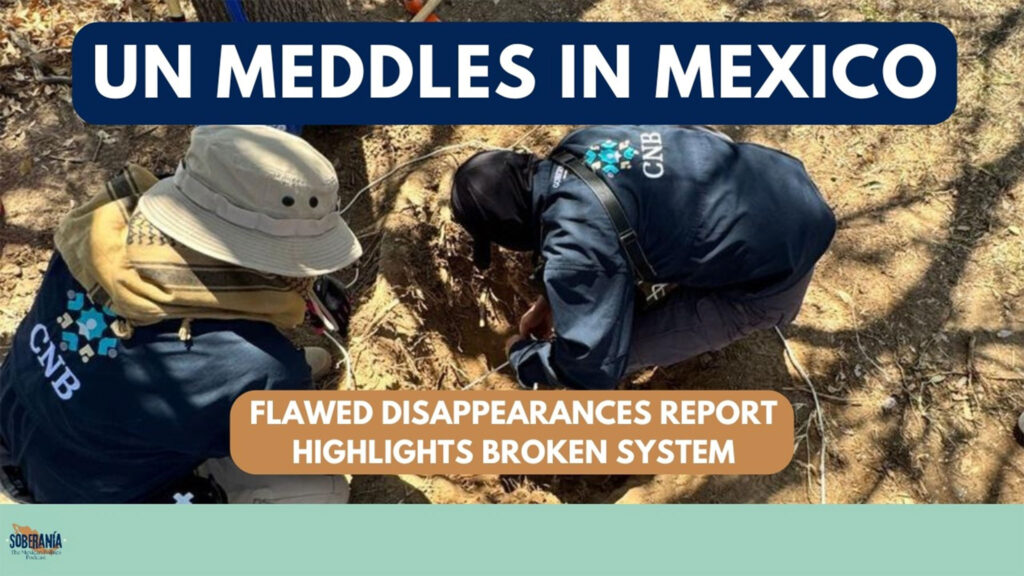
UN Meddles in Mexico: Flawed Disappearances Report Highlights Broken System – Soberanía 102
UN Committee on Enforced Disappearances, migrant deaths in the US, Mexico’s new Foreign Secretary Roberto Velasco, and deterrence in Mexico.
-
People’s Mañanera April 8
President Sheinbaum’s daily press conference, with comments on Chiapas housing, Mexico’s energy system, US and Iran ceasefire, and BlackRock public-private partnerships.
-
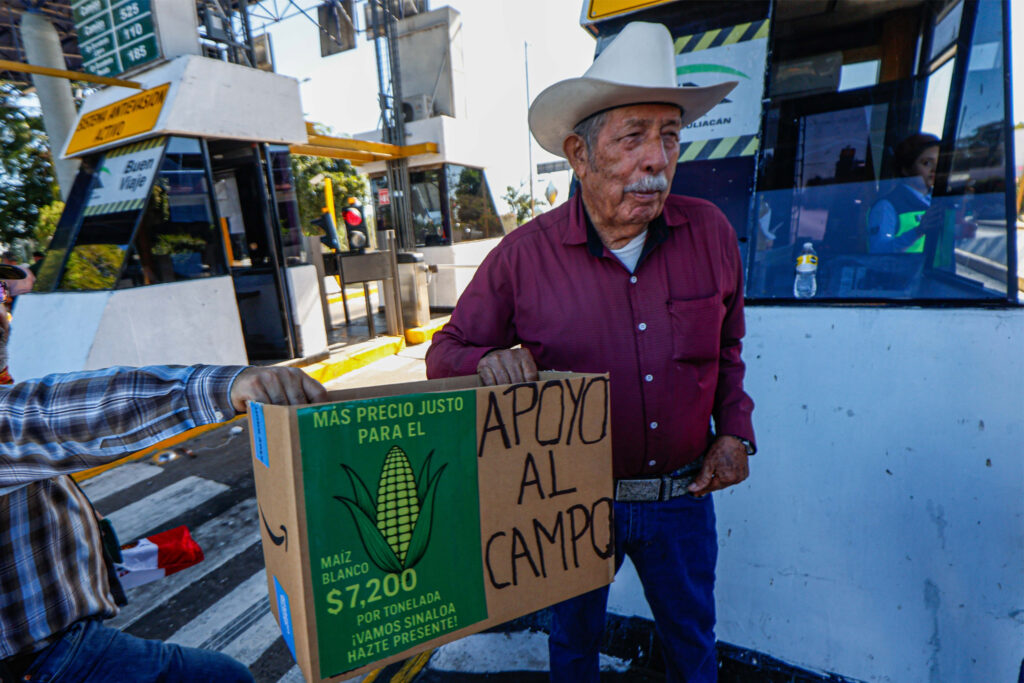
The USMCA is Causing a Decline in Mexican Agriculture
What can the phrase “Without corn, there is no country” mean when domestic corn production is on its last legs in the face of US dumping and the state’s inability to fight neoliberal free trade?