USMCA: Listen to All Voices from the Countryside
This editorial by Victor M. Quintana S. originally appeared in the April 22, 2026 edition of La Jornada, Mexico’s premier left wing daily newspaper. The views expressed in this article are the authors’ own and do not necessarily reflect those of Mexico Solidarity Media or the Mexico Solidarity Project.
On Monday, April 20, a key meeting began between representatives of Mexico and the United States to review the USMCA. Donald Trump’s whims and the fluctuating international situation have cast a shadow of uncertainty and questions over the treaty’s future.
Will the USMCA be reviewed, or will it be terminated altogether? If it is terminated, will there be separate bilateral agreements between the three countries? Nothing is certain at the time of writing.
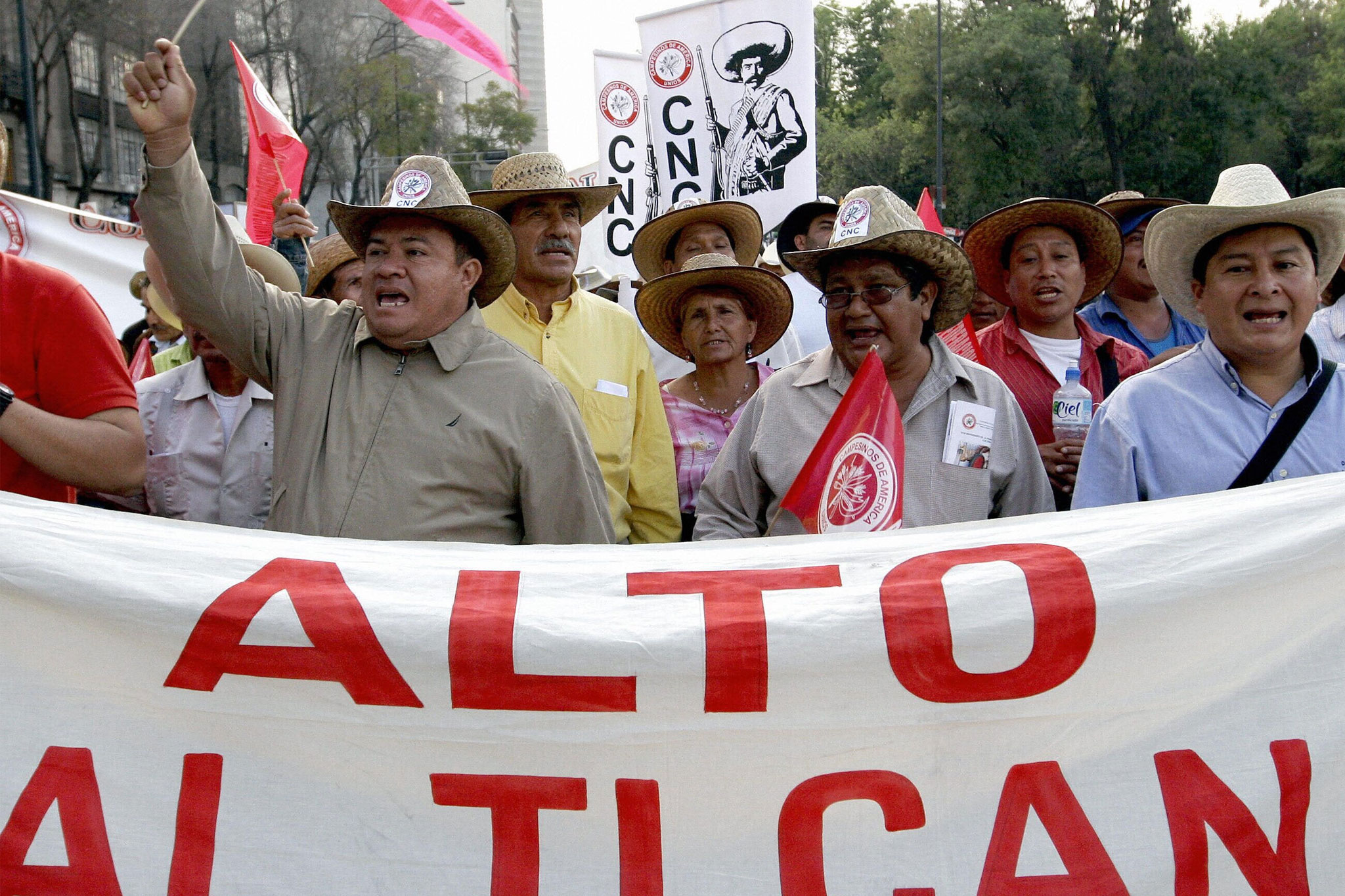
The Secretariat of Economy has focused on key industrial sectors, such as automotive, steel, aluminum, pharmaceuticals, electronics, and others. Representatives from these and other sectors have been heard and given a voice; however, the agricultural sector appears to have been overlooked in these negotiations. This is the complaint, at least, of organizations of small and medium-sized producers who are not part of the National Agricultural Council, as well as groups of agricultural workers and environmentalists.
The profitability of corn, bean, and wheat farmers, to name just three examples, has collapsed due to unfair competition from subsidized grains from the United States, high input costs, and insufficient guaranteed prices.
Faced with this uncertainty, some argue that “don’t change the treaty so it stays as it is,” pointing out that if there are too many demands, Trump will take advantage of the situation to withdraw from the USMCA, which would harm major exporters of tomatoes, avocados, berries, tropical fruits, live cattle, beer, tequila, and mezcal to the United States. This is also the position of the Agricultural Coalition for the USMCA Agreement, made up of 40 agricultural and livestock groups from the United States, the American Federation of Farm Offices, the National Council of Agricultural Cooperatives, the National Corn Growers Association, the American Soybean Association, and the National Milk Producers Union, as well as about a hundred Republican and Democratic legislators from states that export grains, oilseeds, milk, and meat to Mexico: the big winners in the USMCA sector on both sides of the border.
But many other voices from the Mexican agricultural sector and academia think very differently and analyze the costs this trade agreement has had on national agriculture. They point out that from NAFTA to the USMCA, Mexico has lost its food sovereignty in strategic products, such as staple grains and oilseeds. The profitability of corn, bean, and wheat farmers, to name just three examples, has collapsed due to unfair competition from subsidized grains from the United States, high input costs, and insufficient guaranteed prices.
Thus, since the NAFTA negotiations, producer organizations and, since last fall, the National Front for the Rescue of Mexican Agriculture (FNRCM), have demanded the removal of staple grains from the treaty. Doing so now seems far from easy, but if one listens closely to what these organizations are asking for, it is that, with or without the treaty, the federal government must develop and implement a robust policy to promote agriculture for food sovereignty. This implies not only fostering self-sufficiency among the poorest producers, but also establishing the conditions for small and medium-sized commercial farmers to improve their productivity, have access to credit, insurance, price hedging, affordable inputs, and incentives for production organization and marketing, while the State intervenes to regulate agricultural markets. This would be the demand—not a temporary one, but a structural one—of several organizations that have recently mobilized.
However, there are other social demands that are perfectly feasible to include in the current review of the USMCA, as long as there is open dialogue with those who propose them: guaranteeing the defense of territories and common goods, such as water and forests, in addition to the treaty protecting our countryside from the entry and application of agrochemicals.
In order to ensure the protection of native seeds and biodiversity and prevent the entry of transgenic seeds, it is demanded that our country not accept the pressure to adhere to Act 91 of the UPOV (International Union for the Protection of New Varieties of Plants), since it would favor seed patents, limit their use and exchange by producers and promote the control of the seed market by oligopolies.
Another recurring demand is the full respect for the labour rights and social benefits of agricultural workers and their families. The USMCA must not permit the production and sale of agricultural goods produced through labor exploitation, polluting agrochemicals, and environmental devastation.
The challenge is significant: building food sovereignty in a globalized agricultural environment, with a population’s eating habits vastly different from those of the import substitution era. Furthermore, our agriculture is far more heterogeneous than that of our northern neighbors and operates under much less favorable conditions for grain production. Even so, it is imperative to develop a roadmap for building our sovereign agri-food model with broad participation, especially from producers. Our agriculture is not merely a productive activity; it is social cohesion, identity, meaning, and a formidable public good. The USMCA should be an instrument to promote it, not to subordinate it to oligopolistic interests and distort it. Those reviewing the treaty must understand this.
-
People’s Mañanera October 21
President Sheinbaum’s daily press conference, with comments on Pemex, fuel theft, Jalisco’s water crisis, missing persons, and the lie detector.
-
Jáuregui’s Arrest Does Not Close the CIA Case in Chihuahua; Morena Demands Broader Investigations
Morena leader Ariadna Montiel holds Governor Maru Campos politically responsible and says ex-prosecutor Guillermo Zuany must also face justice.
-
Morena Accuses Violation of the Secular State Over Award Ceremony for Evangelicals in the Chamber of Deputies
A representative of Israel’s embassy attended the PRI-hosted event, and the group’s founder was arrested in the U.S. for drug trafficking in 2007, Morena deputies said.