Utopía — or Dystopia? Socialism — or Barbarism?
This interview with Ashwin Ravikumar originally appeared in today’s issue of the Mexico Solidarity Bulletin. We encourage you to subscribe!
There is not just one “utopia,” a single utopian vision of a society where people live together in harmony, security and happiness. In fact, 16 existing Utopías are already in Iztapalapa, one of the poorest boroughs in Mexico City! UTOPIA is the acronym for “Units for Transformation and Organization for Inclusion and Social Harmony.” Ashwin Ravikumar heard about this seemingly “utopian” — that is, impossible — project and went to investigate himself. He found that yes, these spaces are for real!
I visited several of the Utopías myself in two different years with other members of the Mexico Solidarity Project. The first one was Utopía Meyehualco, which features life-size animatronic dinosaurs that move realistically. Children stand in awe! But it’s not an ordinary amusement park feature. It’s science education with a guide who teaches about the evolution of dinosaurs.
Mexico does not claim to be socialist. But whatever it calls itself, constructing majestic, environment-friendly, empowering community centers for the poor demonstrates how effective the polar opposite of neoliberal capitalism can be. Rather than privatizing the goods and services everyone needs and generating profits for the few, Mexico is re-socializing the commons. From the oil industry to airports, trains, banks, and social supports, Mexico proves that, contrary to right-wing propaganda, it is an honest government that can deliver on time, on budget, and to the benefit of the people.
Remember the US neoliberal strategist Grover Norquist? He famously said that he wanted to “reduce government to the size where I can drown it in the bathtub.” What was drowned was the good and welfare of the people. In this polarized time when the US and others are devolving to barbarism, Mexico rebuilds the public sector “for the good of all, but first the poor.” Mexico chooses Utopía.
An Ecosocialist Visits Utopía, Mexico – VOICES
Ashwin Ravikumar, a member of the River Valley Democratic Socialists of America, is a co-chair of the DSA International Committee Mexico Solidarity Working Group. His main interest is examining environmental questions as political questions, which has led to his work as a research scientist, government advisor, teacher, policy advocate and community organizer. He wrote about the UTOPÍAs in Mexico City for Socialist Forum.
What were your research interests in Mexico City?
My main concern has been the damage human-driven climate change has done to the earth’s environment. In Peruvian communities in the Amazon, I saw how neoliberal projects displaced long-standing Indigenous methods of land management that maintained healthy and biodiverse forests.
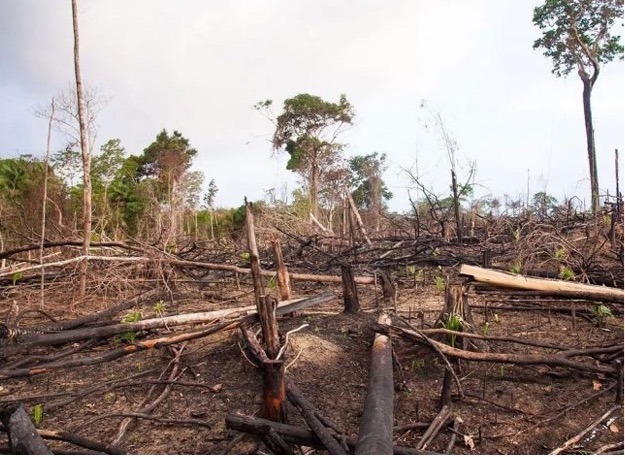
In Mexico, the drive for profits has cleared forests and replaced them with mega ranches and agribusinesses. That displaced small farmers producing cash crops; and that, in turn, affected urban food markets. Mexico City may be far from the rainforest, but the two places are connected through the metabolic relationship between rural and urban communities.
As a socialist looking for examples of eco-socialist policies in operation, I was also excited to hear about the Utopía community centers in the Iztapalapa borough of Mexico City, which aim to improve the quality of life for some of the city’s most marginalized residents in what were some of the most environmentally compromised spaces.

You visited the Utopías, Clara Brugada’s most significant projects, when she was mayor of Iztapalapa. What did you find?
The story begins earlier. In the late 60s, many Mexicans were displaced from rural Michoacan and Oaxaca. As internal migrants, they arrived in Mexico City in great numbers, building squatter settlements on the outskirts of town and also bringing a wealth of political experience from combating expropriation of their land and their exploitation as workers, particularly by mining companies.
A group of Mixteca and other Indigenous Mexicans from Oaxaca founded a community in Iztapalapa called San Miguel Teotongo. The new migrants, often led by women, set up mutual aid systems and built the necessary physical infrastructure, including basic water and electricity systems.
In the late 70s and early 80s, socialist activist Clara Brugada began to work with these women. In the Unión de Colonos San Miguel Teotongo, elder women in the community told me that student organizers like Clara Brugada helped them center feminist principles in their organizing, such as protecting women from domestic abuse while building the community’s capacity to lobby the state for basic urban services.
In the 80s, a new national progressive political party, the PRD, was formed. Clara affiliated with the PRD in the mid-90s and began her electoral activism. In 2014, she joined MORENA and in 2018 was elected mayor of Iztapalapa. In 2024, she was elected mayor of all of Mexico City.
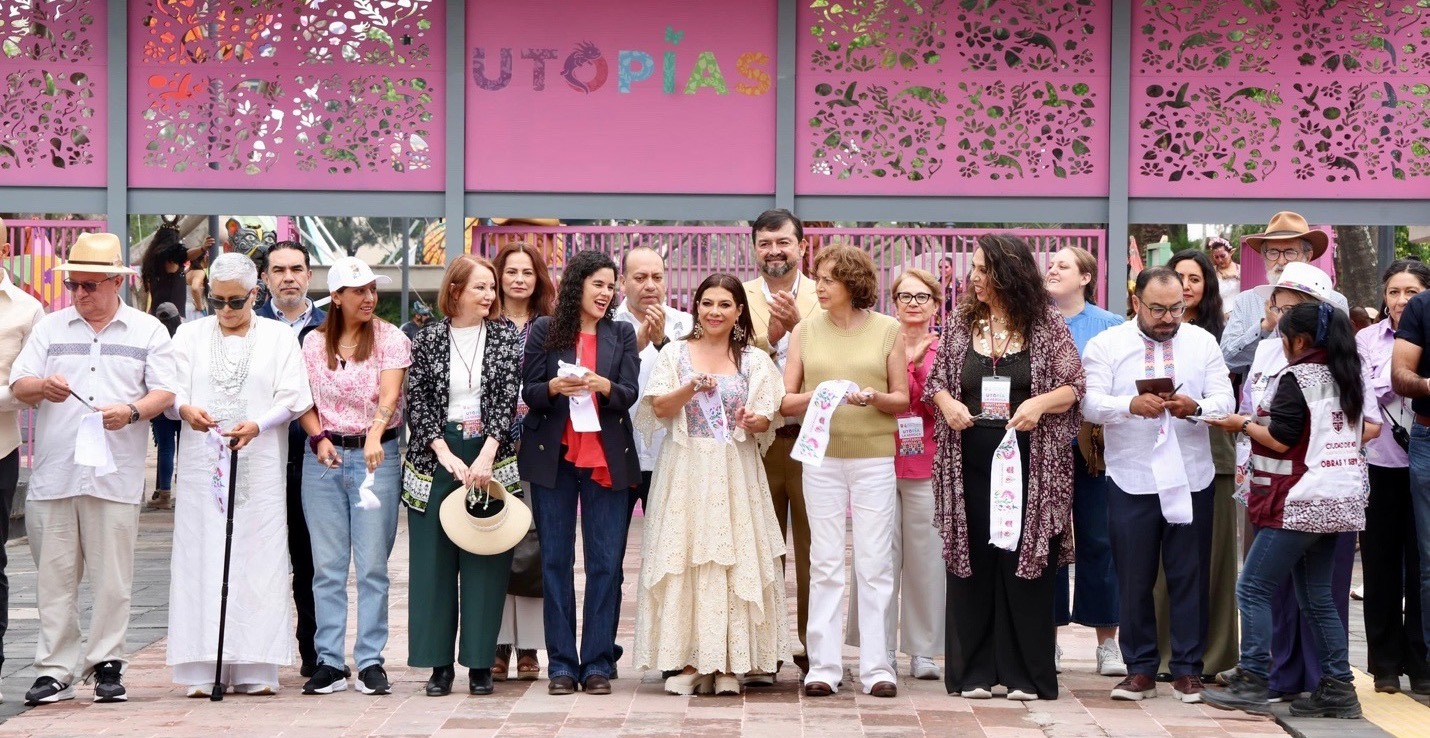
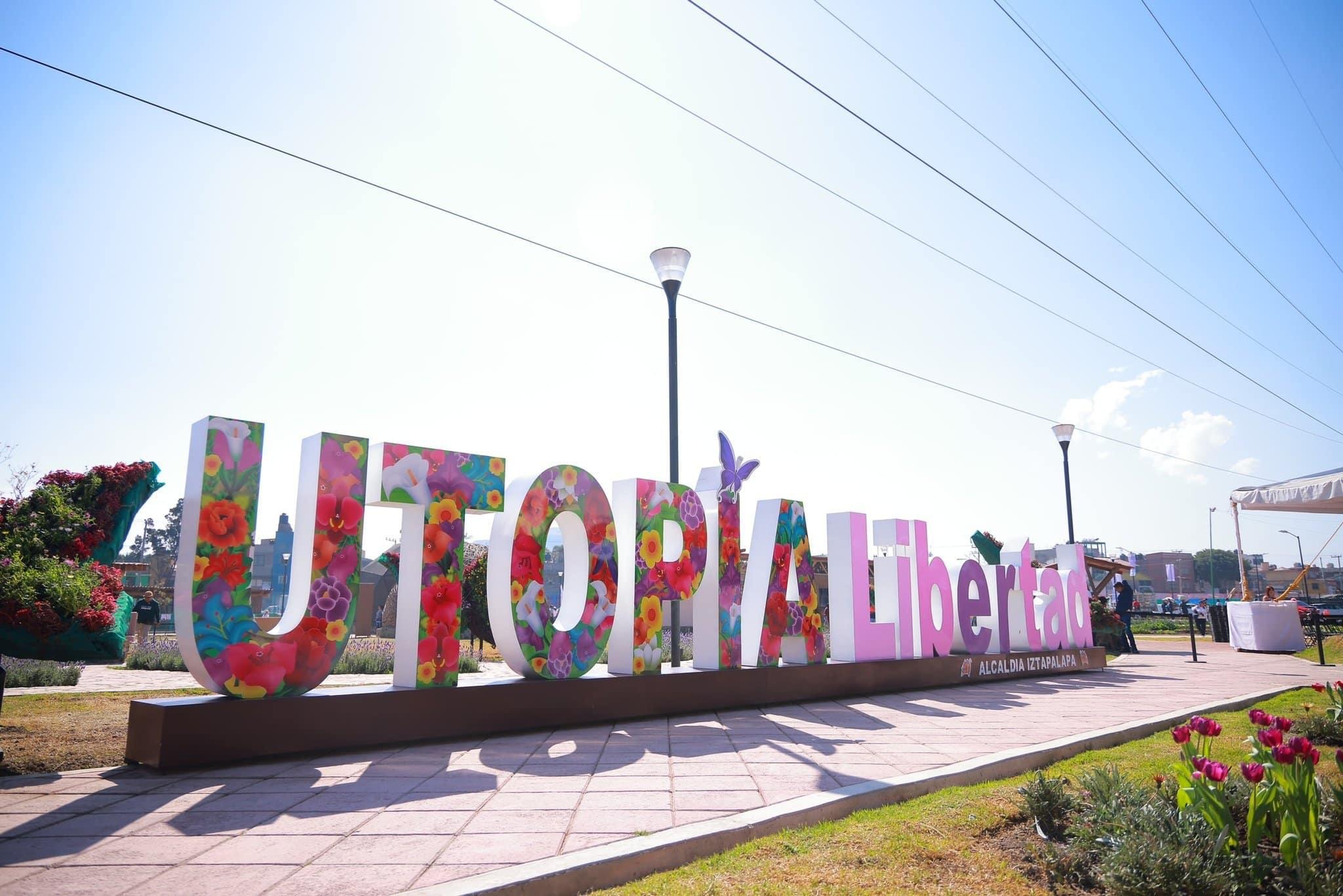
Iztapalapa has 16 Utopías, publicly constructed in less than six years without any new revenue. Each Utopía has a range of specialized services. For example, Utopía La Libertad, sited directly behind a prison wall, has a petting zoo and a planetarium. Utopía Meyehualco, occupying what was an extensive park full of soccer fields only used by exclusive leagues, now has a large animatronic dinosaur park (yes, that’s right) and a hockey rink. Utopía Olini hosts extensive manicured ponds, a tidepool, and a gym, which is the home field for an outstanding breakdancing squad. Utopía Estrella Huizachtépetl sits atop a reclaimed drainage area from a water treatment facility now converted into an extensive wetland ecosystem. And Utopía Quetzacoatl, sited unusually across multiple discontinuous buildings and spaces in a dense urban area, focuses on children’s mental health services, with an art therapist on staff.
Some of the Utopías have regular workshops supporting residents, especially women, in forming small businesses and cooperatives under the banner of the “solidarity economy.”

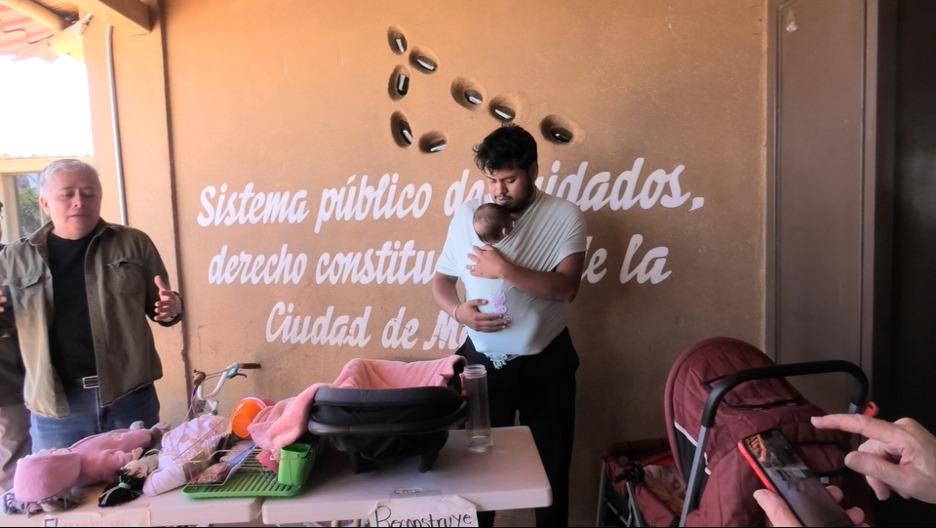
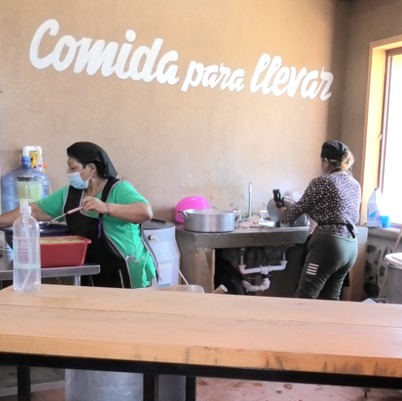
My sense is that the Utopías, besides a social impact, have a political impact as well. They raise working-class expectations as to what politics and government can offer them, including opportunities to create better futures for themselves and their families. Anecdotally, I was struck that working-class people I spoke to in Mexico had greater political consciousness and historical knowledge than most people in the US, including many middle-class and college-educated people.
Could Utopías be constructed in the US?
The Utopías were constructed on unused government-owned land. Public land is scarcer in the US, and costs are higher, especially if private contractors looking for profit are hired. But there is absolutely no reason why we can’t do projects like this in the US. It’s a question of building mass people power capable of demanding such programs and winning state power to implement them.
You co-chair DSA’s Working Group on Mexico. What are its goals?
Our international work focuses on what solidarity looks like from within the imperialist core. Right now, in the US, a top priority is to defend immigrant communities, many of which are Mexican, through direct organizing and policy change. We can create and expand sanctuary policies at the local and state levels to create places of safety.
Nations have the right to sovereignty, and we must also defend Mexico from US attack, both military and economic. That requires educating the US public about what’s really going on in Mexico and building connections between the peoples of our two countries.
DSA has increasingly — and more and more successfully — engaged in elections.
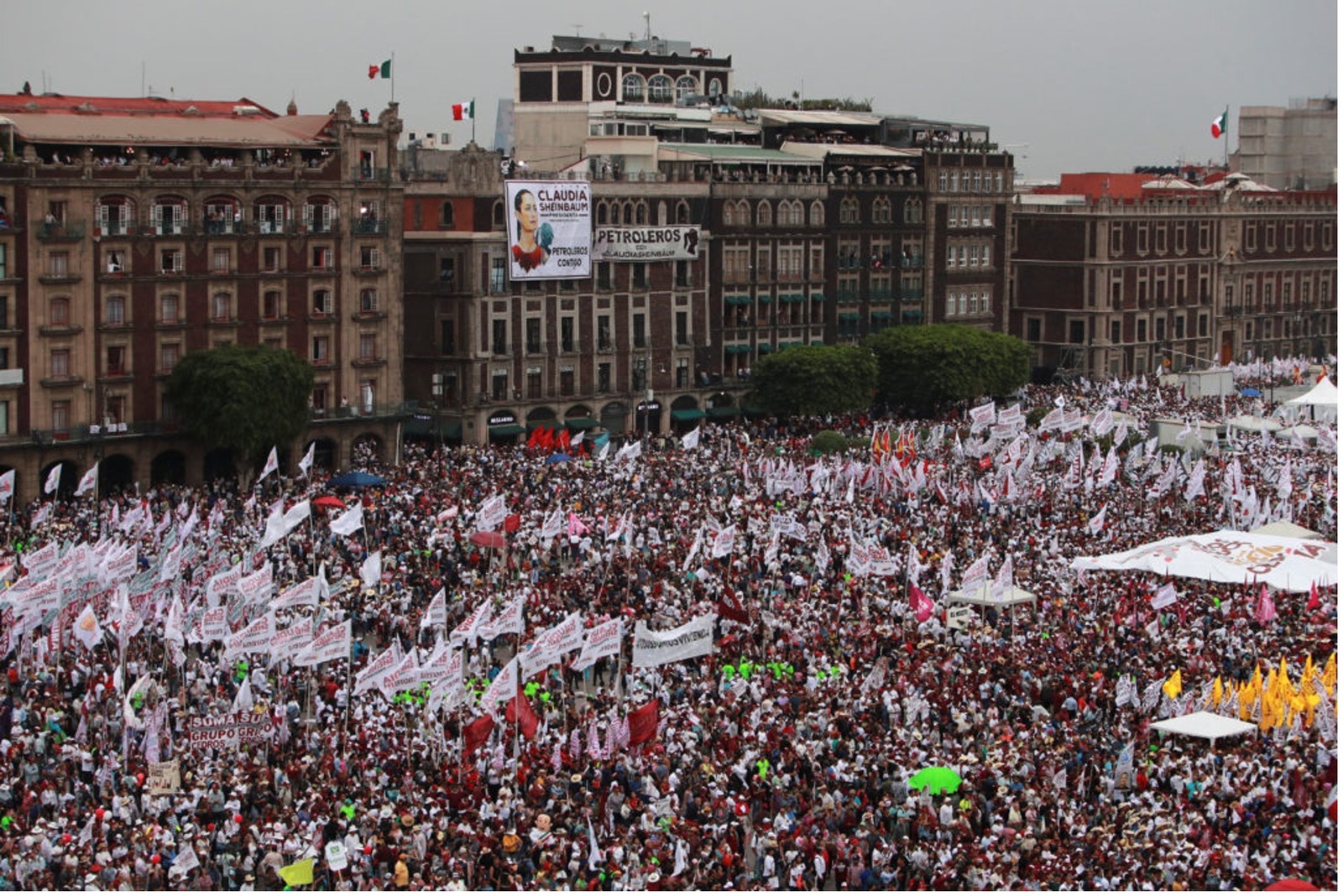
In my personal estimation, DSA has a lot to learn from MORENA’s experience — how social movements became consolidated into a political party, how MORENA has been able to challenge neoliberal politics and govern with and for poor and marginalized people and how it includes internationalism in its program. This is not to say we support MORENA uncritically. But we can learn from the results of decisions they made and did not make.
Does DSA see Morena’s government as socialist?
That Mexico has enacted radical social democratic reforms in spite of the powerful imperialist nation threatening them on their northern border is clearly a major achievement. But DSA isn’t monolithic in its views, and our organization has a range of perspectives on the Mexican government and MORENA. MORENA self-identifies as post-neoliberal and adheres to the ideology of “Mexican Humanism” but stops short of formally declaring itself anti-capitalist, socialist or communist.
Speaking for myself, I believe the MORENA government is expanding social democracy and, in doing so, is expanding the political imagination of the working class in the wake of a brutal period of neoliberal austerity and cartel violence. I’ve never seen any urban social project dedicated to defending and expanding the urban commons as ambitious as the Utopías!
Meizhu Lui’s experiences as the daughter of Chinese immigrants and as a single mom led her to focus on addressing inequalities based on race, gender, and immigration status. A hospital kitchen worker, she was elected president of her AFSCME local. She coordinated the national Closing the Racial Wealth Gap Initiative, and co-authored The Color of Wealth: The Story Behind the U.S. Racial Wealth Divide. Liberation Road, a socialist organization, has been her political home.
-
The Zócalo International Book Fair Ended; Nearly 2 Million People Attended, Paloma Saiz Says
Its director says booksellers sold like never before and younger readers flocked to the fair, which gave away some 40,000 free books in 10 days.
-
Olinia Has the Formula to Succeed in Latin America, Capuano Tripp Says
A call for investors seeks 950 million pesos to found Mexico’s first homegrown automaker, with the state holding 33 to 49 percent and plans to reach other countries of the region by 2030.
-
Mexico Demands US Investigate the Death of a Mexican National in Laredo; 18 So Far in the Trump Era
The SRE will file a complaint with the Webb County prosecutor and press for consular access to immigration detention centers after the latest death.