When Governing Becomes Managing
This editorial by José Romero originally appeared in the February 14, 2026 edition of La Jornada, Mexico’s premier left wing daily newspaper. The views expressed in this article are the authors’ own and do not necessarily reflect those of Mexico Solidarity Media or the Mexico Solidarity Project.
There are times when power ceases to advance and begins to retreat. It doesn’t do so with fanfare or grand pronouncements, but with silence, abrupt and poorly explained decisions, and defensive maneuvers that seek to manage the present without daring to contest the future. Mexico is currently experiencing one of those moments. Not due to a lack of electoral legitimacy, but due to material exhaustion, a lack of room for maneuver, and, above all, a growing difficulty in processing conflict as a normal part of politics.
For years, a project was built that relied on redistribution as the cornerstone of its legitimacy. This approach was socially relevant and politically effective as long as fiscal space and a relatively benign external environment existed. Today, that space has shrunk dramatically. Growth failed to materialize, productive investment failed to take off, and the economic structure remains dependent on external factors over which the country has increasingly less control. When the margin for error disappears, policy ceases to be expansionary and becomes defensive. The decision is no longer about where to go, but rather what to contain first.
In this context, social spending continues more out of inertia than strategy. It persists as a moral commitment, but without a supporting economic narrative for the medium term. Redistribution without growth does not correct structural weaknesses; it merely postpones them. And when fiscal reality begins to take hold, the rhetoric hardens, the space for deliberation narrows, and the distinction between governing and administering begins to blur. What is lost is not only financial leeway, but also a sense of purpose: it ceases to be clear what the government is governing for, beyond simply maintaining the status quo.
The international environment offers no refuge. The world has become harsher, less tolerant of ambiguity, and more demanding of alignments. Great powers do not negotiate with symbols or narratives, but with power dynamics. A country without a clear production strategy, a consistent industrial policy, and a long-term project negotiates from a position of weakness, even if it retains internal legitimacy. Sovereignty that is not produced ends up being administered as a slogan, and slogans carry little weight when confronted by entrenched and well-organized interests.
Faced with this scenario, internal conflict ceased to be seen as a driving force and came to be perceived as a threat. Politics, understood as the management of dissent, was replaced by a logic of control. Agreements that broaden the scope of action are no longer sought; instead, silences that reduce risk are desired. Plurality, which at other times was a strength, begins to be perceived as disorder. Figures trained to operate in friction, not in silence, become uncomfortable in this new climate. And when that happens, the temptation is to neutralize, not persuade.
This retreat is expressed not only in major decisions, but also in everyday gestures: removals without convincing explanation, premature closures of debates, contradictory messages that reveal more uncertainty than direction. This is not classic authoritarianism or open institutional breakdown. It is something more subtle and, therefore, more unsettling: the substitution of politics with the management of fear of conflict. The paradox is evident. By trying to avoid conflict, it accumulates. By trying to silence tensions, they are driven underground. And what is underground, sooner or later, resurfaces with greater force. No political project is weakened by debate; it weakens when it loses sight of its purpose. The stability obtained by suppressing dissent is always fragile, because it rests on the denial of real problems.
Today, the country seems stuck in a prolonged present, without a clear horizon, making decisions that seek to buy time but not to build a future. Scarcity is managed, external pressure is managed, internal discontent is managed. But managing is not governing. Governing implies assuming costs, setting priorities, and accepting that conflict is not an anomaly, but the raw material of politics.
Silence can be tactically useful, but it doesn’t resolve underlying tensions. It only postpones them. And when those in power postpone strategic decisions for too long, they end up trapped in their own caution. Governing isn’t about avoiding conflict; it’s about knowing where to push it. And that is, today, the country’s central dilemma.
-
People’s Mañanera March 30
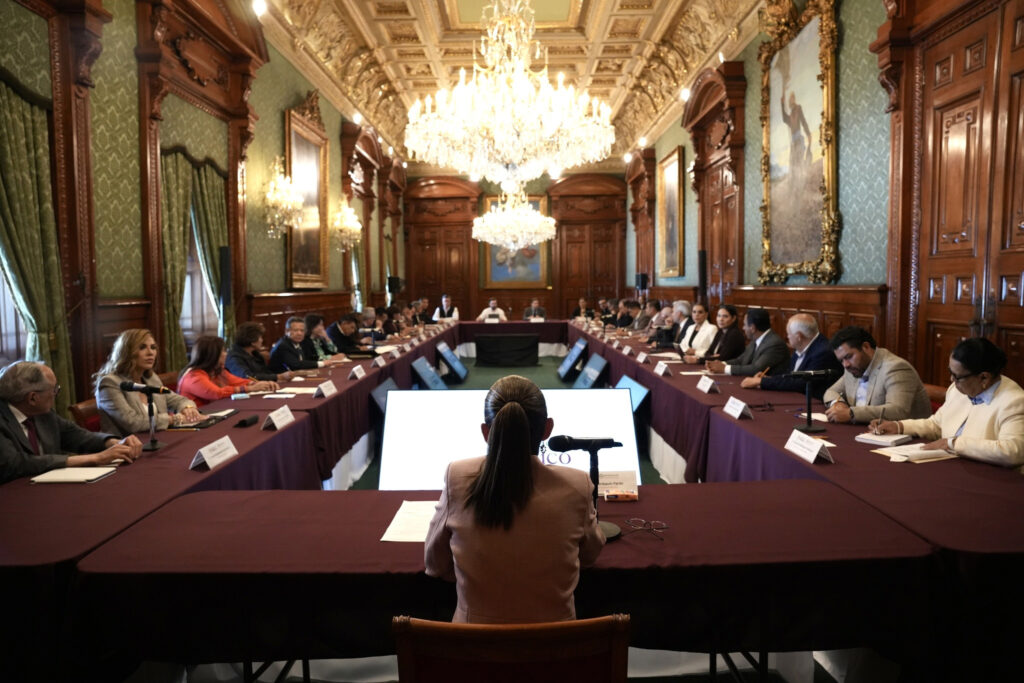
President Sheinbaum’s daily press conference, with comments on investments in Fine Arts & Anthropology & History institutions, Cuba, lawsuit by Mexicans who died in ICE custody, and fuel price controls.
-
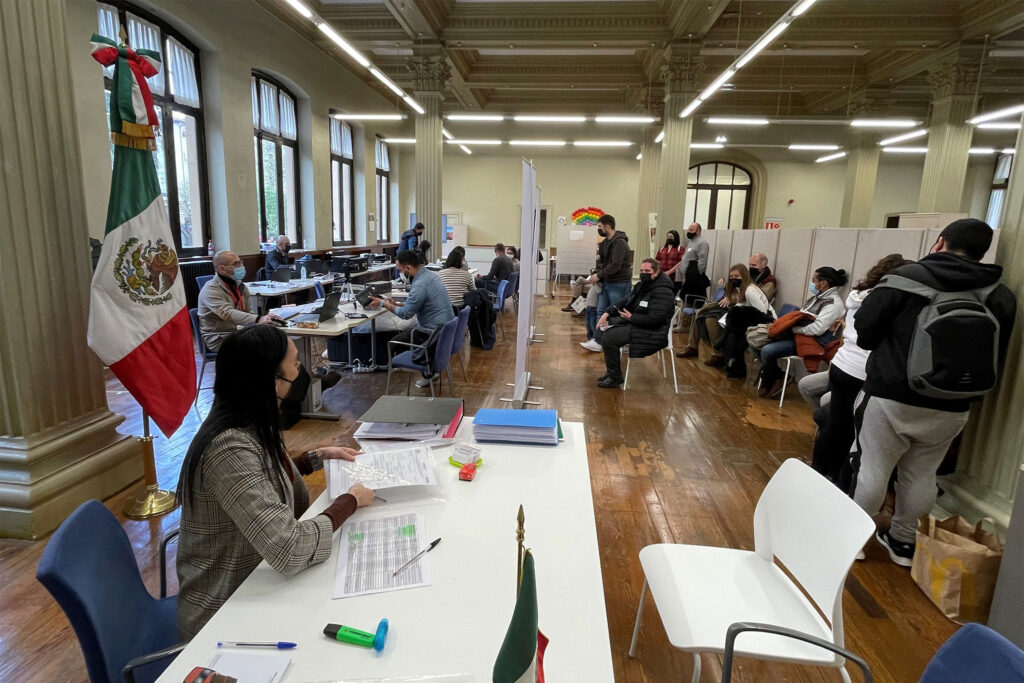
Mexico’s Mobile Consulates in the US
Such consulates perform an extremely important task, especially when the policies of the US administration under Donald Trump are becoming increasingly aggressive.
-
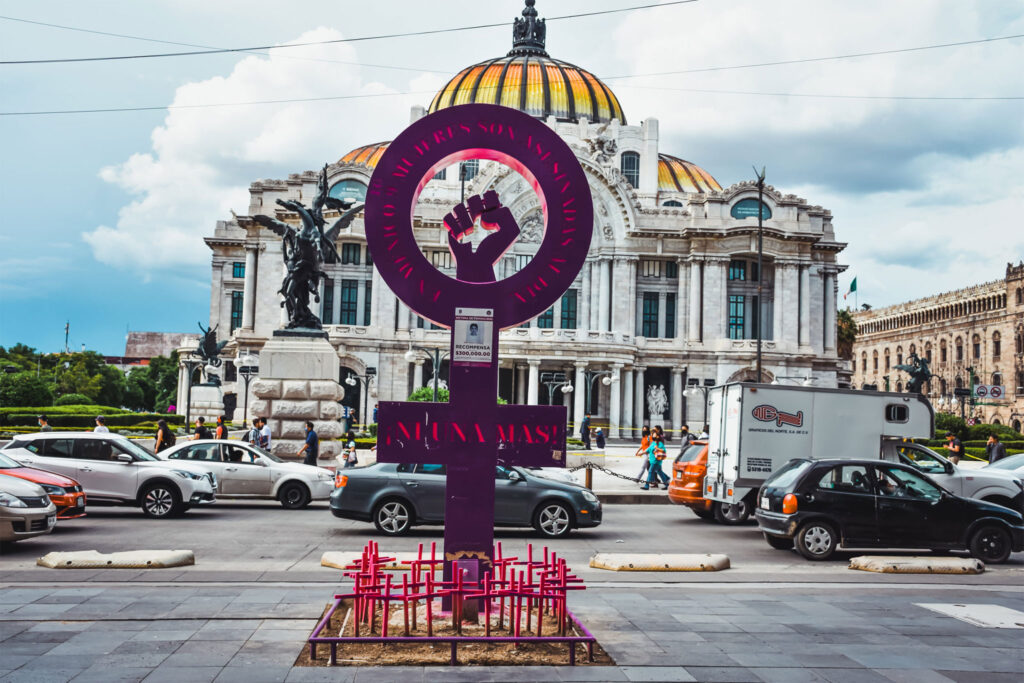
A Law to Protect the Dignity & Life of Women
Mexico’s General Law to Prevent, Investigate, Sanction and Repair the Damage for the Crime of Femicide seeks to strengthen the capacity of the State to protect, act promptly, investigate, as well as guarantee truth, justice and reparation for victims.