
Working Amidst Poverty; Life in San Quintín
This article by Mireya Cuéllar originally appeared in the March 30, 2026 edition of La Jornada, Mexico’s premier left wing daily newspaper.
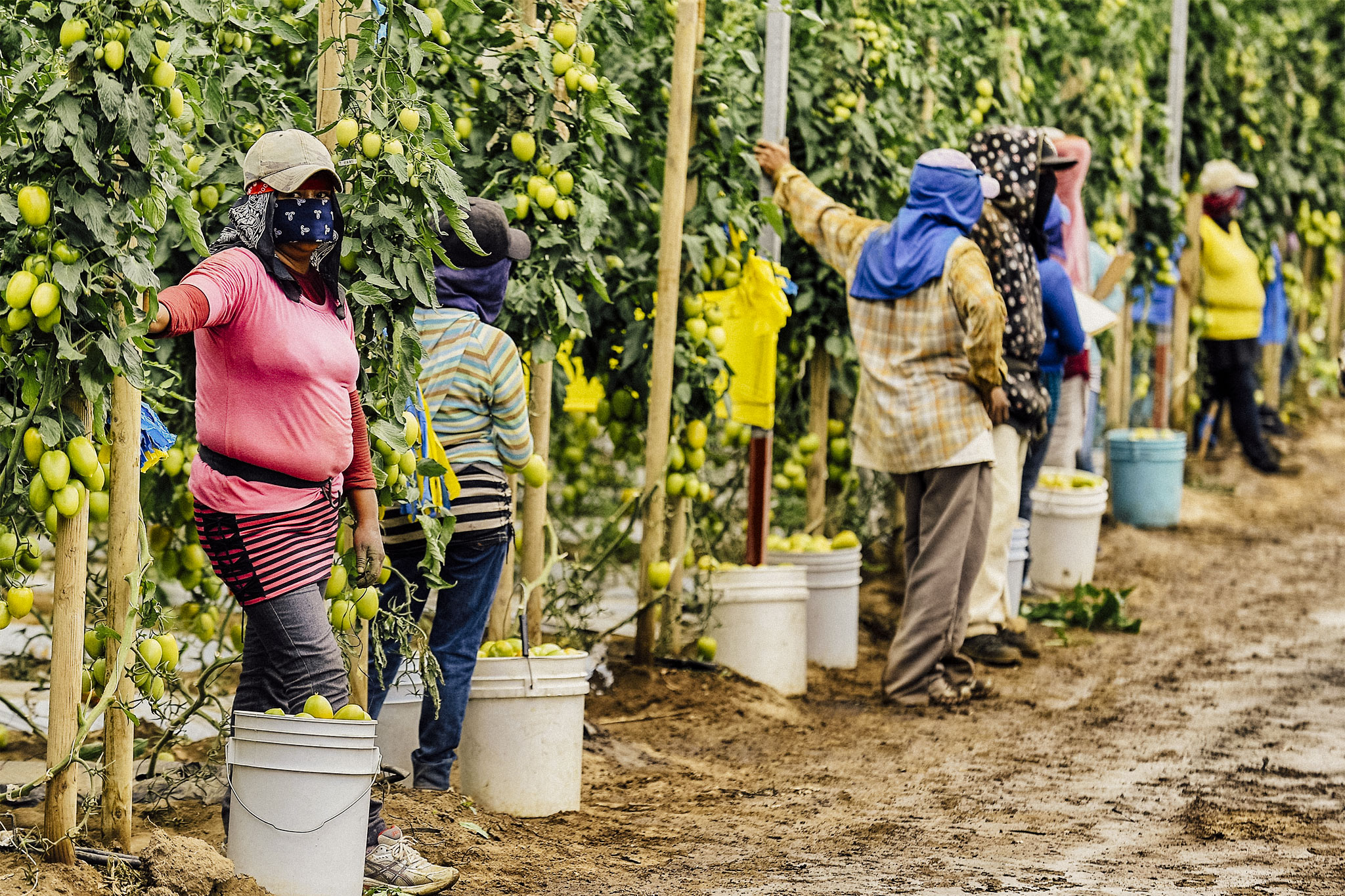
San Quintín, Baja California. Unpaved streets, no streetlights or public transportation; houses without electricity, water, or drainage, with septic tanks or latrines… dirt “parks,” without trees, without swings. It’s the arid poverty of the desert. The landscape bears no relation to the fact that agricultural workers live here with the highest wages in the country, simply because the border minimum wage is 420 pesos.
Nor does it have it with the mechanization of its large agricultural fields, with the shade mesh structures, the drip irrigation systems fed by 90 desalination plants, the succulent berries that are harvested, the more than 10 billion pesos annually that the production that is raised here is worth.
It doesn’t even resemble the rest of the Baja California landscape. Poverty in the state, according to the latest census, affects 13.4 percent of the population; in San Quintín, it reaches 34.9 percent, almost three times higher.
In the state, 10 percent of the population (on average) does not have access to nutritious food; in San Quintín, the indicator rises to 20 percent; 19 percent of the streets in the state do not even have a surface covering; here it is 89 percent… and so on.
San Quintín is bordered to the north by the municipality of Ensenada and to the south by Mulegé, Baja California Sur. Its residents are settled along the 90 kilometers that run from Camalú to El Rosario, on either side of the Transpeninsular Highway. Narrow and with only two lanes, it is the only road. There are no paved streets, bypasses, ring roads, or overpasses here. When it rains, the water floods the eastern part of town, overflowing the highway and eventually reaching the bay.
“What I can say is that there isn’t a single neighborhood with all the services: drainage, drinking water, electricity, street lighting, paving,” says the mayor, Miriam Cano.
10.9% of Inhabitants Cannot Read
The federal government conducted a survey in 30,000 homes to design the Justice Plan for San Quintín. It found that 10.9 percent of residents are illiterate, 12.1 percent are illiterate, 16.5 percent cannot use a cell phone or a computer, and 73.8 percent are unfamiliar with basic computer skills. In fact, many poverty indicators for the municipality are similar to, and even higher than, those of many other municipalities in Chiapas.
Only 20 percent of the population—counted for the development of the Justice Plan—has daily access to water; 40.6 percent, every two or three days; 36 percent, once a week; and 4.7 percent, every 15 days. Each month, the Ensenada State Public Services Commission, on which they still depend, publishes the water rationing schedule for the following 30 days on its website.
That’s for those who have water, because many neighborhoods don’t lack the infrastructure to receive it, because there isn’t any water there either. What little there is is hoarded by the well owners, who sell it to those who don’t have any. Mayor Claudia Sheinbaum announced during her last visit that a desalination plant will be built to provide water to those who don’t have it. To build it, the Federal Electricity Commission (CFE) is replacing the wiring on the towers that reach the southern part of the state; the current wiring can’t handle the increased load.
The power grid doesn’t have the capacity to carry more energy, neither for the population nor for a desalination plant. The energy supply is only sufficient to operate the desalination plants on the farms, which are necessary to sustain production.
In San Quintín, everything seems to be yet to be done. Established as a municipality in 2020, they elected their first mayor, Miriam Cano, last year. Previously, it was part of the municipality of Ensenada, with the municipal seat nearly 200 kilometers away. Also needed are doctors, medicine, the offices of the Tax Administration Service (SAT), and federal, state, and municipal agencies.
One of the things included in the Justice Plan is an “integrated center,” where there will be—in theory—offices of (federal) agencies so that people don’t have to go to Ensenada for a birth certificate or to register with the Tax Administration Service (SAT). Many Indigenous farmworkers don’t register with the SAT—essential for contributing to the Mexican Social Security Institute (IMSS)—because they would lose more than a day of work and have to spend money on transportation to avoid the three-and-a-half-hour (sometimes four, due to traffic) bus ride between San Quintín and Ensenada.
The lack of infrastructure is not the responsibility of the owners of the agricultural fields, says Alberto Leree, founder of the Baja California Agricultural Council, which represents large producers. He recalled that in 2015, when farmworkers abandoned the fields and mobilized demanding better living conditions, the then Undersecretary of the Interior (under Enrique Peña Nieto) Luis Miranda told Governor Francisco “Kiko” Vega—at a meeting where the businessman was also present—that the conflict could be resolved with 4 billion pesos, with the federal government contributing half and the state the other half.
“Kiko Vega didn’t accept,” he said, adding that he didn’t have the money, he recalled. The movement was forged in the neighborhoods—not in the workplaces—where families spent more than 130 pesos (a day’s wage at the time) to buy water and fill a drum that lasted them less than a week. Initially, it was the lack of water that organized them. Later, they rebelled not only against their living conditions but also against their working conditions.
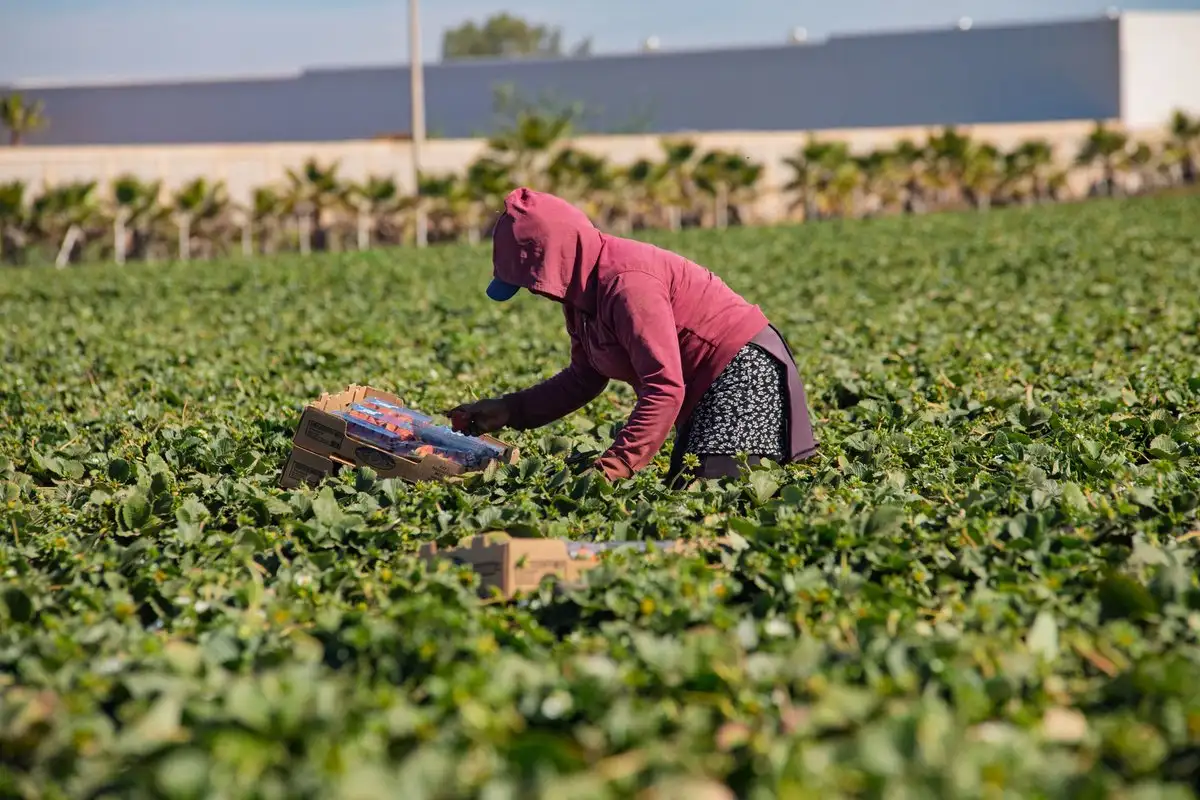
“The PAN party opposed its becoming a district.”
“There’s a racist element in the way the National Action Party (PAN) treated San Quintín,” says a local politician. He recalled that the PAN systematically refused to grant it municipal status, and when someone pressed one of the governors—the PAN governed from 1989 to 2019—his response was: “Why would we want a mayor from Oaxaca?” in Baja California.
Miriam Cano, the councilwoman nominated by Morena, says that a few months ago a federal official gave her a dirty look when she warned him.
“But today the main problem for day labourers is that it’s useless to earn 8,000 pesos a week breaking their backs if they get home and there’s no electricity, no water, no drainage, no streets, no streetlights, and nothing but aspirin at the Social Security clinic… they spend a lot on healthcare, on using their cell phones; on transportation, 50 pesos per child to get to school; a drum of salt water… up to 1,800 pesos for a water truck: of course their money disappears. The price of water is outrageous.”
Here, people are raising their university-aged children by candlelight. “You only have to look at the high school students’ hands—she taught them—. They pick squash, green beans, peas, strawberries… they come from the countryside and have achieved an education, but their neighborhoods still lack water, electricity… also due to a lack of legal certainty regarding land ownership, because someone sold them a plot of communal land cheaply, without proper documentation.”
“The ranches have solved their water problems with wells and desalination plants. Imagine the anger the farmworkers feel when they see there is water for the crops, but not for their homes, to wash dishes, bathe or cook.”
-
Mental Health at Risk
The damage to the mental health and lives of millions of people may already be, to some degree, irreversible; the question is whether we will have the capacity to regulate digital platforms.
-
SITGM & Goodyear Reach Agreement on Wage Increase
The union secured a 5.8 percent wage increase for more than a thousand workers at the San Luis Potosí plant.
-
Workers Party Senator Proposes Ban on Terms Human Resources and Human Capital in Businesses
“We are witnessing how language reflects a logic in which the primary value of people lies in their ability to generate profit,” Senator Alejandro González Yáñez said.