
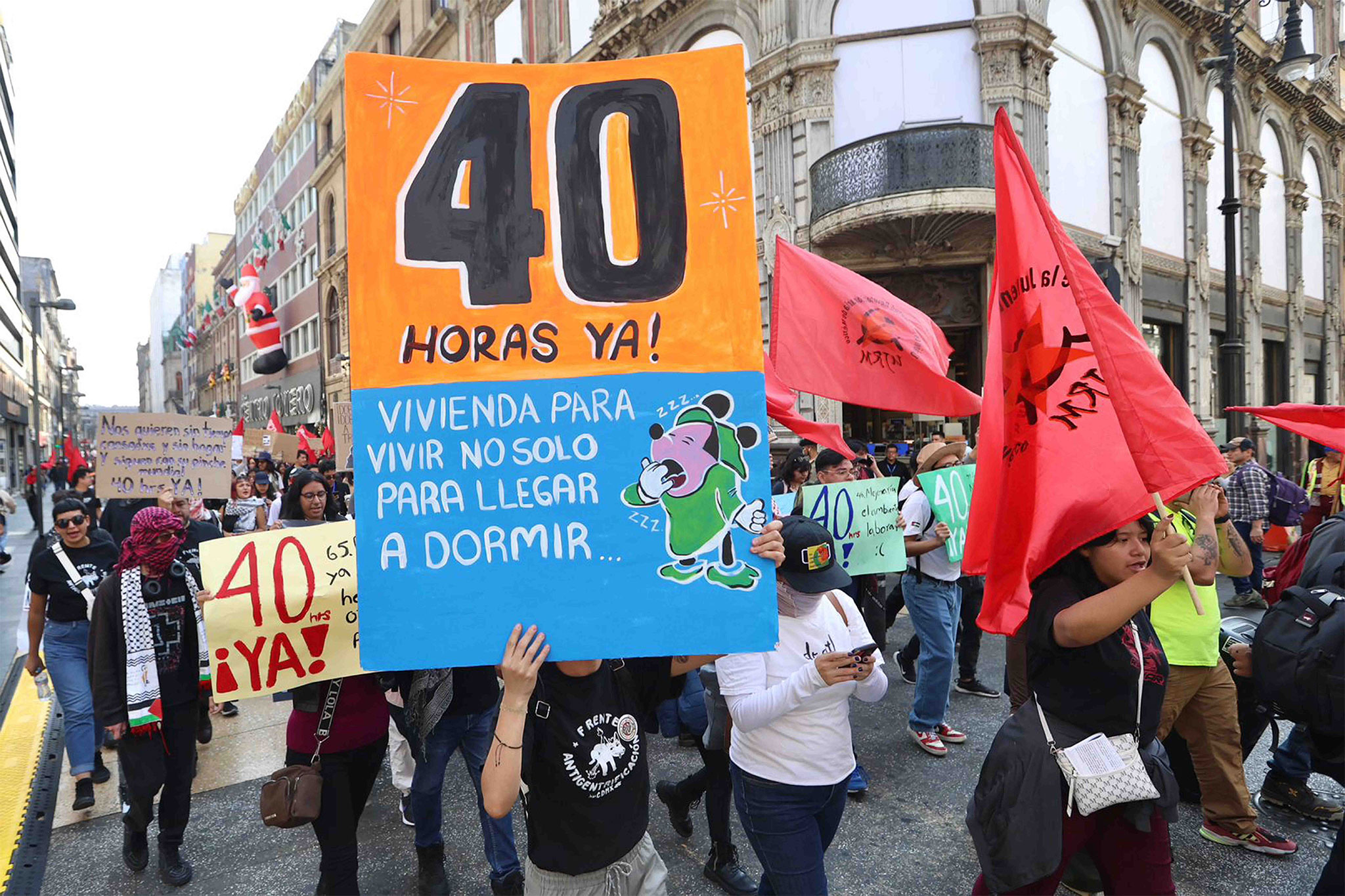
Workweek Reform Lowers Overtime Pay
This article by María del Pilar Martínez originally appeared in the February 10, 2026 edition of El Economista.
Following the approval by the Joint Committees of the Senate of the Republic of the reform to Article 123 of the Constitution, the “fine print” in the overtime scheme has raised alarms in the specialized sector
The technical analysis by the firm Loyo Pérez y Asociados reveals that the reform, far from guaranteeing rest, institutionalizes an “elastic workday” that could extend the effective working time up to 52 hours per week, and will have a lower cost for companies.
In an interview with El Economista, Jorge Loyo, a labour specialist and managing partner of the firm, warned that the current ruling presents a “legal schizophrenia” that puts the occupational health of Mexican workers at risk.
“A 40-hour week is being promoted, but by legally raising the overtime limit from 9 to 12 hours per week, what is really being done is institutionalizing an effective workweek of 52 hours,” Loyo stated.
The crux of the criticism lies in the economic impact of excessive working hours. Under the current legal framework, extreme fatigue is penalized financially: after the ninth hour of overtime, the pay is triple. However, the approved ruling crosses this line.
“We are facing a reduction in the cost of overtime. With the reform, the employer has a margin of 12 hours of double pay. This incentivizes extending the workday to a total of 12 hours, because hours 10, 11, and 12, which were previously paid triple, will now cost the employer less,” the specialist explained.
Another weakness identified by the analysis from Loyo Pérez y Asociados is the lack of tax incentives. By reducing the cap on regular working hours while maintaining the same salary, the hourly cost for companies immediately increases by 20%.
According to Jorge Loyo, this financial pressure, coupled with the gradual implementation that will last until 2030, could push small and medium-sized enterprises towards underreporting of employment:
“The formal contract will state 40 hours, but the employment relationship will operate under the shadow of the 52 effective hours allowed. Without tax incentives to compensate for the increased labor costs, many SMEs will shift the relationship towards informality in order to survive financially.”
Although the ruling seeks to align with the standards of the International Labour Organization (ILO), the specialist points out that the safeguard of 11 consecutive hours of rest between shifts was ignored.
“The success of a reform of this magnitude will not come from a nominal reduction on paper, but from a Tripartite Social Dialogue that prioritizes productivity over fatigue. As it stands, the reform gives employers tools to extend the workday more cheaply than before,” Loyo concluded.
-
El Taller: Central America: Ground Zero for Empire with Hilary Goodfriend
Breaking down Central America’s political trajectory—from US intervention to today’s far-right surge, electoral sabotage, and Mexico’s strategic role.
-
People’s Mañanera March 25
President Sheinbaum’s daily press conference, with comments on Plan B electoral reform, Housing for Wellbeing and housing as a social right, polls, and consular protection for Mexican migrants in the US.
-
Ecocidal Militarism
If citizens in Western democracies were asked whether their militaries should build public infrastructure instead of waging war, they would almost certainly choose the latter. Abby Martin’s newest film “The Greatest Enemy of the Earth,” documents the environmental cost of the American empire.