Wrap-Around Ads Reappear in Mexico City Despite Ban
This article originally appeared in the February 16, 2026 edition of El Economista.
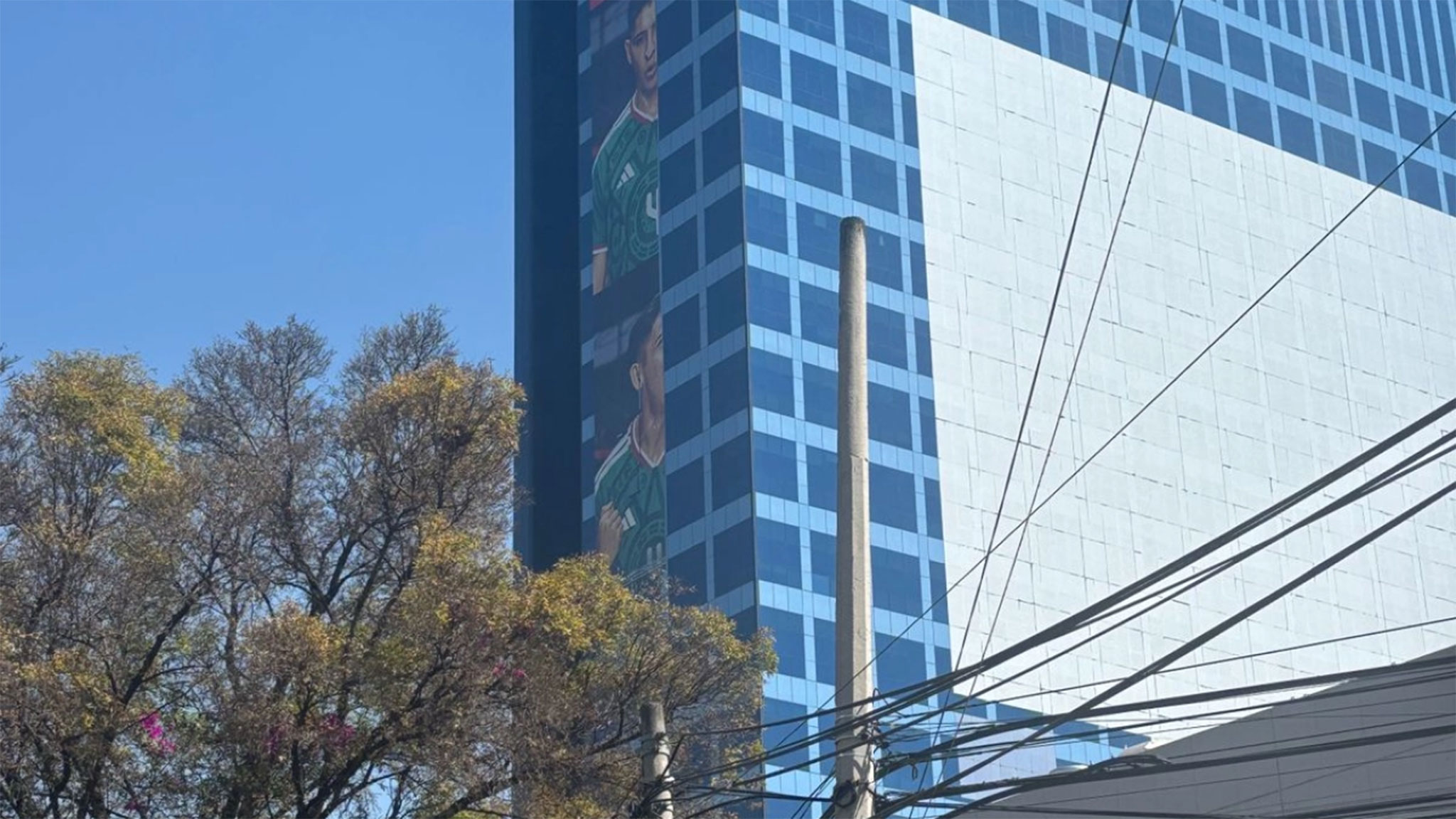
In recent months, more than 100 wraparound advertisements have been placed on buildings in Mexico City, even though this format is prohibited by the local Outdoor Advertising Law, according to the Foundation for the Rescue and Recovery of the Urban Landscape (FRRPU).
The organization pointed out that these structures not only violate current regulations, but also pose a risk to building occupants, as they could hinder evacuation in the event of an emergency, such as a fire.
According to the FRRPU, Article 13, Section VI of the Mexico City Law on Outdoor Advertising expressly prohibits the placement of wrap-around banners on buildings for commercial or institutional advertising purposes. However, this type of advertising has become increasingly visible in areas such as Polanco, the Miguel Hidalgo borough, and sections of the Periférico ring road.
One of the cases that the Foundation described as emblematic is located in the Nápoles neighborhood, in the Benito Juárez district, where a wraparound advertisement was placed over the Mexico City World Trade Center, with an approximate height of 40 stories.
In response to this case, the FRRPU reported that it filed a complaint with the Attorney General’s Office of Mexico City against the property owner and the companies allegedly involved, both the one responsible for renting the advertising space and the advertised brand, with the aim of investigating the facts and determining the corresponding responsibilities.
“The placement of this type of advertising on buildings is alarming from a civil protection standpoint, as it represents a latent risk to the people who live in or are in the buildings. In an emergency situation, such as a fire, the fire could spread more rapidly and hinder the evacuation of the occupants ,” stated Jorge Carlos Negrete Vázquez, president of the Foundation.
What the Law Says
According to the Mexico City Outdoor Advertising Law, the following is prohibited:
- Prohibition of advertisements on buildings and facades: Banners, tarpaulins, mesh , painted or attached advertisements on facades, walls, fences, windows or doors are not permitted , including wrap-around formats that affect lighting , ventilation, visibility, accessibility or safety.
- Prohibition of billboards and large-format structures: Advertisements on rooftops , self-supporting, inflatable, volumetric or three-dimensional are prohibited.
- Prohibition in public space and urban furniture: Advertising is not allowed on poles, traffic lights, road signs, traffic devices, pedestrian bridges or on the floor of public space.
- Prohibition in natural and environmentally valuable areas: Advertising is not allowed on hills, trees, rivers, forests, ecological conservation areas, protected natural areas or wooded areas.
- Prohibition of mobile or projected advertising: Advertisements on structures attached to vehicles, advertising projected from moving vehicles, and the use of drones for advertising purposes are prohibited.
The civil organization urged the authorities of the boroughs and the government of Mexico City to address this problem and strengthen surveillance to prevent the installation of advertisements that violate the law.
He also indicated that the penalties for outdoor advertising companies and property owners who allow the placement of wrap-around banners can reach up to 1 million pesos, and that the removal of the advertisement must be covered by the advertisers, the person responsible for the building and the advertiser who contracted the space.
The FRRPU made its website available to the public to receive reports on illegal or irregular outdoor advertising or street furniture that affects the urban image or contravenes current regulations.
-
People’s Mañanera March 30
President Sheinbaum’s daily press conference, with comments on investments in Fine Arts & Anthropology & History institutions, Cuba, lawsuit by Mexicans who died in ICE custody, and fuel price controls.
-
Mexico’s Mobile Consulates in the US
Such consulates perform an extremely important task, especially when the policies of the US administration under Donald Trump are becoming increasingly aggressive.
-
A Law to Protect the Dignity & Life of Women
Mexico’s General Law to Prevent, Investigate, Sanction and Repair the Damage for the Crime of Femicide seeks to strengthen the capacity of the State to protect, act promptly, investigate, as well as guarantee truth, justice and reparation for victims.