20,000 Marched in Defense of the Homeland in Chihuahua
This article by Fernanda Monroy originally appeared in the May 17, 2026 edition of Revista Contralínea.
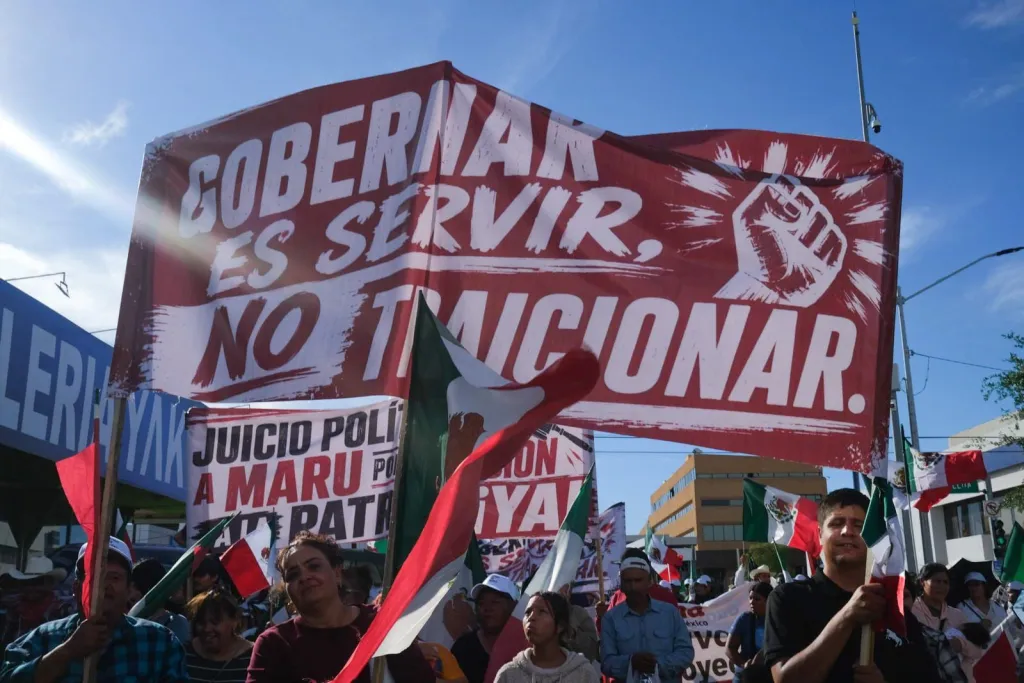
Chihuahua. The heat beat down like a hot iron. By three in the afternoon, sweat was already trickling down the backs of those beginning to gather at the Pancho Villa roundabout, but no one seemed ready to go home. First came the noisemakers. Then the whistles. Then the shouts. “Out with Maru!” the crowd chanted.
The chants began to echo through the avenues as the sun hardened the air and slowed the pace of the march. There wasn’t enough shade. Some tried to shield themselves with hats, worn caps, or makeshift pieces of cardboard. Others held Mexican flags above their heads to protect themselves from the relentless heat that beat down on the city.
At first, only a few people arrived. Then, entire families, farmers , students, teachers, Indigenous women, labourers, and elderly people slowly made their way forward, leaning on canes or wheelchairs. Before the clock struck three in the afternoon, the roundabout was already a collective body enduring under the sun.
The crowd continued to grow until it overflowed the avenues of downtown Chihuahua. According to organizers’ estimates, more than 20,000 people participated in the demonstration.
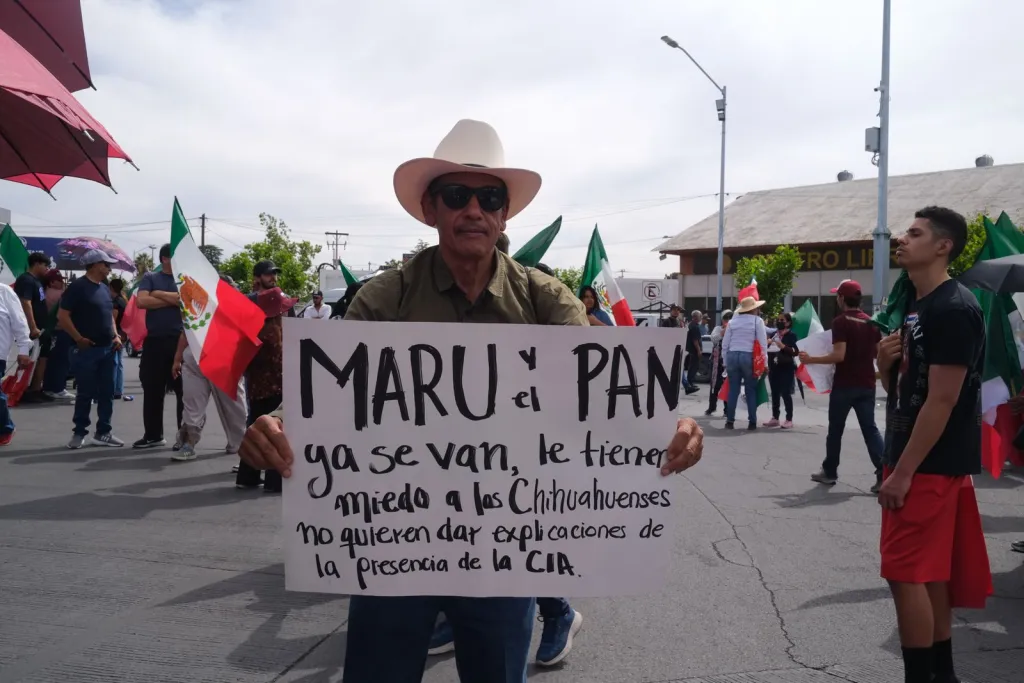
Minutes before the march began, Luis Adame watched as the roundabout started to fill with people under the sun. Holding a Mexican flag in his hands, he stated that he decided to attend because he believes the participation of foreign agents represents a threat to the country.
“We are Mexicans and we love our country. It is not good for another country to come and interfere with us,” he said. For him, the actions of the state government represent a way of “selling out the country.”
The mobilization was called by Morena following the operation carried out on April 19 in the Sierra Tarahumara, where a drug lab was dismantled and the deaths of two alleged CIA agents and two Mexican citizens were subsequently reported. Since then, the party has accused the state government of allowing the participation of foreign agents on national territory outside the mechanisms established by the National Security Law.
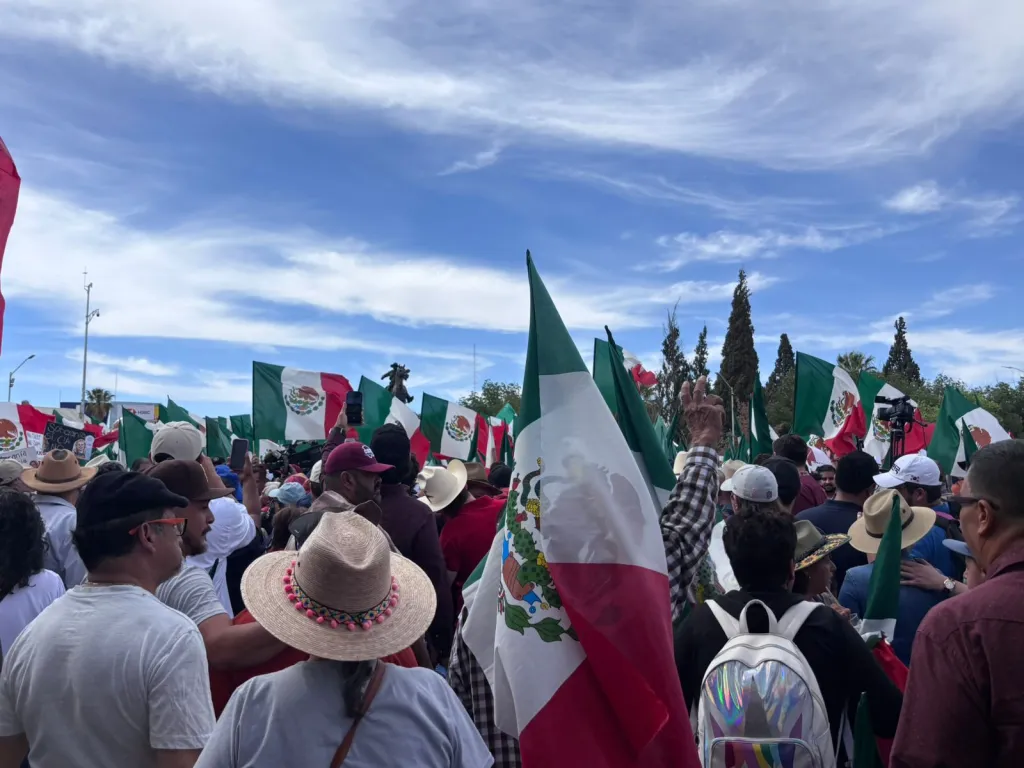
But under the Chihuahua heat, the conflict no longer felt distant. It was no longer just a political or legal debate. It walked among the people. It sweated with them. It could be heard in the slogans, in the waving flags, and in the shared feeling that something of theirs was under threat.
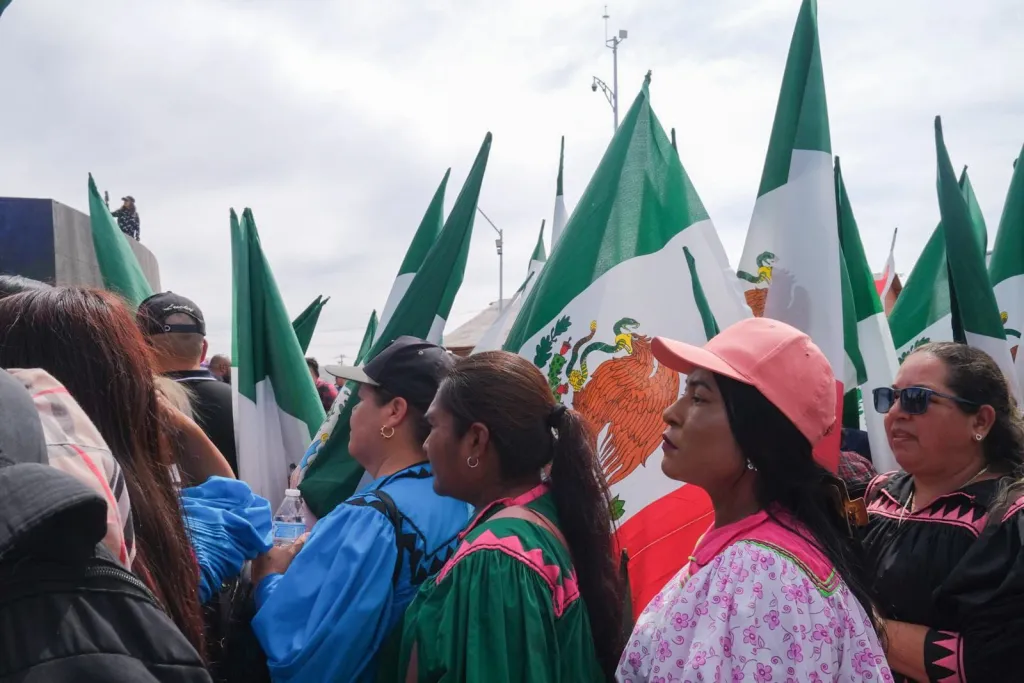
The roundabout began to fill with farmers wearing traditional hats weathered by years of work in the fields; Indigenous women in long, embroidered skirts moved like splashes of color amidst the city’s dry grayness; young people holding hands moved through the crowd; and elderly people continued walking despite the oppressive heat. Some had traveled from distant towns to reach the capital. Others held the hands of small children who barely understood why they were there.
Green, white, and red began to take over the avenue. Mexican flags appeared everywhere: they waved above heads, hung from shoulders, and rose in the heat like an extension of the march itself. Some used them to shield themselves from the sun; others carried them on their backs as if that fabric could give them the strength to reach the Government Palace.
There was more than just patriotism in those flags waving under the Chihuahua sun. Many held them like someone trying to defend something they felt was under threat.
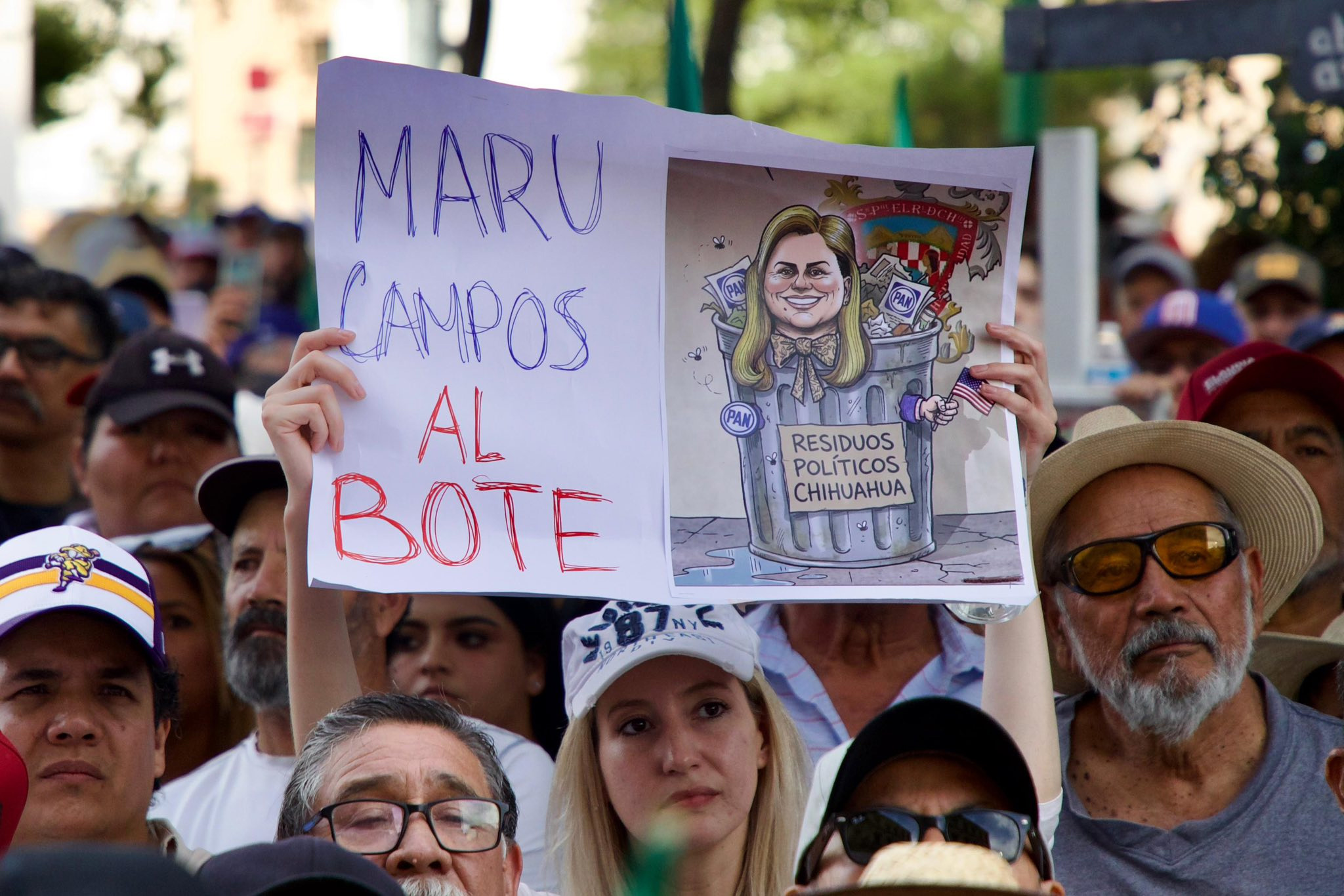
The signs also displayed anger written in capital letters: “The homeland is not for sale,” “Out with Maru,” “Mexico must be respected.” The slogans mingled with shouts of “The people united will never be defeated!” and “Anyone who doesn’t jump is a PAN supporter!” as the contingent began to advance amidst the noise of rattles, trumpets, and whistles.
More than two kilometers under a sun that seemed to harden everything: the air, the breathing, the skin.
At the front marched the Indigenous peoples. The women’s long skirts swung across the hot asphalt as some covered their faces to escape the heat. Others carried Mexican flags, arm in arm with their companions. Their steps were slow, but firm.
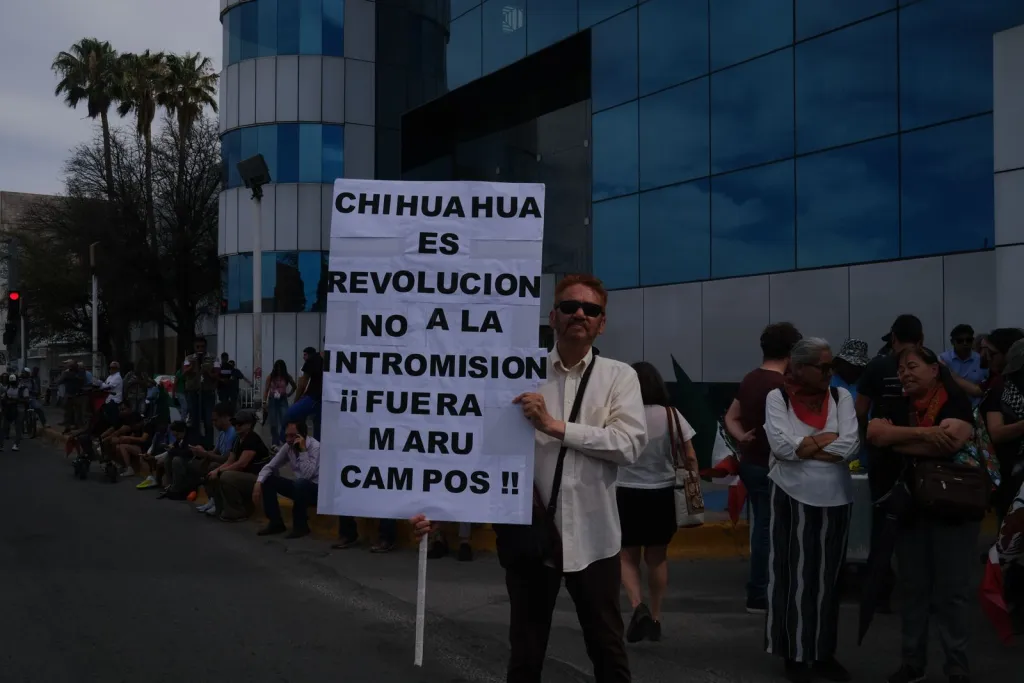
Behind them marched peasants in dusty boots, their hands calloused from the earth. Men with faces weathered by the north wind raised their fists as the chants grew louder. Entire families, young people, and teachers also marched, carrying signs denouncing Governor María Eugenia Campos Galván , whom they accused of having “ betrayed the nation.”
The march moved forward heavily, stifled by the heat, but sustained by something stronger than fatigue: a collective energy that kept growing.
From loudspeakers, the chant “ Mexico, Mexico, I carry you in my heart” began, followed by another song that gradually became the chorus of hundreds of voices: “I am Mexican and that is my flag…” Some shouted it, raising their fists. Others barely murmured it as they continued walking under the scorching sun.
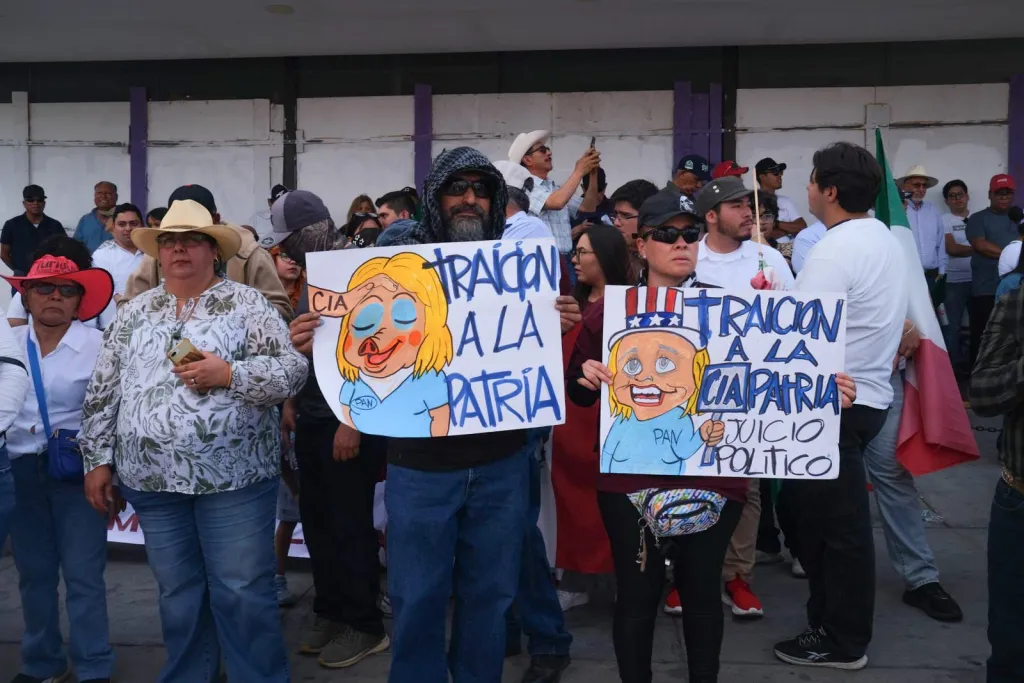
The music moved along with the crowd as a way of reaffirming themselves against the weariness and against the idea of a foreign intervention that, for many of the attendees, represented a direct threat against something deeply their own: the country, sovereignty and the very idea of homeland.
Amid the shouts, the flushed faces of children could be seen, dragging their feet as they walked wearily, clinging to their parents’ hands. But each time they yelled “Get out, Maru!”, the adults responded even louder, and the children smiled again.
The city also reacted to the march. Some drivers honked their horns to join in the chants; others responded with annoyance and shouts from their vehicles. People standing on the sidewalks recorded the human column with their phones as it advanced through dust, sweat, and waving flags along the avenue.
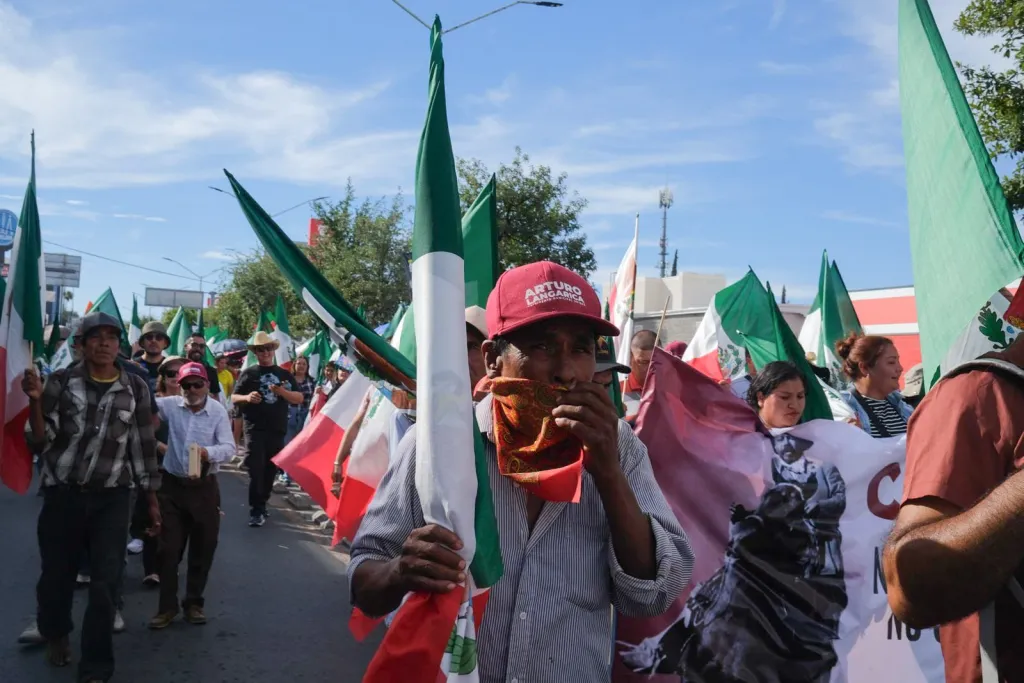
The march proceeded without any visible riot police presence. Just a couple of traffic officers were directing cars as the group occupied the avenues in an orderly fashion. Although there were moments of tension and anger along the way, the march remained peaceful.
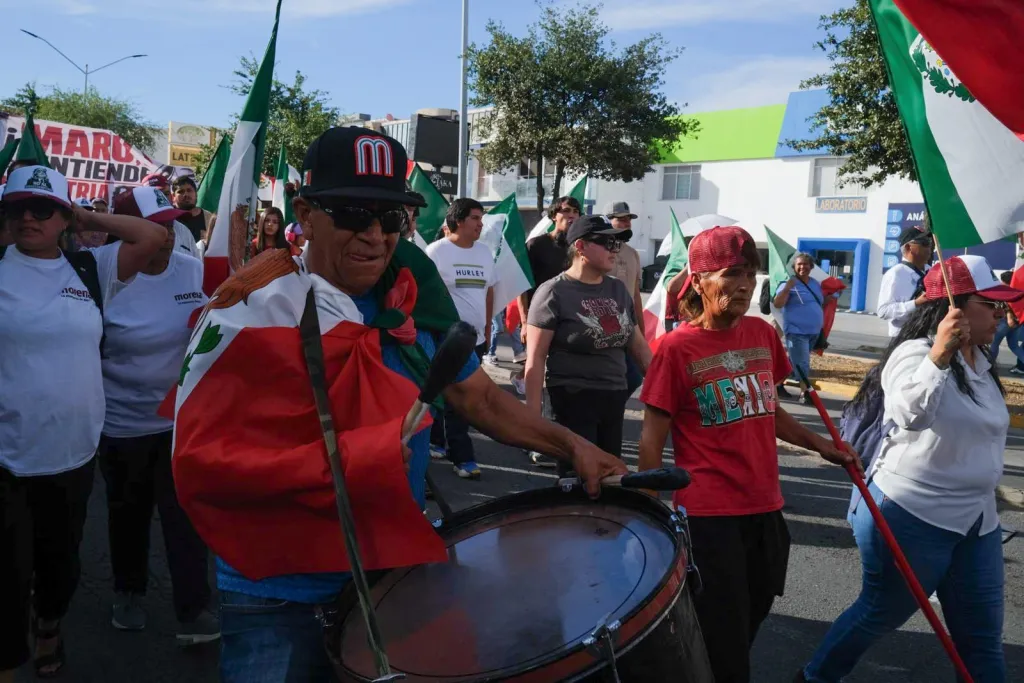
One of the most intense moments occurred when members of the contingent close to René, known to his companions as “the ugly dog”, removed some billboards placed on the avenue where Morena was referred to as a “narco-government”.
Those who participated in the action claimed that the advertisement was part of a smear campaign orchestrated by political and media groups aligned with the state government. As they tore down the banners, some accused the state administration of allocating public funds to propaganda instead of investing in basic services such as healthcare and transportation.
Later, in front of government offices and local media outlets, the contingent continued chanting slogans against what they considered a lack of a free press and an early political propaganda strategy in the lead-up to future elections.
By then, the heat had already begun to disrupt the pace of the walk. Fatigue was starting to settle over the group. Many people sought shade under the few trees along the route, while empty water bottles began to pile up on the sidewalks.
Almost upon reaching the Government Palace, bodies began to appear, resting in any available space. People sat on shop steps, benches, and small patches of shade that barely covered their faces. Some rubbed their feet; others simply remained silent, trying to catch their breath. But exhaustion never truly took hold. Even with the heat clinging to their skin and their legs weary from the march, many remained convinced that they had come out to defend the country from what they considered treason.
Valentín García, originally from Ciudad Juárez , said he decided to participate because he believes the state government has betrayed the people. “What this government is demonstrating is that it is selling out our country,” he stated. “First they said one thing, then another. The people are no longer so easily fooled.”
For many attendees, the demonstration was also a way to vent other pent-up frustrations: insecurity, the lack of public transportation, the deterioration of health services. “Where is the money?” García demanded. “Why are the cities getting worse?”
Among young people, the sentiment was similar. Andrea Quezada, a teacher and participant in the mobilization, stated that she decided to take to the streets because she feels the state government has stopped listening to the people. “ We have a state with many needs,” she said. “And we, as young people, also want to show that this fight is ours.”
Near the end of the march, when many people were looking for shade on the sidewalks to rest their feet, René was still speaking with the same intensity with which he had walked the streets of Chihuahua.
While those around him continued to hear slogans and music blaring from loudspeakers, he insisted that the mobilization wasn’t just about politics, but about sovereignty and the feeling that the state was being handed over to foreign interests. “Here, the CIA governs us.”
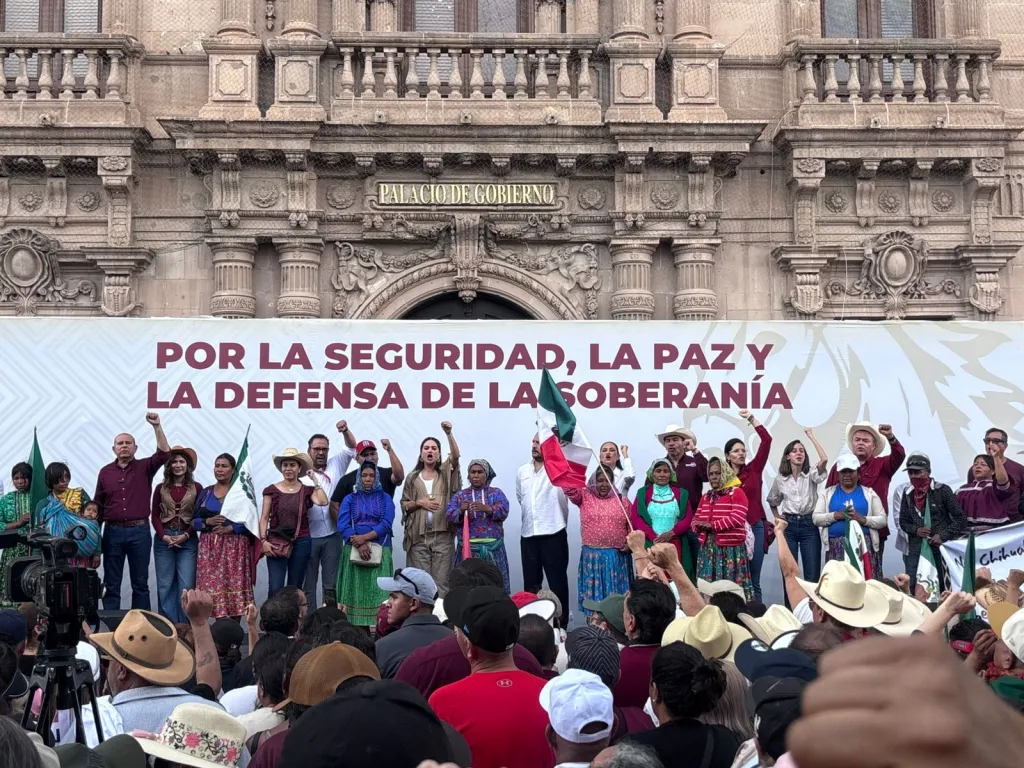
When they finally arrived at the Government Palace, the sun was finally beginning to descend, as if giving a truce to the hundreds of people who were waiting to hear the message from the national leadership of Morena.
In front of the building, Ariadna Montiel, the national leader of Morena , announced that they would pursue impeachment proceedings against the state governor, supported by citizen signatures. The response was immediate: whistles, applause, and renewed shouts of “Out with Maru!”
From the platform, leader Montiel accused the governor of having ceded power to foreign agents and criticized her absence from security meetings with the president of Mexico. She also pointed out that Chihuahua leads the nation in homicide statistics while, she asserted, the state government remains detached from the state’s problems.
When the speech ended, the noise of the chants gradually subsided. Then, from within the crowd, the first notes of the National Anthem began to be heard.
Thousands of voices joined together at the same time. Some people raised their fists; others placed their hands on their chests while holding the Mexican flag.
“But if a foreign enemy should dare to profane your soil with his foot…” The stanza sounded different. Slower. More serious. More urgent.
When the event ended, many people were still chanting “ Morena, Morena! ” as the loudspeakers continued blaring across the plaza. Their faces were flushed from the sun, and sweat soaked their clothes. There were complaints of sore feet and legs, but their spirits remained high.
Some were still dancing. Others were looking for water or resting on the benches after hours of walking in the heat. But even in their exhaustion, the same conviction that had driven the entire mobilization remained: the idea that sovereignty was not a distant word uttered from the desks of power, but something that could also be defended by walking under the scorching Chihuahua sun.
-
Sheinbaum Presents Draft Decree to Force Digital Platforms to Take Down Content That Incites Violence and Hate
No fines for now: the government will talk with tech companies before publishing the decree next week, a promise made after the Coahuila school attack.
-
People’s Mañanera October 9
President Sheinbaum’s daily press conference, with comments on digital safety, IMSS-Bienestar, sovereignty, and the opposition.
-
Mexico’s Gas Reserves Would Last Only 3 Days
Cenagas director Cuitláhuac García revealed Mexico has no gas storage and imports 75% of what it consumes, after a US supply cut exposed the risk.