
Who Produces Social Wealth & Who Concentrates It?
This article by Ángel Villegas originally appeared in the March 24, 2026 edition of Rebelión. The views expressed in this article are the authors’ own and do not necessarily reflect those of Mexico Solidarity Media or the Mexico Solidarity Project.
Author’s note: Tehuacán is a key economic engine in the state of Puebla, in Mexico, standing out mainly in the poultry, textile (especially denim) and beverage sectors.
The history of the poultry industry in Tehuacán began in the mid-twentieth century; it evolved from being a craft activity, in which several families raised birds in the yards of their houses taking advantage of the dry, temperate climate and its location at an ideal altitude with optimal conditions to reduce respiratory diseases in birds compared to coastal areas.
Furthermore, Tehuacán is ideally located as a strategic midpoint between the Port of Veracruz, the entry point for grain, and Mexico City, the main market. Among the pioneering and most influential families who professionalized the sector are the García de la Cadena and Romero families, followed by the Patjane and Célis families, who were instrumental in developing the necessary infrastructure for this industrial branch.
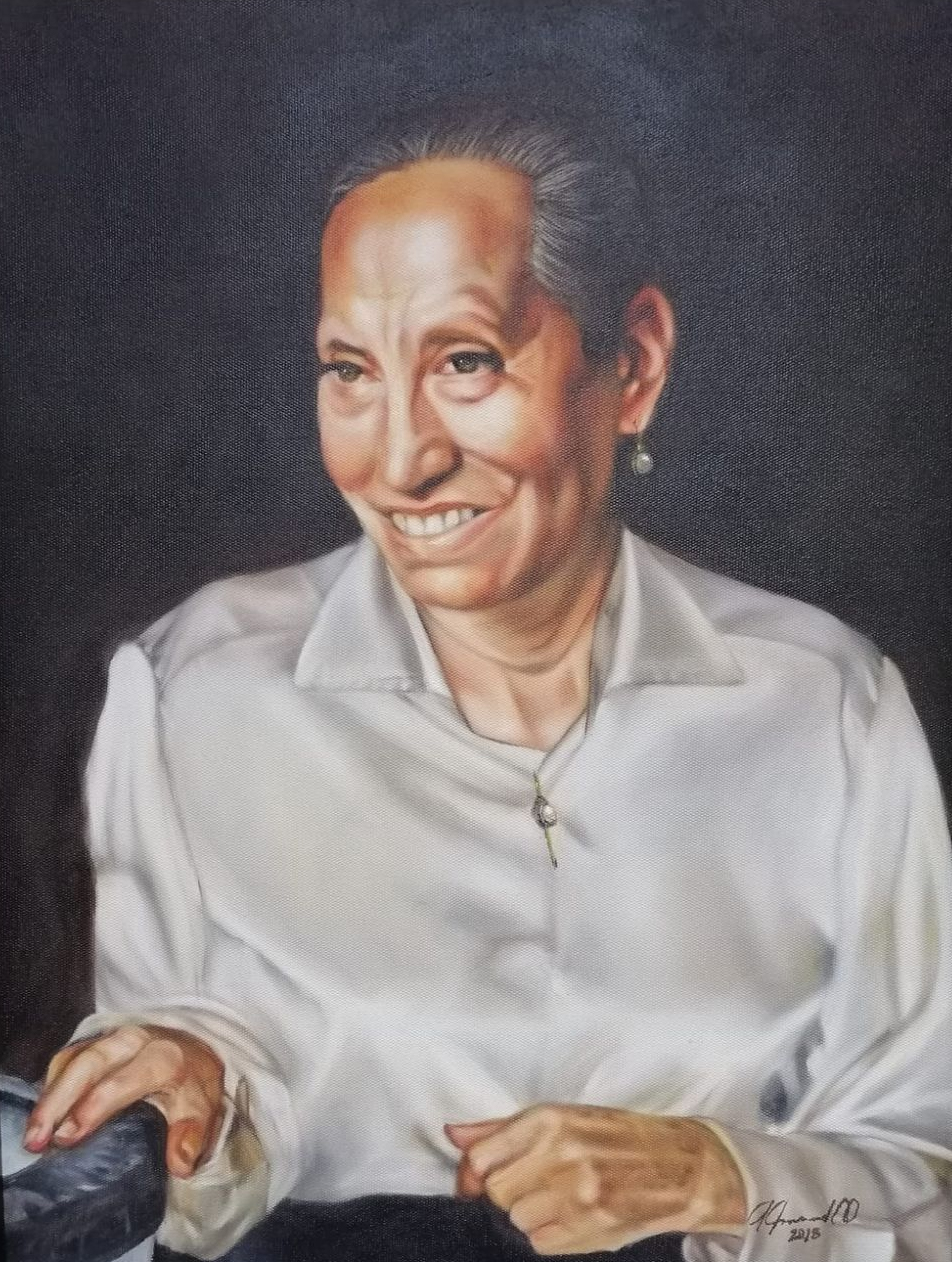
When talking about poultry farming in Tehuacán, it is necessary to mention Doña Socorro Romero Sánchez, known as La Señorita, a visionary woman who not only expanded the farms, but also integrated the process: incubation, feed manufacturing and distribution, until she turned the sector into a commercial giant that offers the national market eggs, broiler chickens, extending her investments to pig farming and the real estate and hotel sectors.
Today, the companies Socorro Romero Sánchez (SRS), El Calvario, and Productos Agropecuarios de Tehuacán (PATSA) have developed sanitation protocols, produce their own vaccines, established rail routes to bring sorghum and corn from the Bajío region and the United States, and have automated egg collection systems and ambient temperature control on their farms, among other advancements that have significantly boosted their productivity and generated substantial profits from jobs. Impressive, isn’t it?
Legend has it that the SRS company began in the 1950s with just 500 chickens, and it has been reported in the media that upon Doña Socorro’s death at the age of 93 in 2009, she left a fortune estimated at over $600 million, including farms, hotels, real estate, and cash—a considerable sum that has sparked a tremendous family feud over one of Mexico’s largest estates. One faction of the family accuses the Célis Romero family of forging the signature on the will, claiming that Doña Socorro Romero, shortly before her death, lacked the physical and mental capacity to express her wishes.
Today, Miguel Ángel Célis Romero, one of the named heirs, is in jail for alleged aggravated extortion against business partners and family members. Adding to the protracted legal battle are accusations of influence peddling, media manipulation, and document forgery. One faction of the family is fighting to have the will annulled in order to recover “what is rightfully theirs,” while the other is fighting to get out of prison and maintain control of the company. In families formed under bourgeois ideology, all emotional and blood ties are lost; they are worth absolutely nothing compared to cold economic interests, regardless of whether the loot is large or small.
On January 26, 2026, hundreds of workers from that company took to the main streets of Tehuacán to march toward the House of Justice, the headquarters of the State Attorney General’s Office, to demand “a fair trial and the release” of their imprisoned boss. There are testimonies from the workers alleging that they were pressured and manipulated into defending interests not only unrelated to, but antagonistic to, their own, under the false pretense that “their jobs were in danger.”

On February 21st, a digital news outlet in Tehuacán broadcast live the protest of dozens of workers outside the SRS company demanding attention to their unjust dismissal. Would any worker be interested in being exploited by either side of the feuding family? In my opinion, whether they want to bleed you dry or throw you out on the street, both vampires are the same.
Now, which of the two sides of the family has the right to keep the fortune? I believe NEITHER! For over 100 years, the science of political economy has solved the mystery of how capital reproduces itself, and since then it has been known that it does so by extracting surplus value—that is, through unpaid surplus labor from the working class. Strictly speaking, where did the $600 million in dispute come from? The answer is clear, unequivocal, and compelling: from the exploitation of the labor of thousands of workers who have dedicated their lives to that company in exchange for meager wages, humiliation, union manipulation, and all kinds of pressure to work in the worst conditions, obeying without question under threat of pay cuts or being thrown out on the street. It is the working class that, essentially, made possible the miracle of transforming the first 500 chickens into more than $600 million.
The famous German playwright, Bertolt Brecht, was able to formulate it with great precision in his poem entitled Questions From a Worker Who Reads:
Who built Thebes of the 7 gates ?
In the books you will read the names of kings.
Did the kings haul up the lumps of rock ?

And Babylon, many times demolished,
Who raised it up so many times ?

In what houses of gold glittering Lima did its builders live ?
Where, the evening that the Great Wall of China was finished, did the masons go?

Great Rome is full of triumphal arches.
Who erected them ?

Over whom did the Caesars triumph ?
Had Byzantium, much praised in song, only palaces for its inhabitants ?

Even in fabled Atlantis, the night that the ocean engulfed it,
The drowning still cried out for their slaves.

The young Alexander conquered India.
Was he alone ?

Caesar defeated the Gauls.
Did he not even have a cook with him ?

Philip of Spain wept when his armada went down.
Was he the only one to weep ?

Frederick the 2nd won the 7 Years War.
Who else won it ?

Every page a victory.
Who cooked the feast for the victors ?

Every 10 years a great man.
Who paid the bill ?

So many reports.

So many questions.
Let me ask you one more question: who built the powerful economic empire that the poultry industry represents in Tehuacán? Was it solely the entrepreneurial intelligence of its founder? Obviously not. No one can create such a fortune on their own; they can only concentrate it, and in fact, that’s what happens in capitalism. In Mexico, we have men who amass great fortunes and are among the richest in the world. And every effort is made to make us believe that they are rich only because of their intelligence and business acumen. But that’s false. There’s a big difference between creating and accumulating wealth. Wealth is created by wage labor exploited by capital and is accumulated by the owner of the means of production. What’s fair is that this wealth shouldn’t be concentrated in a few hands, but rather distributed among all those who produce it.
The workers, not only those of the SRS company, must shake off the exploitation and the corrupt tutelage of the protection unions and not let themselves be manipulated; they must form their own independent organization to be in a position to march and demand, indeed, “the share that corresponds to them” of the social wealth that they themselves have produced.
-
People’s Mañanera September 25
President Sheinbaum’s daily press conference, with comments on crime in Tabasco, tourism, jobs, the World Cup, and Ayotzinapa.
-
Mexico’s Food for Well-Being Agency Expects Production of 10,000 Tons of Cacao in Tabasco
The government will invest 32 million pesos in 100 fermentation modules so growers stop selling unfermented beans cheaply and earn more.
-
Claudia Sheinbaum Confirms Her Attendance at the APEC Summit in November
Sheinbaum will travel to Shenzhen, China, for the APEC summit in November, where Mexico takes the baton as the next host, in 2028.