
Ecocidal Militarism
This article by Étienne von Bertrab originally appeared at Diario Red on March 17, 2026 and has been translated and republished with the permission of the author. We encourage you to follow Étienne at @etiennista.
Author’s note: Here is information on how to screen Earth’s Greatest Enemy in theaters or universities (although it seems that for now the effort is focused on the United States); it is expected to be available on streaming platforms by May.
As a Mexican, I’m amazed when people in Europe express concern about ‘militarism’ in Mexico or the alleged ecocide of the Maya Train. Indeed, both militarism and ecocide form a recurring narrative used by the opposition in Mexico, a story that has been effectively disseminated in international media. Let’s break it down a bit.
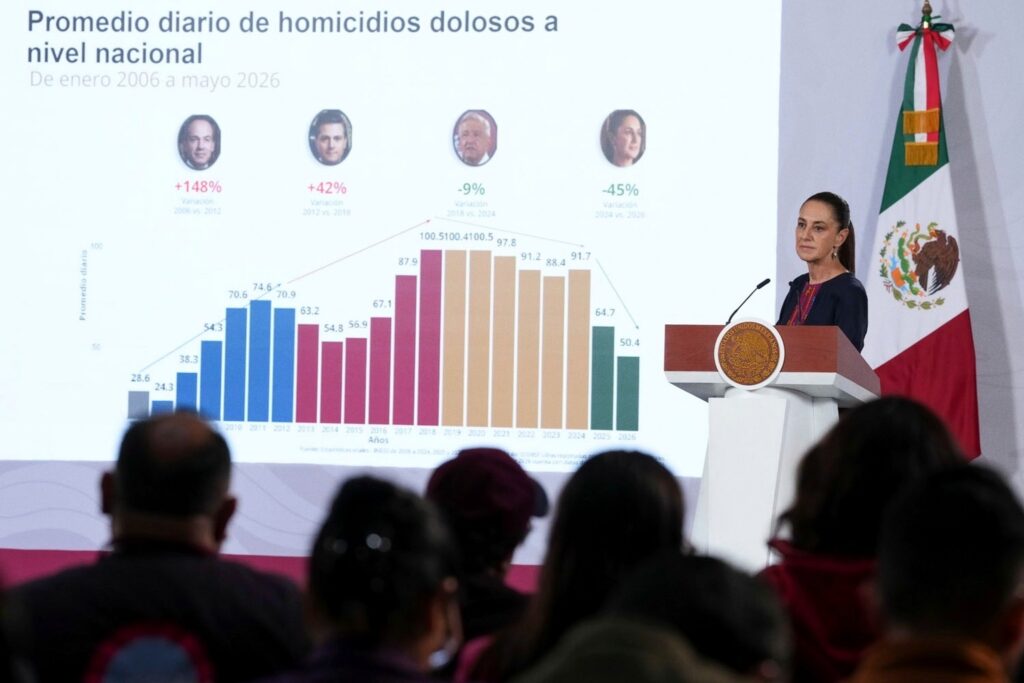
On the one hand, we, the awakened Mexicans, know that since 2018 the growing role of the armed forces, which led to a larger budget for the Ministry of National Defense (SEDENA) , has nothing to do with the acquisition of weapons for war, with facilitating the repression of social movements or undermining the right to protest.
The environmental impact of the construction of the Maya Train in Mexico pales in comparison to the numerous ecocides that local communities have witnessed over the years.
In contrast, in addition to performing security functions, the Mexican armed forces, during the Fourth Transformation, have built airports and railways (such as the Maya Train), modernized ports, created the Banco del Bienestar (Welfare Bank) network that allows the disbursement of funds from social programs and offers banking services to those who did not have them, among other tasks.
Air, airport and train services are also operated —including those being built by the current administration— within the public company group Grupo Mundo Maya.
While there are issues to consider in order to maintain a real balance between civilian and military actors in this ‘civilian militarism’, as the scholar in the field Sebastián Raphael calls it, these are far removed from the concerns that humanity has regarding true militarism, that of destruction and death, and the role it plays in the suffering of entire portions of the world’s population and the destruction of life on the planet.
Regarding the Maya Train, whose construction inevitably had environmental impacts including the deforestation of 6,659 hectares of jungle (according to the Mexican Center for Environmental Law), the national and foreign media overlooked the fact that simultaneously more than 400,000 hectares in the region were reforested as part of Sembrando Vida and that the Calakmul Biosphere Reserve, the most important in the Maya Jungle, second in importance on our continent after the Amazon, not only increased its area by 5,000 hectares but its core zones – those with the strictest conservation measures – went from 200,000 to 519,000 hectares.
Europe is beginning to rearmament and with it the formation of war economies, which, despite a rhetoric of sovereignty, will primarily benefit the US military-industrial-digital complex.
Furthermore, the environmental impact of the construction of the Maya Train pales in comparison to the multiple ecocides that local communities have witnessed over the years , which were—and still are—little discussed from the center of the country and abroad.
In contrast to what is happening in Mexico, Europe is beginning to rearmam and with it the formation of war economies, which despite discourses around sovereignty will primarily benefit the US military-industrial-digital complex.
To finance it, NATO member countries are making adjustments primarily to their social spending, with a ten-year horizon to ‘achieve’ dedicating 5% of their respective GDP to national security.
None of these countries will escape the social impact of this rearmament; not Germany, which since the Second World War abandoned militarism, first by force and then by choice; nor Sweden, which for a long time not only rejected militarism but even financed social movements for peace; for the Netherlands it will mean doubling its defense spending in the next ten years, which will mean austerity for its people.
Not even Spain will be spared, despite Pedro Sánchez’s recent ‘No to war’ speech.
What is uniquely pathetic is that this is happening at the insistence of Donald Trump, a convicted criminal and dangerous narcissist who, along with the psychopath Netanyahu, is willing to lead the world into World War III or a nuclear debacle, which experts consider increasingly possible given the humiliation suffered by the United States and Israel two weeks after their military aggression against Iran.
Today, Europe lacks leadership that looks after the interests of its people and the future of humanity; its masks regarding respect for international law or the environment have fallen.
It is increasingly clear that Europe today lacks leadership that safeguards the interests of its people and the future of humanity. Its masks regarding respect for international law and the environment have fallen, and its true nature is visible to the global majority.
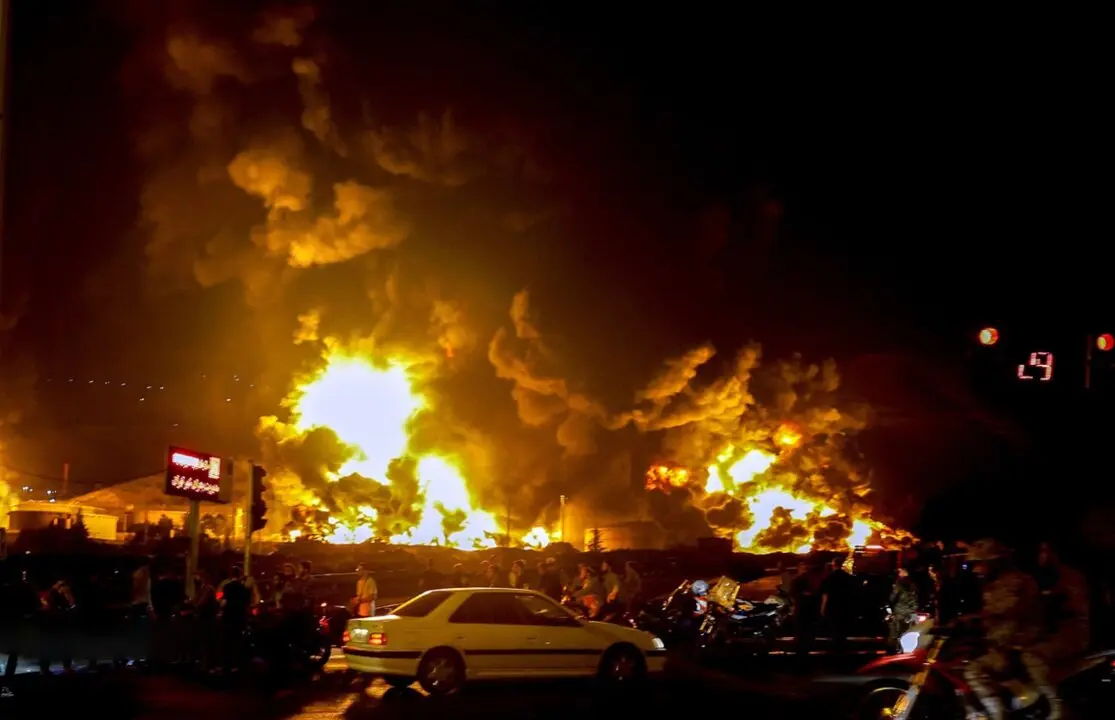
All wars cause destruction and human suffering—that is their purpose—and bring with them local, regional, and global environmental impacts. But the destructive capacity of our time is far greater than in previous decades, and the cruelty of those who instigate them also seems to be greater, as demonstrated by the attack on Tehran’s oil depots, in effect a chemical weapon that will have repercussions on the health of millions of people.
As reported by the Conflict and Environment Observatory, pollution incidents in the Middle East since the United States started this war are putting people and ecosystems at risk of serious and long-term damage, and trends point to considerable regional environmental damage as the war continues.
However, it is not necessary to wage war for true militarism to cause immense and irreversible damage to the systems that support life on the planet.
In alternative spaces in the United States, the film Earth’s Greatest Enemy is already being shown, documenting the environmental cost of the American empire —the greatest in history.
The documentary is the result of five years of work by American investigative journalist and documentary filmmaker Abby Martin, who, along with her partner Michael Prysner, a veteran of the Iraq War, have set out to help the citizens of their country open their eyes, and the global environmental movement to review its causes and slogans.
Of course, they are not the first to connect climate collapse and the environmental crisis with capitalism and its imperial instruments such as continuous war, and prominent figures in the global environmental movement have suffered the consequences of this shift in understanding the problem and of a more radical activism.

This can be seen in the young Swedish woman Greta Thunberg, who ceased to be a star for the Western media and politicians as soon as she became active against the genocide in Gaza.
What the state of Israel is doing there with the backing of the United States and European powers has divided the youth climate movement on that continent, as other prominent leaders, such as the German Luisa Neubauer, find Greta’s position uncomfortable.
Thus, the genocide against the Palestinian people turned Thunberg into an enemy of the powerful, such as the technology billionaire and founder of Palantir Technologies Peter Thiel, who in a recent series of lectures on the antichrist said that it could very well be “someone like Greta”.
Abby Martin seeks to spread anger and rage against the monster of imperialism, but also inspiration and hope, as more and more people connect the dots of different crises and mobilize.
The documentary seeks to tell the full story of the existential crises brought about by US militarism and presents staggering statistics. Its military consumes (even when not engaged in war) around 270,000 barrels of oil every day, equivalent to 55 million cubic meters of greenhouse gases annually.
That military alone is the world’s largest polluter, consuming more fossil fuels than 150 countries. It should come as no surprise that its government has managed to keep military emissions out of the accounting reported to the international community.

The film also narrates the impacts caused by military installations inside and outside the United States (it has between 800 and 1,000 worldwide) as well as local resistance to expel them, whether in Hawaii or Okinawa in Japan, and gives voice to the veterans’ movement who, affected physically and psychologically, are abandoned by their government and treated as human waste from wars.
In this way, Abby Martin seeks to spread anger and rage against the monster of imperialism, but also inspiration and hope, as more and more people, inside and outside her country, connect the dots of different crises and mobilize to confront the greatest enemy of humanity and the planet.
If citizens in Western democracies were asked whether their armies should build public infrastructure instead of waging war, they would surely choose that option, but their governments and media are not ready for that conversation.
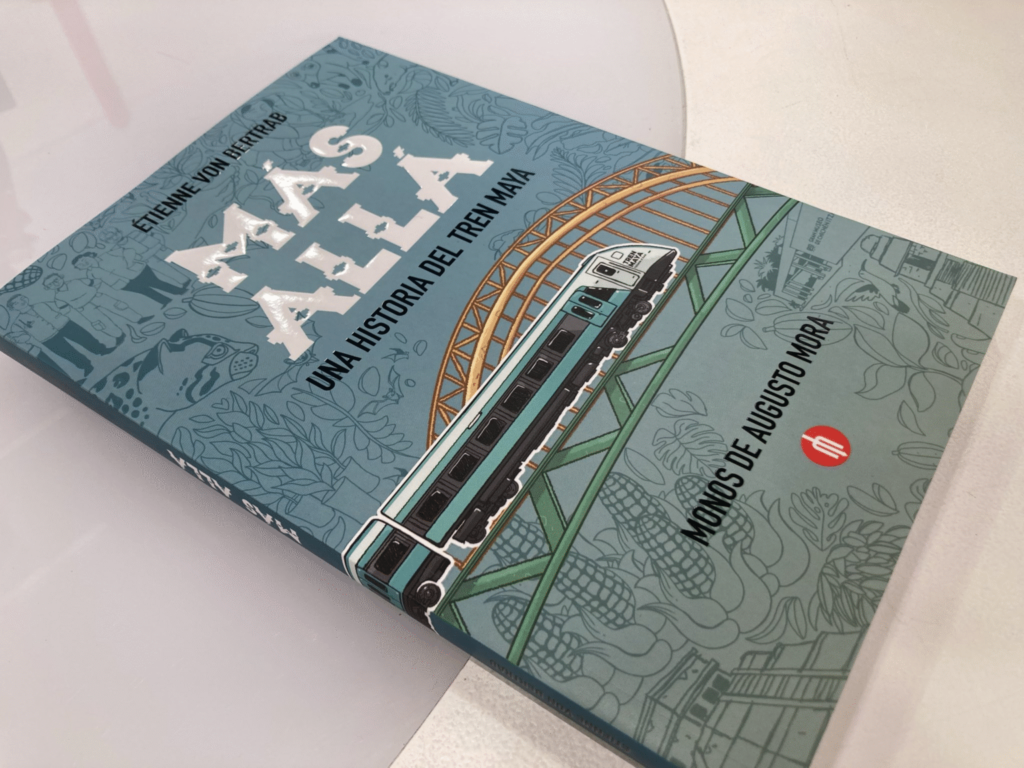
Étienne von Bertrab is a lecturer in political ecology and communication for social change at the Development Planning Unit of University College London and the author of Más allá: una historia del Tren Maya.
-
Sheinbaum Backs UN Resolution on Pedro Castillo
Sheinbaum backed a UN panel that found Castillo’s detention arbitrary, said his ouster lacked the votes Peruvian law required, and signaled Mexico is open to restoring ties with Lima.
-
Under Calderón There Was Interference, Deals With Cartels, and Violence Increased: Sheinbaum
Sheinbaum said Calderón’s pacts with the Sinaloa Cartel and unchecked US operations drove homicides up 148%, citing Fast and Furious.
-
Centro Fox, a Little Gift from the Elites Thanks to Tax Favors, Will Become a Catholic School
Former Mexican President Vicente Fox handed his elite-funded complex, bankrolled by Slim, Azcárraga and Salinas, to a Catholic order on a 100-year loan.