Popular Resistance to the Yankee Invasion of the Port of Veracruz
This article by Gilberto López y Rivas was originally published in the April 21, 2026 edition of Rebelión.
“Among the people, artisans, employees, bricklayers, humble merchants, men and some women stand out in the armed skirmishes, leaving their lives at the points of greatest resistance: Andrés Montes, a modest cabinetmaker, fights all day.”
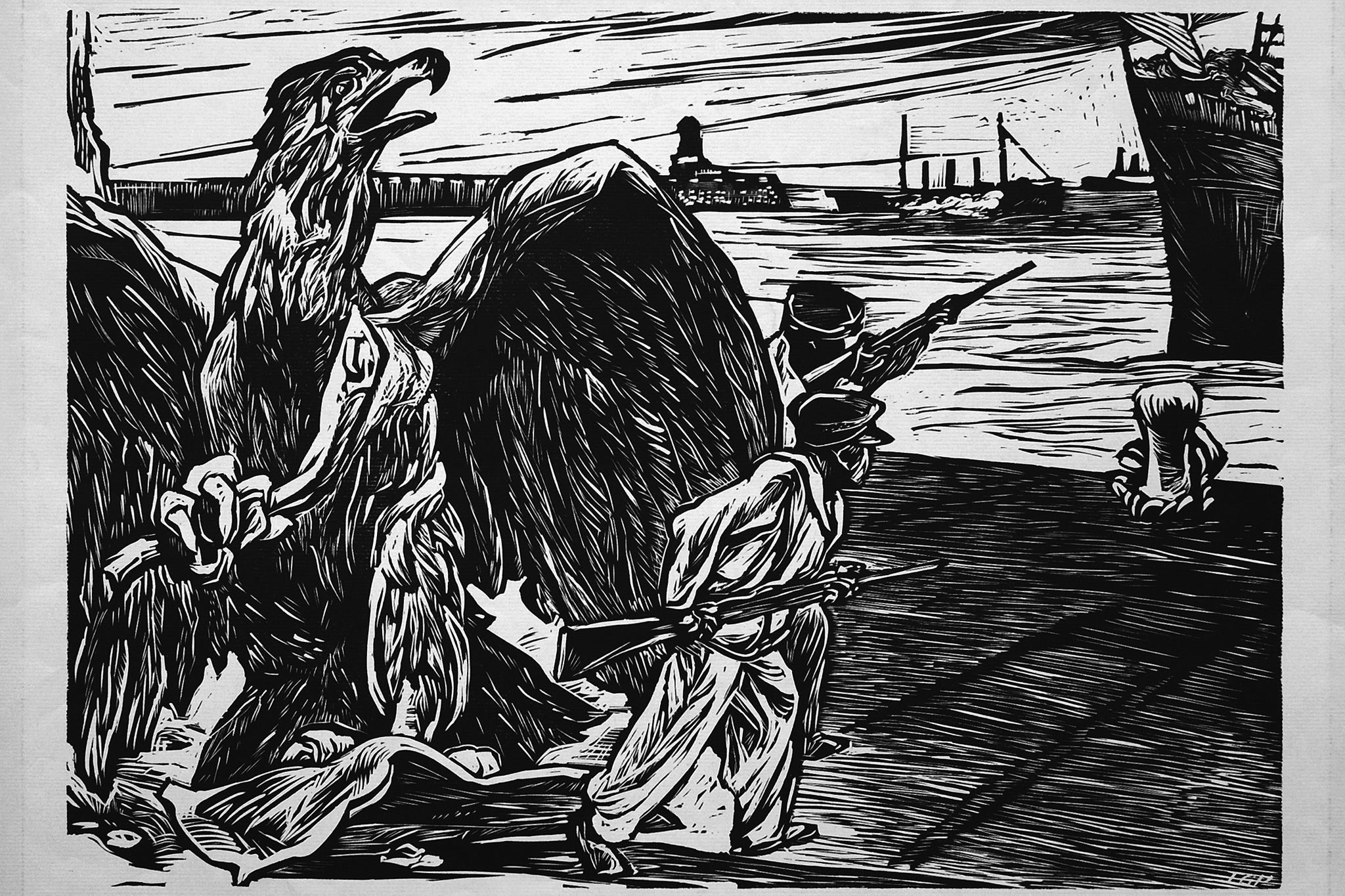
This April 21st marks the 112th anniversary of the popular defense of the port of Veracruz against the U.S. occupation. Once again, the people of Veracruz played a leading role in one of the most heroic chapters of Mexican resistance against U.S. intervention. As happened in Mexico City on September 14, 1847, when U.S. troops entered the port, the regular army abandoned the port without engaging the invaders. It was the people who, spontaneously and without a precise defense plan, took to the streets, erected makeshift barricades, occupied street corners, rooftops, balconies, and bell towers, and with meager supplies and a few weapons, prepared themselves, knowing their struggle was lost from the outset, to defend national sovereignty and dignity.
The battle being waged could not have been more unequal. The United States, protecting its vast economic interests in our country (oil, mines, land, railroads, etc.) and seeking to establish itself as the supreme arbiter of the ongoing Mexican revolutionary conflict (See: Friedrich Katz, La guerra secreta en México, Vol. I, Mexico: Ediciones ERA, 1982), anchored 44 warships, three hospital ships, and several supply vessels off the port of Veracruz, initiating the landing, which in four days brought more than seven thousand men to the ground. The expeditionary force possessed the most modern weapons of the time: Lee repeating rifles, Gatling and Colt machine guns, heavy artillery, an unlimited supply of ammunition and war materiel, and, moreover, the artillery support of the fleet anchored in the bay.
Prior to the landing, U.S. agents had managed to neutralize the potential participation of the Mexican Federal Army, under General Gustavo A. Mass, in the defense of the port. Mass was part of Victoriano Huerta’s forces, who had staged a coup against President Madero, and ordered him to cease resistance and abandon the city. Indeed, in the early hours of April 21, Mass withdrew from the port, heading for Tejería, abandoning the population to their fate and taking the bulk of his troops, most of their heavy and light weapons, and their ammunition with him. In his hasty retreat, he even forgot the flag of the battalion he commanded, his sword, and his decorations.
The Popular Resistance
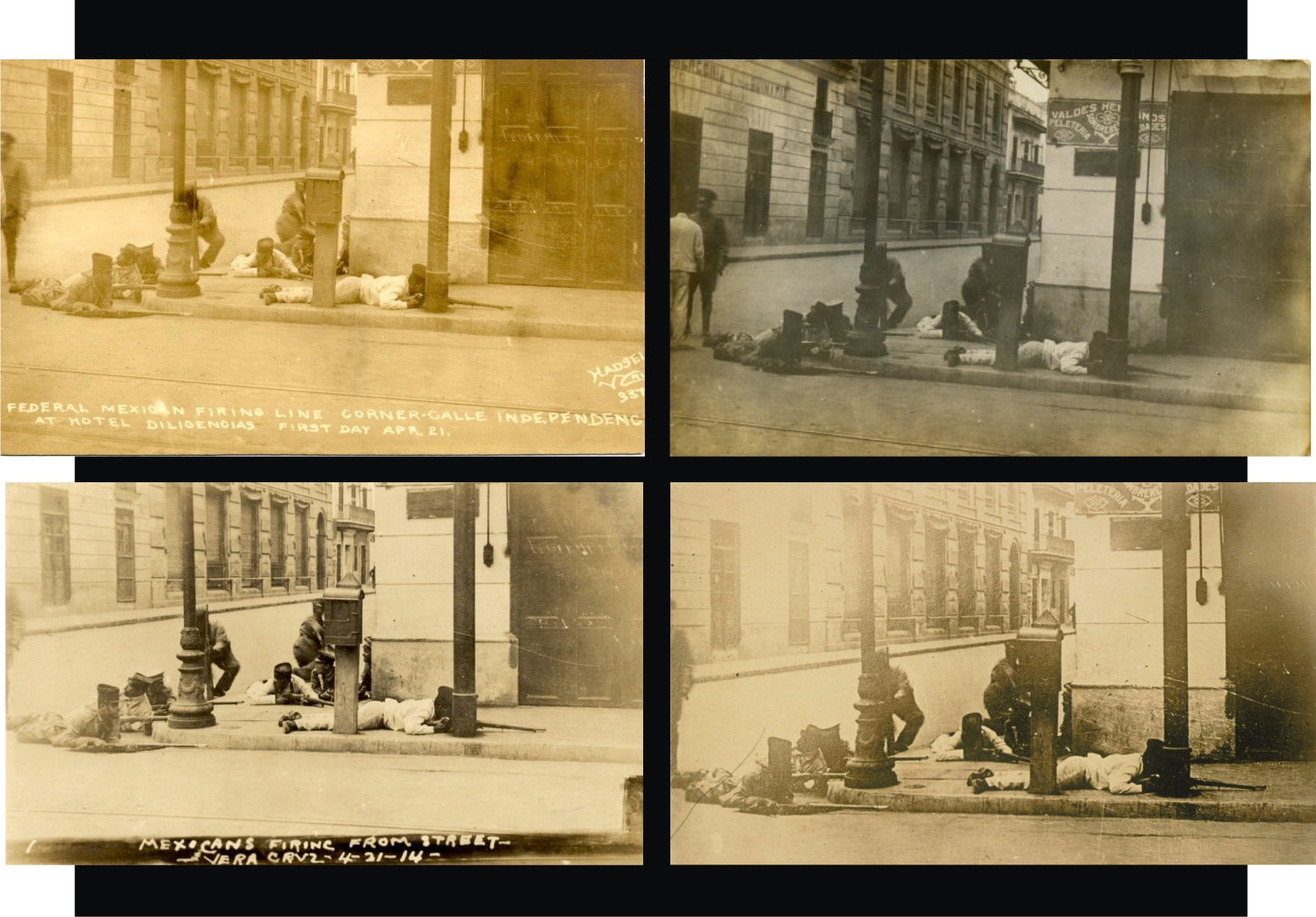
Just as in 1847, the defenseless people were suddenly confronted with a fait accompli: the fourth foreign invasion in less than a century, with no means of defense other than their profound indignation and their determination to resist. Faced with the evacuation of the city by the Federal Army and underestimating the capacity of our people to respond, the Americans confidently occupied strategic positions near the docks. The US plans did not anticipate any resistance in the capture of the port. The might of the naval fleet and the visible show of force expressed in the massive landing made it difficult to imagine an attack against the invading forces.
However, the initial shock and shame of the people of Veracruz when news of the landing spread faded when the first isolated shots were heard: a solitary and modest municipal policeman, Aurelio Monfort, angrily discharged his pistol in front of a large contingent of marines, and was immediately riddled with bullets by the crossfire of enemy rifles.
In the official ceremonies held annually in the Port of Veracruz, only the figure of the military personnel who fought an abstract enemy (who is no longer mentioned) is exalted, just as the extraordinary citizen epic is not remembered.
The people clamored for weapons with exasperation, fighting even for the few left behind by the army. Others armed themselves with rifles and pistols offered by merchants. Some patriots waited their turn, amidst the fighting, to collect the weapons of the fallen: one instance was recorded of eight civilian volunteers fighting for hours with a single rifle. Groups of civilian volunteers and some patriotic soldiers, under the command of Colonel Manuel Contreras, spread out in small groups throughout the buildings and street corners of the besieged city.
At the Naval Academy, the students rushed into battle under the command of Commodore Manuel Azueta, forming the only organized military unit to resist the invaders. The gunfire became widespread. The Naval Academy and several buildings in the city were hit by bombardment from cruisers and destroyers, while the marines, who had earned the admiration of writer Jack London, correspondent for Collier’s Weekly, swept the streets with dum-dum expanding bullets, prohibited by international regulations of war at that time. Despite the disparity between the opposing forces, the people resisted valiantly for more than 24 hours; even on the afternoon of the 22nd, sporadic gunfire could still be heard. Acts of great heroism occurred during the fighting, such as that of José Azueta, a former student of the Naval Academy, the Commodore’s son, and an artillery lieutenant, who wielded an open machine gun to increase the effectiveness of his fire, until he fell gravely wounded. When the Americans offer him medical help, Azueta refuses it and replies: “I don’t want my life from the invaders.”
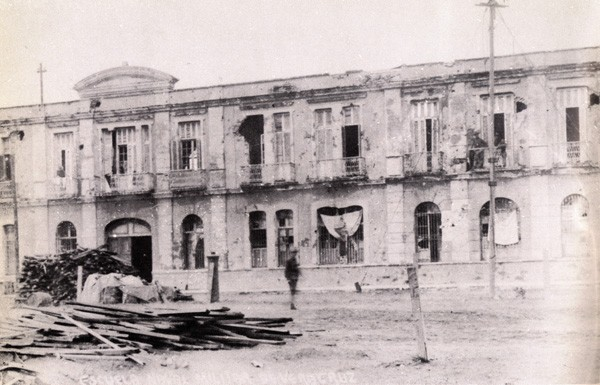
Among the townspeople, artisans, clerks, bricklayers, humble merchants, men, and some women stand out in the armed skirmishes, losing their lives at the points of greatest resistance: Andrés Montes, a modest cabinetmaker, fights all day. On the afternoon of the 21st, he goes home to leave some supplies; before returning to the fight, he writes a letter to his youngest son: “My son, if what is happening now ever happens again, defend your country as I am doing. Your father.” Despite his wife’s pleas for him not to leave the house again, Andrés Molina exclaimed: “Right now I have no mother, no wife, no children. I only see that I have a beautiful country and I must defend it from Yankee infamy” (María Luisa Melo de Remes. Veracruz Mártir. La infamia de Woodrow Wilson, 1914. Mexico: Author’s Edition, 1966). This people’s hero fell at eight o’clock that night, his stomach pierced by an expanding bullet at the corner of Arista and Independencia streets.
Children and women joined in the defense and even participated in the fight against the invaders. The popular imagination recalls America, who greeted the Yankees with gunfire as they approached the port’s red-light district. Significant sectors of the Spanish community resisted the invaders, resulting in deaths and injuries among them.
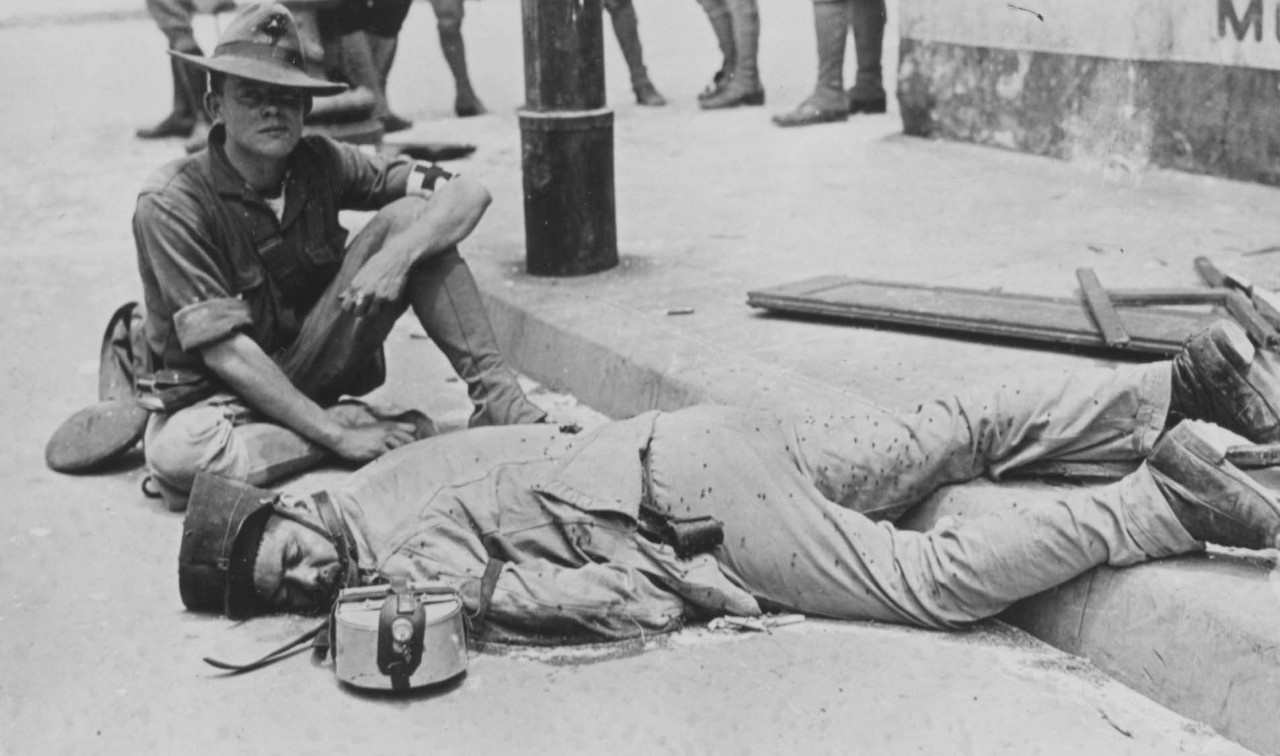
By the end of the 22nd, the resistance had ended with hundreds of Veracruz residents dead. The invading soldiers made pyres of the patriots’ bodies and burned them without any respect. Many combatants were taken prisoner and held in jails during the occupation. Hundreds of wounded were treated by a group of volunteer doctors and medical students who demonstrated their contempt for the invaders by selflessly carrying out this task.
Most of the dead and wounded were civilians. The military groups that fought—the Naval Academy and some soldiers and officers of the 19th Infantry Battalion—resisted until 7:30 p.m. on the 21st. Among those who died were José Azueta, Virgilio Uribe, Jorge Alacío Pérez, and Benjamín Gutiérrez, among those whose deaths are recorded. However, the majority of the approximately 500 killed in action were due to the bombings (which London applauds for their precision) and indiscriminate Yankee repression. They were anonymous heroes without headstones or monuments to honor their memory. Moreover, several of the plaques commemorating the victims of the Yankee intervention at the pier and other locations in the port were destroyed by municipal authorities in an effort to deny the people their place in history: to erase everything that strengthens the anti-imperialist spirit of Mexicans. In the official ceremonies held annually in the port, only the figure of the military personnel who fought an abstract enemy, which is no longer mentioned, is exalted, just as the extraordinary citizen epic is not remembered.
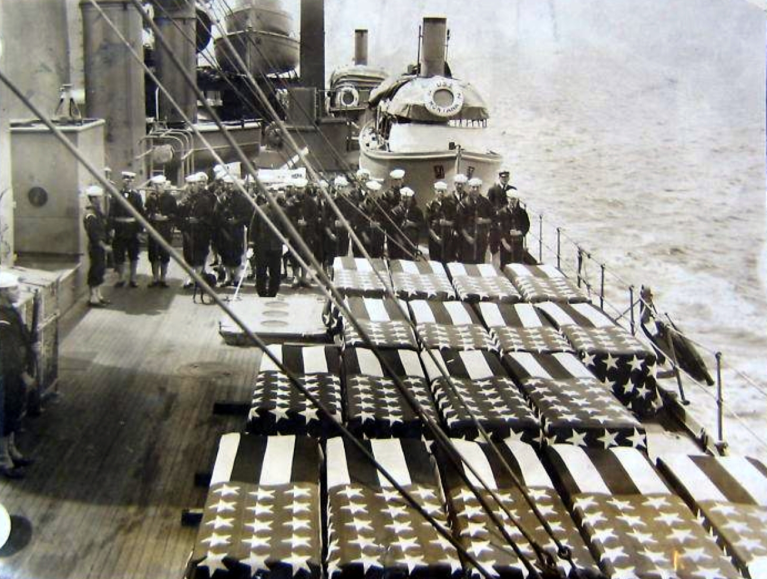
The people’s resistance did not end with the valiant struggle of April 21st and 22nd. Testimonies from survivors, which I had the opportunity to collect a few decades ago, recount numerous attacks against the U.S. troops during the occupation. Martial law was imposed, residents were forced to sleep with their balconies and doors open, and had to keep their lights on throughout the night.
The struggle for sovereignty manifested itself in other ways. Significant sectors of the population refused to submit to the threats and orders of the military government imposed by the invaders. Among them, the role played by the teachers of the port stands out. The majority refused to serve the invaders, organizing a parallel system to the so-called American education department, despite the repression and financial offers from the occupying authorities. Delfino Valenzuela and Elena V. del Toro are prime examples of the patriotism of Veracruz’s teachers. There were also individual cases of anonymous patriotism. The lighthouse keeper on Lobos Island, near the port, was pressured to work for the Americans, to which he replied: “No sir, I will not work for you. I will not betray my country, nor will I work for you for any money you give me, even if you keep me imprisoned for as long as you want” (my interview with Josefa Syvain).
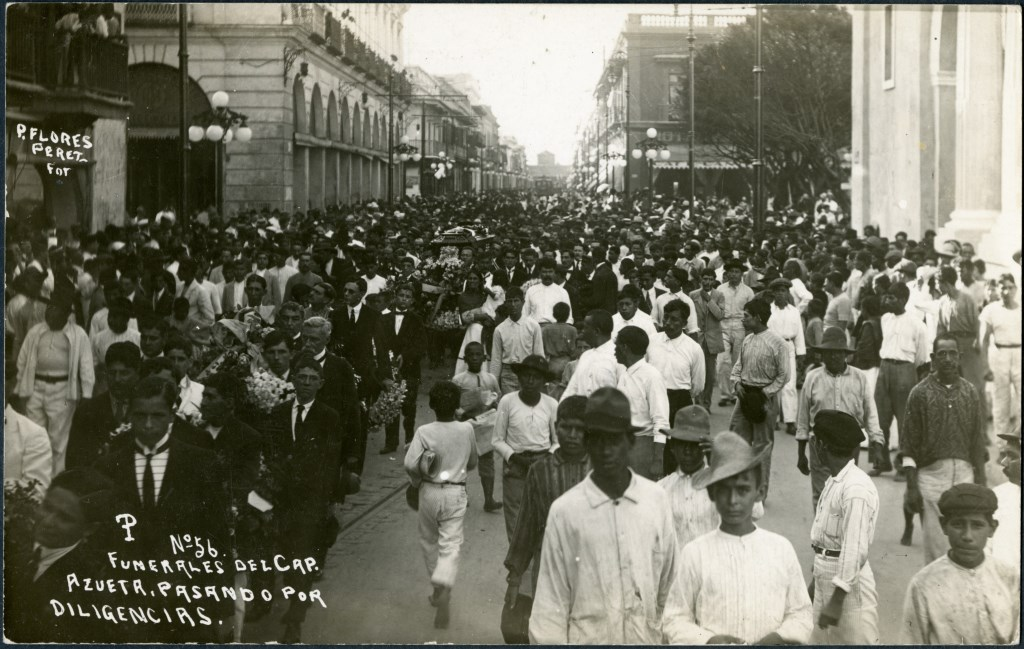
In contrast to this courageous and dignified attitude, municipal and customs employees, merchants, and some families of the Port’s oligarchy actively collaborated with the enemy, receiving the open repudiation and contempt of the majority of Veracruz’s population. The funerals of José Azueta and Captain Benjamín Gutiérrez, on May 11 and 23, respectively, became defiant demonstrations of protest against the foreign occupation: thousands of citizens followed the funeral processions through the main streets of the city. (Andrea Martínez. La intervención norteamericana a Veracruz, 1914, SEP, Mexico, 1982.) Under Yankee military authority, the people clearly expressed their national consciousness, refuting with their actions the falsity of Jack London’s assessments, who, in May 1914, wrote enthusiastically in Collier’s:
“Truly, the people of Veracruz will long remember having been conquered by the Americans and will pray for the blessed day when the Americans conquer them again. They would not mind being conquered forever.” (Collier’s, Volume 53, No. 11, May 30, 1914)
The occupation of the port lasted six long months. Finally, on November 24, 1914, the Constitutionalist troops entered Veracruz, while simultaneously the Yankee invaders boarded ships at the dock. Thus ended yet another of the United States’ interventions in our country; it would not be the last.
-
People’s Mañanera October 21
President Sheinbaum’s daily press conference, with comments on Pemex, fuel theft, Jalisco’s water crisis, missing persons, and the lie detector.
-
Jáuregui’s Arrest Does Not Close the CIA Case in Chihuahua; Morena Demands Broader Investigations
Morena leader Ariadna Montiel holds Governor Maru Campos politically responsible and says ex-prosecutor Guillermo Zuany must also face justice.
-
Morena Accuses Violation of the Secular State Over Award Ceremony for Evangelicals in the Chamber of Deputies
A representative of Israel’s embassy attended the PRI-hosted event, and the group’s founder was arrested in the U.S. for drug trafficking in 2007, Morena deputies said.