Río Sonora Basin Committees Accuse Grupo México & Government of Trying to Close Toxic Spill Issue
This article originally appeared in the May 20, 2026 edition of Fábrica de Periodismo.
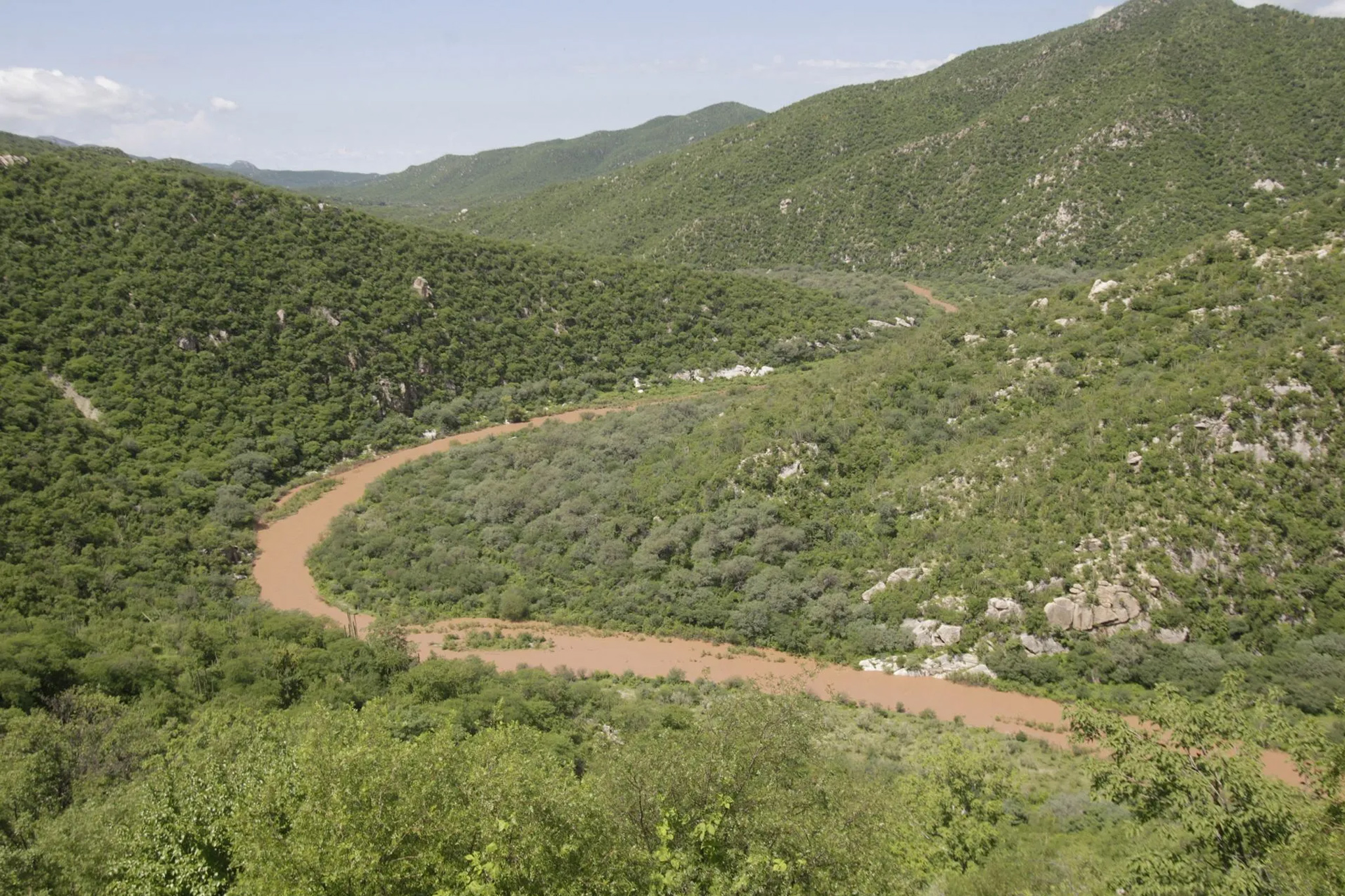
The Río Sonora Basin Committees (CCRS) allege that the federal government and the company Grupo México are seeking to legally close the case regarding the Río Sonora Trust, a mechanism created in 2014, after the spill of 40,000 cubic meters – the equivalent of 16 Olympic swimming pools – of acidified copper sulfate and other highly toxic heavy metals into the Sonora and Bacanuchi rivers.
Grupo México, one of the largest corporations in the country, is responsible for this event considered the worst environmental disaster in the history of metal mining in Mexico.
The Río Sonora Trust was created to address the damage caused by the spill in the river , but the affected communities did not participate in the process.
In February 2017, Grupo México closed the Trust without fulfilling its objectives and without fully implementing the resources. For these reasons, in 2018 the CCRS filed injunctions before the Supreme Court of Justice of the Nation (SCJN), which in early 2020 issued a landmark ruling: communities must participate in all reparation mechanisms.
But the ruling did not translate into action. In 2023, the Secretariat of the Environment (Semarnat) filed a complaint against Grupo México for failing to carry out remediation, which was withdrawn in 2026 by the Mexican government as part of agreements negotiated with the company, agreements which—according to the CCRS—were made behind closed doors.
At the moment, the Fourth District Judge in Administrative Matters in Mexico City, Ulises Oswaldo Rivera González, will decide in the coming days whether the case is declared fulfilled.
“The Supreme Court ordered community participation, not secret negotiations: a river that remains polluted cannot be declared repaired, nor can a case be closed where communities are systematically excluded from decisions regarding reparations . The judge faces two paths: sterile formalism, which declares the sentence fulfilled based on the mere existence of an agreement signed behind closed doors with opaque clauses (…) or keeping the case open to guarantee that the rights to health, clean water, and a healthy environment of the communities are fully restored,” the CCRS stated in a press release.
A Matter of Environmental Justice
According to a study by researchers Liz Ileana Rodríguez, Yuriria Orozco, and María del Carmen Rodríguez, the people affected by the mining disaster in the Sonora River have sounded a persistent alarm about environmental contamination and its direct repercussions on water, agriculture, and public health, showing that the recovery process in the various affected communities is far from over.
“Judge Rivera González’s decision will determine whether environmental justice in Mexico is real or just a promise.”Whether the Judiciary is willing to enforce a landmark ruling by the Supreme Court of Justice of the Nation, or whether it will allow one of the most serious cases of environmental pollution in the country to be closed without transparency or accountability,” the CCRS stated.
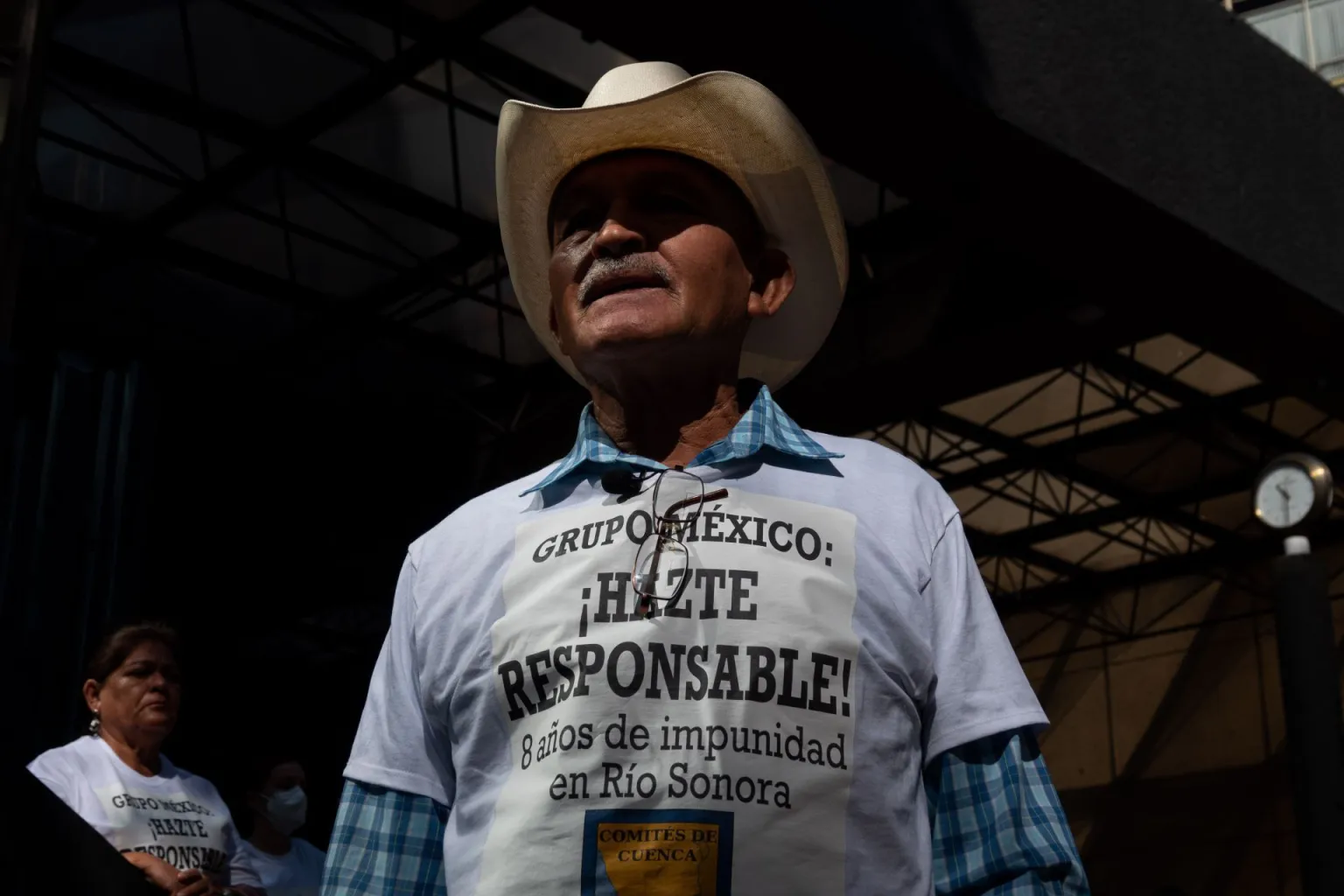
Therefore, the Committees urge the judge not to close the case and to take into account the real inclusion of the communities in the design of the reparation of damages. They warn that the case is intended to be closed through a new agreement that has not been made transparent, neither in content nor in resources, with more than 22,000 people affected in the municipalities of Arizpe, Banámichi, Huépac, San Felipe de Jesús, Aconchi, Baviácora and Ures.
“Closing the case under these conditions would institutionalize impunity for Grupo México and send an alarming message: that in Mexico, companies responsible for environmental and human rights damages can disregard or circumvent court rulings,” the CCRS stated.
-
Ayotzinapa Case: The Report on the New Lines of Investigation Will Be on Monday, Sheinbaum Announces
Parents of the 43 protested the Army’s exoneration outside the CNDH; officials will now detail new arrests, searches and cellphone-data leads.
-
Mexico at the UN: Velasco Defends Sovereignty and Calls for Renewing the Organization; Reiterates Support for Cuba and Recognition of Palestine
Speaking for Sheinbaum, the foreign minister said Mexico’s Constitution already embodies the UN Charter and that it is time for a woman to lead the UN.
-
People’s Mañanera September 25
President Sheinbaum’s daily press conference, with comments on crime in Tabasco, tourism, jobs, the World Cup, and Ayotzinapa.