Washington’s Tariffs Against the World
This article by Mario Campa originally appeared in the July 29, 2026 edition of SinEmbargo, a Mexican independent digital news outlet.
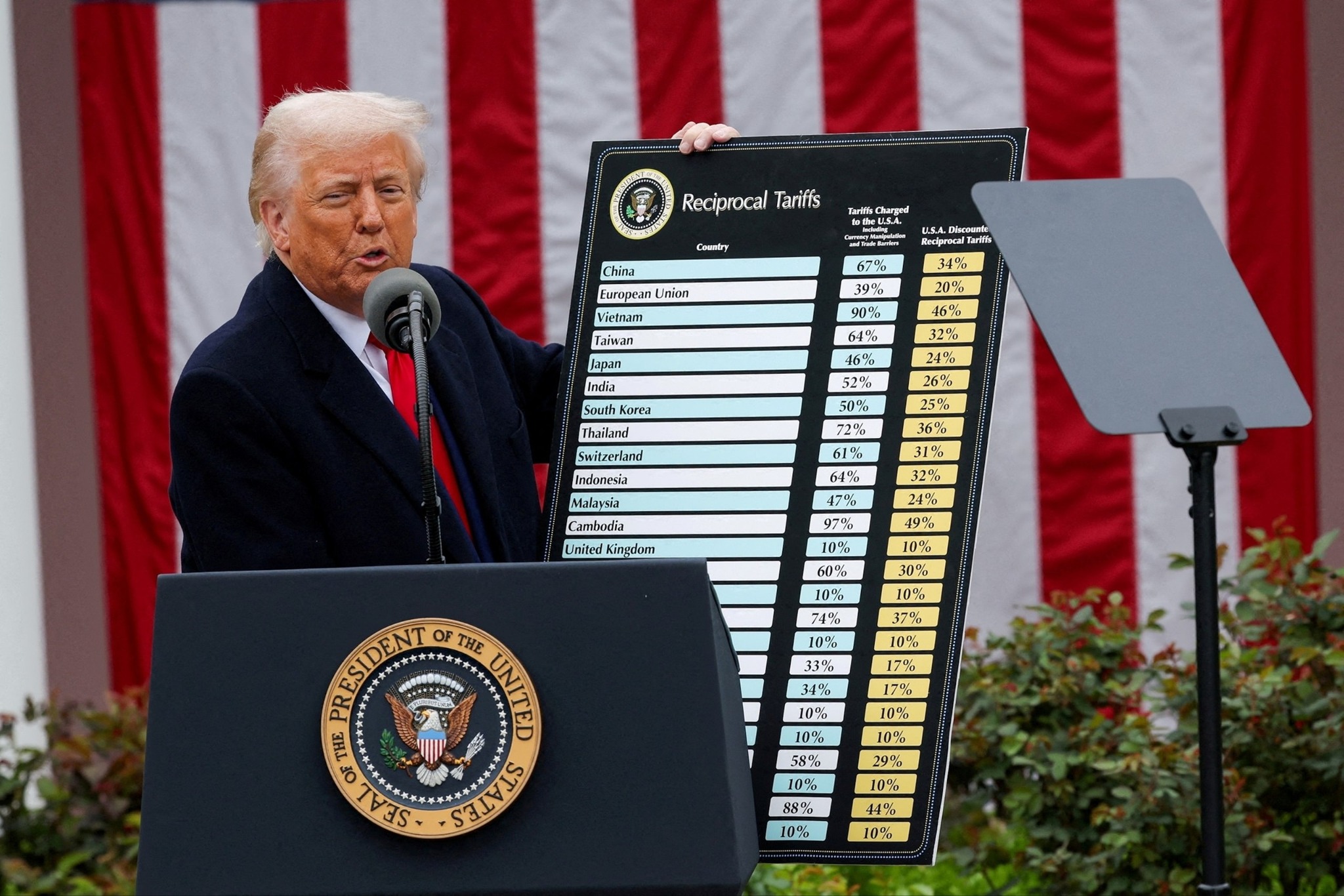
The Trump administration imposed new tariffs on dozens of countries, among them some fifteen in Latin America. It alleges that the partners did not adequately halt forced labor. In truth, it responds to the Supreme Court ruling that halted the tariffs imposed worldwide by virtue of illegal emergency powers. The rates now taking effect range from 10 percent to 12.5 percent, and they affect partners and rivals alike, though the nuances matter. In the case of Brazil, they represent a surcharge on the punitive 25 percent tariff announced days earlier. Mexico and Canada, on the other hand, could dodge the trade blow provided they comply with the T-MEC rules of origin, under constant dispute and revision.
The essential motivation may be strictly commercial. The new tariffs punish the 60 main trading partners of the United States, which account for 99.4 percent of imports. It is worth recalling that Trump promised to close the trade imbalances and that the result in 2025 was unsatisfactory: a drop of barely 2.1 billion dollars (0.2 percent) in the total deficit for goods and services. The White House insists that the tariffs are necessary to protect American workers and guarantee fair competition, although the reason—forced labor—is ambiguous, if convenient: the absence of reliable figures encourages arbitrariness in any supposed advance or setback, according to Washington’s interests.
A second explanation, complementary to the economic cause, is the proximity of the November midterm election. One of the barometers most used by Republicans, the RealClearPolitics aggregator, gives the President 41 approval points, placing him only four percentage points above the low recorded in his first term (2017-2021). The polls agree that four-fifths of the electorate blame Trump for the rise in gasoline prices. Inflation is gaining relevance as an issue because of the labor climate; since Trump took over the Presidency, hiring lost momentum and economic activity declined. In this scenario of rejection of an agenda crucial for any Republican President, Washington’s trade war on the world gains appeal as a residual economic banner.
At first (2025), Trump’s tariffs were more effective at curbing investment outside the United States than at closing the trade deficits. Asia expanded its surplus despite the marked decline in Chinese exports. In 2025, US imports from China fell 30 percent while exports dropped 26 percent, compressing the imbalance favorable to China by 93 billion dollars. In contrast, the combined shipments of Taiwan, Vietnam, and India shot up 47 percent, widening their joint surplus by 140 billion dollars in a single year. On the other hand, despite facing higher effective tariffs than Canada, Mexico expanded its market share in US imports. US purchases from Mexico rose six percent in 2025 compared to 2024, while imports from Canada fell seven percent. This divergence allowed Mexico to consolidate its lead in 2025 as the main supplier to the United States, with a market share of 15.6 percent versus 11.1 percent for Canada and 9.0 percent for China.
Nevertheless, so far in 2026 the trade dynamics are beginning to validate Trump’s discourse and actions from a commercial standpoint. In the first five months of the year, US exports grew 15 percent, while imports fell five percent. Among the countries most affected by lower US purchases, Europe (-33 percent), China (-30 percent), Singapore (-28 percent), Brazil (-24 percent), and Japan (-7 percent) suffer the greatest hardships. By contrast, Taiwan (+79 percent), Vietnam (+39 percent), Korea (+18 percent), and Mexico (+11 percent) get bigger slices of a shrinking pie. In the aggregate, the US trade deficit shrank to 405 billion dollars in the first five months of 2026, down from 606 billion dollars a year earlier. Certainly, part of this owes to the weakness of the dollar; moreover, unwanted effects such as the inflationary rebound and the deterioration in international relations remain off the balance sheet. In any case, Trump would seek to shield what he has gained.
As for the precarious T-MEC, Canada, threatened by new punitive tariffs that would take effect this coming August 19, faces an uphill outlook. Mexico, by contrast, gains market share (16.9 percent vs. 14.5 percent in January-May 2025), at the expense of China (7.2 percent vs. 9.8 percent). However, Washington’s trade war against the world did not bring Mexico positive short-term spillovers: (1) total US purchases are in decline, (2) the appreciation of the Mexican peso drove up imports from the United States by 15 percent, and (3) investment remains on hold, waiting for the fog to clear. As long as Trump is in no hurry, any relative gain for Mexico will be a Pyrrhic victory.
Mario A. Campa Molina is a political and industrial economist, a graduate of the MPA program at Columbia University (2013-2015). He contributes as a columnist and panelist to various media outlets and is a contributing editor in Spanish for the ideas magazine Phenomenal World, published by the Jain Family Institute (NY). He has work experience in the financial, energy, public, and academic sectors.-
AMLO Warns of the Rise of Neofascism: “It’s Not the Right, nor the Far Right”
Returning in a video from his La Chingada ranch, he presented his new book, Pueblo, dedicated to Sheinbaum, whom he called the world’s best President.
-
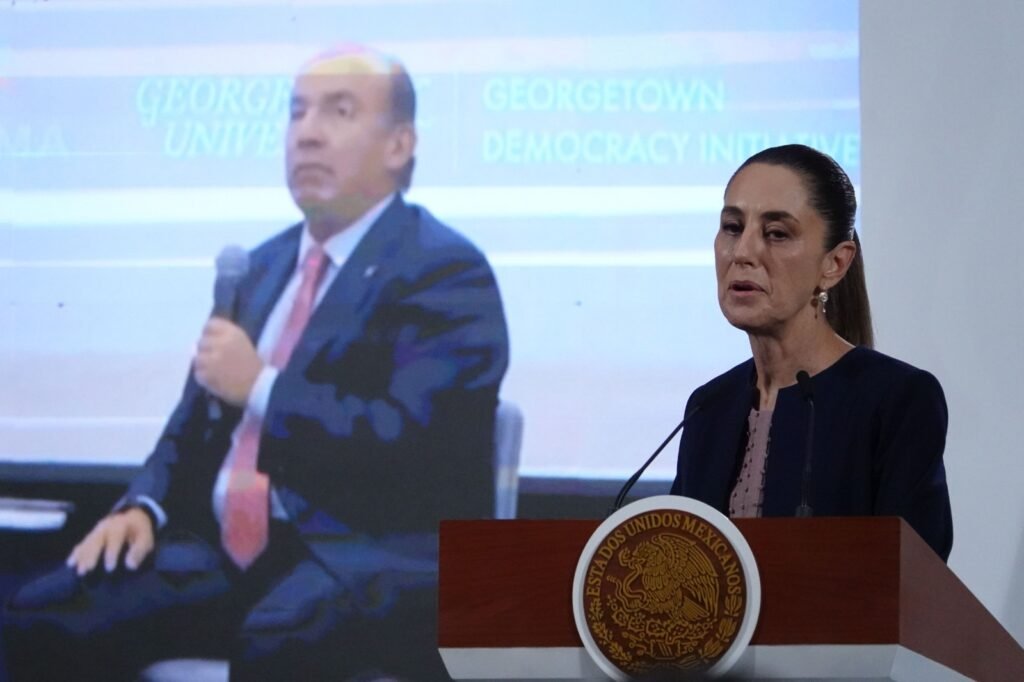
Sheinbaum Mocks Calderón: “It Would Be a Gem for Him to Talk About Democracy”
She suggested he explain his security chief García Luna, now serving 38 years in a US prison, and why homicides doubled during his term.
-
People’s Mañanera September 30
President Sheinbaum’s daily press conference, with comments on housing, the environment, water, single nationality, Calderón, and the Lie Detector.